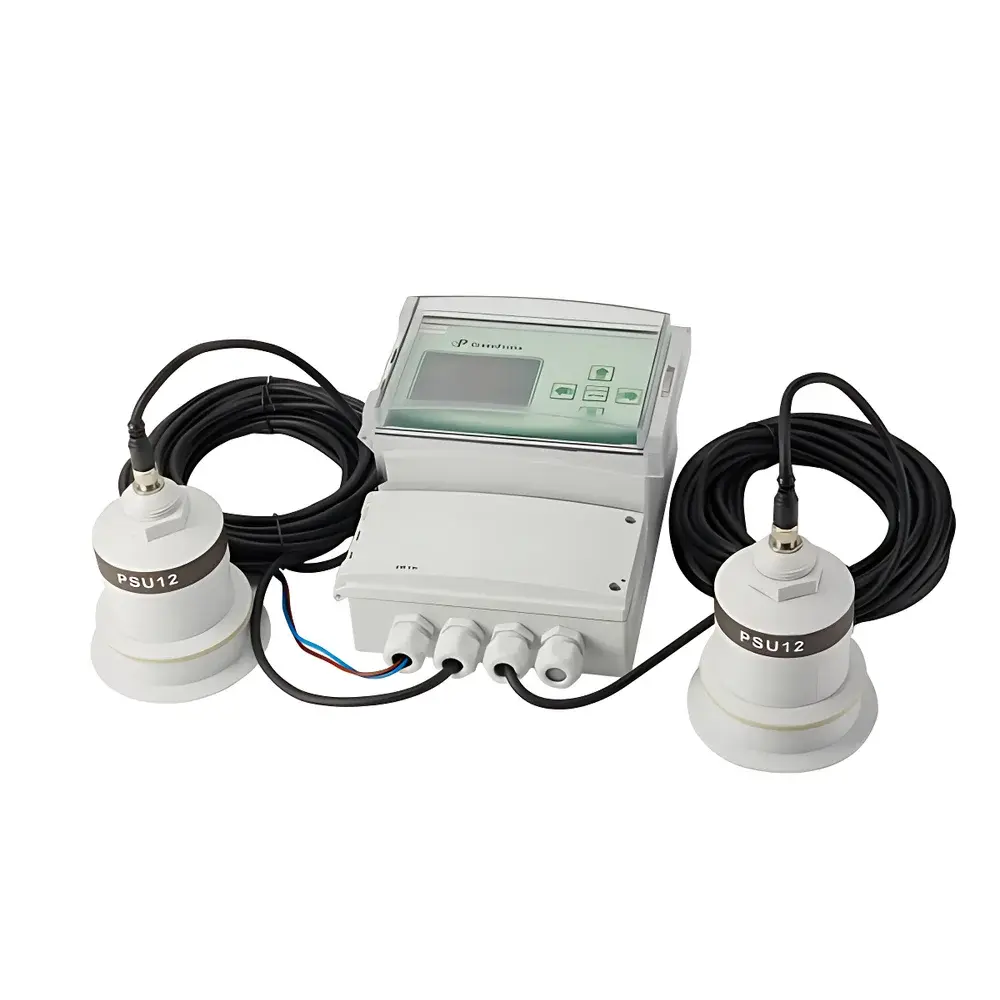
GreenPrima proLev500 / proLev500D Split-Type Ultrasonic Level Transmitter & Differential Level Meter
| Brand | GreenPrima |
|---|---|
| Origin | Imported |
| Manufacturer Type | Manufacturer |
| Model | proLev500 / proLev500D |
| Product Type | Level Transmitter |
| Sensor Range | PU06: 0.3–6 m |
| PU12 | 0.5–12 m |
| Blind Zone | PU06: 0.3 m |
| PU12 | 0.5 m |
| Accuracy | ±0.2% of full scale |
| Resolution | 1 mm |
| Display | Color matrix LCD |
| Power Supply | 85–230 VAC or 24 VDC |
| Operating Temperature | Sensor: –25 to +75 °C |
| Controller | –10 to +60 °C |
| Enclosure Rating | Controller: IP66 |
| Sensor | IP68 |
| Max. Process Pressure | 0.5 bar |
| Housing Material | Polypropylene (PP) |
| Process Connection | G1" male thread |
| Cable Length | 10 m (separated configuration) |
| Language | English |
Overview
The GreenPrima proLev500 and proLev500D are industrial-grade, split-type ultrasonic level measurement systems engineered for reliable, non-contact monitoring of liquid and bulk solid levels in tanks, silos, sumps, and open channels. Based on time-of-flight (ToF) ultrasonic pulse-echo principle, the system emits high-frequency acoustic waves (typically 40–60 kHz) from a transducer mounted above the medium surface; the elapsed time between emission and echo return is precisely measured and converted into distance using the speed of sound in air—temperature-compensated via an integrated sensor. The proLev500 operates as a single-point level transmitter, while the proLev500D extends functionality to dual-sensor differential level measurement—enabling continuous calculation of level difference (Δh) between two independent points, critical for interface detection, overflow prevention, or flow rate estimation in weirs and flumes.
Key Features
- Split architecture: Physically separated controller and ultrasonic sensor units—facilitating flexible installation in hazardous, high-temperature, or space-constrained environments.
- Dual-sensor capability (proLev500D): Supports synchronized acquisition from two independently mounted PU06 or PU12 transducers, with real-time Δh computation and configurable alarm thresholds.
- Temperature-compensated ToF algorithm: Integrated Pt1000 sensor in each transducer ensures accurate sound velocity correction across –25 to +75 °C ambient range.
- Robust polypropylene (PP) housing: Chemically resistant to common acids, alkalis, and organic solvents; suitable for aggressive industrial atmospheres.
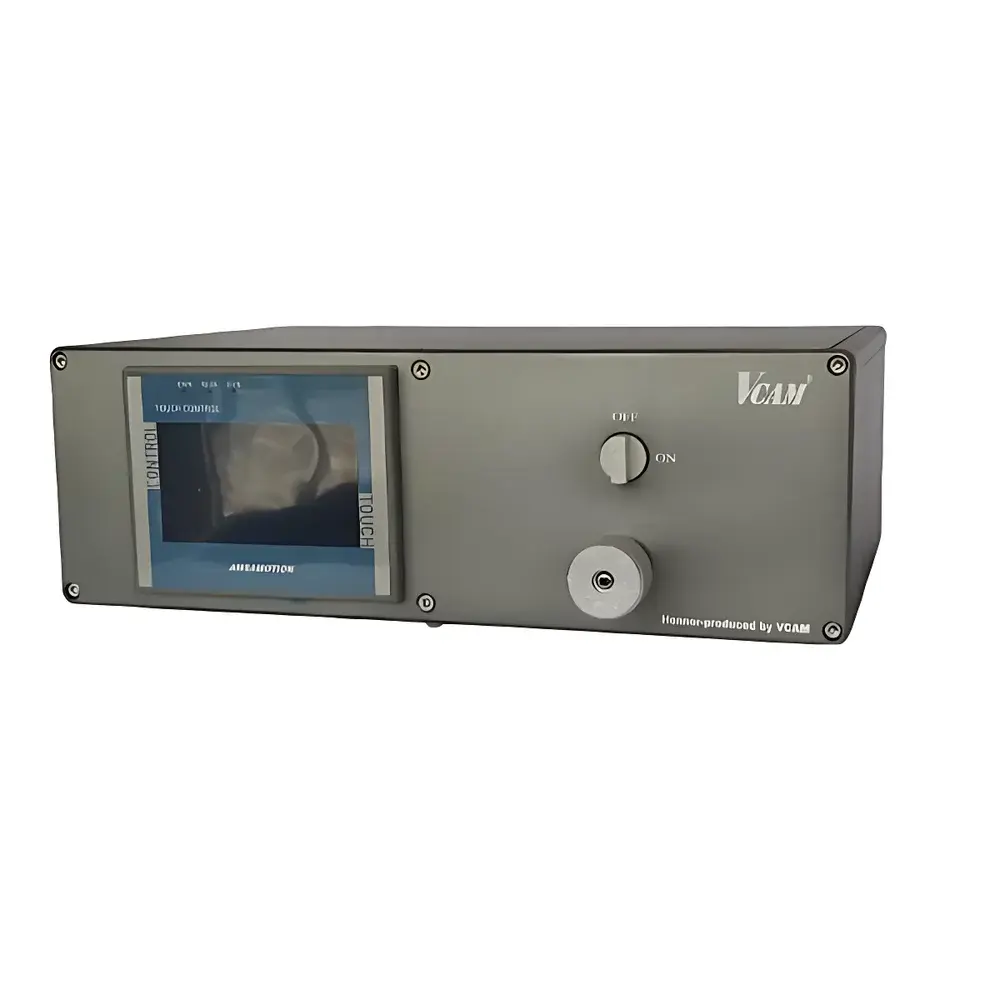
- Color matrix LCD display on controller: Provides intuitive local visualization of level, differential value, status flags, diagnostics, and setup menus—fully navigable in English.
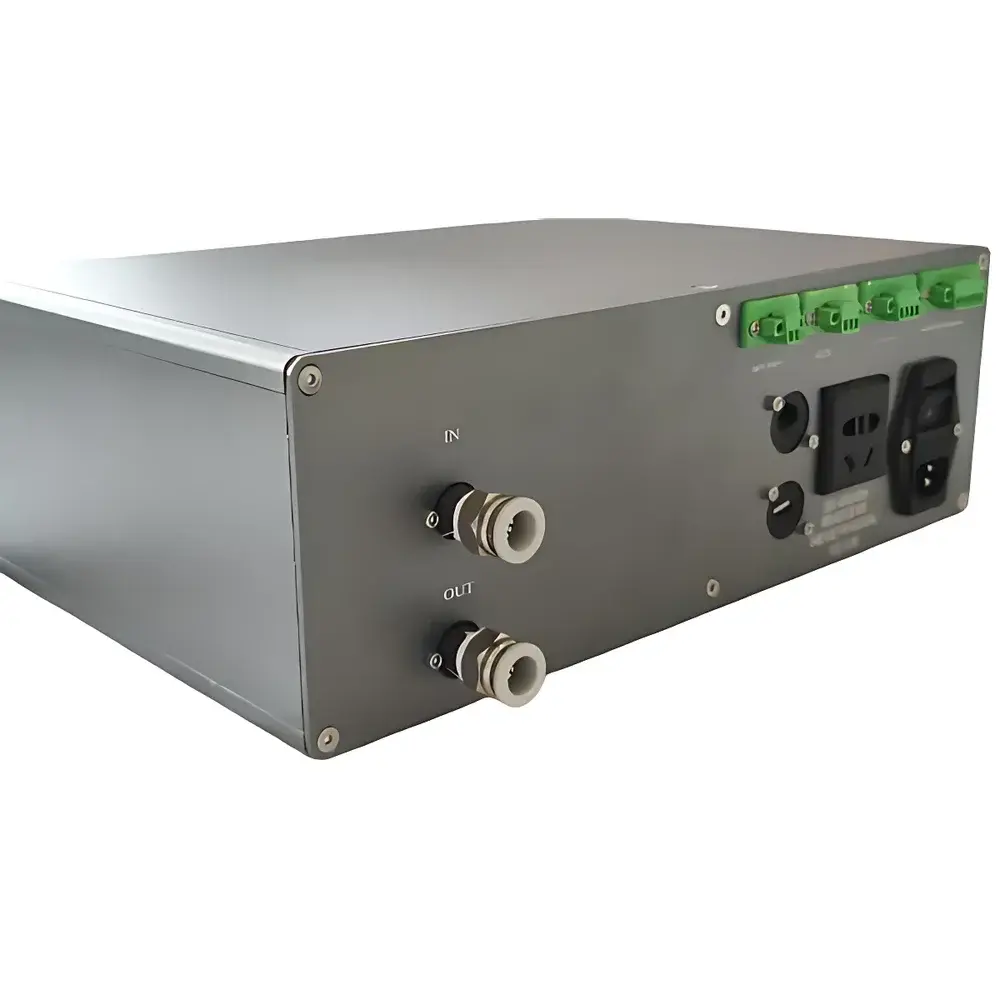
- Configurable output interfaces: 4–20 mA analog output (HART optional), relay outputs (SPDT, 5 A @ 250 VAC), and Modbus RTU over RS-485 for integration into DCS, SCADA, or PLC-based control systems.
Sample Compatibility & Compliance
The proLev500/500D series is validated for continuous level monitoring of homogeneous liquids (e.g., water, wastewater, chemical solutions, fuels) and free-flowing or aerated bulk solids (e.g., grain, plastic pellets, limestone). Performance remains stable under moderate vapor, dust, or light condensation—though heavy foam, turbulent surfaces, or highly absorptive media (e.g., wet sawdust, thick sludge) may require site-specific evaluation. The system complies with IEC 61326-1 (EMC for industrial environments), IEC 60529 (IP66/IP68 ingress protection), and meets CE marking requirements. While not intrinsically safe, it is suitable for Zone 2/22 classified areas when installed per IEC 60079-14 guidelines. No regulatory certification for SIL or functional safety (IEC 61508) is claimed; users requiring safety instrumented functions must implement external logic solvers.
Software & Data Management
Configuration and diagnostics are performed locally via the controller’s menu-driven interface or remotely using GreenPrima’s proprietary PC-based commissioning software (proConfig Suite), distributed under license. The software supports parameter backup/restore, firmware updates, real-time data logging (CSV export), and waveform visualization for echo quality assessment. All configuration changes—including range scaling, damping, fail-safe behavior, and relay logic—are timestamped and stored in non-volatile memory. Audit trails are retained for ≥30 days and support GLP/GMP-aligned operational review; however, full 21 CFR Part 11 compliance (e.g., electronic signatures, role-based access control) requires deployment within a validated enterprise system—not embedded in the device firmware.
Applications
- Wastewater treatment: Level monitoring in influent channels, equalization basins, and effluent discharge weirs—where differential measurement prevents overflows during storm events.
- Chemical storage: Non-invasive level tracking in corrosive or volatile liquid tanks—eliminating seal degradation risks associated with contact sensors.
- Food & beverage: Monitoring of syrup, juice, or dairy tanks where hygiene and clean-in-place (CIP) compatibility are essential—PP construction enables steam cleaning up to 121 °C.
- Aggregate handling: Silo level control for cement, fly ash, or sand—resistant to dust accumulation and mechanical vibration.
- Power plant auxiliary systems: Condensate tank and cooling tower basin monitoring—operating reliably in high-humidity, temperature-variable environments.
FAQ
What is the maximum measurable distance for the PU12 sensor?
The PU12 transducer is rated for a maximum range of 12 meters under standard atmospheric conditions (20 °C, 65% RH) with a reflective, flat liquid surface. Actual performance may vary depending on target reflectivity, temperature gradients, and airborne particulates.
Can the proLev500D calculate flow rate directly?
No. The proLev500D computes differential level (Δh) only. Flow rate derivation requires integration with a calibrated hydraulic structure (e.g., Palmer-Bowlus flume) and external calculation logic—typically implemented in a PLC or SCADA system.
Is field calibration required after installation?
No routine recalibration is needed. The device performs automatic zero and span verification during power-up and includes built-in self-diagnostics for transducer health, echo signal strength, and temperature drift compensation.
Does the system support HART communication?
Yes—HART 7 protocol is available as an optional firmware upgrade for the 4–20 mA output channel, enabling multidrop configuration and enhanced diagnostic access via handheld or PC-based tools.
What mounting orientation is recommended for optimal echo return?
The transducer must be mounted perpendicular to the expected material surface, with no obstructions (e.g., ladders, agitators, inlet streams) within the beam envelope. A minimum clearance of 300 mm from side walls is advised to avoid false echoes.