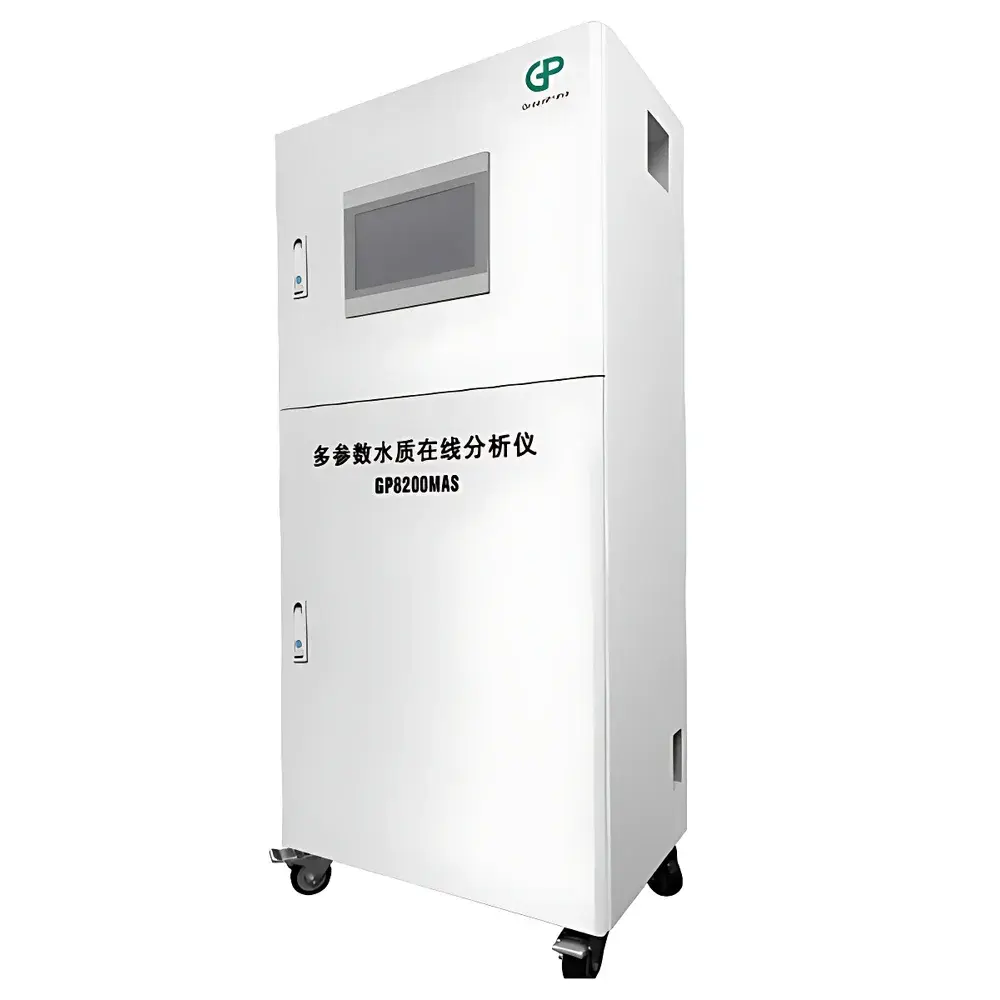
GreenPrima GP8200MAS Drinking Water Quality Online Monitoring System
| Brand | GreenPrima |
|---|---|
| Origin | Shanghai, China |
| Manufacturer Type | Manufacturer |
| Model | GP8200MAS |
| Price | Upon Request |
| Measurement Principles | Potentiometric (pH/ORP), Amperometric (Free Chlorine), Nephelometric (Turbidity), Conductometric (Conductivity), Electrochemical Membrane (Dissolved Oxygen) |
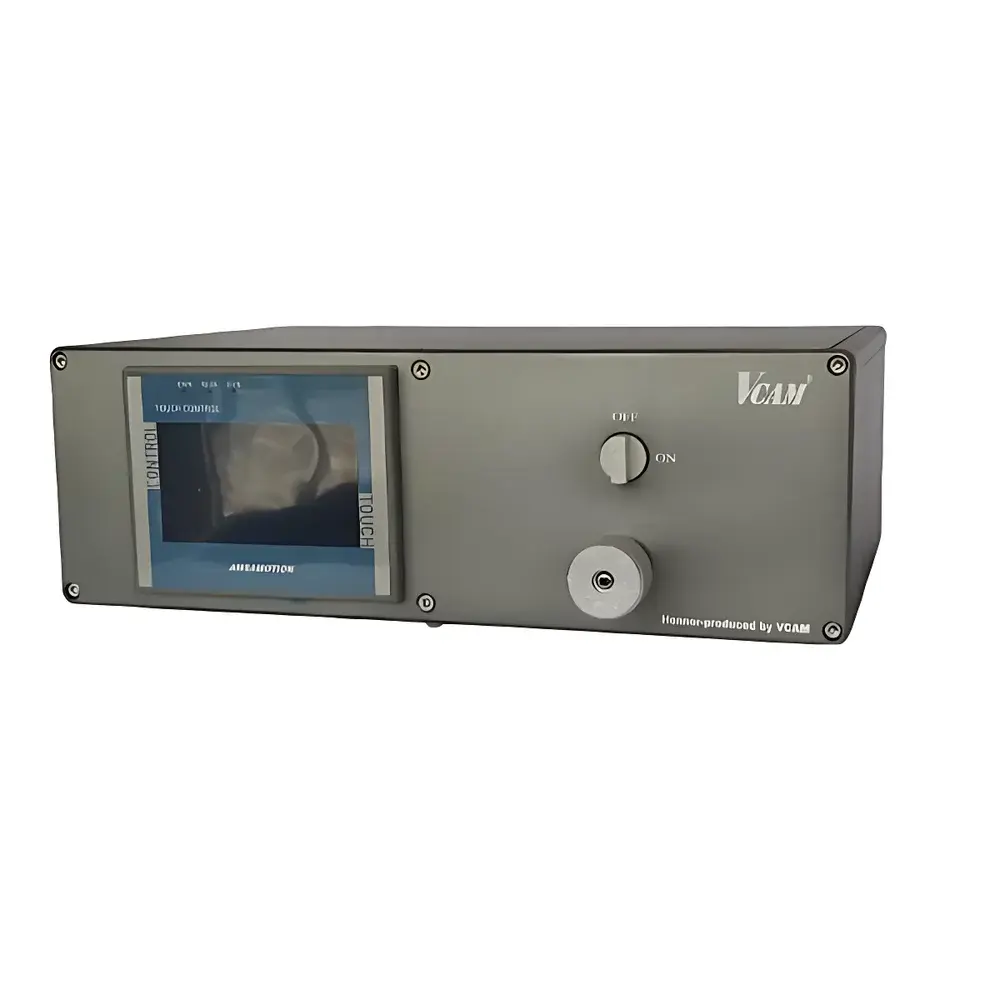
| Display | 10-inch TFT LCD Touchscreen (Chinese UI) |
| Enclosure Rating | IP65 |
| Dimensions | 1300 × 600 × 400 mm (customizable) |
| Power Supply | AC 220 V / 20 W or DC 24 V / 15 W (solar-compatible) |
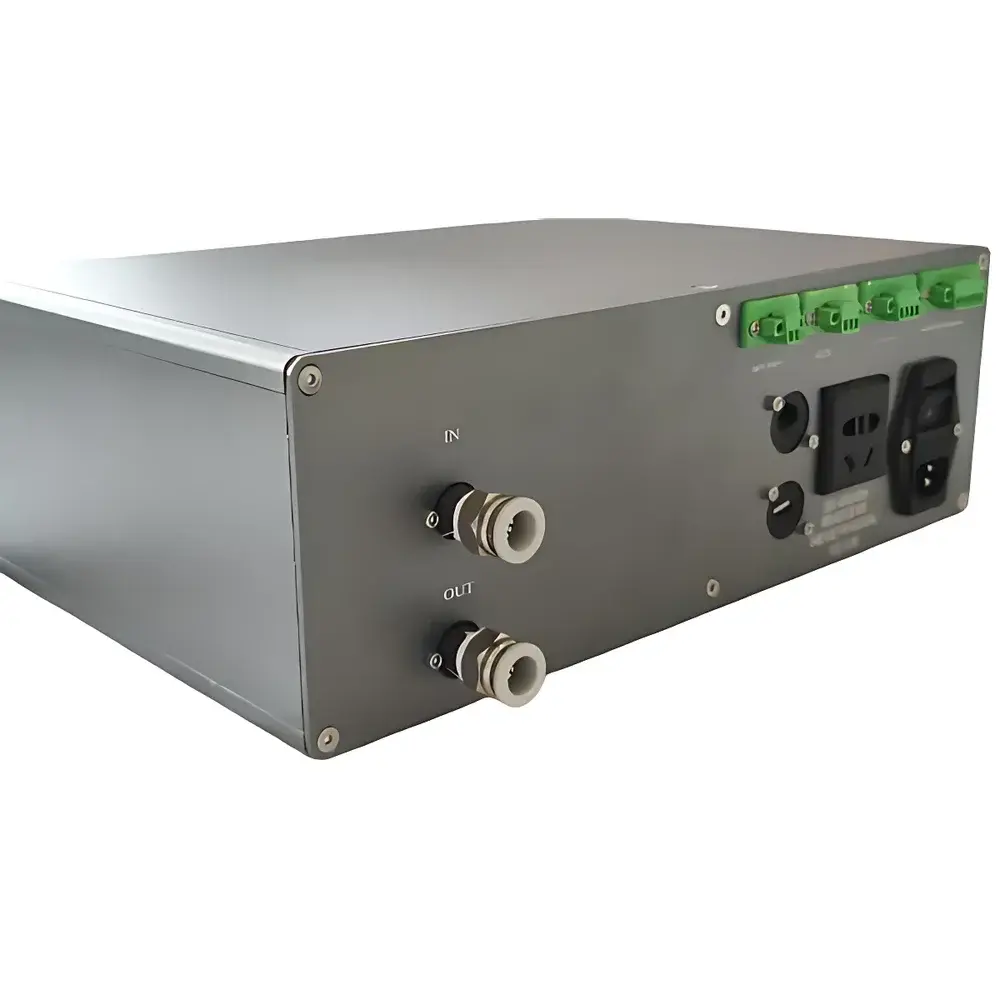
| Output Options | 4–20 mA (up to 8 channels, optional), RS485 (Modbus RTU), Ethernet (optional), GPRS (China Mobile/Unicom/Telecom, optional), Wi-Fi (optional) |
| Relay Outputs | 8 × SPST, 5 A @ 250 VAC / 30 VDC |
| Data Transmission | DTU-integrated cloud connectivity via GoPu Cloud Platform (web, mobile app, WeChat Mini Program, SMS alerts) |
| Calibration & Compensation | Automatic temperature compensation (NTC10K/PT1000, –10 to 130 °C), pH-based compensation for free chlorine, user-selectable turbidity range auto-scaling |
Overview
The GreenPrima GP8200MAS is a modular, multi-parameter online water quality monitoring system engineered for continuous, real-time surveillance of drinking water distribution networks, municipal water treatment effluent points, and critical infrastructure such as reservoirs, pump stations, and building ingress points. Designed in accordance with international operational requirements for potable water safety, the system integrates independently isolated sensor channels—each dedicated to a specific physicochemical parameter—to eliminate cross-interference and ensure measurement integrity under variable hydraulic and environmental conditions. Its architecture adheres to the functional principles defined in ISO 7027 (turbidity), ISO 5667-22 (on-line monitoring), and ASTM D1293 (pH), while supporting traceability and audit readiness required by national drinking water regulations including China’s GB 5749–2022 and WHO Guidelines for Drinking-water Quality. The system operates without reagents, eliminating consumables-related drift, maintenance downtime, and secondary contamination risk—making it suitable for unattended deployment in remote or environmentally sensitive locations.
Key Features
- Modular sensor architecture: Each parameter (pH, ORP, free chlorine, turbidity, conductivity, dissolved oxygen, temperature) uses a physically and electrically isolated measurement channel to prevent signal crosstalk and ensure metrological independence.
- Reagent-free operation: Amperometric free chlorine and electrochemical DO sensors require no chemical dosing; nephelometric turbidity detection avoids optical fouling through self-cleaning algorithms and dual-beam referencing.
- Intelligent compensation: Automatic temperature compensation across all parameters using either NTC10K or PT1000 probes (–10 to 130 °C); pH-dependent compensation applied to free chlorine readings per standard practice in chlorinated systems.
- Flexible configuration: Users select only required parameters at installation; additional modules can be added in-field without hardware replacement or firmware overhaul.
- Robust human-machine interface: 10-inch capacitive touchscreen with localized Chinese GUI, context-sensitive soft keys, real-time trend visualization, and on-device alarm acknowledgment and event logging.
- Scalable connectivity: Native RS485 Modbus RTU interface; optional 4–20 mA analog outputs (up to eight channels); optional cellular (GPRS) and Ethernet modules enable seamless integration into SCADA, DCS, or centralized telemetry platforms.
Sample Compatibility & Compliance
The GP8200MAS is validated for use with potable water matrices meeting national and international clarity, conductivity, and residual disinfectant specifications. It accommodates flow velocities up to 3 m/s and suspended solids concentrations ≤ 1000 NTU without requiring pre-filtration. Sensor housings are constructed from food-grade 316L stainless steel and PEEK, compliant with NSF/ANSI Standard 61 for materials in contact with drinking water. The system supports GLP-aligned data handling—including timestamped calibration logs, sensor diagnostic flags, and user-access-level authentication—and is compatible with 21 CFR Part 11–ready data management when deployed with authorized cloud configurations. All electrical components meet IEC 61000-6-2 (EMC immunity) and IEC 61000-6-4 (EMC emissions) standards.
Software & Data Management
Data acquisition, storage, and remote access are managed through the GoPu Cloud Platform—a secure, ISO/IEC 27001-aligned SaaS environment accessible via web browser, iOS/Android native application, or WeChat Mini Program. The platform provides time-synchronized historical data retrieval (minimum 18 months local + cloud backup), configurable alarm thresholds (with hysteresis), multi-level notification routing (SMS, push, WeChat), and exportable CSV/PDF reports conforming to ISO/IEC 17025 documentation templates. On-device firmware supports Over-The-Air (OTA) updates and stores ≥30 days of high-frequency sampling data (1-minute intervals) in non-volatile memory. Audit trails record all configuration changes, calibration events, and user logins with digital signatures and IP metadata.
Applications
- Real-time compliance monitoring at drinking water treatment plant discharge points per GB 5749–2022 and EU Directive 98/83/EC.
- Early-warning detection of contamination events (e.g., chlorine decay, turbidity spikes, pH excursions) in distribution networks.
- Performance verification of point-of-use (POU) and point-of-entry (POE) treatment units in commercial buildings and hospitals.
- Remote supervision of rural water supply systems powered by solar-battery hybrid configurations.
- Integration into smart city water management dashboards via standardized Modbus TCP or MQTT protocols.
FAQ
Does the GP8200MAS support third-party SCADA integration?
Yes—the system natively communicates via Modbus RTU over RS485 and optionally supports Modbus TCP via Ethernet module, enabling direct mapping of register addresses to supervisory control systems.
Can sensor modules be calibrated in situ without removing them from the pipe?
All sensors support field calibration using standard reference solutions; pH, ORP, and free chlorine modules include two-point calibration routines with automatic slope/offset validation.
Is the cloud platform accessible outside mainland China?
Yes—GoPu Cloud is globally reachable via HTTPS; regional data residency options (EU, APAC) are available under enterprise licensing agreements.
What is the recommended maintenance interval for optical turbidity sensors?
Under typical municipal water conditions, cleaning intervals range from 3 to 6 months; the system logs fouling rate metrics and triggers preventive maintenance alerts based on signal attenuation trends.
How is cybersecurity implemented for remote data transmission?
GPRS/Ethernet communications use TLS 1.2+ encryption; device authentication employs certificate-based mutual TLS; all cloud API endpoints enforce OAuth 2.0 authorization and role-based access control (RBAC).