
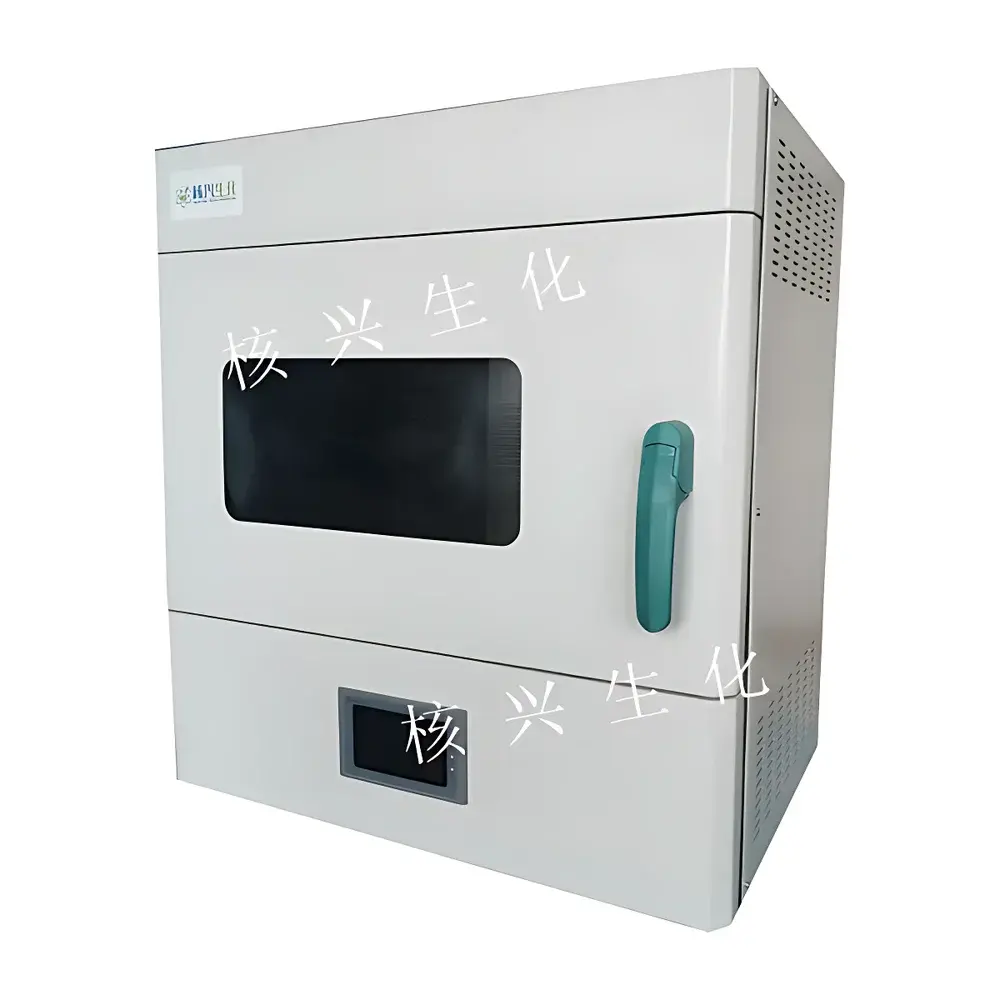
HEXING BIOCHEMICAL HXN-W40S Microwave-Assisted & Electric Heating Integrated Sample Concentrator, Evaporator, Acid-Removal and Ashing System
| Brand | HEXING BIOCHEMICAL |
|---|---|
| Origin | Shandong, China |
| Model | HXN-W40S |
| Instrument Type | Automated Quantitative Concentrator |
| Temperature Range | 0–300°C |
| Temperature Control Accuracy | ±0.1°C |
| Maximum Sample Volume Capacity | 40 L |
| Microwave Power | 0–800 W at 2450 MHz |
| Electric Heating Power | 1600 W |
| Cavity Volume | 40 L |
| Construction | Stainless Steel Monolithic Welded Body with PTFE Anti-Corrosion Coating |
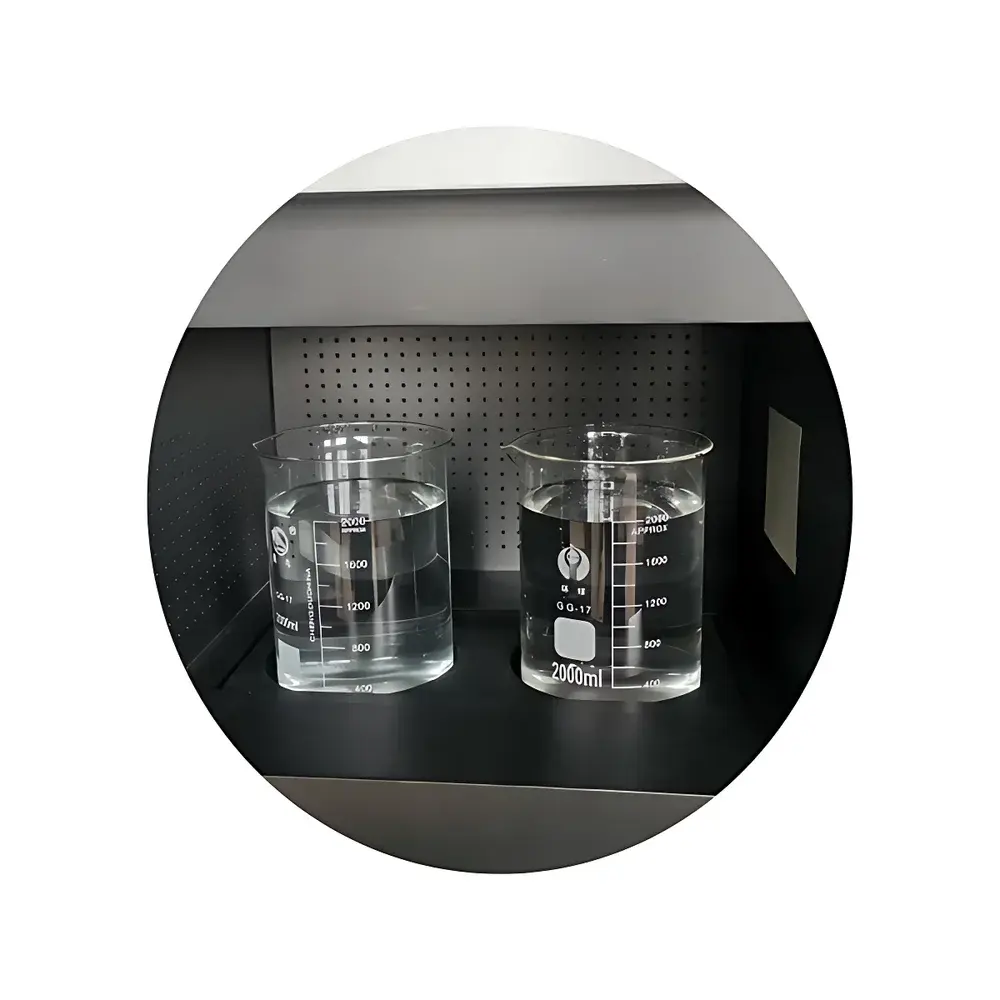
| Evaporation Vessels | One 2000 mL Ceramic Tray (microwave mode) or Two 2000 mL Standard Glass Beakers (electric heating mode) |
| Acid Removal & Ashing Capacity | Three 100 mL Ceramic Crucibles |
| Temperature Monitoring | Dual-mode — Non-contact Infrared + Thermocouple |
| Exhaust System | Corrosion-Resistant Centrifugal Fan (≤60 dB) |
| Control System | PLC-based Intelligent Touchscreen Interface with LED Internal Illumination and Transparent Observation Window |
| Dimensions (W×D×H) | 760 × 550 × 610 mm |
Overview
The HEXING BIOCHEMICAL HXN-W40S is an integrated laboratory sample preparation system engineered for sequential, programmable execution of concentration, evaporation, acid removal (digestion residue volatilization), and low-temperature ashing—specifically optimized for radiochemical analysis of aqueous environmental samples per GB/T 5750.13 (“Standard Methods for the Examination of Drinking Water – Radioactivity Parameters”). Unlike conventional hotplate evaporators or standalone microwave digesters, the HXN-W40S implements a hybrid thermal architecture combining controlled microwave energy (2450 MHz, 0–800 W) and resistive electric heating (1600 W) within a single 40 L corrosion-resistant cavity. This dual-mode design enables precise thermal management across distinct physicochemical stages: gentle micro-boiling for volume reduction (e.g., 2000 mL → 100 mL), controlled sulfuric acid fuming under inert conditions, and final residue carbonization at up to 300°C—all performed in situ without sample transfer. The system operates on Couette-flow-adjacent thermal uniformity principles in microwave mode and conductive/convective equilibrium in electric mode, ensuring reproducible mass balance and minimal isotopic fractionation during α/β-emitter preconcentration.
Key Features
- Hybrid thermal platform supporting both microwave-assisted rapid evaporation and electric heating for standardized slow evaporation per GB/T 5750.13 methodology
- PLC-driven multi-stage process programming with independent parameter sets for concentration, acid fuming, and ashing phases
- Dual temperature sensing architecture: non-contact infrared pyrometry for surface monitoring + embedded thermocouple for bulk thermal validation
- Corrosion-resistant 40 L monolithic stainless steel cavity with electropolished interior and PTFE-coated surfaces for HNO₃/H₂SO₄/HF resistance
- Modular vessel support: 2000 mL ceramic tray (microwave mode), dual 2000 mL borosilicate beakers (electric mode), and three-position 100 mL ceramic crucible holder for acid removal and ashing
- Integrated low-noise (<60 dB(A)) centrifugal exhaust with chemically resistant impeller and sealed bearing assembly
- Full-color capacitive touchscreen interface with real-time graphical trend logging, password-protected method storage, and USB data export
Sample Compatibility & Compliance
The HXN-W40S accommodates aqueous matrices including drinking water, surface water, groundwater, and wastewater extracts—particularly those requiring α/β nuclide quantification (e.g., ²¹⁰Po, ²³⁴Th, ⁹⁰Sr, ²³⁹Pu). It supports standard reference materials (SRMs) such as NIST SRM 4350B and IAEA-375 for method validation. While not certified to ISO/IEC 17025 or GLP out-of-the-box, the system’s audit-ready digital log (timestamped temperature profiles, power output, stage duration, operator ID) facilitates compliance with internal QA/QC protocols aligned with ISO 17025 Clause 7.7 and US EPA Method 900.0 requirements for radiochemical sample preparation. All materials contacting samples conform to USP Class VI biocompatibility standards; PTFE coating meets ASTM D1748 for long-term acid exposure resistance.
Software & Data Management
The embedded PLC controller runs HEXING’s proprietary ConcentrationLogic™ firmware v3.2, enabling creation and recall of up to 99 user-defined methods. Each method stores setpoints for microwave power ramping, electric heating duty cycle, target temperature plateaus, dwell times, and cooling delays. All operational events—including infrared vs. thermocouple deviation alerts, fan speed modulation, and door interlock status—are timestamped and stored locally on industrial-grade SD card (16 GB included). Data export is supported via CSV over USB 2.0; optional Ethernet module (HXN-NET-01) enables integration into LIMS via Modbus TCP. Audit trail functionality complies with FDA 21 CFR Part 11 requirements when paired with external identity verification hardware (e.g., RFID badge reader).
Applications
- Pre-concentration of large-volume water samples (up to 2000 mL) prior to α-spectrometry or liquid scintillation counting (LSC)
- Sulfuric acid fuming of evaporated residues to remove residual nitric and hydrochloric acids—critical for minimizing spectral interference in β-counting
- In-situ carbonization of sulfate-rich residues at ≤300°C to stabilize radionuclides prior to electrodeposition or source preparation
- Non-radioactive applications: heavy metal preconcentration (e.g., As, Cd, Pb) in environmental monitoring, pharmaceutical residual solvent removal, and botanical extract concentration
- Method development for ISO 10703, ASTM D7283, and EPA 900.0-compliant workflows
FAQ
Does the HXN-W40S meet GLP or GMP validation requirements?
It provides foundational features required for validation (traceable temperature calibration, electronic audit trail, method locking), but formal qualification (IQ/OQ/PQ) must be executed per site-specific SOPs using third-party metrology tools.
Can the system handle hydrofluoric acid (HF)-containing digests?
No. Although the PTFE coating resists most mineral acids, HF etches silica-based ceramics and compromises PTFE integrity above 120°C; use only for HNO₃/H₂SO₄/HCl matrices.
Is remote monitoring supported?
Yes—via optional HXN-NET-01 Ethernet module enabling real-time parameter viewing and alarm notifications through standard web browsers or SCADA platforms.
What maintenance intervals are recommended?
Infrared sensor cleaning every 50 operating hours; cavity inspection and PTFE coating integrity check every 500 hours; fan filter replacement quarterly under continuous operation.
How is temperature uniformity verified across the 40 L cavity?
Using NIST-traceable multi-point thermocouple mapping (per ASTM E220) during factory acceptance testing; users may perform periodic verification with calibrated thermal imaging or distributed thermocouple arrays.



