
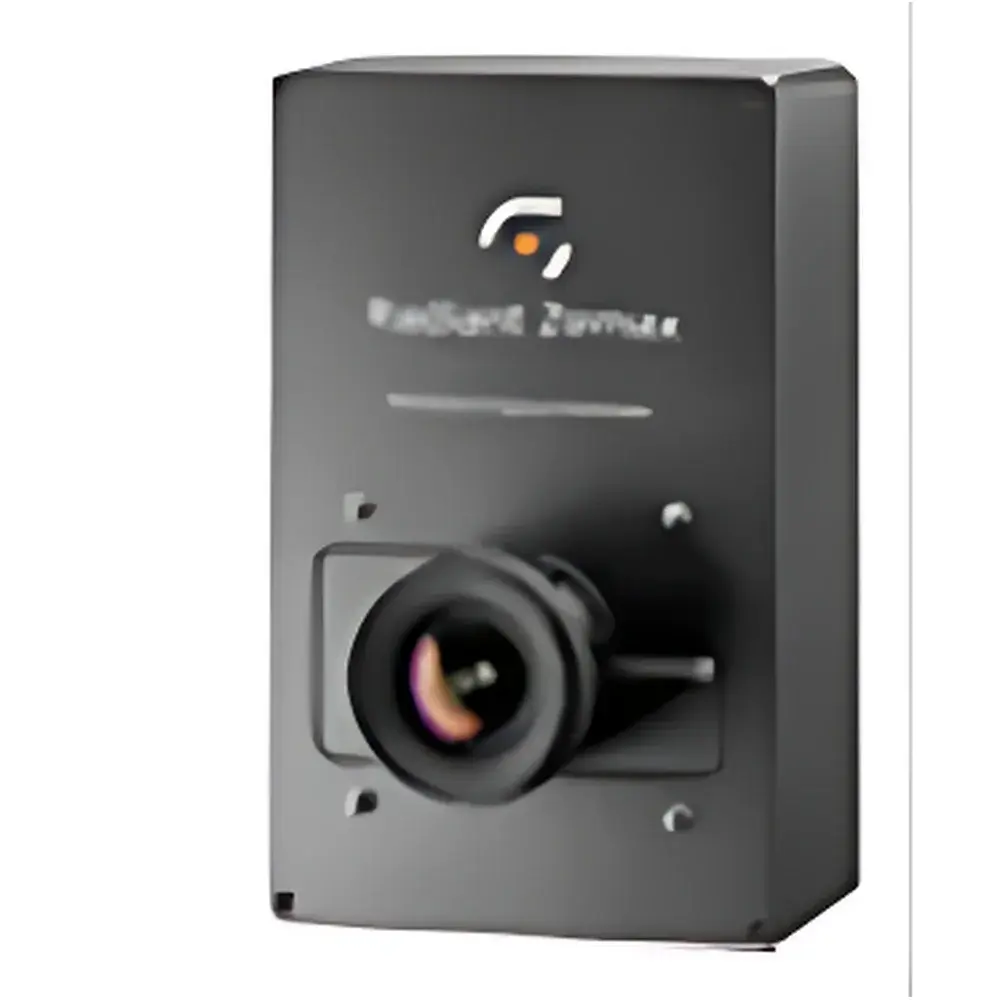
Radiant Zemax PM-1200 Series CCD-Based Imaging Colorimeter and Luminance Meter
| Brand | Radiant Zemax |
|---|---|
| Origin | USA |
| Model | PM-1200 Series |
| Sensor Type | 12-bit CCD with CIE-matched optical filters |
| Measurement Capabilities | Luminance (cd/m²), Illuminance (lux), Radiance (W/sr·m²), Irradiance (W/m²), Luminous Intensity (cd), Radiant Intensity (W/sr) |
| Spatial Resolution | Up to 2.3 megapixels (configurable by model variant) |
| Dynamic Range | >1,000,000:1 (with electronic exposure control) |
| Compliance | ISO/CIE-compliant photometric and radiometric calibration traceable to NIST |
| Software Platform | ProMetric® v3.x or later (supports ASTM E308, CIE 15:2018, IEC 62368-1, and MIL-STD-3009 NVIS requirements) |
Overview
The Radiant Zemax PM-1200 Series is a high-precision, CCD-based imaging colorimeter engineered for quantitative two-dimensional measurement of luminance, chromaticity, radiance, and irradiance across flat-panel displays, lighting systems, and illuminated human-machine interfaces. Operating on the principles of calibrated digital photometry and spectrally matched radiometry, the system integrates a thermoelectrically stabilized 12-bit scientific CCD sensor with precision CIE 1931 and CIE 1964 color-matching filter assemblies—ensuring metrological traceability to NIST standards. Unlike spot-based photometers, the PM-1200 captures full-field spatial distributions in a single acquisition, enabling pixel-level analysis of uniformity, Mura defects, angular intensity profiles, and spectral homogeneity. Its architecture supports both laboratory-grade R&D validation and high-throughput production line testing under controlled ambient conditions.
Key Features
- Thermally stabilized 12-bit CCD sensor with <1.5 e⁻ RMS read noise and programmable electronic exposure control (10 µs to 60 s), enabling high-dynamic-range imaging across low-brightness NVIS applications and high-luminance OLED emissive surfaces.
- CIE 1931 (2°) and CIE 1964 (10°) photopic and scotopic spectral response filters—optically bonded and factory-calibrated for luminance (cd/m²), chromaticity (CIE x,y & u′,v′), and correlated color temperature (CCT) measurements per CIE 15:2018.
- Integrated lens options (f/2.8, f/4.0, telecentric) supporting field-of-view configurations from 10° to 120°, with optional motorized focus and aperture control for automated multi-distance setups.
- Real-time hardware binning and region-of-interest (ROI) masking to optimize signal-to-noise ratio and frame rate—capable of sub-second full-frame acquisition at reduced resolution for inline inspection.
- ProMetric software platform with embedded GLP/GMP-compliant audit trail, user access levels, electronic signatures, and FDA 21 CFR Part 11–ready data export (CSV, XML, TIFF, PDF).
Sample Compatibility & Compliance
The PM-1200 series is validated for use with emissive and transmissive optical sources including OLED, microLED, LCD, PDP, CRT, and projection systems; backlit keypads, automotive instrument clusters, aviation HUDs, and NVIS-compliant night-vision displays. It meets ISO 9241-307 (visual display ergonomics), IEC 62368-1 (audio/video ICT safety), and MIL-STD-3009 (NVIS radiance uniformity). Calibration certificates include uncertainty budgets per ISO/IEC 17025:2017 and are issued with NIST-traceable reference standards. Optional third-party verification reports support IQ/OQ/PQ protocols for regulated manufacturing environments.
Software & Data Management
ProMetric software provides unified control of acquisition, analysis, and reporting. It includes preconfigured test sequences for Mura detection (per ISO 13406-2 Annex B), luminance uniformity (ΔL/Lmax), chromaticity shift (Δu′v′), and beam pattern analysis (IESNA LM-79–style polar plots). All raw image data is stored with metadata (exposure time, lens ID, calibration date, operator ID) in a secure SQLite database. Export modules generate compliant reports for internal QA review or external regulatory submission—including ASTM E308-conformant spectral interpolation and CIE S 026/E:2018 photobiological safety annotations.
Applications
- Display manufacturing: Pixel-level uniformity mapping, Mura grading, burn-in assessment, and gamma curve validation for AMOLED and QD-LCD panels.
- Automotive HMI: Instrument cluster legibility under daylight and night conditions, HUD virtual image brightness consistency, and NVIS spectral compliance (625–950 nm radiant intensity limits).
- Lighting design: Photometric distribution modeling (candela plots), glare index (UGR) calculation, and LED module binning verification.
- Aerospace & defense: Night-vision goggle compatibility testing, cockpit display emissivity profiling, and MIL-STD-810G environmental stability monitoring.
- R&D labs: Spectral power distribution (SPD) reconstruction via multi-filter acquisition, chromatic adaptation modeling (CIECAT02), and perceptual uniformity evaluation (CIEDE2000).
FAQ
Is the PM-1200 calibrated for both photometric and radiometric measurements?
Yes—each unit ships with dual calibration files: one optimized for luminance/chromaticity (CIE 1931 V(λ)-weighted) and another for absolute radiometric quantities (W/sr·m²), both traceable to NIST SRM 2241 and 2242.
Can the system perform automated pass/fail inspection on production lines?
Yes—ProMetric’s ScriptPro engine enables custom logic for real-time defect classification (e.g., Mura severity thresholds, luminance outliers beyond ±5% of mean), with PLC-triggered acquisition and Ethernet/IP or Modbus TCP output.
Does it support measurement of microLED arrays with sub-10 µm emitters?
Resolution is limited by optical diffraction and pixel pitch; for features below 50 µm, a telecentric macro lens (e.g., PM-1200-TL100) combined with sub-pixel interpolation yields reliable centroid and peak-intensity metrics per IEC TR 62739.
How frequently must recalibration be performed?
Radiant recommends annual recalibration against primary standards; however, built-in self-check routines (using integrated LED reference source) verify sensor stability every 24 hours per ISO/IEC 17025 internal quality procedures.



