
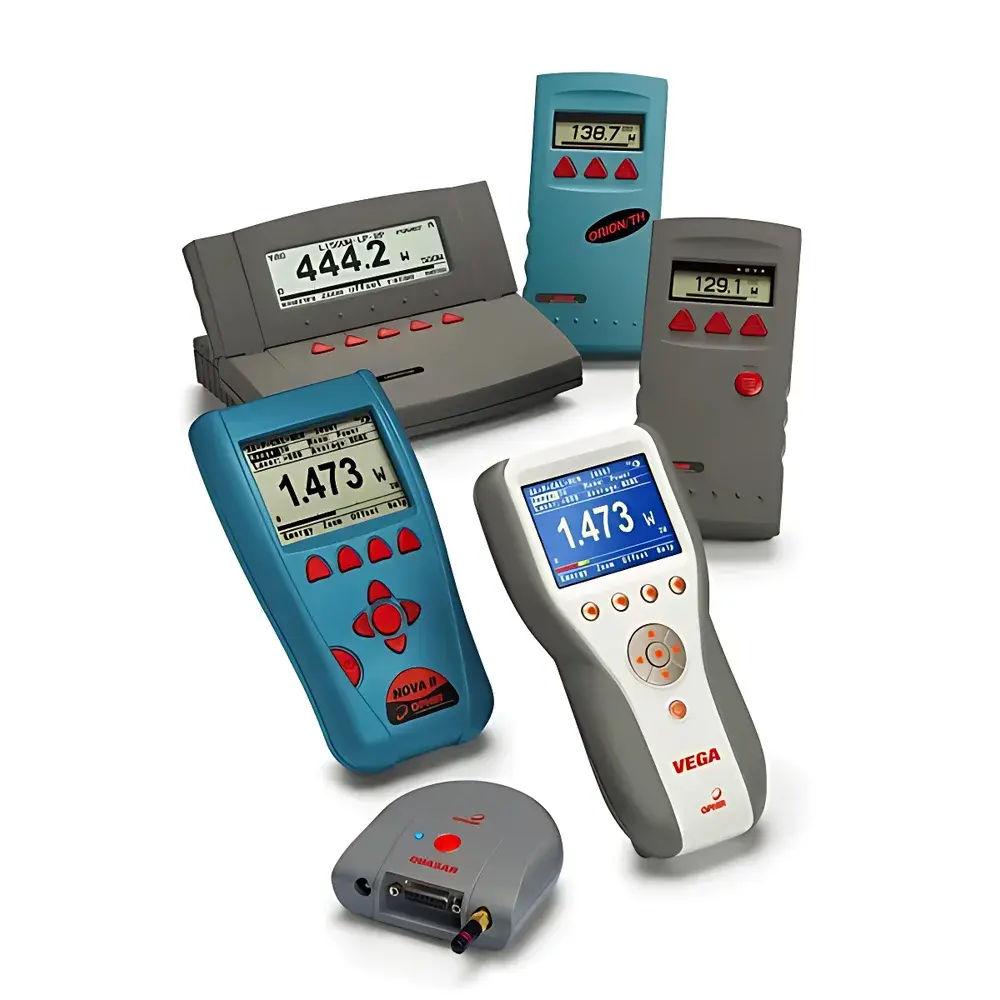
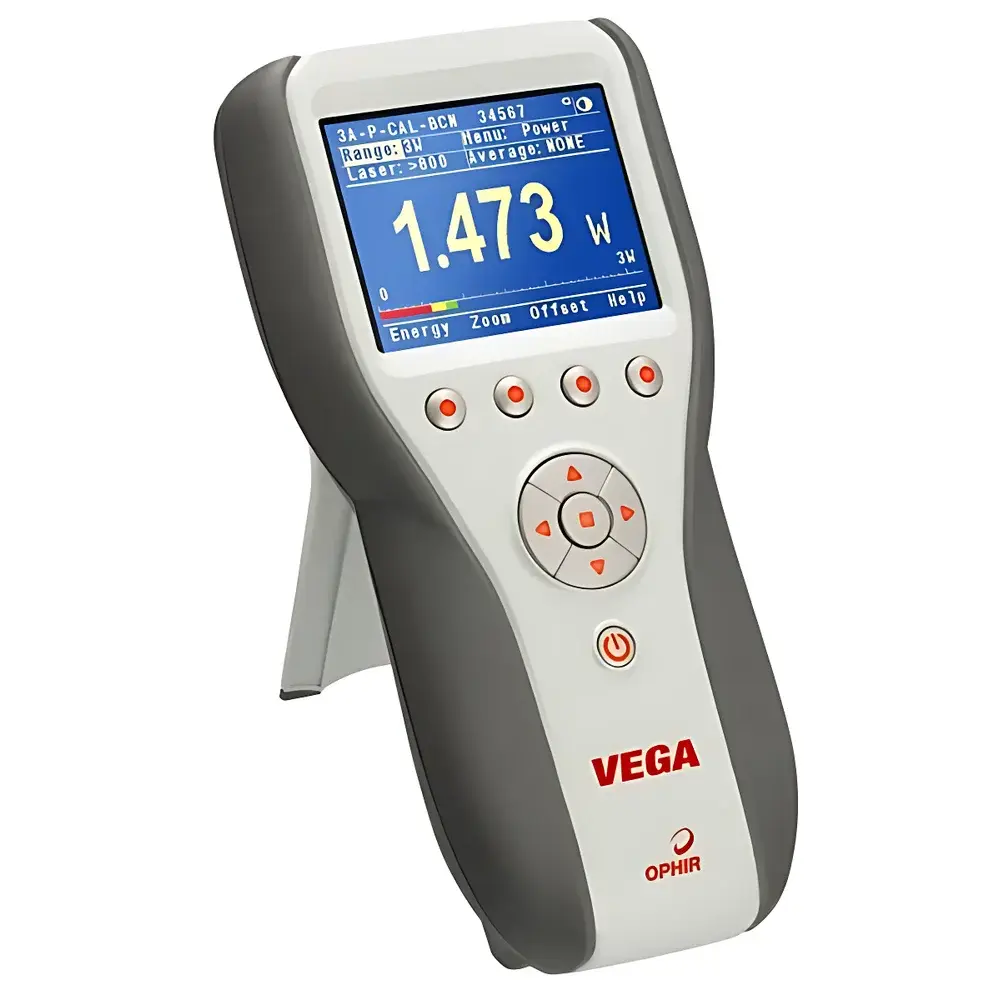
Ophir Vega / Nova II / LaserStar Laser Power and Energy Meters
| Brand | Ophir |
|---|---|
| Origin | Israel |
| Product Series | Vega, Nova II, LaserStar, Nova, StarLite |
| Probe Compatibility | Thermopile, Photodiode, Pyroelectric, and Integrating Sphere Sensors |
| Measurement Range | 10 pW – 150 W (CW), 15 µJ – 300 J (pulsed) |
| Wavelength Coverage | 193 nm – 20 µm |
| Compliance | ISO/IEC 17025-accredited calibration, supports GLP/GMP data integrity requirements |
Overview
Ophir laser power and energy meters are precision optical measurement instruments engineered for traceable, high-reproducibility quantification of continuous-wave (CW) and pulsed laser radiation. Based on fundamental photodetection principles—photodiode responsivity for low-power visible/NIR measurements, thermopile thermal conversion for broad-spectrum and high-power applications, and pyroelectric response for fast-pulse energy detection—these systems deliver metrologically sound results across research laboratories, semiconductor manufacturing, medical device validation, and aerospace laser testing environments. Each instrument integrates with a modular family of calibrated sensors, enabling seamless adaptation to diverse beam geometries, divergence profiles, and temporal characteristics without sacrificing accuracy or dynamic range.
Key Features
- Multi-platform architecture supporting five core meter families: Vega (color touchscreen handheld), Nova II (compact benchtop with >4 kHz sampling), LaserStar (dual-channel desktop unit with real-time arithmetic functions), Nova (universal interface for all Ophir sensor types), and StarLite (cost-optimized portable meter).
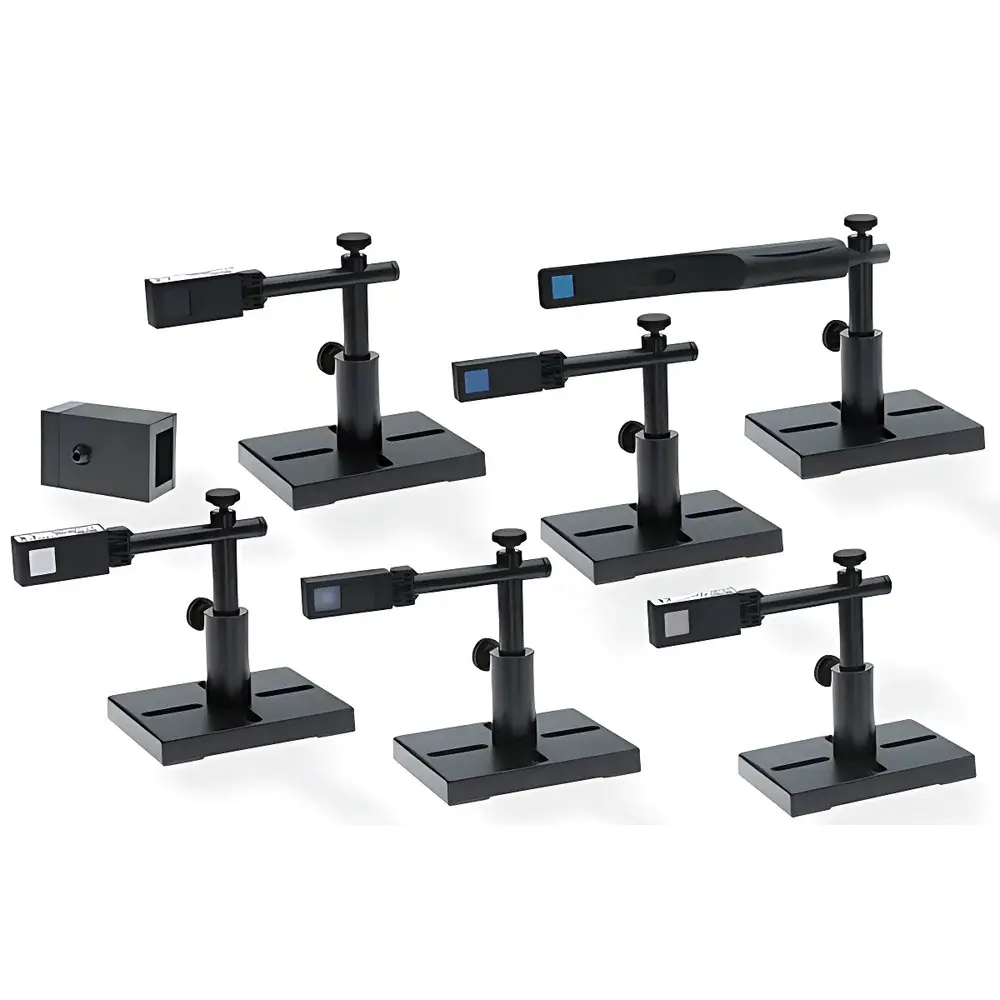
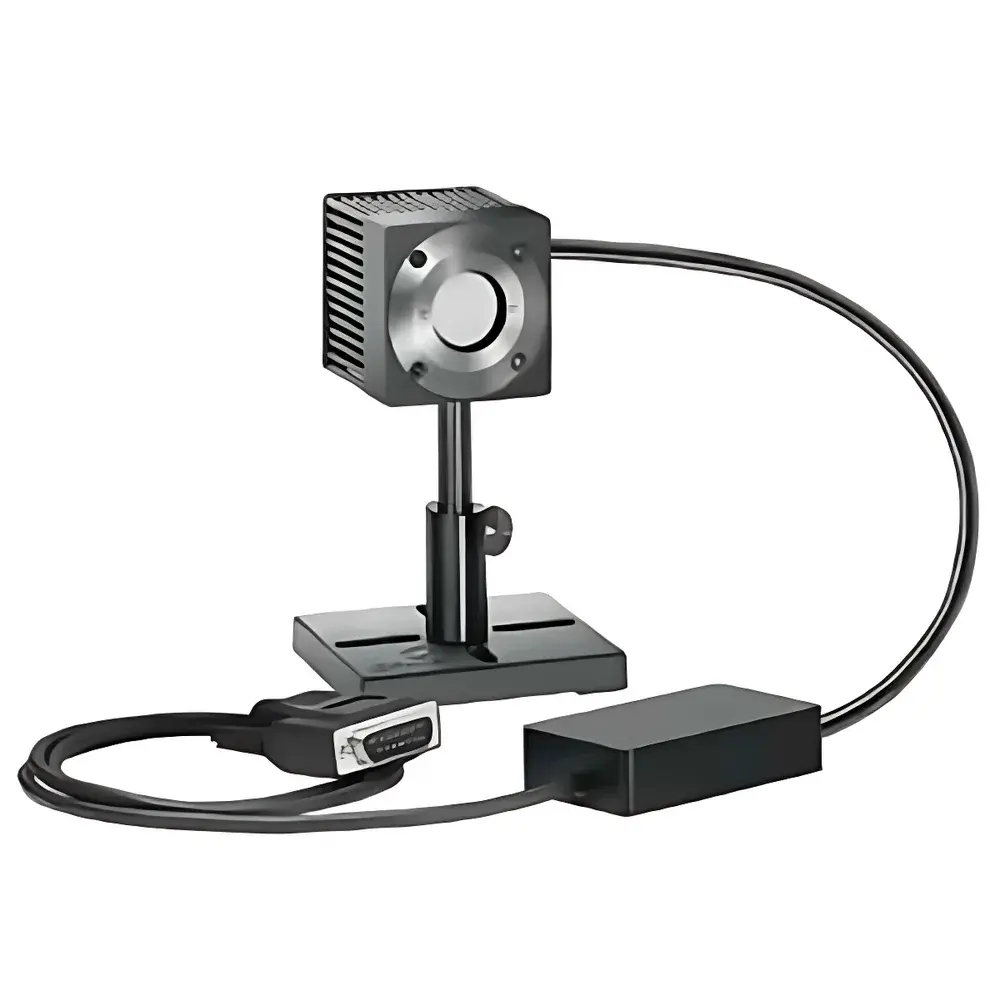
- Plug-and-play compatibility with over 100 NIST-traceably calibrated probes—including photodiode (e.g., PD300 series, sensitivity down to 10 pW), thermopile (e.g., 3A–150A series, up to 150 W CW), pyroelectric (e.g., PE series for single-shot pulse energy), and integrating sphere (e.g., 3A-IS, F100A-IS for divergent or multimode beams).
- Onboard data logging: Nova II stores up to 50,000 points at >4,000 Hz; LaserStar supports dual-channel acquisition at 1.5 kHz with ratio, sum, and difference computation; Vega enables full-field spectral and temporal analysis via intuitive soft-key navigation.
- Digital interfaces include USB 2.0, RS232, and optional GPIB (via LabVIEW VIs); firmware-upgradable architecture ensures long-term interoperability with evolving control ecosystems.
- Comprehensive software suite: Ophir StarLab v3.x provides real-time graphing, statistical analysis (min/max/avg/std dev), pass/fail thresholding, automated report generation (PDF/CSV), and full audit trail functionality compliant with FDA 21 CFR Part 11 and ISO 13485 documentation requirements.
Sample Compatibility & Compliance
Ophir meters accommodate lasers spanning excimer (193 nm), UV solid-state (266 nm), visible diode (405–670 nm), NIR fiber (980–1550 nm), mid-IR (up to 20 µm), and ultrafast femtosecond sources. Probe selection is determined by beam parameters: photodiode sensors (e.g., PD300-UV-193, PD300-IRG) are optimized for low-noise, high-bandwidth CW measurement below 1 W; thermopile sensors (e.g., 30(150)A-LP1-18) feature high damage thresholds (>10 J/cm² for nanosecond pulses) and flat spectral response across UV–FIR; integrating sphere probes (e.g., F100A-IS) enable accurate power measurement of highly divergent or non-Gaussian beams common in VCSEL arrays and LED-based phototherapy systems. All sensors undergo individual calibration per ISO/IEC 17025 in Ophir’s ILAC-MRA accredited facility, with certificates including uncertainty budgets, wavelength correction factors, and linearity deviation curves.
Software & Data Management
Ophir StarLab software serves as the central hub for instrument configuration, real-time visualization, and regulatory-compliant data handling. It supports multi-sensor synchronization, time-stamped acquisition with hardware-triggered start/stop, and configurable averaging windows (1–10,000 samples). Export formats include CSV (for MATLAB/Python post-processing), XML (for LIMS integration), and PDF reports embedding raw traces, statistics, and operator metadata. Audit trail records capture user login events, parameter changes, calibration updates, and data export actions—enabling full traceability under GLP, GMP, and ISO 9001 quality management frameworks. Remote operation via TCP/IP is supported for automated test benches and production line integration.
Applications
- Laser diode qualification in telecom and consumer electronics manufacturing
- Medical laser system verification (e.g., dermatology IPL, ophthalmic Nd:YAG, dental Er:YAG)
- Ultrafast amplifier characterization (pulse energy stability, repetition rate dependence)
- VCSEL array uniformity mapping using integrating sphere + scanning stage
- Material processing laser power monitoring (cutting, welding, additive manufacturing)
- National metrology institute reference comparisons and inter-laboratory proficiency testing
FAQ
What is the difference between photodiode and thermopile sensors?
Photodiode sensors offer high sensitivity (down to 10 pW) and fast response (<1 µs), ideal for low-power CW lasers but limited to ~1–3 W maximum. Thermopile sensors provide broadband spectral coverage (0.19–20 µm), higher power handling (up to 150 W CW), and inherent pulse energy capability—but with slower response (~100 ms) and lower noise floor.
Can one meter operate multiple probe types interchangeably?
Yes. Nova, Nova II, LaserStar, Vega, and StarLite meters auto-detect connected Ophir smart probes and load appropriate calibration coefficients, wavelength corrections, and scaling factors—eliminating manual configuration errors.
How often does calibration require renewal?
Ophir recommends annual recalibration for critical applications. All probes ship with ISO/IEC 17025 certificate valid for 12 months; extended calibration intervals may be justified under documented risk assessment per ISO 10012.
Is remote programming supported for automated test systems?
Yes. Full SCPI command set is available over USB, RS232, and GPIB. LabVIEW, Python (PyVISA), MATLAB, and C# drivers are provided free of charge with each instrument.
Do these meters meet FDA or EU regulatory requirements for medical device validation?
Ophir meters support 21 CFR Part 11 compliance through StarLab’s electronic signature, audit trail, and data integrity features. They are routinely deployed in Class II/III laser system IQ/OQ/PQ protocols and CE-marked medical equipment design verification.





