
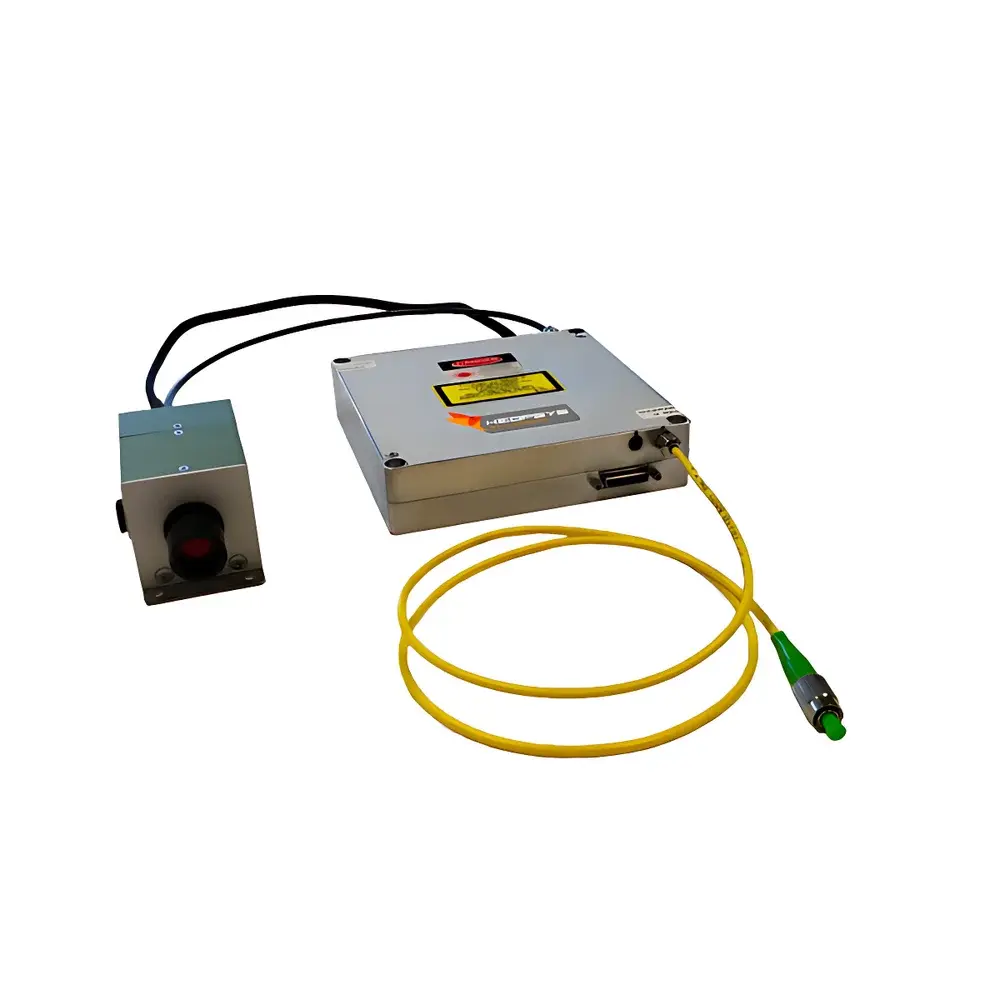
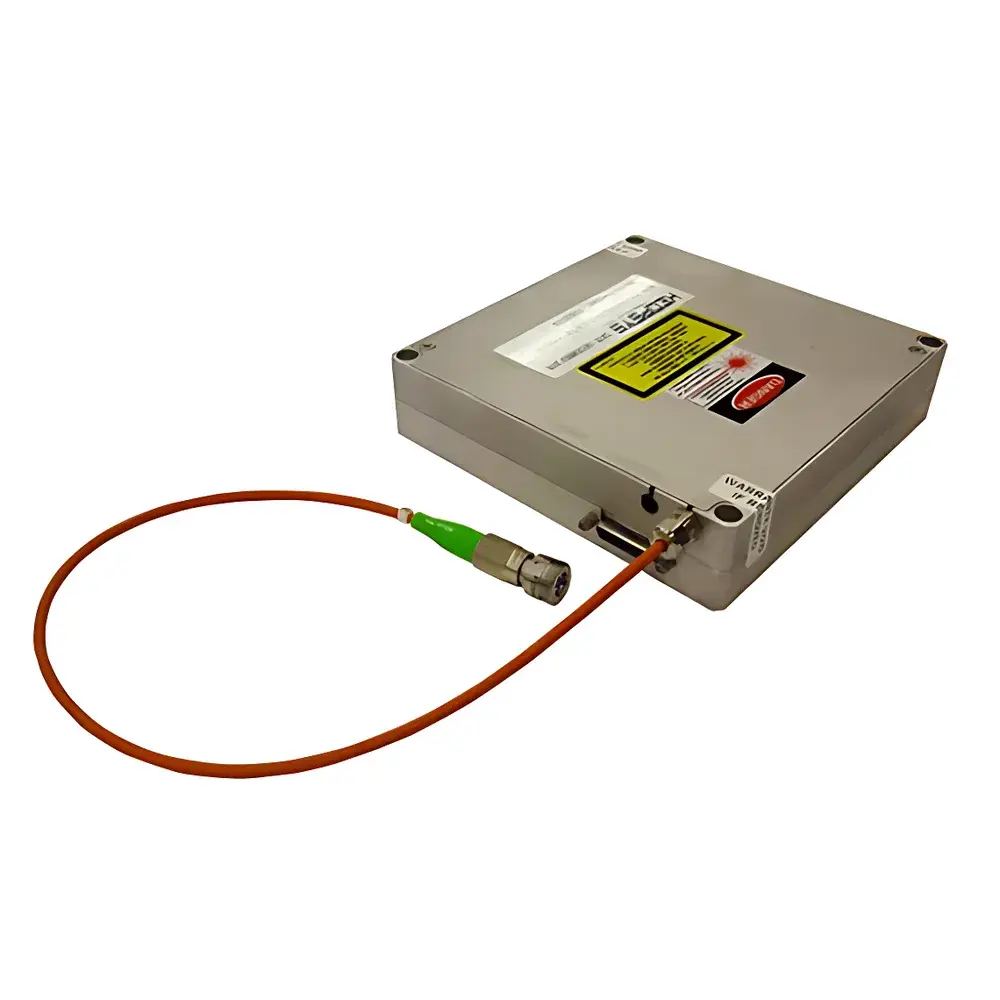
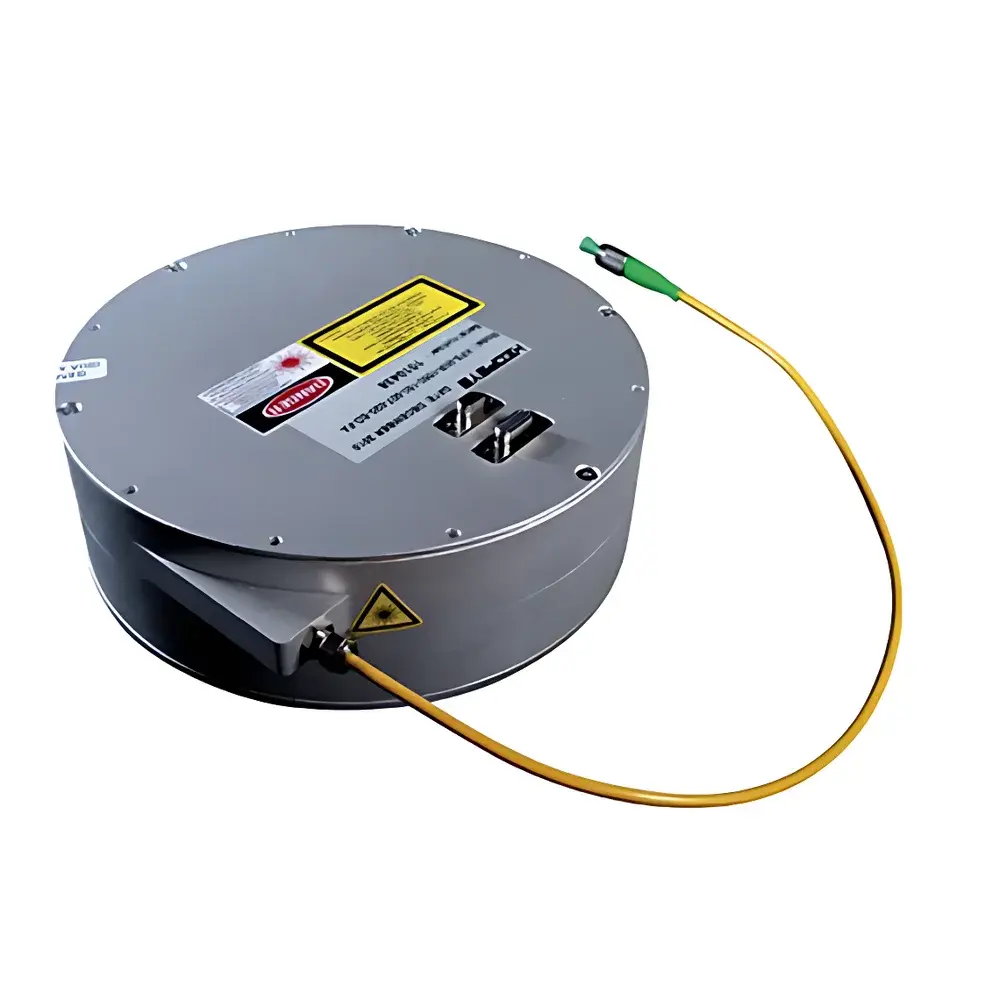
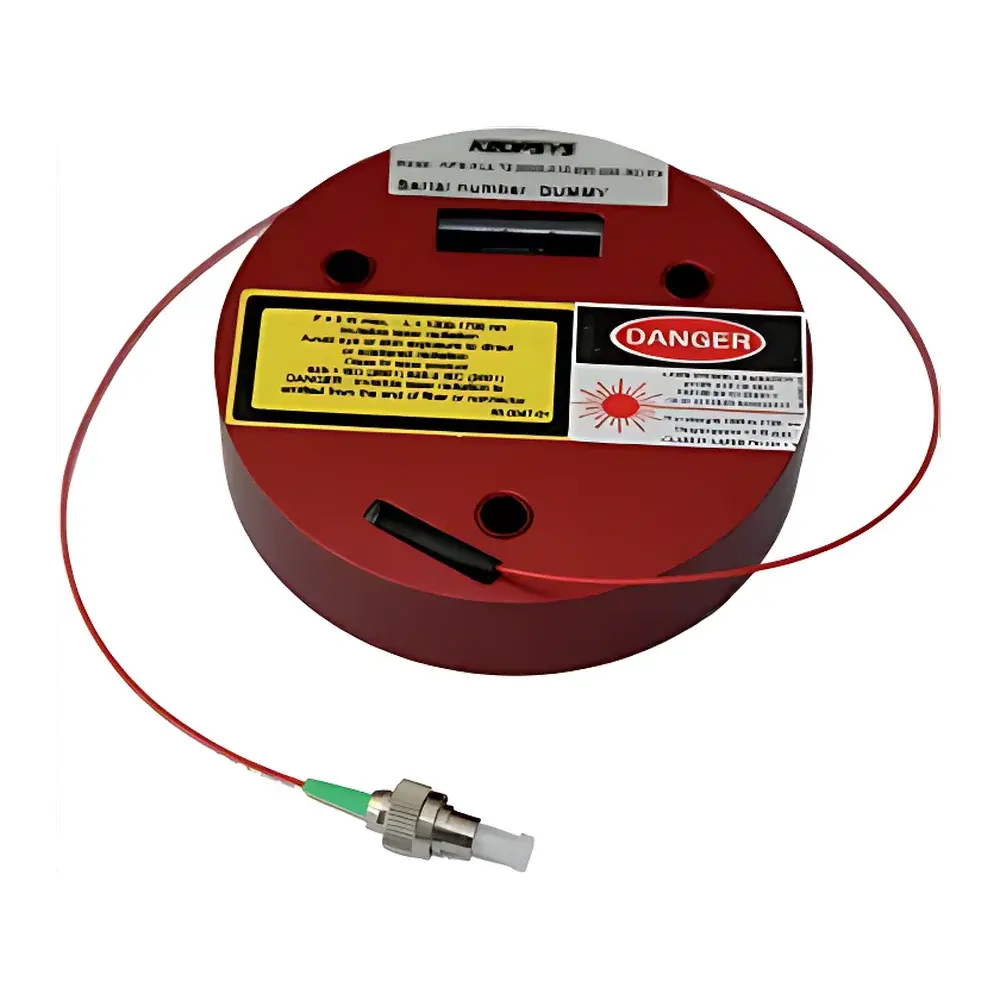
Keopsys PUFL, PGFL, PYFL-KULT, PEFK-KULT, PTFL-KULT, PYFL-MIRVISION & PEFK-MIRVISION Pulsed Narrow-Linewidth Fiber Lasers
| Brand | Keopsys |
|---|---|
| Origin | France |
| Product Series | PUFL, PGFL, PYFL-KULT, PEFK-KULT, PTFL-KULT, PYFL-MIRVISION, PEFK-MIRVISION |
| Wavelength Bands | 1.0 µm, 1.5 µm, 2.0 µm (KULT) |
| Pulse Format | Nanosecond to Sub-microsecond Pulses |
| Linewidth | < 100 MHz (typical, transform-limited) |
| Operation Mode | Q-switched or MOPA-configured |
| Cooling | Air-cooled or Conduction-cooled (model-dependent) |
| Compliance | CE, RoHS, IEC 60825-1:2014 (Class 4 Laser Product) |
Overview
Keopsys pulsed narrow-linewidth fiber lasers represent a family of high-stability, solid-state coherent light sources engineered for precision applications requiring spectrally pure, temporally controlled optical pulses. These systems operate on the principle of stimulated emission in rare-earth-doped (Yb3+, Er3+, Tm3+) single-mode photonic crystal or large-mode-area fibers, with linewidths maintained below 100 MHz—typically near the Fourier-transform limit—through active cavity stabilization and low-noise seed oscillator architectures. Unlike broadband pulsed sources, these lasers deliver high temporal coherence while preserving nanosecond-scale pulse durations (e.g., 1–100 ns FWHM), enabling coherent detection, heterodyne interferometry, and nonlinear frequency conversion with high conversion efficiency. The platform is segmented into three technically distinct subfamilies: (i) frequency-doubled or tripled variants of fundamental fiber oscillators (e.g., green/UV output via SHG/THG); (ii) the KULT series—compact, air-cooled, Q-switched modules emitting at 1.0 µm (Yb), 1.5 µm (Er), and 2.0 µm (Tm), optimized for eye-safety and atmospheric transmission; and (iii) the MIRVISION series—higher-energy MOPA-based systems at 1.0 µm and 1.5 µm, designed for pumping optical parametric amplifiers (OPAs), time-resolved spectroscopy, and laser-induced breakdown spectroscopy (LIBS). All models comply with IEC 60825-1:2014 as Class 4 laser products and integrate interlock-ready safety circuitry for integration into OEM instruments and regulated laboratory environments.
Key Features
- Sub-100 MHz spectral linewidth (FWHM), enabling high-fidelity coherent beam combining and Doppler-sensitive measurements
- Wavelength flexibility across 1.0 µm (Yb-doped), 1.5 µm (Er-doped), and 2.0 µm (Tm-doped) bands—covering key atmospheric windows and material absorption peaks
- Q-switched (KULT) and master oscillator power amplifier (MOPA) (MIRVISION) architectures for tailored pulse energy (up to several mJ), repetition rate (1 kHz–500 kHz), and pulse shape control
- Integrated thermoelectric cooling and low-noise current drivers ensuring long-term wavelength stability (< ±0.5 pm/h) and amplitude noise < 0.3% RMS (10 Hz–1 MHz)
- RS-232, USB, and optional analog/digital TTL interfaces for remote triggering, pulse-on-demand operation, and synchronization with external detectors or delay generators
- Hermetically sealed, fiber-pigtailed output with FC/APC or collimated free-space options—designed for vibration-insensitive deployment in industrial metrology and field-deployable LIDAR systems
Sample Compatibility & Compliance
These lasers are compatible with standard single-mode (SMF-28, PM1550) and polarization-maintaining fiber inputs, supporting seamless integration into interferometric setups, fiber-optic sensing arrays, and nonlinear wavelength conversion stages (e.g., PPLN, MgO:PPLN, GaSe OPOs). All units conform to CE marking requirements under the EU Machinery Directive and Electromagnetic Compatibility (EMC) Directive 2014/30/EU. Optical safety certification per IEC 60825-1:2014 includes full classification documentation, labeling, and built-in key-switch interlocks. For regulated environments—including pharmaceutical analytical labs and defense R&D facilities—the systems support audit-ready operation logs when interfaced with validated software platforms compliant with FDA 21 CFR Part 11 and ISO/IEC 17025 traceability frameworks.
Software & Data Management
Keopsys provides the KeoControl™ GUI (Windows/Linux) for real-time parameter configuration—including pulse repetition rate, peak power, burst mode sequencing, and internal/external trigger selection. The SDK (C/C++, Python, LabVIEW) enables integration into custom automation workflows and supports synchronized data acquisition with oscilloscopes, spectrum analyzers, or time-correlated single-photon counting (TCSPC) modules. All operational parameters—including diode temperature, pump current, output power, and interlock status—are logged with UTC timestamps and exportable in CSV or HDF5 format. Firmware updates preserve calibration coefficients and retain user-defined profiles, ensuring reproducibility across instrument lifecycles in GLP/GMP-compliant laboratories.
Applications
- Laser-induced breakdown spectroscopy (LIBS) for elemental analysis in mining, metallurgy, and nuclear forensics
- Differential absorption LIDAR (DIAL) and coherent Doppler LIDAR for atmospheric gas profiling (H2O, CO2, CH4)
- Optical coherence tomography (OCT) source seeding and swept-source OCT calibration
- Pump-probe transient absorption spectroscopy with sub-picosecond time resolution
- Fiber Bragg grating (FBG) inscription and phase-mask-based photonic device fabrication
- Coherent beam combining for high-brightness directed energy and free-space optical communications
FAQ
What distinguishes the KULT series from the MIRVISION series?
The KULT series employs monolithic, passively Q-switched cavities for compactness and robustness, delivering moderate pulse energies (µJ–hundreds of µJ) at high repetition rates. The MIRVISION series utilizes a seeded MOPA architecture, enabling higher pulse energies (up to several mJ), superior pulse-to-pulse stability, and flexible pulse shaping—ideal for nonlinear optics and LIBS.
Are these lasers suitable for integration into FDA-regulated analytical instruments?
Yes—when deployed with validated control software and audit-trail-enabled logging, they meet functional requirements for use in USP , , and ASTM E2919-compliant particle characterization and laser scattering systems.
Can the linewidth be further narrowed using external cavities or filters?
While the intrinsic linewidth is already transform-limited, external locking to ultra-stable Fabry–Pérot cavities or Pound–Drever–Hall stabilization can reduce residual frequency jitter—commonly implemented in gravitational wave detector prototype setups and atomic physics experiments.
Do you provide calibration certificates traceable to NIST or COFRAC standards?
Yes—factory calibration reports include wavelength accuracy (±0.1 nm), pulse width (±5%), and average power (±2%) with uncertainty budgets traceable to COFRAC-accredited metrology labs in France.
Is OEM mechanical and electrical integration support available?
Keopsys offers full mechanical drawings (STEP/IGES), pinout schematics, thermal derating curves, and EMC test reports under NDA to facilitate turnkey integration into analytical platforms, medical devices, and aerospace payloads.





