
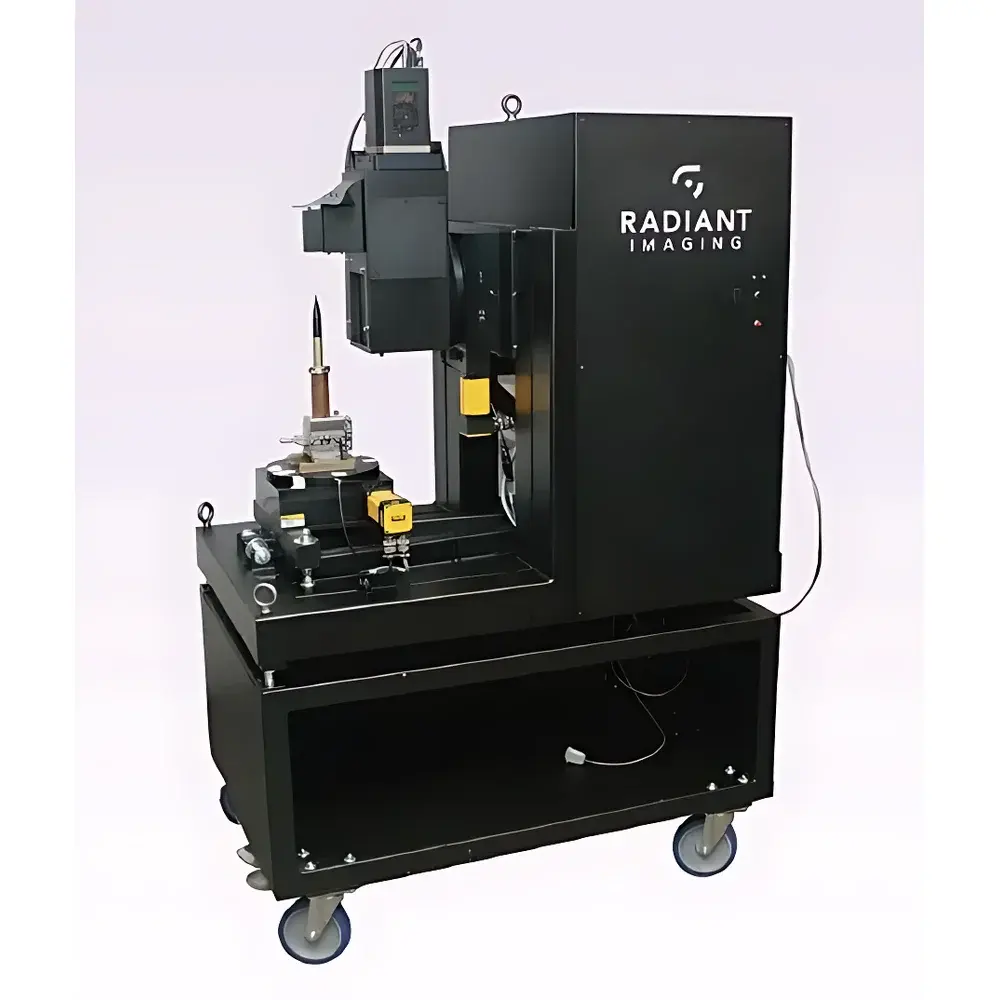
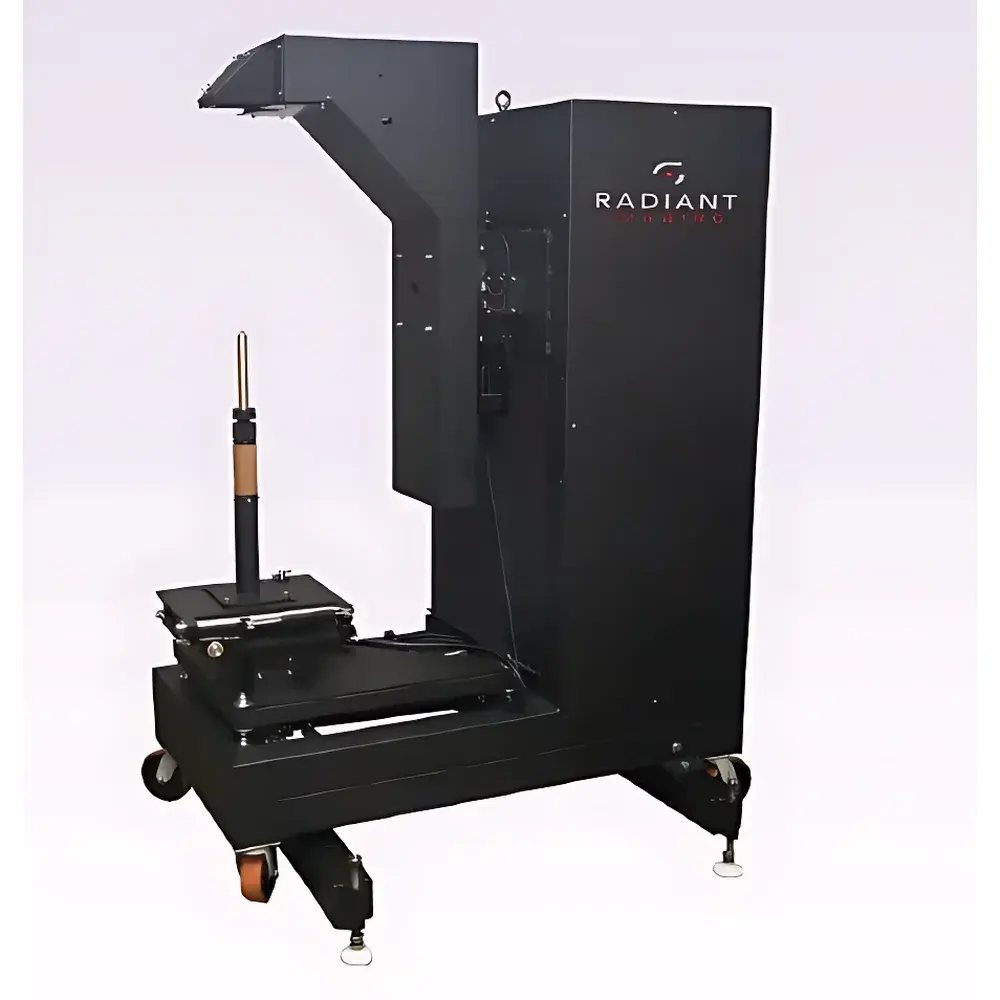
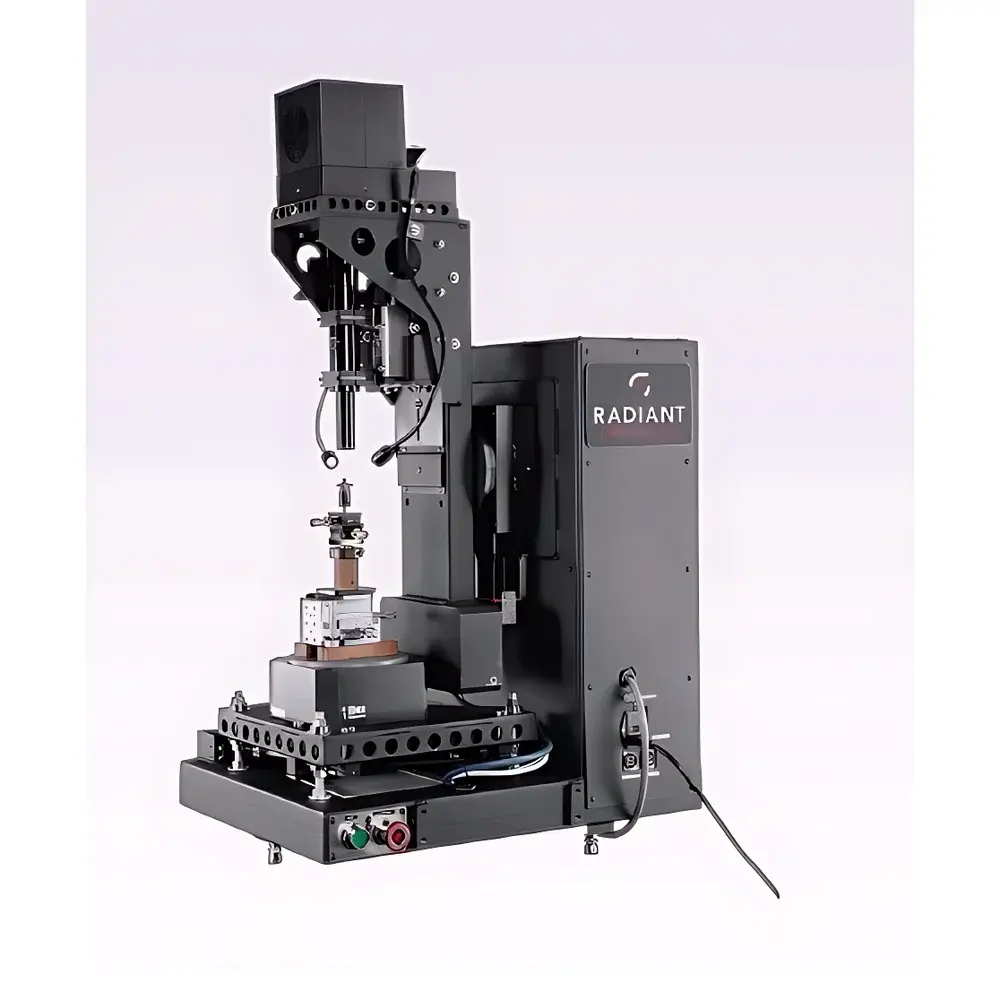
Radiant Zemax SIG300 Near-Field Radiometric and Colorimetric Measurement System for Small Light Sources
| Brand | Radiant Zemax |
|---|---|
| Origin | USA |
| Model | SIG300 / SIG310 / SIG400 |
| Application Scope | Near-field luminance, chromaticity, and angular intensity distribution measurement of LEDs, lamp modules, and compact light sources |
| Compliance Framework | Supports ASTM E308, CIE 127, IES LM-79, ISO/CIE 11664 (colorimetry), and FDA/ISO 13485-aligned quality documentation workflows |
| Software Integration | Fully compatible with ProSource® v10+ for RSM generation, ray set export (IES, EULUMDAT, ASAP, LightTools, TracePro), GLP/GMP audit trail logging, and 21 CFR Part 11–compliant user access control |
Overview
The Radiant Zemax SIG300 Near-Field Radiometric and Colorimetric Measurement System is an industrial-grade imaging goniophotometer engineered for high-fidelity spatial characterization of small-area light sources. It operates on the principle of multi-angle, image-based photometry and colorimetry—capturing calibrated luminance (cd/m²) and CIE 1931 xy or CIELAB chromaticity data across a full hemisphere (±90° in elevation, 360° in azimuth) around the source under test. Unlike traditional point-sensor goniometers, the SIG300 employs a scientific-grade cooled CCD/CMOS imaging radiometer coupled with precision motorized rotation stages to acquire registered image stacks at discrete angular positions. These images are processed into the Radiant Source Model (RSM)—a vendor-neutral, metadata-rich binary format that encodes per-pixel radiometric and colorimetric values along with geometric origin, orientation, and optical path calibration parameters. The RSM serves as the foundational input for optical simulation, enabling physically accurate ray tracing in industry-standard design environments.
Key Features
- Modular goniometric architecture supporting both vertical and horizontal source mounting configurations with repeatable mechanical registration (≤ ±15 µm centering accuracy for die-level LED measurements)
- Dual-mode optical train: interchangeable lens assemblies for micro-field (≤ 5 mm FOV), standard-field (≤ 50 mm FOV), and macro-field (≤ 200 mm FOV) imaging—optimized for chip-scale emitters, SMD packages, and miniature modules
- Integrated thermally stabilized LED and arc-lamp reference sources for real-time photometric calibration traceable to NIST standards
- High-dynamic-range (HDR) imaging with auto-exposure sequencing and pixel-level non-uniformity correction (NUC)
- Full-spectrum colorimetric capability: spectral response matched to CIE 1931 V(λ) and x(λ), y(λ), z(λ) functions; supports CIE 1976 u’v’ and CIELAB ΔE₀₀ reporting
- Rugged aluminum-alloy frame with vibration-damped optical table integration and EMI-shielded electronics enclosure for production lab stability
Sample Compatibility & Compliance
The SIG300 accommodates light-emitting devices ranging from bare LED dies (≥ 100 µm × 100 µm) to mid-power surface-mount packages (e.g., 3535, 5050 formats) and compact COB arrays up to 25 mm diagonal. Its mechanical stage tolerances and software-driven autofocus ensure consistent focus plane alignment across angular positions—critical for maintaining MTF integrity in near-field modeling. All measurement protocols align with ASTM E308-23 (computing chromaticity from spectral data), CIE 127:2007 (conditions for LED intensity measurement), and IES LM-79-19 (electrical and photometric testing of solid-state lighting). Data provenance—including instrument ID, calibration certificate expiry, operator log, environmental temperature/humidity stamps, and raw image hashes—is embedded in every exported RSM file to satisfy GLP and GMP documentation requirements.
Software & Data Management
Control and analysis are executed via Radiant’s ProSource® software suite (v10.4+), which provides a validated, 21 CFR Part 11–compliant environment featuring role-based user authentication, electronic signatures, and immutable audit trails. ProSource® automates RSM generation, applies geometric distortion correction using factory-measured lens maps, and exports ray sets in multiple interoperable formats: IESNA LM-63 (.ies), EULUMDAT (.ldt), ASAP (.asap), LightTools (.ltf), and TracePro (.tp3). Batch processing supports statistical analysis across sample populations (e.g., binning by luminous flux, CCT shift, or spatial uniformity), while API hooks enable integration with enterprise LIMS and PLM systems. All raw images and processed RSMs are stored in a vendor-agnostic HDF5 container format with embedded EXIF-style metadata.
Applications
- Optical design validation: Generating physically accurate near-field models for illumination system optimization in automotive headlamps, display backlight units, and medical device indicators
- LED package qualification: Quantifying spatial chromaticity variation (Δu’v’), hot-spot formation, and beam asymmetry prior to module integration
- Process control in packaging lines: Monitoring luminance uniformity and CCT drift across wafer-level testing and post-reflow inspection
- Standards compliance reporting: Producing LM-79–compliant photometric reports with uncertainty budgets per ILAC-G8:2009
- Failure analysis: Correlating local luminance dropouts or color shifts with thermal imaging or electrical stress test results
- Virtual prototyping: Feeding RSM-derived ray sets into Monte Carlo simulations to predict far-field intensity distributions and glare metrics (UGR, TI)
FAQ
What distinguishes the SIG300 from conventional goniophotometers?
It replaces sequential point-sensing with synchronized imaging goniometry—capturing full-field luminance and chromaticity data at each angular position, thereby preserving spatial correlation essential for accurate near-field modeling.
Can the SIG300 measure UV or IR-emitting sources?
Standard configuration covers 380–780 nm visible spectrum; optional extended-range sensor modules (350–1000 nm) are available with recalibrated color matching functions and NIST-traceable spectral responsivity data.
How is measurement uncertainty quantified for RSM outputs?
ProSource® computes combined standard uncertainty per pixel using Type A (statistical repeatability) and Type B (calibration certificate, lens distortion, alignment error) components per GUM (JCGM 100:2019), reported alongside all exported datasets.
Is remote operation supported for cleanroom or hazardous environments?
Yes—Ethernet-connected operation with isolated I/O triggers, programmable via TCP/IP socket interface or Python SDK; optional fiber-optic shutter and purge-compatible enclosure kits available.
Does Radiant provide RSM validation services against reference standards?
Certified RSM verification is offered through Radiant’s ISO/IEC 17025-accredited metrology lab, including comparison against NIST SRM 2241 and inter-laboratory round-robin benchmarking per CIE TC 2-72 guidelines.



