
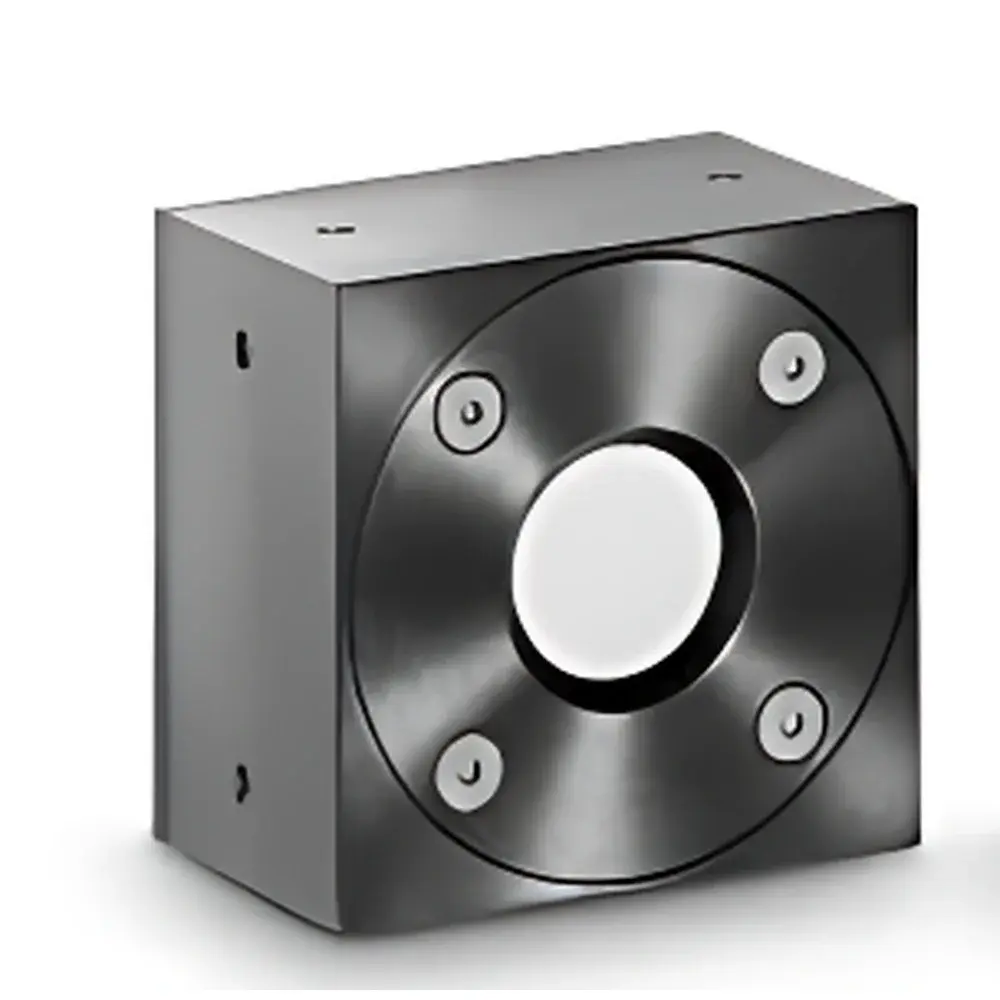
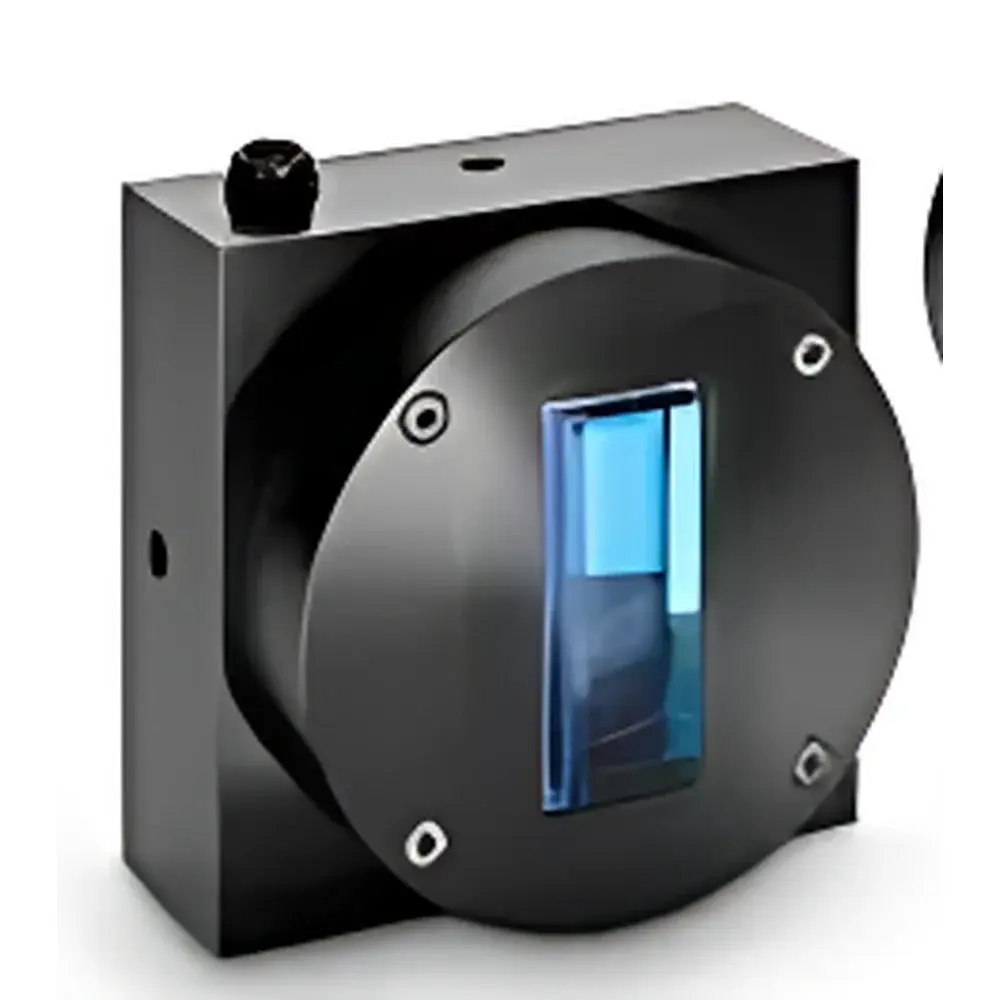
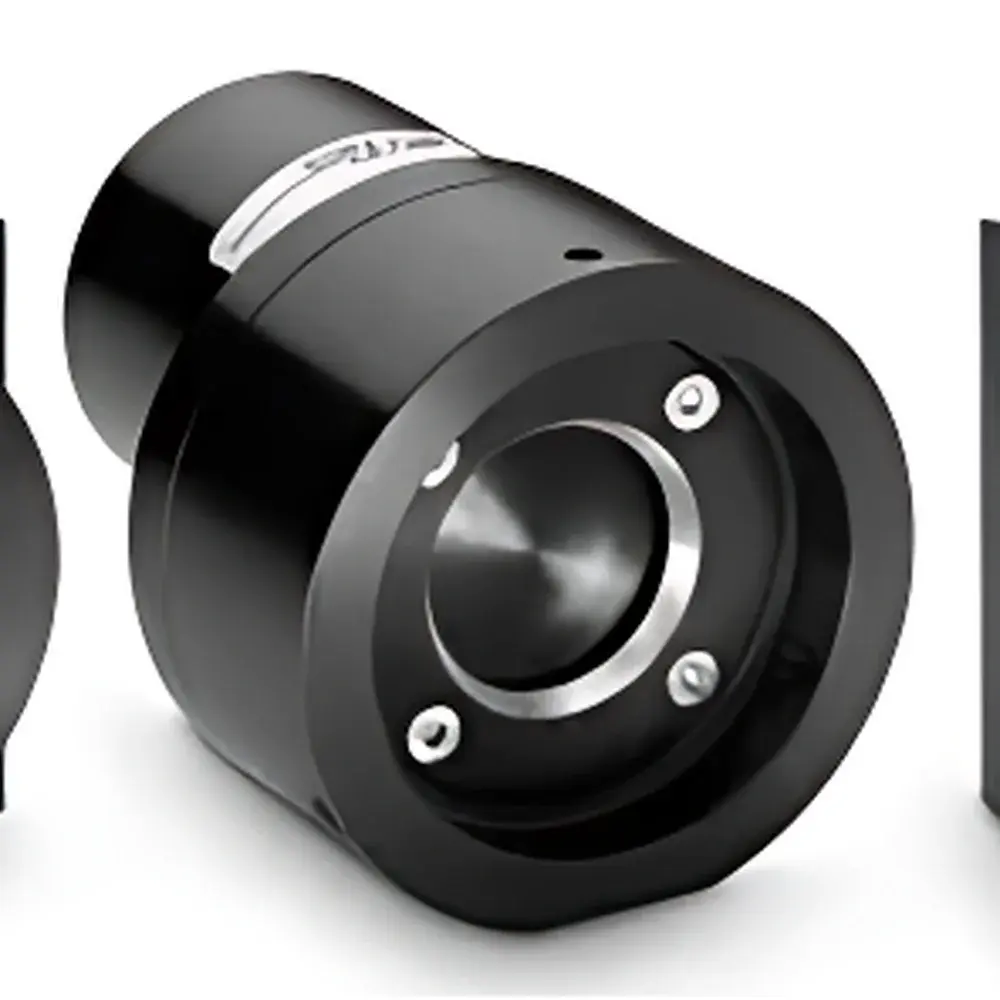
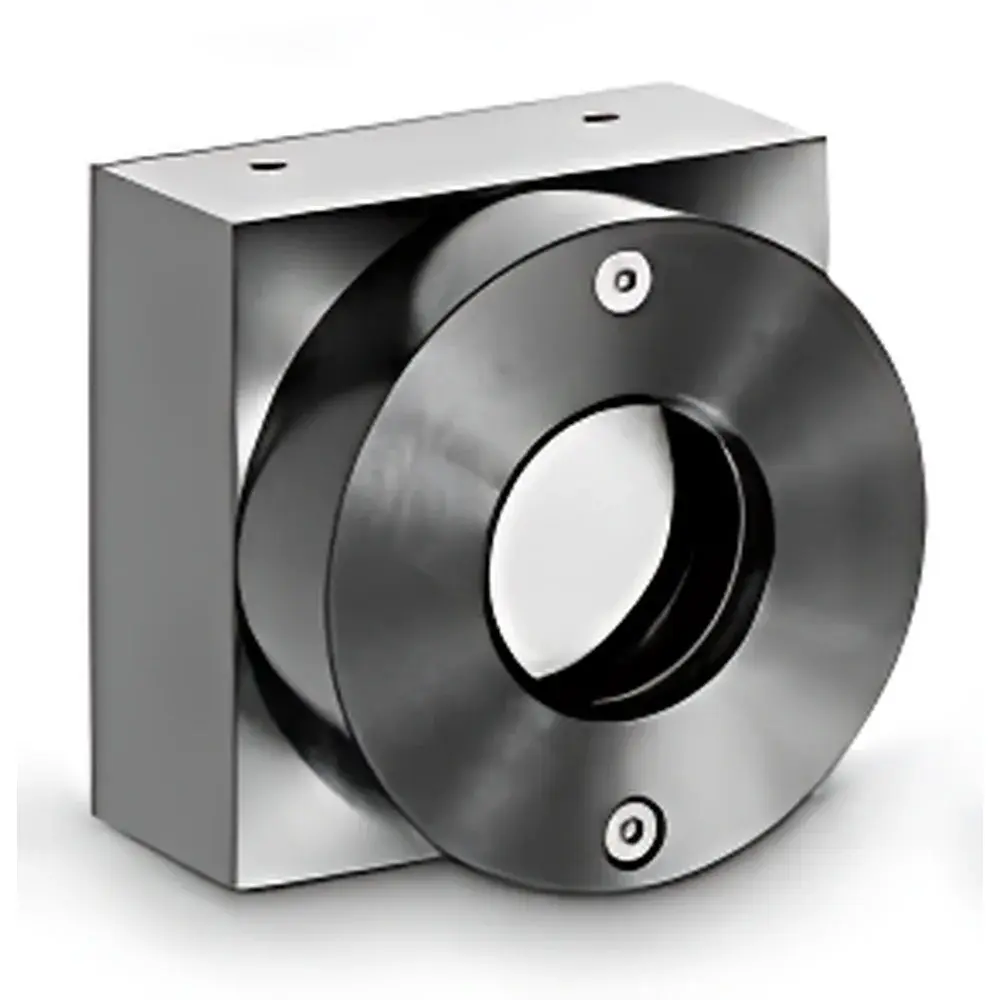
Ophir 20C-SH OEM Laser Power and Energy Sensor Head
| Brand | Ophir |
|---|---|
| Origin | Israel |
| Model | 20C-SH |
| Sensor Type | Thermopile-based OEM Power/Energy Probe |
| Wavelength Range | 0.19–20 µm |
| Energy Range | 2 µJ–10 J |
| Output Options | Analog Voltage or Digital (RS232/USB, configurable) |
| Packaging Form | Bare PCB or Fully Encapsulated Module |
| Compliance | RoHS, CE, ISO 9001 Manufacturing Environment |
| Customization Support | Mechanical Interface, Signal Conditioning, Calibration Traceability to NIST |
Overview
The Ophir 20C-SH is a thermopile-based OEM laser power and energy sensor head engineered for integration into original equipment manufacturer (OEM) systems requiring high-fidelity, traceable optical radiation measurement. Designed and manufactured in Israel under strict ISO 9001-certified processes, the 20C-SH operates on the principle of thermal detection—converting incident laser irradiance into a proportional temperature gradient across a thermopile junction, which generates a millivolt-level output signal linearly correlated with absorbed power or pulse energy. Its broadband spectral response (0.19–20 µm) enables accurate measurement across UV, visible, NIR, SWIR, MWIR, and LWIR laser sources—including excimer, diode, fiber, CO₂, and ultrafast pulsed lasers—without wavelength-dependent recalibration. Unlike photodiode-based sensors, the 20C-SH exhibits minimal dependence on beam size, spatial profile, or angle of incidence, making it suitable for industrial laser processing monitoring, medical laser system feedback control, and scientific instrumentation where long-term stability and calibration integrity are critical.
Key Features
- Thermopile sensing architecture with inherent flat spectral responsivity from deep UV (190 nm) to far-infrared (20 µm)
- Energy measurement range spanning 2 µJ to 10 J per pulse; continuous power measurement capability up to 20 W (with optional heat sinking)
- OEM-optimized form factor: available as bare PCB assembly or fully potted, mechanically stabilized module with customizable mounting flanges, threaded inserts, or flex-circuit interfaces
- Configurable analog output (0–5 V or 0–10 V, ratiometric or absolute scaling) and digital communication options (RS232 or USB, firmware-upgradable)
- Integrated signal conditioning options: selectable gain stages, low-pass filtering (10 Hz–1 kHz cutoff), and zero-drift compensation circuitry
- NIST-traceable calibration certificates provided per unit; optional multi-point wavelength validation and pulse-width correction factors for ultrafast applications
Sample Compatibility & Compliance
The 20C-SH accommodates free-space laser beams with diameters ranging from 1 mm to 15 mm (dependent on absorber coating configuration) and supports both CW and pulsed operation (repetition rates up to 10 kHz). It is compatible with Gaussian, top-hat, and multimode beam profiles without requiring real-time beam profiling. Absorber coatings—including broadband black (BB), high-damage-threshold (HDT), and water-cooled variants—are selected based on application-specific peak power density and average power requirements. The probe meets RoHS Directive 2011/65/EU and carries CE marking for electromagnetic compatibility (EN 61326-1) and safety (EN 61010-1). While not a standalone medical device, its design supports integration into Class 4 laser systems compliant with IEC 60825-1:2014 and FDA 21 CFR Part 1040.10. Calibration data is archived with full audit trail per ISO/IEC 17025:2017 requirements.
Software & Data Management
The 20C-SH operates independently of proprietary host software but is fully compatible with Ophir’s StarLab™ SDK and LabVIEW™, MATLAB®, and Python-based instrument control frameworks via standard SCPI command sets. OEM integrators receive comprehensive API documentation, register-level hardware interface specifications, and reference firmware examples for microcontroller-based readout systems. All calibration coefficients—including linearity corrections, temperature compensation tables, and wavelength-specific responsivity offsets—are embedded in non-volatile memory and accessible via serial query. For regulated environments, the sensor supports time-stamped data logging with optional GLP/GMP-compliant metadata tagging (operator ID, environmental conditions, calibration expiry) when paired with validated acquisition software.
Applications
- Laser-based additive manufacturing systems requiring closed-loop power stabilization during metal sintering or polymer curing
- Medical laser platforms (e.g., dermatology, ophthalmology, surgical ablation) where regulatory-grade energy verification is mandated pre-treatment
- Automated optical inspection stations performing in-line laser source qualification in semiconductor lithography tooling
- Research-grade ultrafast laser labs measuring pulse energy stability over extended acquisition windows (>10⁶ shots)
- Defense-related directed-energy systems requiring ruggedized, embeddable sensors with MIL-STD-810G environmental tolerance (optional conformal coating and shock-mount variants)
FAQ
Is the 20C-SH calibrated for both power and energy modes?
Yes—each unit undergoes dual-mode calibration at certified wavelengths (e.g., 1064 nm, 10.6 µm, 532 nm) with documented uncertainty budgets per ISO/IEC 17025.
Can the sensor be used with femtosecond laser pulses?
It measures total pulse energy accurately; however, pulse width correction factors must be applied for pulses <10 ns due to thermal rise-time limitations—application notes and correction algorithms are supplied.
What mechanical interfaces are supported for system integration?
Standard options include M4/M6 threaded holes, Ø12.7 mm kinematic mounts, and custom machined aluminum housings with SMA905 or FC/PC fiber port integration.
Does Ophir provide firmware update tools for field reconfiguration?
Yes—OEM customers receive secure, version-controlled firmware binaries and bootloader utilities enabling output scaling, filter parameter adjustment, and communication protocol switching without hardware modification.
How often is recalibration recommended?
Annual recalibration is advised for GxP environments; biennial intervals are acceptable for stable industrial installations with documented performance trending.



