
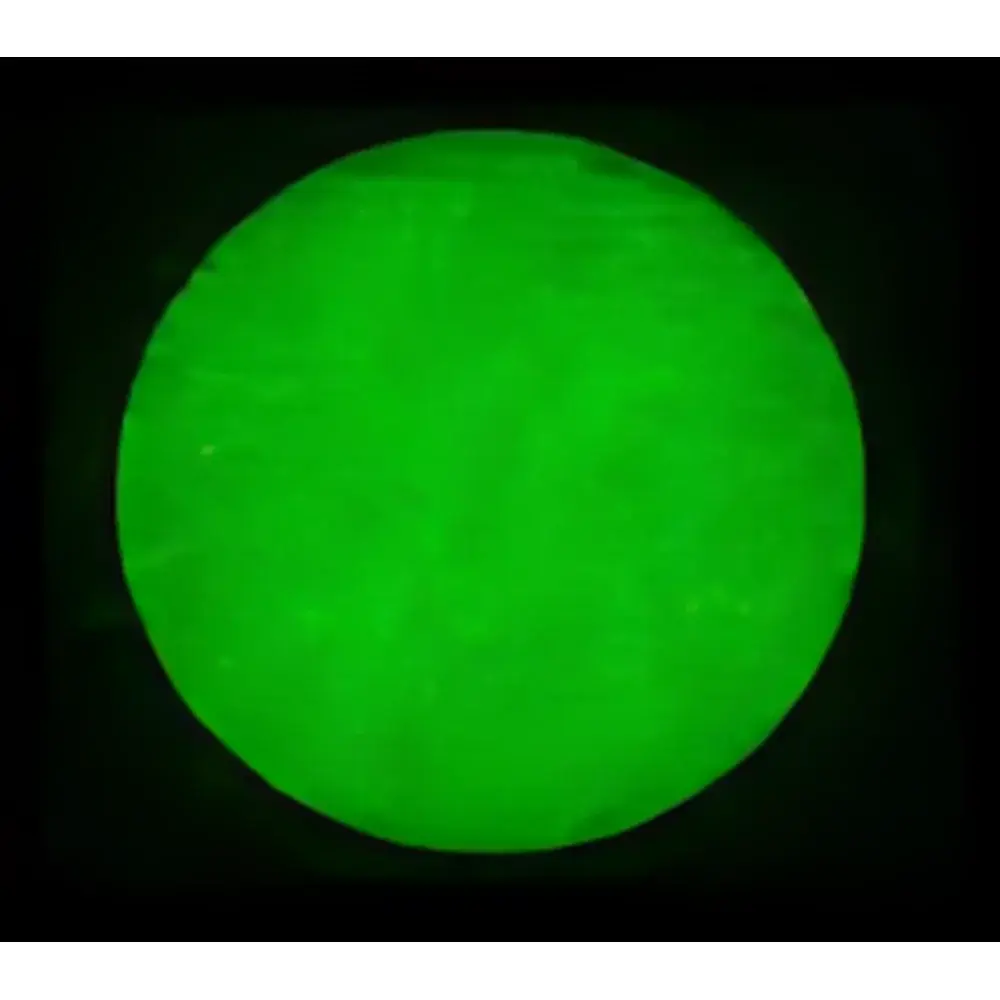
Holo/Or Flat-Top Beam Shaper
| Origin | USA |
|---|---|
| Manufacturer Type | Authorized Distributor |
| Origin Category | Imported |
| Model | Holo/Or |
| Price Range | USD 7,000 – 14,000 (FOB) |
| Core Application Domain | Solid-State Laser Systems & Precision Laser Processing |
Overview
The Holo/Or Flat-Top Beam Shaper is a high-precision diffractive optical element (DOE) engineered to transform an incident Gaussian laser beam into a spatially uniform intensity profile—commonly referred to as a “flat-top” or “top-hat” distribution. Based on rigorous scalar diffraction theory and iterative phase-retrieval design algorithms, this beam shaper operates via controlled wavefront modulation rather than simple apodization or refractive shaping. Its performance is fundamentally governed by the wavelength-dependent phase function encoded in fused silica or ZnSe substrates, enabling deterministic energy redistribution across the target plane. Designed for integration into continuous-wave (CW) and pulsed solid-state laser systems—including Nd:YAG, fiber, and diode-pumped lasers—the device delivers sharp-edged, near-diffraction-limited flat-top profiles with minimal side lobes and high energy efficiency (>90% typical transmission for AR-coated variants). It serves as a critical enabler in applications demanding spatially consistent irradiance, where Gaussian intensity gradients would otherwise induce non-uniform thermal loading, ablation thresholds, or photobiomodulation responses.
Key Features
- Diffractive beam shaping architecture optimized for high fidelity and low M² degradation
- AR-coated fused silica or ZnSe substrates supporting wavelengths from 266 nm to 1060 nm
- Configurable output profiles: circular, square, rectangular, or custom-shaped top-hat distributions
- Edge steepness < 5% intensity transition width (10–90%) at specified working distance
- Uniformity tolerance: ±0.5% over central 75% of beam area (tight-spec variant); ±20% over full 75–98% uniformity range (broad-spec variant)
- Input beam diameter compatibility: 0.8 mm to 25 mm (1/e²)
- Working distance range: 25 mm to infinity—enabling both collimated and focused system integration
- No moving parts; passive, alignment-insensitive operation under stable thermal conditions
Sample Compatibility & Compliance
The Holo/Or Flat-Top Beam Shaper is compatible with TEM₀₀ and low-order multimode solid-state laser sources operating in UV, visible, and NIR spectral bands. It has been validated for use with Class 4 laser systems per IEC 60825-1:2014 and meets RoHS 3 and REACH compliance standards for material content. While the DOE itself does not carry CE or FDA clearance, its integration into end-user laser processing platforms must comply with applicable regional directives—including ISO 13857 (safety of machinery), ANSI Z136.1 (safe use of lasers), and, where applicable, FDA 21 CFR Part 1040.10/1040.11 for medical laser devices. Documentation packages include ISO 10110-7 surface quality certification, wavefront error reports (<λ/10 RMS), and LIDT test data (measured at 10 ns pulse duration, 10 Hz, 1064 nm).
Software & Data Management
As a passive optical component, the beam shaper requires no embedded firmware or driver software. However, Holo/Or provides proprietary design tools—including the Beam Shaper Designer Suite (BSDS)—for modeling propagation, predicting far-field uniformity, and optimizing placement within multi-element optical trains. Users may import measured input beam profiles (M², beam radius, divergence) to simulate output performance prior to physical integration. All delivered units are accompanied by calibrated characterization reports containing interferometric phase maps, intensity cross-sections, and MTF curves. Traceable metrology data adheres to ISO/IEC 17025-accredited laboratory protocols, supporting GLP-compliant documentation workflows in regulated R&D and manufacturing environments.
Applications
- Laser micromachining: uniform ablation depth control in PCB drilling, thin-film scribing, and semiconductor dicing
- Medical laser systems: consistent tissue interaction in dermatology (e.g., fractional resurfacing), ophthalmology (transscleral cyclophotocoagulation), and dental hard-tissue ablation
- Display & projection: homogenized illumination for laser phosphor displays and AR/VR micro-projectors
- Optical trapping & manipulation: creation of uniform optical potential wells for colloidal particle arrays
- Industrial welding & cladding: reduction of keyhole instability and spatter through spatially stabilized power density
- Scientific instrumentation: pump beam conditioning for ultrafast amplifier stages and nonlinear frequency conversion crystals
FAQ
What is the minimum input beam diameter supported?
The standard design supports input beam diameters from 0.8 mm to 25 mm (1/e²), with custom variants available for smaller or larger apertures upon optical layout review.
Can this beam shaper be used with ultrashort pulses (e.g., femtosecond lasers)?
Yes—when fabricated on fused silica with appropriate group delay dispersion (GDD) compensation, it maintains flat-top integrity for pulses ≥100 fs; consult technical support for GDD-matched substrate selection.
Is there a difference between “uniformity” and “flatness” specifications?
Yes: Uniformity refers to RMS deviation across the central region; flatness describes peak-to-valley variation within the defined top-hat zone—both are reported in calibration certificates.
How sensitive is performance to input beam alignment and pointing stability?
Misalignment >±0.5 mrad induces measurable edge softening and reduced central uniformity; kinematic mounts with sub-mrad adjustability are recommended for production-grade repeatability.
Do you provide mounting solutions or integration optics?
Standard SM1- or C-mount adapters are available; custom optomechanical housings—including air-spaced collimation modules and relay lens sets—can be co-designed under NDA.




