
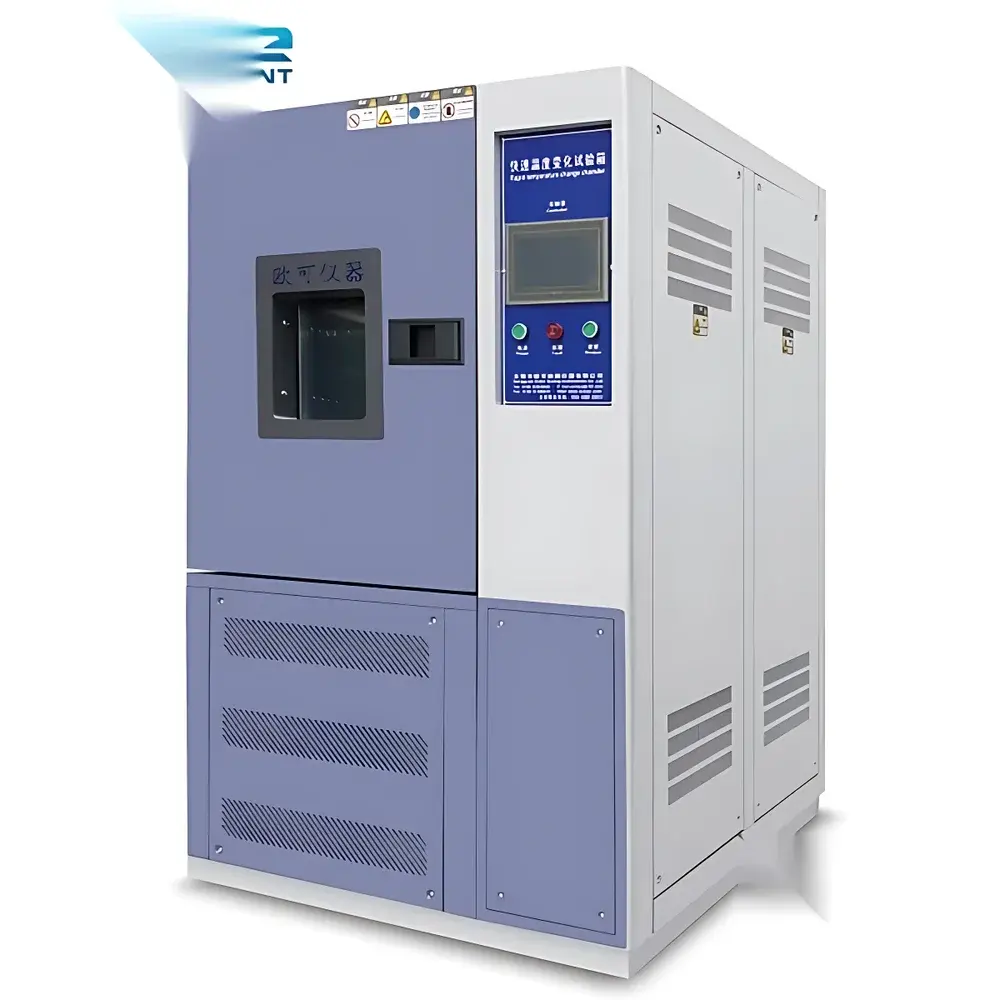
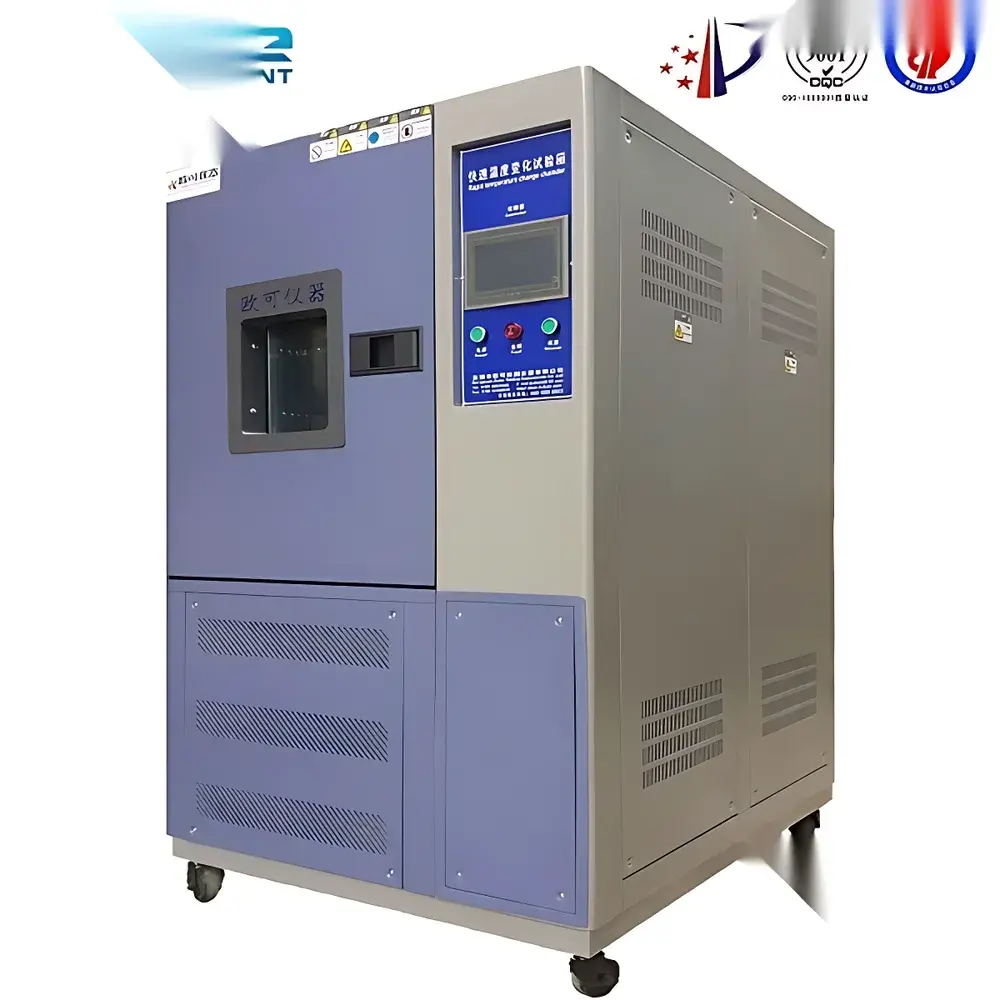
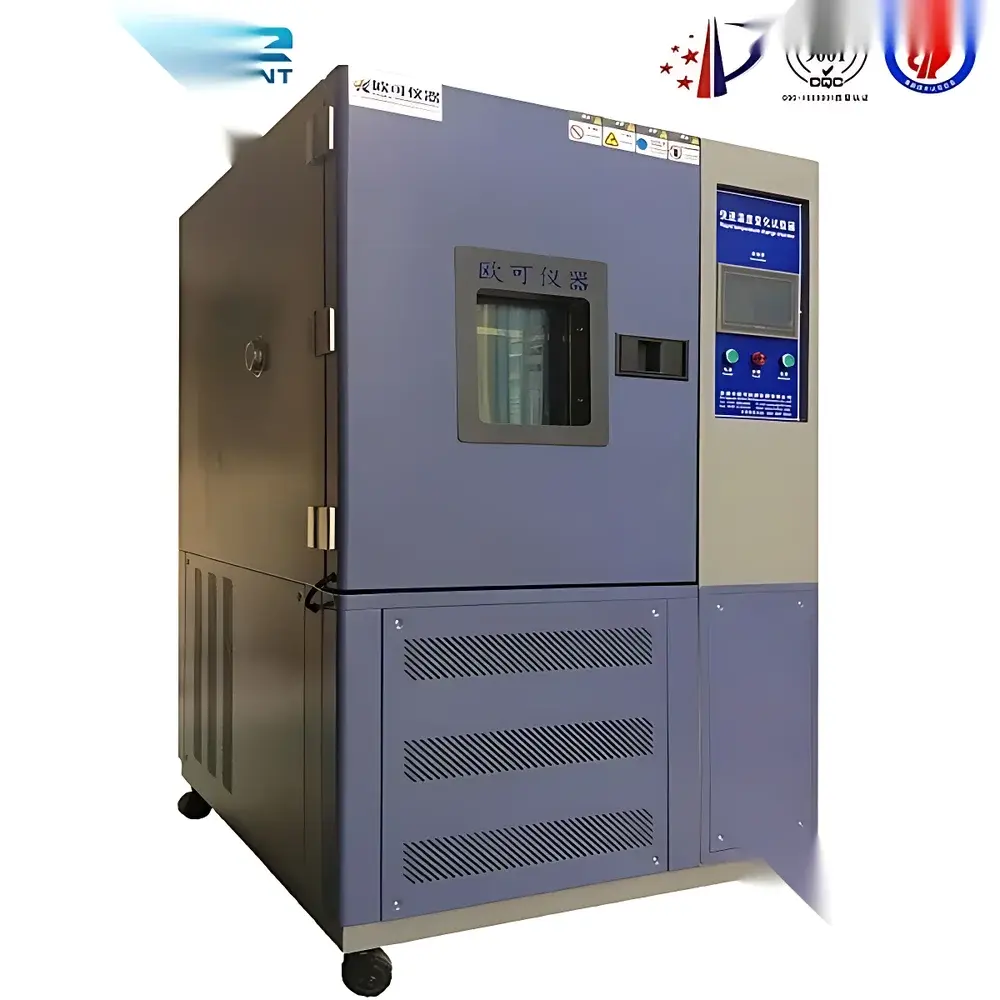
Other Brands KS-TH Series Rapid Temperature Change Test Chamber for Electronic Components
| Brand | Other Brands |
|---|---|
| Origin | Imported |
| Manufacturer Type | Authorized Distributor |
| Internal Dimensions (W×H×D, mm) | 500×600×500 to 1000×1000×1000 |
| External Dimensions (W×H×D, mm) | 1750×2250×2350 to 2350×2800×3000 |
| Temperature Range | −70 °C to +150 °C |
| Humidity Range (optional) | 20–98 %RH |
| Rapid Temperature Transition Range | −45 °C to +85 °C |
| Transition Rate Options | 5–30 °C/min (linear or non-linear, selectable) |
| Temperature Uniformity | ±2.0 °C |
| Humidity Uniformity | ±3.0 %RH |
| Temperature Control Accuracy | ±0.5 °C |
| Humidity Control Accuracy | ±2.5 %RH |
| Temperature Resolution | 0.1 °C |
| Humidity Resolution | 0.1 %RH |
| Refrigeration System | Twin-stage or single-stage cascade refrigeration with hermetic compressors (e.g., Tecumseh or Bitzer) |
| Cooling Method | Water-cooled |
| Inner Chamber Material | SUS304 stainless steel |
| Outer Chamber Material | Cold-rolled steel with powder coating or stainless steel |
| Insulation | High-density polyurethane foam (CFC-free) |
| Power Supply | AC 380 V, 3-phase 5-wire, 50/60 Hz |
| Weight | 950–2300 kg |
| Safety Protections | High/low pressure switches, overtemperature/overhumidity cutoffs, compressor overload protection, fuse, fault alarm system, water shortage warning |
Overview
The Other Brands KS-TH Series Rapid Temperature Change Test Chamber is an engineered environmental stress screening (ESS) system designed specifically for reliability validation of electronic components, PCB assemblies, and microelectromechanical systems (MEMS) under accelerated thermal cycling conditions. It operates on the principle of controlled, high-rate thermal ramping between defined low- and high-temperature setpoints—enabling simulation of real-world operational transients encountered in aerospace avionics, automotive ECUs, 5G infrastructure modules, and industrial control electronics. Unlike standard temperature-humidity chambers, this system prioritizes dynamic thermal performance: its dual-stage refrigeration architecture, optimized air circulation dynamics, and precision PID-controlled heating/cooling subsystems deliver repeatable linear or non-linear ramp profiles across a wide operational envelope (−45 °C to +85 °C) at rates up to 30 °C/min. The chamber complies with key international test standards including IEC 60068-2-14 (Test N: Change of temperature), MIL-STD-810H Method 503.6, and GB/T 2423.1–2001 (cold), GB/T 2423.2–2001 (dry heat), and GB/T 2423.4–2001 (damp heat, cyclic). Its structural integrity, thermal stability, and metrological traceability make it suitable for use in GLP-compliant laboratories and production-line qualification testing.
Key Features
- Modular rapid transition capability: Six standardized rate options (5, 10, 15, 20, 25, and 30 °C/min) configurable via controller firmware—each validated under no-load conditions per IEC 60068-3-11.
- Dual independent thermal management: Separated heating and cooling circuits minimize cross-interference, reduce thermal inertia, and extend compressor service life while maintaining ±0.5 °C control accuracy.
- Uniform airflow distribution: Multi-blade centrifugal circulation fan with adjustable vane guidance ensures ≤±2.0 °C temperature uniformity across the entire working volume—even during transient ramp phases.
- Robust chamber construction: Seamless SUS304 stainless steel inner chamber resists oxidation and outgassing; outer enclosure uses either powder-coated cold-rolled steel or optional stainless cladding for cleanroom compatibility.
- Intelligent safety architecture: Integrated fault detection includes refrigerant high/low pressure monitoring, heater overtemperature cut-off, humidity sensor drift compensation, and real-time water supply status feedback for water-cooled condensers.
- Controller flexibility: Two configuration tiers—basic [R] model with fixed-setpoint operation, and advanced [B] model featuring SP-790 LCD touchscreen controller supporting up to 300 programmable segments across 30 profiles, with 999-cycle looping and timestamped event logging.
Sample Compatibility & Compliance
The KS-TH chamber accommodates test specimens ranging from surface-mount device (SMD) packages (0201 to BGA-1536) to full-size automotive ECUs and server backplanes. Standard internal volumes (150 L to 1000 L) support industry-standard test fixtures, thermal interface material (TIM) evaluation jigs, and multi-unit DUT racks with integrated power and signal feedthroughs (optional). All models meet electromagnetic compatibility (EMC) requirements per EN 61326-1 and are certified for CE marking under the EU Machinery Directive 2006/42/EC. For regulated industries, the [B]-series controller supports audit-ready data export (CSV/Excel), user access levels (admin/operator), and optional 21 CFR Part 11–compliant electronic signatures when paired with external validation software.
Software & Data Management
The SP-790 controller provides native USB and RS-485 interfaces for direct integration into factory MES or LabVIEW-based test automation frameworks. Logged parameters include chamber setpoint, actual temperature/humidity, ramp rate, elapsed cycle time, and alarm history—with timestamps aligned to UTC. Raw data files are structured for seamless import into statistical process control (SPC) platforms such as Minitab or JMP. Optional Ethernet connectivity enables remote monitoring via secure HTTPS web interface, with role-based dashboard views and automated email/SMS alerts upon deviation or cycle completion. All firmware updates are digitally signed and validated prior to installation to ensure system integrity.
Applications
- Qualification of solder joint reliability in lead-free reflow processes using JEDEC J-STD-020D thermal cycling profiles.
- Screening for tin whisker growth acceleration in high-reliability military-grade connectors.
- Evaluation of encapsulant delamination resistance in power semiconductor modules subjected to repeated thermal shock.
- Validation of thermal expansion coefficient (CTE) mismatch effects in heterogeneous packaging stacks (e.g., SiC die on AlN substrates).
- Pre-conditioning of MEMS accelerometers and gyroscopes prior to functional testing per AEC-Q100 Grade 0 requirements.
- Accelerated aging studies of polymer-based conformal coatings under combined thermal-humidity stress (when humidity option installed).
FAQ
What is the difference between linear and non-linear ramp modes?
Linear mode maintains constant temperature change per minute throughout the entire transition. Non-linear mode allows user-defined dwell times at intermediate setpoints or variable ramp rates within a single cycle—useful for simulating realistic thermal gradients observed in vehicle cabin environments or satellite orbital transitions.
Can humidity be controlled simultaneously with rapid temperature changes?
Humidity control is available as an optional add-on but operates independently of rapid thermal cycling. During high-rate ramps (>10 °C/min), humidity regulation is suspended to preserve thermal stability; RH control resumes only during stabilized soak periods per IEC 60068-3-5.
Is calibration traceability provided with delivery?
Each unit ships with a factory calibration certificate traceable to NIM (China National Institute of Metrology) or equivalent national metrology institute (NMI), covering temperature uniformity, control accuracy, and ramp rate verification at three reference points (−40 °C, 25 °C, +85 °C).
What maintenance intervals are recommended for the refrigeration system?
Compressor oil and refrigerant charge should be verified annually; condenser water filters require quarterly cleaning; and air filter elements must be replaced every 6 months under continuous operation. Full preventive maintenance (PM) kits and OEM service contracts are available through authorized distributors.
Does the chamber support custom test profile import via CSV?
Yes—the SP-790 controller accepts externally generated cycle definitions formatted as comma-separated values (CSV) with columns for target temperature, dwell time, ramp rate, and humidity setpoint (if equipped), enabling direct execution of customer-specific qualification protocols.
Related Products



