
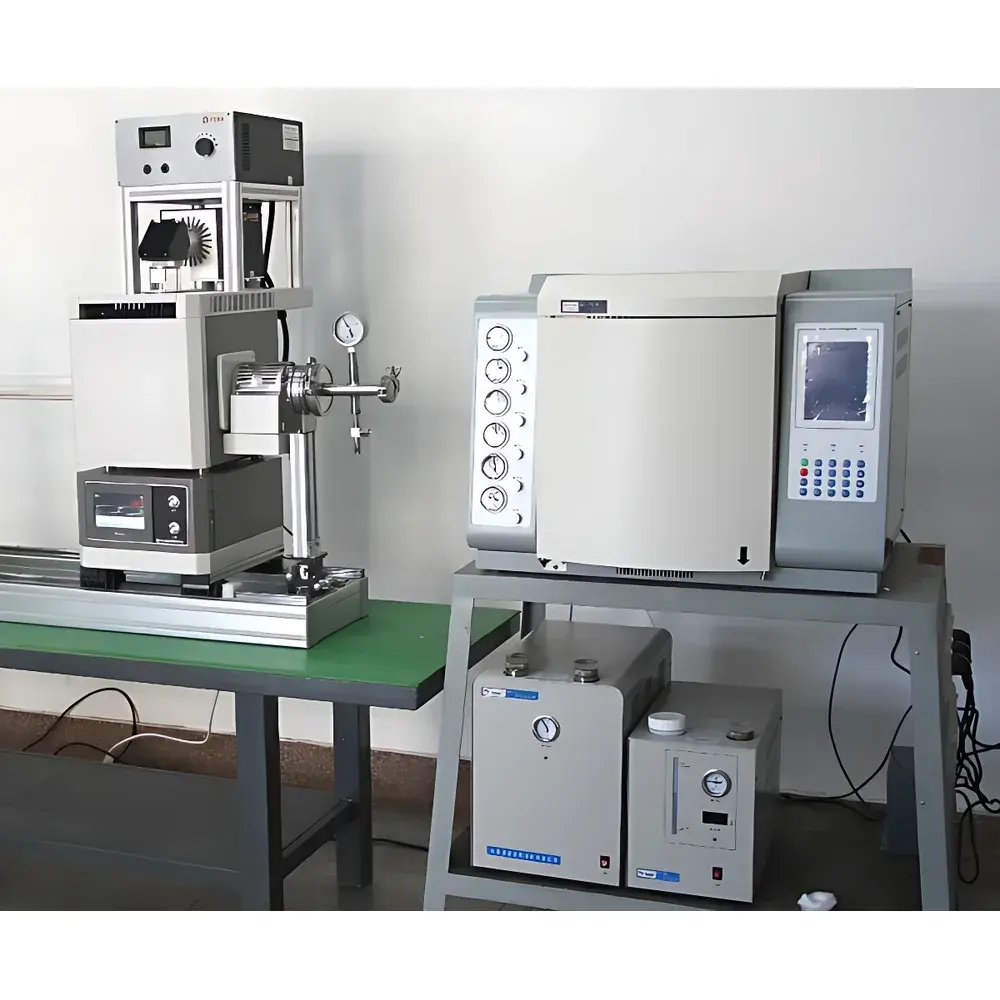
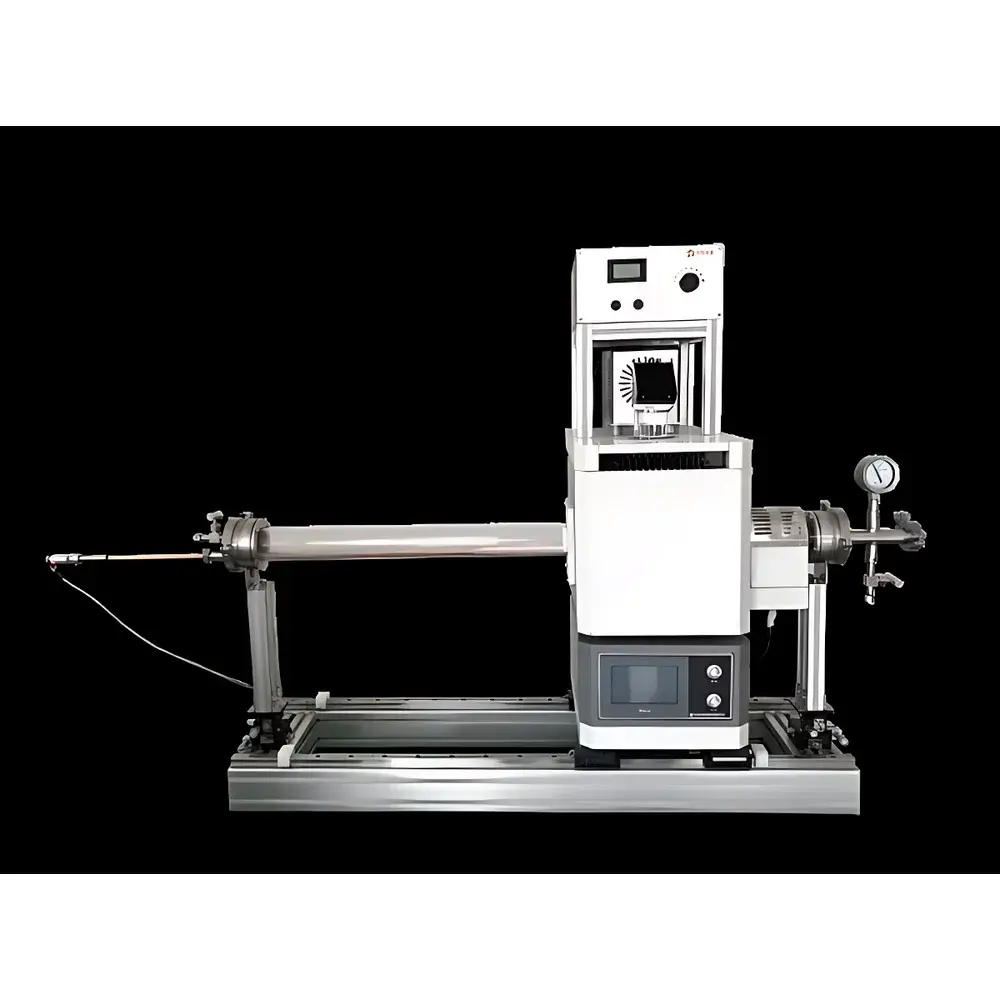
CEL-OPTH-I High-Temperature Photo-Thermal Catalytic Reaction System (Photo-Thermal Synergy)
| Brand | CEL |
|---|---|
| Origin | Beijing, China |
| Manufacturer Type | Direct Manufacturer |
| Origin Category | Domestic |
| Model | CEL-OPTH-I |
| Price Range | USD 1,400 – 7,200 |
| Operating Pressure | Ambient (0 MPa gauge) |
| Max. Reaction Temperature | 1000 °C (programmable, 1 °C resolution) |
| Catalyst Loading Capacity | Up to 2 g (standard quartz sample boat) |
| Heating Power | 1.2 kW (220 V, 50 Hz) |
| Heating/Cooling Rate | 30 °C/min (heat), 60 °C/min (cool) |
| Standard Light Source | CEL-PF300-T8 Xenon Lamp System with Optical Filters |
| Reactor Material | High-Purity Fused Silica (UV-Vis-NIR Transparent, ≤1000 °C) |
| Cooling Method | Forced-Air Insulation Jacket |
| Temperature Control Accuracy | ±1 °C |
| Atmosphere Control | Vacuum-compatible (<10⁻³ mbar), inert gas purging (N₂, Ar), optional PECVD-capable gas manifold with mass flow controllers (MFCs) |
Overview
The CEL-OPTH-I High-Temperature Photo-Thermal Catalytic Reaction System is an engineered platform for simultaneous and controlled application of thermal energy (up to 1000 °C) and broadband optical irradiation (UV–Vis–NIR) to catalytic materials during synthesis, activation, or performance evaluation. Unlike conventional thermal reactors or standalone photoreactors, this system implements true photo-thermal synergy via coaxial illumination geometry: a high-intensity xenon lamp (CEL-PF300-T8) couples light into the reaction zone through a fused silica light guide, delivering collimated photons directly onto the catalyst bed housed inside a vertically oriented, high-transmittance quartz tube—while the surrounding high-temperature furnace maintains precise, programmable thermal profiles. This dual-stimulus architecture enables fundamental studies of photonic enhancement mechanisms in thermally activated catalysis, including lattice oxygen mobility under irradiation, hot-carrier-assisted surface reactions, and defect engineering during in-situ annealing. The system operates at ambient pressure and supports both static and dynamic gas environments, making it suitable for mechanistic investigations under well-defined kinetic and thermodynamic conditions.
Key Features
- Integrated photo-thermal architecture: Independent yet synchronized control of furnace temperature (ambient to 1000 °C, ±1 °C accuracy) and optical flux (adjustable intensity, spectral filtering via interchangeable bandpass/longpass filters)
- Fused silica reactor assembly: Optically transparent, vacuum-rated (≤10⁻³ mbar), chemically inert quartz tube (OD 50 mm, L 300 mm) with integrated quartz sample boat and centering fixture
- Modular mechanical design: Linear translation stage enables rapid axial positioning of the catalyst bed relative to both thermal gradient maxima and photon focal plane—facilitating optimization of light absorption depth vs. thermal uniformity
- Atmosphere management: Integrated vacuum line with two-stage rotary vane pump, dual-channel MFC-controlled gas inlet (N₂, Ar, O₂, CO₂, synthetic air), and optional PECVD-ready gas distribution manifold
- Thermal dynamics: Forced-air insulated furnace housing ensures stable operation at maximum temperature; heating rate up to 30 °C/min, cooling rate up to 60 °C/min (natural convection + active airflow)
- Expandable configuration: Modular interface ports allow seamless integration of external accessories—including FTIR gas cells, online GC sampling loops, or electrochemical biasing units—for multimodal operando characterization
Sample Compatibility & Compliance
The CEL-OPTH-I accommodates powdered, pelletized, or supported catalysts (typical loading: 0.1–2.0 g) within its standardized quartz sample boat. Substrates include TiO₂, g-C₃N₄, perovskites, MOFs, transition metal oxides, and plasmonic nanocomposites. The system complies with standard laboratory safety protocols for Class I optical radiation (IEC 62471) and low-voltage electrical equipment (IEC 61010-1). All gas-handling components meet ISO 8573-1 purity class 4 requirements when used with certified compressed gases. For GLP/GMP-aligned workflows, optional audit-trail-enabled temperature and lamp power logging (via RS485/Modbus) supports 21 CFR Part 11-compliant data integrity when paired with validated third-party SCADA software.
Software & Data Management
Temperature programming is executed via embedded PID controller with 16-segment ramp-soak capability and real-time digital display. Optional PC-based control (CEL-Soft v3.x, Windows 10/11) provides synchronized logging of furnace setpoint/actual temperature, lamp current/voltage, and external sensor inputs (e.g., thermocouple, gas analyzer output) at user-defined intervals (100 ms–10 s). Data export formats include CSV and MATLAB (.mat); time-stamped files include metadata on calibration status, operator ID, and session notes. Firmware updates are delivered via USB flash drive; no cloud dependency or internet connectivity required.
Applications
- Synthesis and crystallization of photocatalysts (e.g., phase-pure anatase/rutile TiO₂, doped BiVO₄) under simultaneous UV irradiation and thermal annealing
- Operando evaluation of photo-thermal CO₂ hydrogenation over Cu/ZnO/Al₂O₃ under simulated solar spectrum and elevated temperature
- Kinetic analysis of formaldehyde oxidation on MnOₓ/TiO₂ under visible-light-driven thermal activation (300–600 °C)
- Thermally assisted photocatalytic water splitting using NiFe-LDH-modified SiC under AM1.5G illumination
- Defect engineering in WO₃ nanorods via in-situ photo-thermal reduction in H₂/N₂ mixtures
- NOₓ abatement testing on CeO₂-ZrO₂ composites under cyclic light-on/light-off thermal transients
FAQ
What spectral range does the standard CEL-PF300-T8 xenon source cover?
The unfiltered output spans 200–2500 nm; UV cutoff filters (e.g., 254 nm, 320 nm), visible bandpasses (400–780 nm), and NIR windows (780–1100 nm) are available as accessories.
Can the system operate under reduced pressure while maintaining optical access?
Yes—the quartz reactor is rated for continuous operation down to 10⁻³ mbar; all optical interfaces use Viton O-rings and fused silica viewports compatible with high-vacuum bake-out.
Is the furnace temperature uniformity characterized across the catalyst zone?
At 800 °C, axial uniformity is ±5 °C over a 40 mm zone (measured with calibrated K-type thermocouples); radial deviation is <±2 °C.
How is light intensity quantified and calibrated?
Irradiance is measured using a NIST-traceable silicon photodiode power meter (model PM100D) placed at the sample position; spectral irradiance data is provided with each lamp replacement.
Does the system support reactive gas atmospheres such as H₂ or NH₃?
Yes—when equipped with stainless-steel gas lines, high-temp MFCs, and appropriate exhaust scrubbing; H₂ service requires leak-check certification per ISO 15848-1 prior to first use.



