
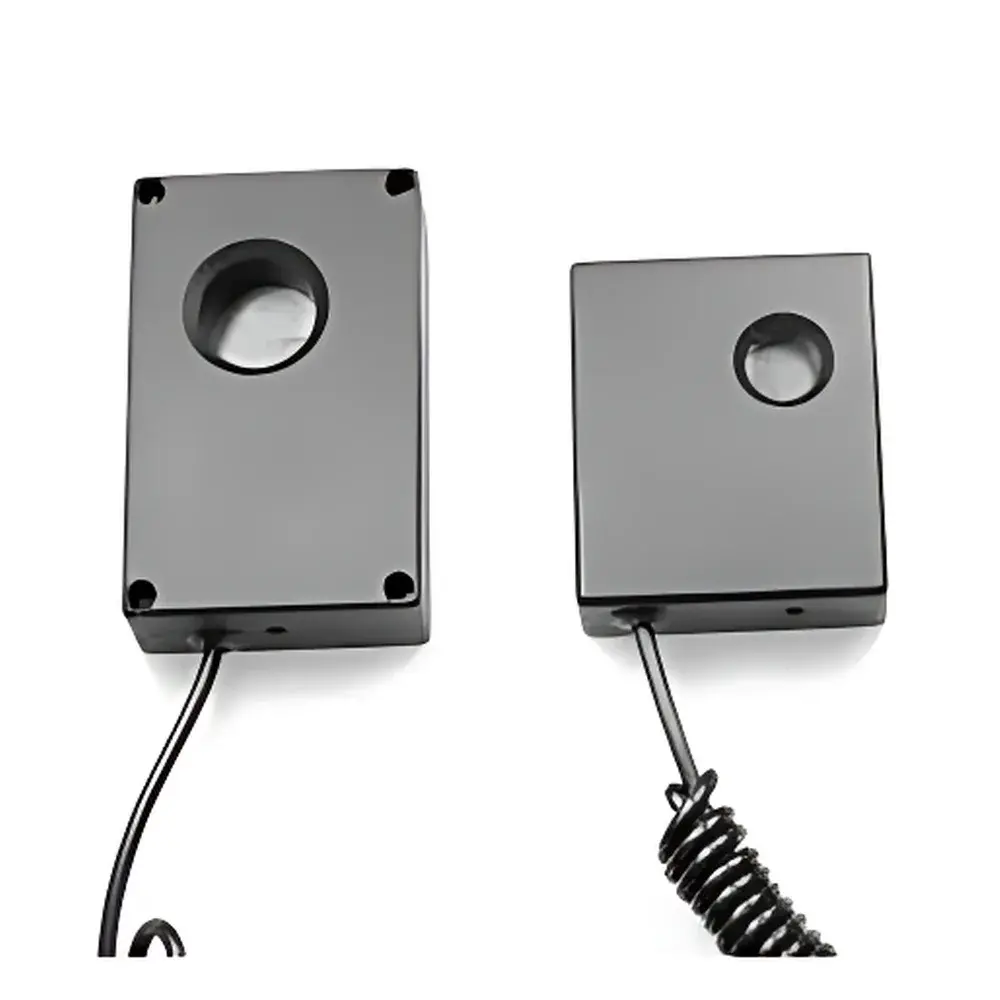
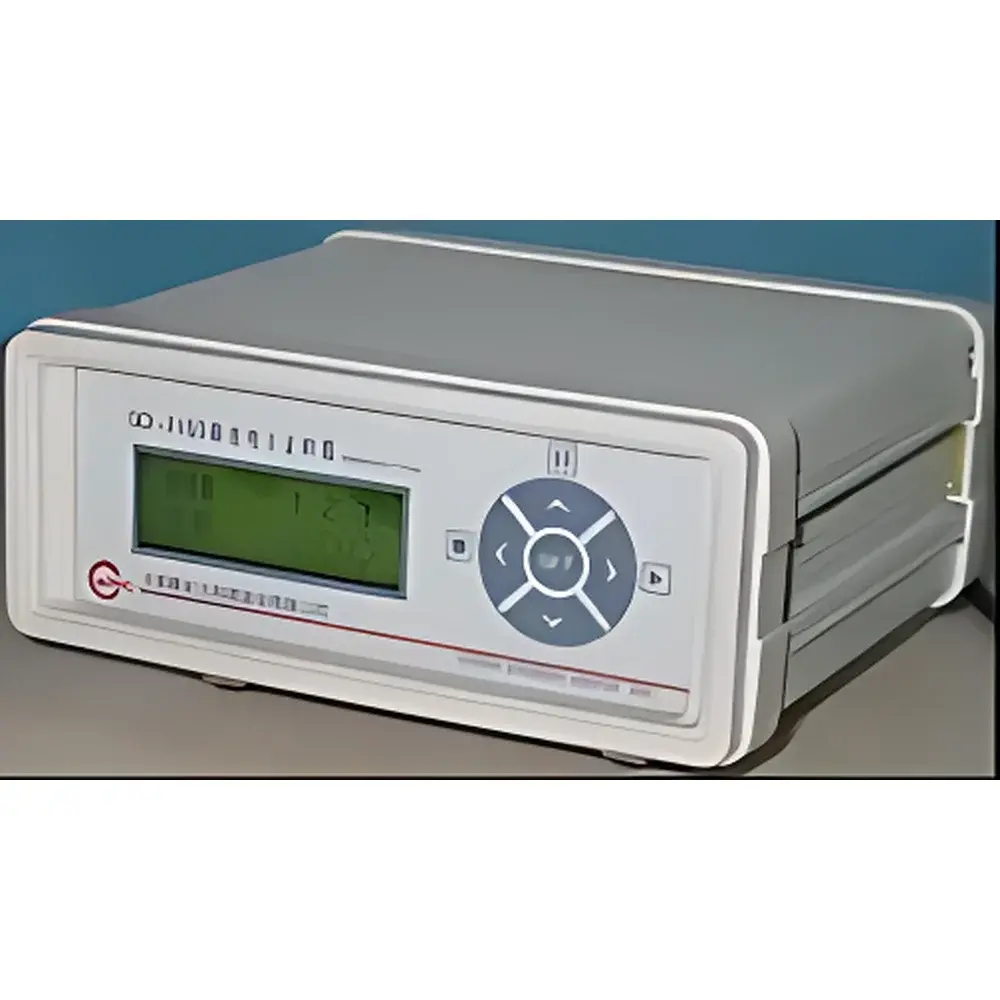
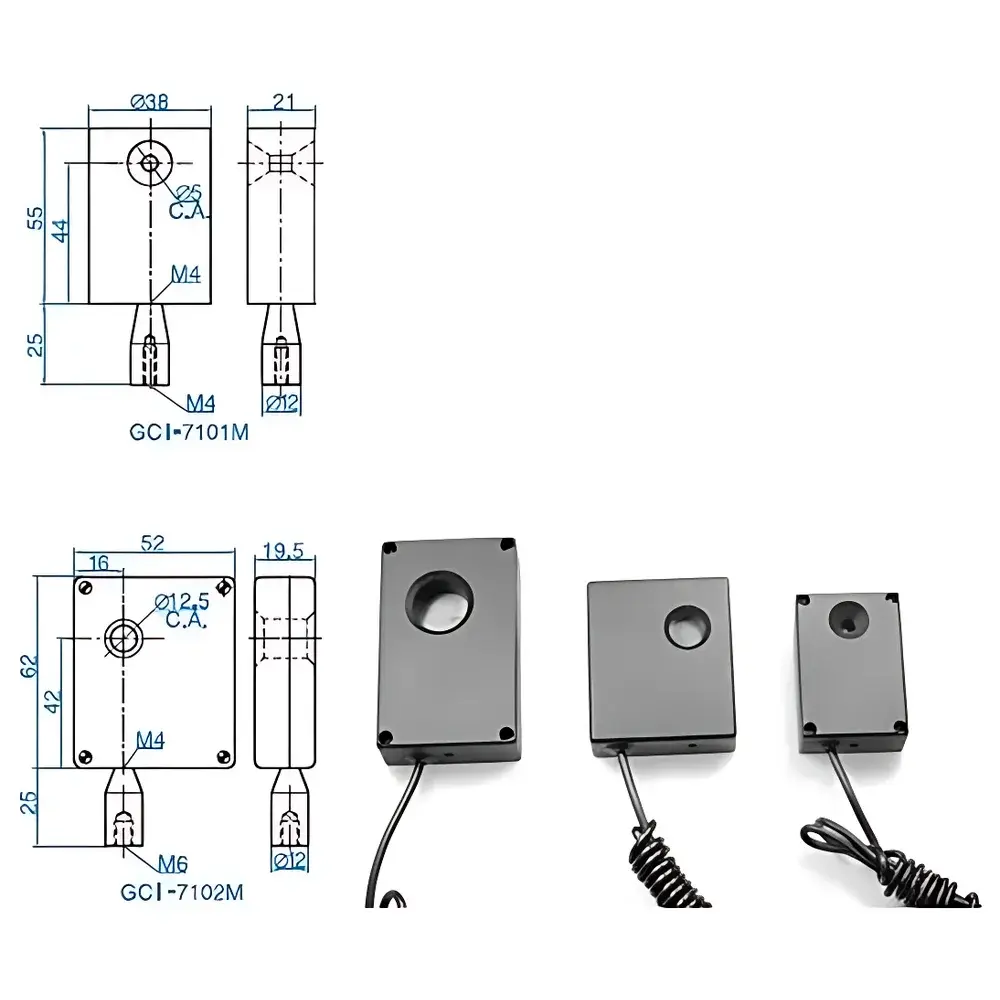
GCI-7103M Precision Electronic Shutter (20 mm Aperture)
| Brand | Zhongjiao Jinyuan |
|---|---|
| Origin | Beijing, China |
| Manufacturer Type | Direct Manufacturer |
| Country of Origin | China |
| Model | GCI-7103M |
| Component Category | Light Source Accessory |
| Aperture Diameter | Φ20 mm |
| Timing Range | 1 ms – 27 h |
| Timing Accuracy | ±1 ms |
| Power Supply | AC 220 V, 0.8 A |
| Shutter Operating Voltage | DC 12 V |
| Shutter Operating Current | <200 mA |
| Load Channels | 3 independent channels |
| Interface | USB & RS232 |
| Control Modes | Auto-cycle, B-mode, T-mode |
| Trigger Options | Manual, Wireless Remote (10 m range), TTL (60 cm cable) |
| External Trigger Cable Length | 90 cm |
| Panel Interface | LCD + capacitive touch keys |
| Software Support | ASCII command protocol, GUI-based configuration utility |
Overview
The GCI-7103M Precision Electronic Shutter is a high-reliability optical control component engineered for demanding laboratory and industrial applications requiring precise temporal gating of light paths. Designed around a robust electromagnetic actuation mechanism and integrated with the GCI-73 intelligent timing controller, this shutter delivers deterministic open/close transitions with sub-millisecond repeatability. Its core operational principle relies on synchronized solenoid-driven blade displacement, ensuring minimal mechanical hysteresis and consistent aperture exposure across repeated cycles. The Φ20 mm clear aperture enables compatibility with medium-format optical benches, collimated beam paths, and multi-channel illumination systems—making it suitable for time-resolved spectroscopy, pulsed laser synchronization, fluorescence lifetime measurement setups, and automated optical calibration workflows. Unlike mechanical shutters subject to wear-induced drift, the GCI-7103M employs solid-state timing logic and temperature-compensated quartz oscillators to maintain timing stability over extended operating periods and ambient temperature fluctuations (±0.5°C).
Key Features
- Φ20 mm unobstructed optical aperture with anti-reflective coated aluminum alloy housing for minimal stray light and thermal deformation resistance
- GCI-73 embedded timing controller featuring ±1 ms absolute timing accuracy across full 1 ms–27 h range
- Three independent load channels supporting simultaneous control of multiple shutters or auxiliary devices (e.g., LEDs, solenoids)
- Triple-trigger architecture: manual push-button, 433 MHz wireless remote (10 m line-of-sight), and opto-isolated TTL input (60 cm shielded cable, compatible with standard 0–5 V logic levels)
- Dual-interface connectivity: USB 2.0 (CDC class, no driver required on Windows/macOS/Linux) and RS232 (DB9, configurable baud rates up to 115200 bps)
- Intuitive human-machine interface: backlit monochrome LCD with capacitive touch keys enabling direct parameter entry without external software
- Flexible operational modes: Auto-cycle (programmable interval/number of cycles), B-mode (latch-on while button pressed), T-mode (toggle per press), and manual override
- Comprehensive ASCII command set (e.g., “OPEN1”, “CLOSE2”, “SETT=500MS”) enabling seamless integration into LabVIEW, Python, MATLAB, or custom C/C++ instrument control frameworks
Sample Compatibility & Compliance
The GCI-7103M is optimized for use with continuous-wave and pulsed light sources including halogen lamps, LED arrays, xenon arc lamps, and Q-switched lasers (with appropriate power attenuation). Its DC12 V / <200 mA drive specification ensures compatibility with standard laboratory power supplies and avoids inductive kickback issues common in higher-current actuators. The device complies with IEC 61000-4-2 (ESD immunity), IEC 61000-4-3 (radiated RF immunity), and GB/T 18268.1–2010 (industrial measurement equipment EMC requirements). While not certified for medical or aerospace use, its design adheres to GLP-aligned documentation practices—including traceable firmware versioning, calibration log fields in the host software, and audit-ready ASCII command logging when connected via serial/USB.
Software & Data Management
The included Windows-compatible GUI application provides real-time status monitoring, waveform preview for cycle sequences, and persistent profile storage (XML format). All timing parameters—including dwell time, delay offset, repetition count, and trigger source selection—are programmable via both graphical sliders and direct numeric entry. The software implements local timestamping (system clock synchronized to millisecond resolution) for each shutter event and exports CSV logs containing absolute UTC timestamps, channel ID, state transition (OPEN/CLOSE), and error flags (e.g., timeout, voltage drop). For regulated environments, the ASCII command interface supports full 21 CFR Part 11 compliance when deployed with third-party electronic lab notebook (ELN) systems that enforce user authentication, audit trails, and electronic signatures.
Applications
- Time-gated Raman spectroscopy: synchronizing shutter opening with laser pulse arrival to suppress Rayleigh scatter
- Photostability testing: delivering controlled UV/visible irradiation doses to pharmaceutical samples per ICH Q1B guidelines
- Optical encoder calibration: generating precisely timed reference pulses for position feedback validation
- Multi-spectral imaging: sequencing illumination across narrowband LED sources while maintaining inter-channel temporal alignment
- Education labs: demonstrating shutter latency, duty cycle effects on photodiode response, and TTL synchronization fundamentals
- Industrial machine vision: enabling strobed illumination for high-speed motion capture without motion blur
FAQ
What is the maximum recommended duty cycle for continuous operation?
The GCI-7103M is rated for 50% duty cycle at 10 Hz (i.e., 50 ms ON / 50 ms OFF) with ambient temperature ≤35°C. Continuous DC operation exceeds thermal limits of the solenoid coil.
Can the shutter be triggered directly from a digital oscilloscope’s trigger output?
Yes—provided the oscilloscope outputs a clean 0–5 V TTL-compatible signal with ≥10 mA drive capability and rise/fall times <100 ns. Use the supplied 60 cm TTL cable to minimize noise coupling.
Is firmware upgrade supported in-field?
Yes—firmware updates are delivered as signed .hex files and applied via the GUI software using the built-in bootloader. Version history and MD5 checksums are published in the technical documentation.
Does the device support external synchronization to a master clock (e.g., 10 MHz reference)?
No native 10 MHz input; however, the TTL trigger input accepts externally generated pulse trains synchronized to a master clock, enabling phase-locked operation within system-level timing constraints.
What safety certifications does the unit carry?
It carries CE marking per Directive 2014/30/EU (EMC) and 2014/35/EU (LVD), and meets RoHS 2011/65/EU material restrictions. No UL or CSA certification is held.




