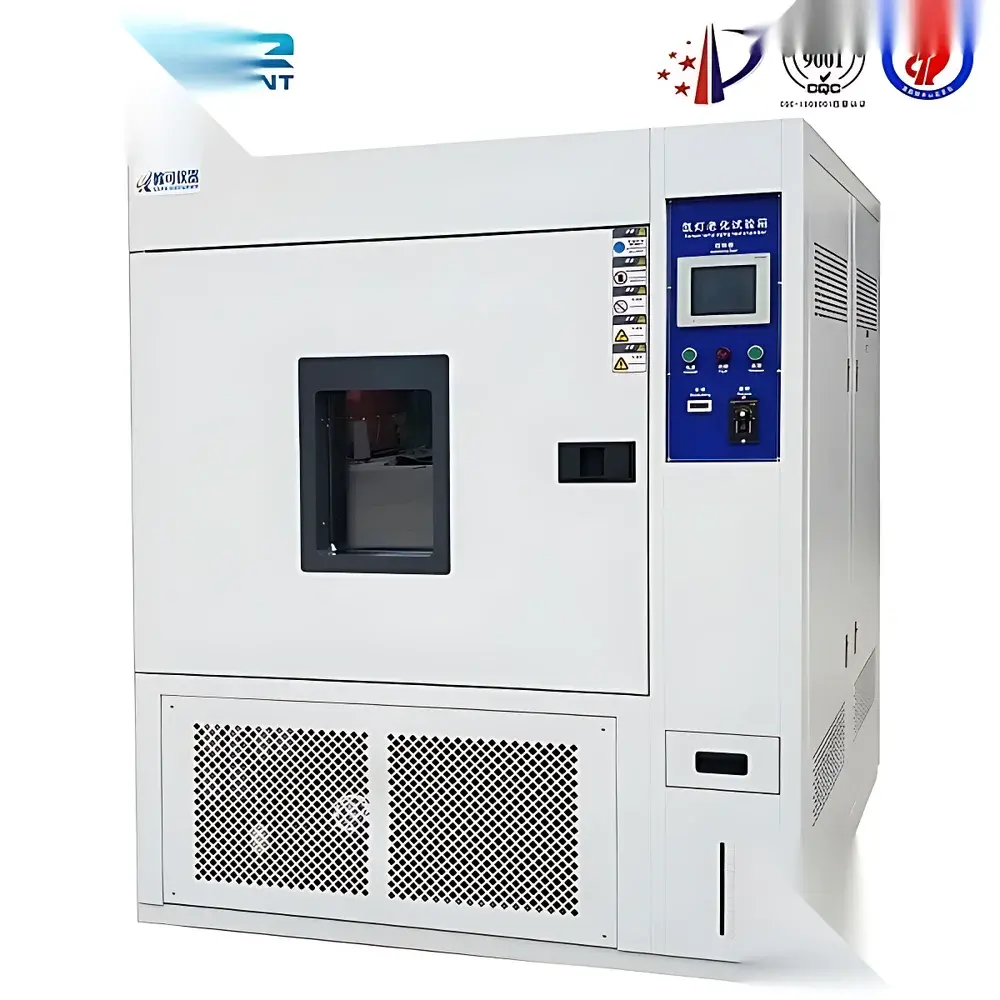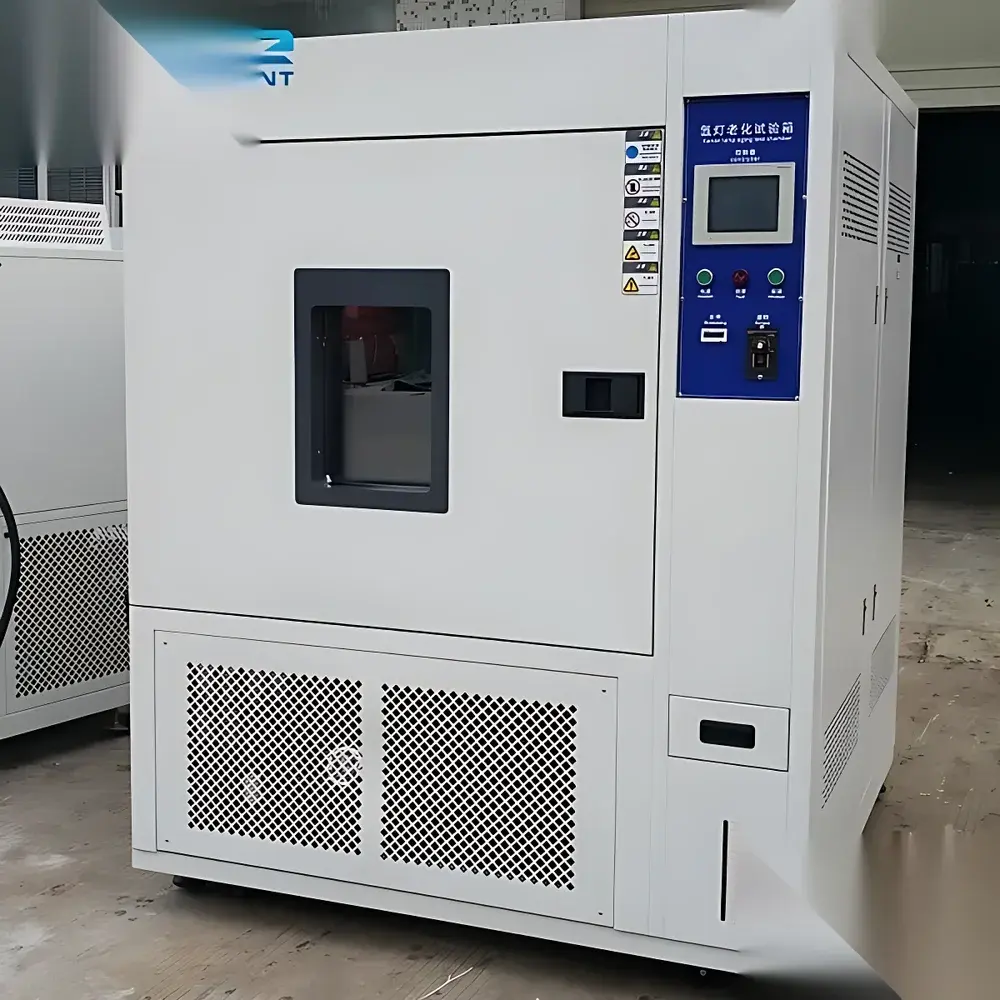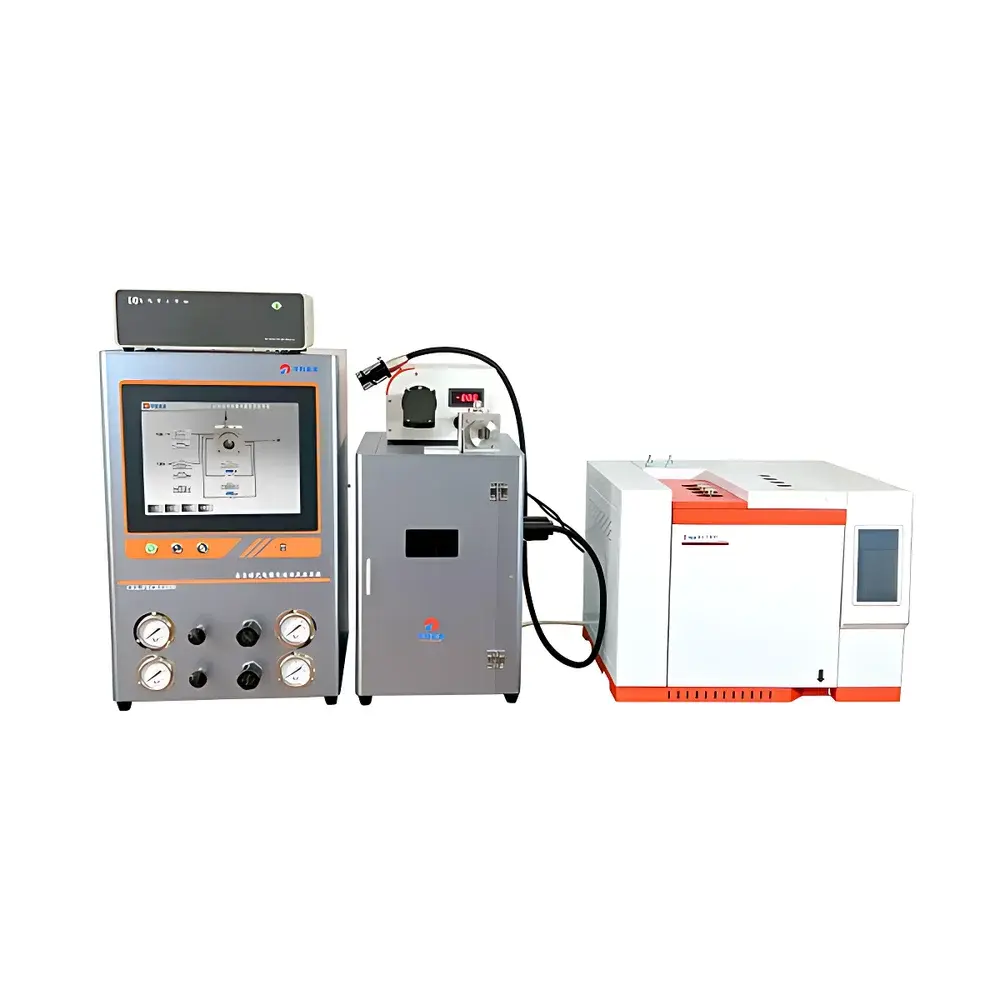
CEL-PECRS2000 Automated Photoelectrocatalytic Flow Reactor System
| Brand | CEA (Zhongjiao Jinyuan) |
|---|---|
| Origin | Beijing, China |
| Manufacturer Type | Original Equipment Manufacturer (OEM) |
| Product Category | Domestic |
| Model | CEL-PECRS2000 |
| Light Source Type | Broadband Xenon Arc Lamp with Optional Mercury Vapor Lamp Integration |
| Irradiation Mode | Internal Illumination Configuration |
| Compliance | Designed for ASTM E2738, ISO 15443-2, and GLP-aligned experimental workflows |
Overview
The CEL-PECRS2000 Automated Photoelectrocatalytic Flow Reactor System is an integrated laboratory-scale platform engineered for quantitative evaluation of photoelectrocatalytic activity under controlled, continuous-flow conditions. It operates on the fundamental principle of simultaneous photon absorption and electrochemical charge transfer at semiconductor–electrolyte interfaces—enabling precise decoupling of photocurrent generation, faradaic efficiency, and product selectivity in catalytic CO₂ reduction, water splitting, nitrogen fixation, and related energy conversion reactions. Unlike batch-mode reactors, the CEL-PECRS2000 employs a closed-loop fluidic architecture that maintains steady-state mass transport to the catalyst surface, minimizing concentration polarization and enabling reproducible kinetic analysis across extended operation durations (up to 100+ hours). Its core design adheres to the physical constraints of three-phase (gas–solid–liquid) interfacial catalysis, where incident photons drive electron–hole pair generation while applied bias modulates charge separation efficiency and product distribution.
Key Features
- Modular integration of broadband xenon arc illumination (250–2500 nm, adjustable intensity), potentiostat/galvanostat control (±10 V, ±1 A), and high-sensitivity online gas chromatography (TCD/FID detection)
- Internal illumination geometry with quartz-coated titanium reaction cell (Grade 2 CP-Ti), rated for ≤1.2 MPa operating pressure and resistant to acidic/alkaline electrolytes (pH 1–14)
- Triple-channel precision mass flow controllers (MFCs) for independent regulation of CO₂, N₂, H₂, or synthetic air feed streams (accuracy: ±1% FS, repeatability: ±0.2% FS)
- Electrode configuration flexibility: supports two-electrode (counter/reference combined) and three-electrode (working/counter/reference) configurations; working electrode substrate compatible with sputtered, drop-cast, or CVD-deposited photoactive films
- Gold-plated conductive contacts ensuring low-contact resistance (<5 mΩ) and long-term electrochemical stability under cathodic polarization
- Real-time synchronization of optical irradiance (via calibrated photodiode), electrochemical current/voltage (16-bit resolution, 100 kS/s sampling), and GC peak area data (sub-ppm detection limit for CO, CH₄, H₂, O₂, C₂H₄)
Sample Compatibility & Compliance
The system accommodates heterogeneous photocatalysts (e.g., TiO₂, g-C₃N₄, BiVO₄, Cu₂O thin films), molecular catalysts immobilized on conductive substrates (carbon cloth, FTO, ITO), and gas-diffusion electrodes for CO₂RR. All wetted components comply with ASTM F899 (standard specification for titanium alloys) and ISO 10993-5 (biological evaluation of medical devices—cytotoxicity testing). The control architecture meets functional safety requirements aligned with IEC 61508 SIL-2 for automated unattended operation. Data acquisition conforms to FDA 21 CFR Part 11 audit trail standards when operated with validated software modules (electrochemical workstation firmware v3.8+, GC control suite v2.5+).
Software & Data Management
A unified Linux-based HMI interface (10.1″ capacitive touchscreen) coordinates subsystem operation via deterministic real-time scheduling. The embedded software stack includes: (1) GasFlow Manager™ for MFC calibration, pressure ramping, and leak detection algorithms; (2) ElectroChem Suite™ supporting cyclic voltammetry, chronoamperometry, and Mott–Schottky analysis with automatic IR compensation; (3) ChromoLink™ for GC method development, retention time locking, and multi-component quantification using internal standard calibration (e.g., Ar as reference for CO₂/CO/CH₄). Raw datasets are exported in HDF5 format with embedded metadata (timestamp, irradiance value, cell temperature, electrolyte conductivity), ensuring FAIR (Findable, Accessible, Interoperable, Reusable) data principles.
Applications
- Quantitative assessment of CO₂-to-fuel conversion efficiency (FECO, FECH₄, FEC₂H₄) under AM 1.5G illumination and controlled cathodic bias
- Stability benchmarking of photoanodes in oxygen evolution reaction (OER) via 24–72 h chronoamperometric stress testing with in situ pH monitoring
- Kinetic isotope effect (KIE) studies using ¹³CO₂/¹⁵N₂ feeds to elucidate rate-determining steps in multi-proton-coupled electron transfers
- Structure–activity correlation mapping across catalyst libraries using automated sequential injection of electrolyte variants (KHCO₃, KOH, MEA solutions)
- Validation of DFT-predicted adsorption energies through operando product distribution analysis under varying light intensities (10–100 mW/cm²)
FAQ
What light sources are supported, and how is spectral output characterized?
The system ships with a 300 W xenon arc lamp (250–2500 nm), optionally configurable with a 100 W mercury vapor lamp for UV-selective excitation. Spectral irradiance is traceably calibrated using a NIST-traceable spectroradiometer (Hamamatsu CG100) and reported as photon flux (μmol·m⁻²·s⁻¹) within user-defined bands (e.g., UV-A, visible, NIR).
Can the reactor operate in true three-phase configuration without liquid flooding?
Yes—the titanium flow cell incorporates a hydrophobic gas-diffusion layer (GDL) support and precisely machined microchannel manifolds to maintain stable gas–catalyst–electrolyte contact angles >120°, preventing electrolyte intrusion into gas channels during continuous operation.
Is remote monitoring and control supported?
The system provides Ethernet/IP and Modbus TCP interfaces for integration into centralized lab automation networks. Secure SSH access enables command-line parameter adjustment and log retrieval without physical HMI interaction.
How is catalyst loading standardized across experiments?
The working electrode cavity features a fixed 0.5 cm² geometric area with recessed mounting to ensure uniform illumination and consistent diffusion layer thickness. Catalyst mass is quantified gravimetrically pre- and post-testing using a microbalance (0.1 μg resolution) per ISO 17025-accredited protocols.
Does the system meet regulatory requirements for GMP/GLP environments?
When deployed with validated software versions and documented calibration records (including annual lamp output verification and GC column certification), the CEL-PECRS2000 satisfies instrumentation qualification criteria outlined in USP and EU Annex 11 for analytical instrument lifecycle management.