
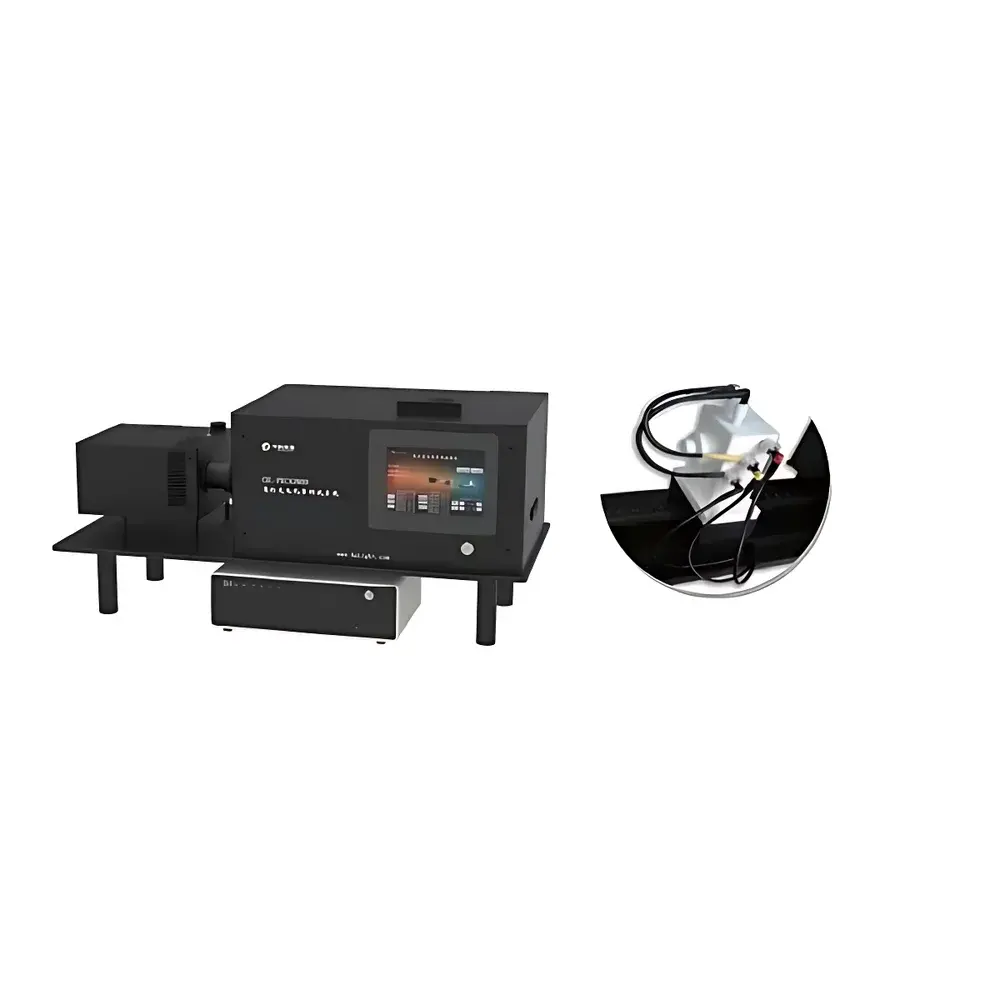
CEL-PECX1000 Xenon-Lamp-Based Photoelectrochemical Testing System
| Brand | CEL (Beijing Zhongjiaojinyuan Technology Co., Ltd.) |
|---|---|
| Origin | Beijing, China |
| Manufacturer Type | Original Equipment Manufacturer (OEM) |
| Product Category | Domestic |
| Model | CEL-PECX1000 |
| Light Source Type | High-Intensity Short-Arc Xenon Lamp |
| Illumination Mode | External Irradiation Configuration |
| Optical Enclosure | Fully Sealed Light Path |
| Filter Mechanism | Motorized Filter Wheel with Pre-Installed Bandpass Filters |
| Electrochemical Cell Mount | 3-Axis Manual Translation Stage with Horizontal Auto-Leveling Capability |
Overview
The CEL-PECX1000 Xenon-Lamp-Based Photoelectrochemical Testing System is an integrated laboratory platform engineered for quantitative photoelectrochemical (PEC) characterization under controlled illumination conditions. It operates on the principle of coupling high-intensity, spectrally tunable xenon lamp irradiation with potentiostatic/galvanostatic electrochemical measurement to enable in situ and operando analysis of semiconductor photoanodes, photocathodes, and hybrid catalytic interfaces. The system is specifically designed for researchers investigating charge carrier generation, separation, and interfacial transfer kinetics in energy conversion materials—particularly for applications in solar fuel synthesis, water splitting, CO₂ reduction, dye-sensitized solar cells (DSSCs), and perovskite-based optoelectronic devices. Its external irradiation architecture ensures minimal thermal coupling between light source and electrochemical cell, preserving electrolyte stability and enabling precise photon flux calibration via NIST-traceable reference diodes.
Key Features
- High-Radiance Xenon Light Source: Equipped with a stabilized 300 W short-arc xenon lamp delivering broadband output (250–2500 nm) with spectral irradiance suitable for AM1.5G solar simulation when combined with appropriate filters.
- Motorized Filter Wheel Integration: Supports up to six interchangeable bandpass or long-pass optical filters (e.g., 365 nm, 405 nm, 450 nm, 520 nm, 630 nm, and NIR cutoff), enabling automated wavelength selection without manual intervention or optical realignment.
- Three-Dimensional Electrochemical Cell Positioning: Features a precision-machined XYZ translation stage with micrometer-resolution adjustment (±1 µm repeatability) and motor-assisted horizontal auto-leveling to ensure orthogonal incident light alignment relative to electrode surface normal—critical for reproducible incident photon-to-current efficiency (IPCE) measurements.
- Optically Isolated Enclosure: Entire light path—from lamp housing through collimation optics, filter wheel, and focusing lens—is housed within a light-tight aluminum enclosure with EMI-shielded interlocks, eliminating ambient stray light and ensuring compliance with ISO/IEC 17025 environmental control requirements for photometric consistency.
- Modular Electrochemical Interface: Compatible with standard three-electrode configurations (working, counter, reference) and supports integration with commercial potentiostats (e.g., BioLogic SP-300, CHI760E) via analog voltage/current I/O and TTL synchronization triggers.
Sample Compatibility & Compliance
The CEL-PECX1000 accommodates standard quartz or fused-silica electrochemical cells (e.g., 10 mm × 10 mm optical windows, 3 mm path length), custom-designed PEC reactors with gas-tight sealing, and rotating disk electrodes (RDEs) with optical access. All optical components comply with ISO 9022-3 (optical instrument environmental testing) and RoHS Directive 2011/65/EU. The system meets mechanical safety standards per IEC 61010-1 for laboratory electrical equipment. While not pre-certified for GLP or GMP environments, its design supports full auditability—including timestamped irradiance logging, filter position tracking, and synchronized electrochemical data capture—enabling traceability required for ASTM E2583 (standard practice for IPCE measurement) and ISO 15387 (photoelectrochemical performance testing of semiconductor electrodes).
Software & Data Management
Control and synchronization are managed via dedicated Windows-based software supporting dual-channel acquisition: one channel for real-time irradiance monitoring (via calibrated Si or GaAs photodiode), and another for electrochemical signal streaming (current/voltage/potential). Data export formats include CSV, HDF5, and MATLAB-compatible .mat files. The software implements configurable trigger logic (e.g., light-on delay, pulse width modulation, dark/light cycling protocols) and supports batch scripting for multi-wavelength IPCE sweeps. Audit trails record operator ID, timestamp, filter ID, lamp operating hours, and calibration certificate expiry dates—facilitating compliance with FDA 21 CFR Part 11 when deployed in regulated R&D settings.
Applications
- Quantitative incident photon-to-current efficiency (IPCE) and applied bias photon-to-current efficiency (ABPE) mapping across UV–vis–NIR spectral ranges
- Kinetic analysis of photocorrosion and surface passivation under operational illumination
- In situ electrochemical impedance spectroscopy (EIS) under modulated illumination for charge-transfer resistance deconvolution
- Time-resolved photocurrent transient analysis for carrier lifetime estimation
- Comparative screening of co-catalyst loading effects on hole extraction efficiency
- Stability assessment of emerging photoelectrode architectures (e.g., BiVO₄/WO₃ heterojunctions, Fe₂O₃/NiOOH composites) under chronoamperometric stress tests
FAQ
What spectral range is achievable with the standard filter set?
The default filter wheel includes center wavelengths at 365 nm, 405 nm, 450 nm, 520 nm, 630 nm, and a 780 nm long-pass; additional filters can be user-installed per ISO/DIS 15387 Annex B recommendations.
Is lamp intensity stabilization supported?
Yes—the xenon lamp power supply incorporates closed-loop arc position feedback and constant-current regulation, maintaining irradiance drift below ±1.5% over 2-hour continuous operation (measured at 400 nm with NIST-calibrated reference detector).
Can the system interface with third-party potentiostats?
Absolutely—the rear panel provides isolated analog outputs (0–10 V) for light status and TTL sync pulses for start/stop triggering, fully compatible with BioLogic, Pine Research, and Metrohm Autolab platforms.
Does the enclosure support purge gas integration?
Yes—two 6 mm Swagelok ports are provided on the sample chamber for inert gas (N₂, Ar) or reactive atmosphere (H₂, O₂) purging during long-term PEC stability tests.
What maintenance intervals are recommended for the xenon lamp?
Lamp replacement is advised after 1,000 hours of cumulative operation; the software logs total lamp-on time and issues alerts at 900-hour and 950-hour thresholds.



