
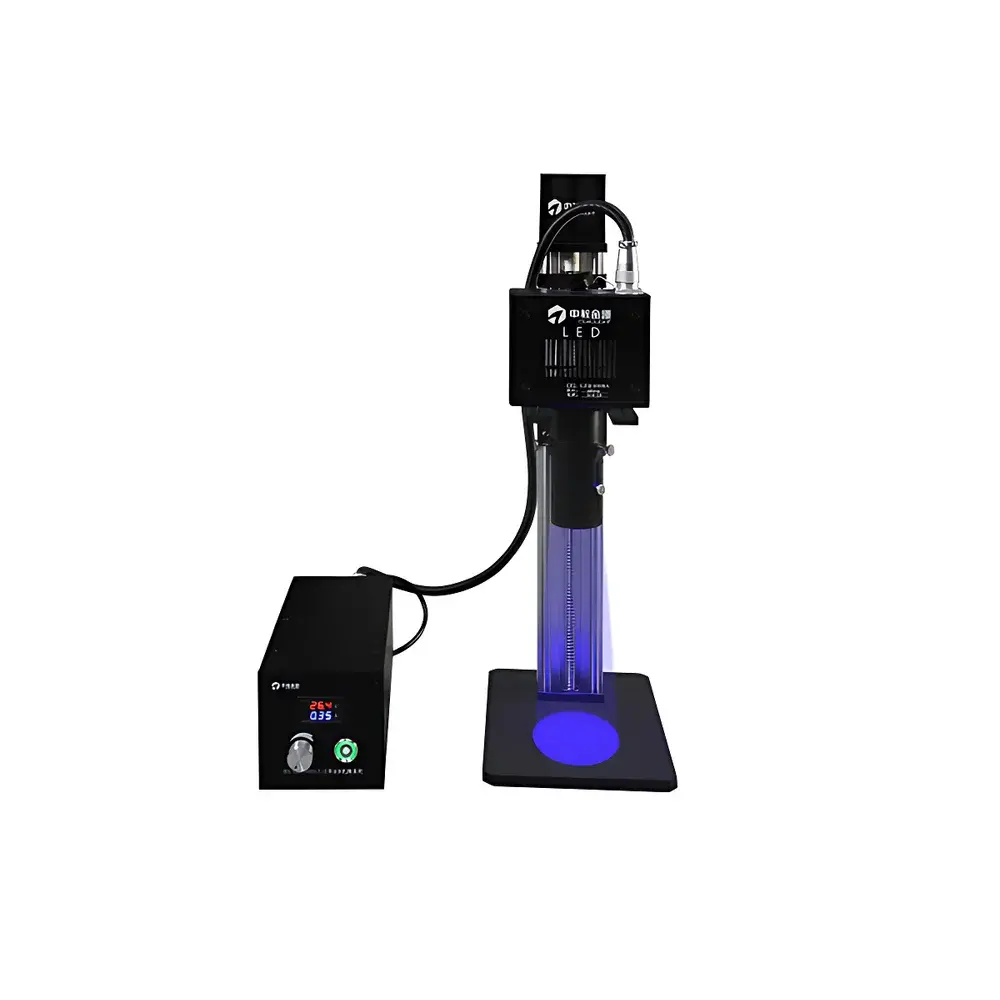
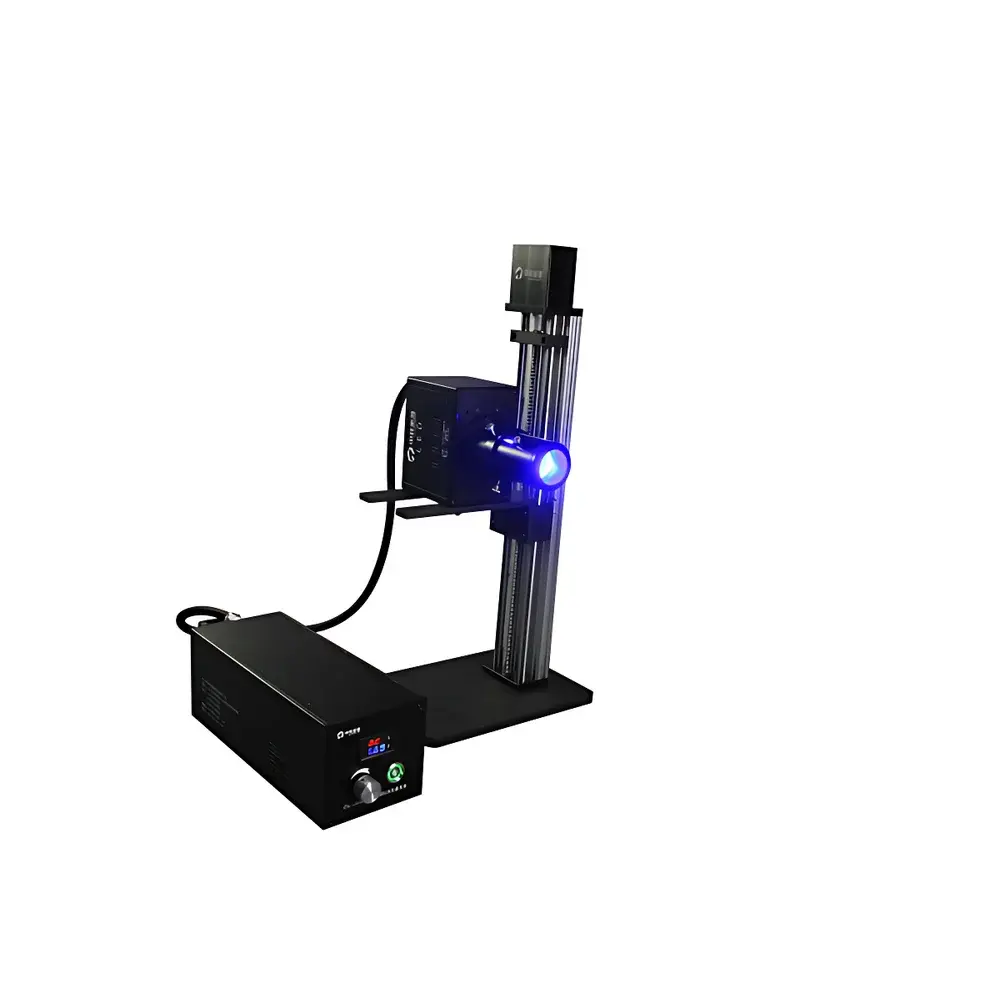
CEL-LED100HA High-Power Multispectral LED Light Source System
| Brand | CEL (Beijing Zhongjiaojinyuan Technology Co., Ltd.) |
|---|---|
| Origin | Beijing, China |
| Manufacturer Type | OEM Manufacturer |
| Product Category | Domestic |
| Model | CEL-LED100HA |
| Light Source Type | High-Intensity Monochromatic & White LED Array |
| Illumination Mode | External Irradiation |
| Spectral Bands | 16 discrete wavelengths (365, 395, 405, 420, 455, 470, 500, 520, 590, 620, 660, 740, 810, 850, 940 nm + white) |
| FWHM | ≤20 nm |
| Control Interface | Digital front-panel display (voltage & current) |
| Input Power | 240 W AC 220 V ±0.01% |
| LED DC Power | <200 W at 38 V ±0.01% |
| Operating Current | <5.0 A (0.01 A resolution) |
| Optical Output Power | 20 W ±0.1% |
| Output Aperture | Ø50 mm |
| Irradiance Uniformity | <2% (measured across 50 mm diameter, traceable to solar simulator standards) |
| Max Irradiance | ≤300 mW/cm² (at 50 mm distance, measured with CEL-NP2000 radiometer) |
| Minimum Rated Lifetime | 10,000 h (except 365 nm channel: 5,000 h typical) |
| Cooling | Separated forced-air thermal management (optical path isolated from airflow) |
| Dimensions (LED Housing) | 164 × 95 × 145 mm |
| (Power Supply) | 313 × 128 × 118 mm |
| Standard Accessories | Digital LED driver, LED lamp housing, focusing lens assembly, LMP400 motorized XYZ stage (400 mm vertical/horizontal travel, dual-axis irradiation capability) |
| Optional Accessories | CEL-LT90 90° beam-turning adapter, AREF bandpass filters, fiber-coupling interface |
Overview
The CEL-LED100HA High-Power Multispectral LED Light Source System is an engineered optical platform designed for precision photochemical, photophysical, and optoelectronic research. Unlike broadband arc lamps or filtered incandescent sources, the CEL-LED100HA employs discrete, high-radiance monochromatic LED emitters—each individually selected for narrow spectral bandwidth (FWHM ≤20 nm), calibrated radiant flux, and long-term radiometric stability. Its operational principle relies on solid-state electroluminescence within semiconductor junctions, enabling deterministic photon delivery without plasma fluctuations, electrode degradation, or UV-induced quartz darkening. This architecture delivers exceptional temporal stability (<0.1% RMS intensity drift over 8 h), spatial uniformity (<2% irradiance variation across a 50 mm field), and spectral fidelity—making it suitable as a reference-grade irradiation source in quantitative photocatalysis, quantum yield determination, perovskite solar cell characterization, and time-resolved luminescence spectroscopy.
Key Features
- 16 independently addressable spectral channels spanning 365 nm (UVA) to 940 nm (NIR), plus broadband white light (400–780 nm), all based on imported high-power single-die LEDs with integrated thermal management.
- Digital constant-current driver with simultaneous real-time display of output voltage and operating current (0.01 A resolution), ensuring repeatability in irradiance-controlled experiments.
- Motorized LMP400 XYZ translation stage enables precise external illumination geometry: horizontal/vertical beam alignment, focal plane adjustment (±200 mm travel per axis), and reproducible sample-to-source distance control.
- Optically isolated forced-air cooling system maintains junction temperature below 65°C under continuous operation—preventing wavelength shift and luminous decay while preserving spectral integrity.
- Adjustable collimation optics deliver tunable spot diameters (20–100 mm) with minimal divergence, supporting both large-area irradiation and focused micro-irradiation protocols.
- Compliant with IEC 60825-1:2014 (laser product safety classification equivalent for LED-based systems) and compatible with ISO/IEC 17025-accredited calibration workflows when paired with NIST-traceable radiometers (e.g., CEL-NP2000).
Sample Compatibility & Compliance
The CEL-LED100HA supports diverse sample formats including electrochemical cells (three-electrode PEC reactors), Petri dishes, cuvettes, thin-film substrates, and gas-phase photoreactors. Its external irradiation design eliminates internal reflection artifacts common in integrating sphere–based systems and avoids thermal loading associated with immersion-style sources. All spectral channels meet ASTM E927-22 requirements for spectral match classification when used with appropriate secondary optics and diffusers. For GLP/GMP-regulated environments, the optional CEL-PHCS100 software provides 21 CFR Part 11–compliant electronic records—including user authentication, immutable audit trails, timestamped parameter logs, and exportable CSV/Excel datasets—enabling full traceability in pharmaceutical photostability testing (ICH Q1B) or catalyst lifetime validation studies.
Software & Data Management
CEL-PHCS100 is a dedicated Windows-based control application that transforms the CEL-LED100HA into a networked, scriptable irradiation node. It supports scheduled on/off cycles (up to 99 segments), linear or stepwise power ramping (0–100% in 0.1% increments), multi-channel synchronization, and real-time graphing of radiometric output. All operational parameters—including setpoints, actual current/voltage, elapsed runtime, and thermal sensor readings—are logged with millisecond timestamps. Data exports include metadata headers compliant with MIAME and FAIR principles, facilitating integration into LIMS or ELN platforms. Remote access via TCP/IP allows centralized control across multi-instrument laboratories without physical interface dependency.
Applications
- Quantitative photocatalytic degradation kinetics (e.g., methylene blue, phenol) under monochromatic excitation—enabling action spectrum construction and bandgap validation.
- Photoelectrochemical water splitting studies requiring stable, spectrally defined bias illumination synchronized with potentiostat triggers.
- Stability testing of organic photovoltaics and perovskite absorbers under ISOS-L-1 or IEC 61215-defined irradiance profiles.
- Time-resolved fluorescence lifetime measurements (TRPL) where pulse-free, low-noise illumination minimizes afterglow interference.
- Photobiomodulation and microbial inactivation assays demanding precise NIR dose control (e.g., 810 nm, 850 nm).
- Calibration of spectroradiometers and quantum sensors against primary LED standards traceable to NIM (China National Institute of Metrology).
FAQ
What is the spectral uncertainty for each LED channel?
Each channel is factory-calibrated using an AULTT-P series fiber-optic spectrometer; absolute peak wavelength tolerance is ±2 nm, and FWHM is guaranteed ≤20 nm at rated drive current.
Can multiple CEL-LED100HA units be synchronized for multi-wavelength irradiation?
Yes—via TTL trigger input/output ports and PHCS100 software scripting, enabling sub-millisecond inter-unit timing alignment for pump-probe or dual-excitation protocols.
Is the 365 nm channel suitable for long-term UV-A exposure studies?
It is rated for 5,000 hours at nominal power; for extended UV durability, users should operate below 80% maximum current and monitor radiant flux decay quarterly using a calibrated UV radiometer.
Does the system support fiber-optic coupling?
Not natively—but the Ø50 mm output port accepts standard SMA905 or FC/PC adapters via optional custom collimator mounts (part number: CEL-FIBER-KIT).
How is irradiance uniformity validated?
Uniformity maps are generated using a 100-point grid scan with a CEL-NP2000 thermopile sensor array; raw data and ISO 9050-compliant non-uniformity reports are supplied with each unit.





