

Zhongjiaojinyuan CEL-CCHV In Situ FTIR Spectroscopy High-Vacuum Catalyst Characterization System
| Brand | Zhongjiaojinyuan |
|---|---|
| Origin | Beijing, China |
| Manufacturer Type | Direct Manufacturer |
| Country of Origin | China |
| Model | CEL-CCHV |
| Price | USD 23,500 (FOB) |
| Operating Pressure | ≤1×10⁻³ Pa |
| Maximum Temperature | 450 °C |
| Catalyst Loading Capacity | 10 mg |
Overview
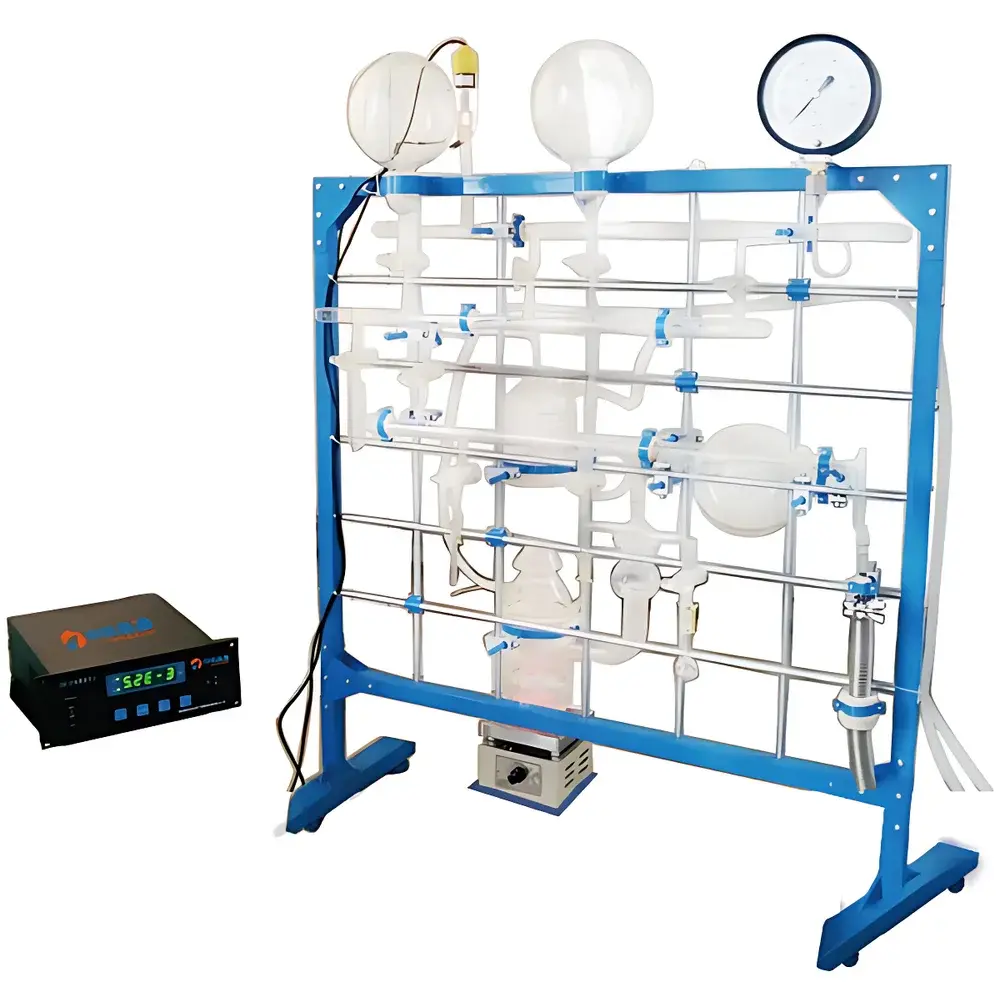
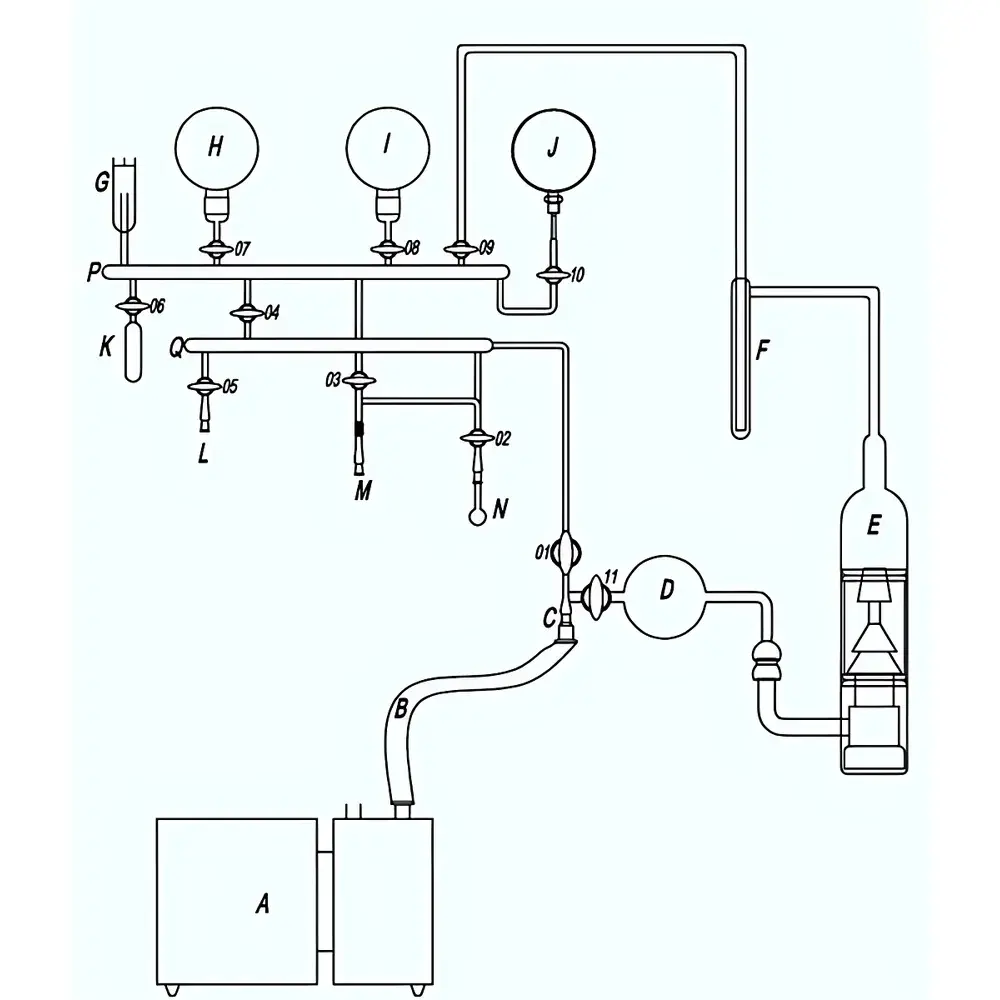
The Zhongjiaojinyuan CEL-CCHV In Situ FTIR Spectroscopy High-Vacuum Catalyst Characterization System is an engineered platform for dynamic, surface-sensitive molecular analysis of heterogeneous catalysts under controlled thermal, gaseous, and vacuum environments. It integrates a high-vacuum glass manifold—comprising a two-stage pumping system (mechanical pump + four-stage glass diffusion pump) with liquid nitrogen cold trap—and a transmission-mode quartz infrared cell equipped with programmable heating (up to 450 °C), thermocouple feedback, gas dosing lines, and CaF₂ optical windows (transmission range: 4000–1000 cm⁻¹). Designed for seamless coupling with commercial FTIR spectrometers (e.g., Bruker VERTEX, Thermo Nicolet iS50), the system enables real-time, in situ monitoring of adsorbed probe molecules—including CO, NO, NH₃, pyridine, and CH₃OH—on catalyst surfaces during pretreatment, adsorption, desorption, redox cycling, and catalytic reaction. Its operational principle relies on attenuated total reflection (ATR)-compatible transmission geometry combined with ultra-high vacuum (UHV)-grade sealing integrity (<1×10⁻³ Pa), ensuring minimal background interference and quantitative spectral fidelity for surface-species identification under near-reaction conditions.
Key Features
- Two-stage vacuum architecture: primary mechanical pumping (to ~1 Pa) followed by glass diffusion pumping (to ≤1×10⁻³ Pa), enhanced by liquid nitrogen cold trapping for residual gas suppression
- Optically transparent borosilicate glass valves and manifolds enabling visual process monitoring and leak-free UHV operation
- Integrated quartz IR cell with electrically heated sample stage, precision thermocouple control, and dual gas inlets for sequential or co-adsorption experiments
- Removable transmission cell design allowing rapid insertion/extraction into standard FTIR beam paths without realignment
- Digital high-accuracy vacuum gauges (Pirani + cold cathode ionization) with dual-range readout (10⁰–10⁻³ Pa and 10⁻³–10⁻⁶ Pa)
- Modular gas handling: dedicated purification bottles (K-type glass ampoules), calibrated dosing lines, and inert-gas purging capability
- Standard CaF₂ windows (optional BaF₂, KBr, or ZnSe for extended spectral range); all window materials certified for low reflectance loss and chemical inertness
- Configurable thermal profiles via programmable ramp/soak controller; temperature stability ±1 °C over full 50–450 °C range
Sample Compatibility & Compliance
The CEL-CCHV system accommodates powdered, pelletized, or supported catalysts (max. 10 mg loading) across oxide (e.g., Al₂O₃, SiO₂, TiO₂), zeolite, sulfide, and transition metal (Pt, Pd, Ni, Ru) systems. Its design conforms to ASTM D7269-22 (standard practice for in situ spectroscopic characterization of catalysts) and supports GLP-compliant data acquisition when paired with validated FTIR software. Vacuum integrity meets ISO 2859-1 sampling standards for leak rate verification (≤1×10⁻⁹ mbar·L/s helium equivalent). All wetted components are chemically resistant to common probe molecules (NH₃, CO, NO, H₂O, O₂) and compatible with UHV-compatible cleaning protocols (baking at 150 °C under vacuum). The system’s borosilicate glass construction ensures negligible outgassing and avoids metallic contamination—critical for acid-site quantification and redox-sensitive measurements.
Software & Data Management
While the CEL-CCHV is hardware-only (no embedded controller), it interfaces directly with industry-standard FTIR acquisition platforms (OPUS, OMNIC, GRAMS/AI) via analog/digital I/O triggers. Temperature ramping, gas valve sequencing, and vacuum status logging can be synchronized using external programmable logic controllers (PLCs) or LabVIEW-based automation modules (optional add-on). All spectral acquisitions retain full metadata: timestamp, pressure (log file), temperature setpoint/actual, gas composition history, and cell position status. Audit trails comply with FDA 21 CFR Part 11 requirements when deployed within validated laboratory informatics environments. Raw interferograms and processed spectra are exportable in JCAMP-DX, ASCII, and HDF5 formats for third-party kinetic modeling (e.g., MATLAB, Python SciPy).
Applications
- Acid–base site quantification: Differentiation and titration of Brønsted vs. Lewis acid sites via pyridine/NH₃ adsorption–desorption thermoprofiles (150–400 °C), with band deconvolution of 1440–1650 cm⁻¹ region
- Surface composition mapping: Competitive CO/NO co-adsorption on bimetallic catalysts (e.g., Pt–Ru, Pd–Ag) to determine surface enrichment ratios via integrated ν(CO) intensity ratios
- Electronic & geometric effect analysis: Shifts in ν(CO) wavenumber (±5–20 cm⁻¹) and bridged/linear CO ratio changes under varying Ag/Pd ratios or oxidation states
- Hydroxyl speciation: Identification of isolated, vicinal, and bridging OH groups on metal oxides (e.g., γ-Al₂O₃, SiO₂–Al₂O₃) between 3800–3500 cm⁻¹
- Reaction intermediate tracking: Real-time detection of surface formates, carbonates, methoxy, or iminium species during CO₂ hydrogenation, methanol synthesis, or NH₃-SCR
- Oxygen species reactivity: Low-temperature (−196 °C) in situ probing of superoxide (O₂⁻), peroxide (O₂²⁻), and lattice oxygen mobility using isotopic ¹⁸O₂ exchange
FAQ
What vacuum level is achievable during in situ IR measurement?
The system maintains ≤1×10⁻³ Pa during active spectral acquisition, verified by dual-range ionization gauge and confirmed via residual gas analysis (RGA) calibration.
Can the IR cell be used with ATR accessories?
No—the CEL-CCHV uses transmission geometry only; however, custom ATR-compatible cells with diamond/ZnSe crystals are available upon request.
Is the system compatible with synchrotron IR beamlines?
Yes—its modular flange design (KF-40/KF-25) allows direct integration with UHV beamline endstations; optical path length is adjustable via spacer rings.
How is catalyst deactivation monitored during long-term reaction studies?
By time-resolved spectral series (1–5 min intervals) tracking carbonyl band decay, carbonate accumulation, or hydroxyl regeneration—correlated with simultaneous mass spectrometry (optional QMS integration).
Does the system support isotopic labeling experiments?
Yes—dedicated gas purification ampoules and cryogenic traps enable precise ¹³CO, ¹⁵NH₃, or D₂O dosing with <0.1% isotopic cross-contamination.
Related Products



