
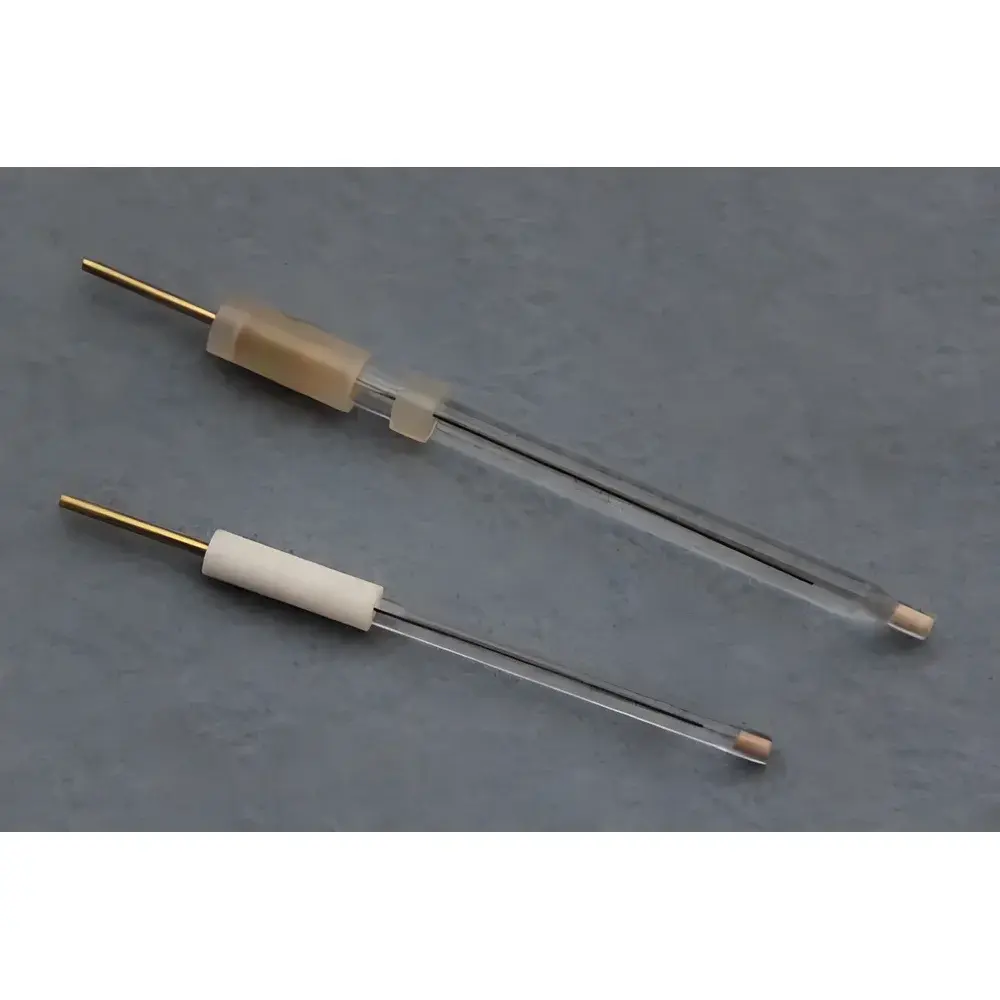
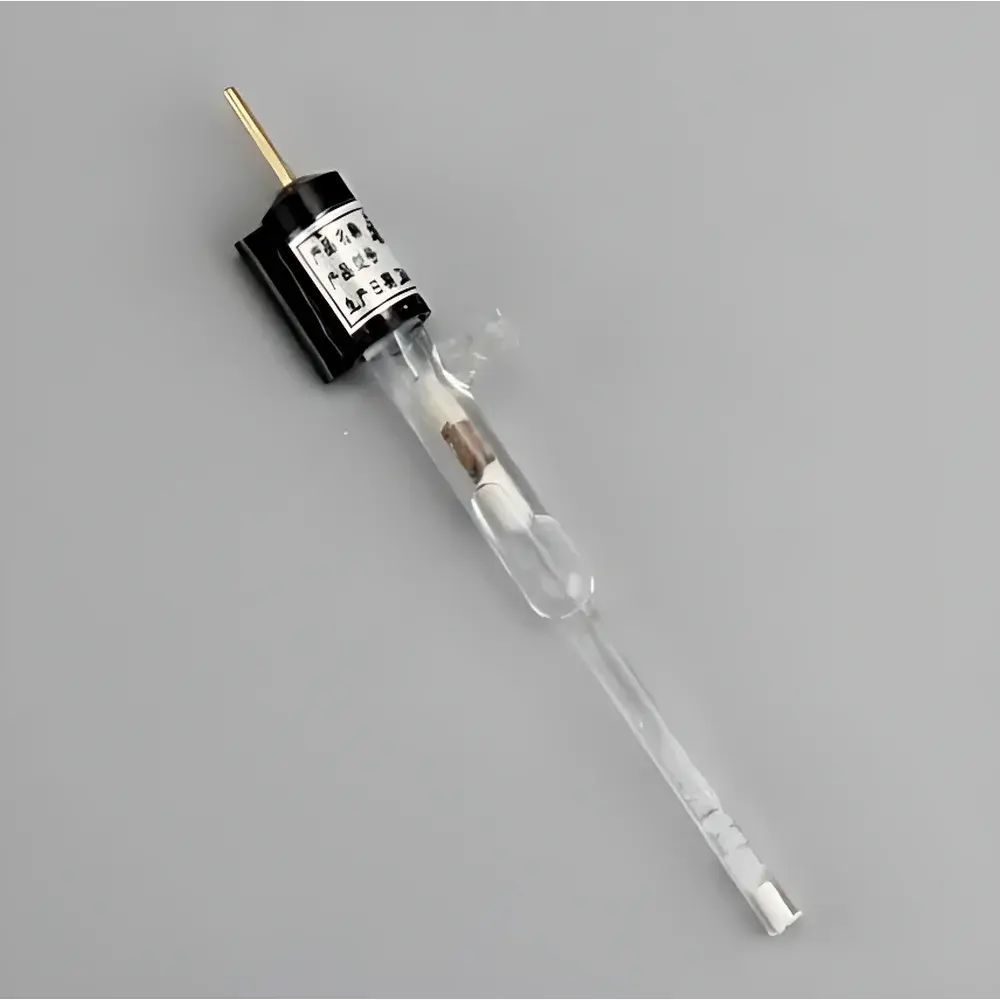
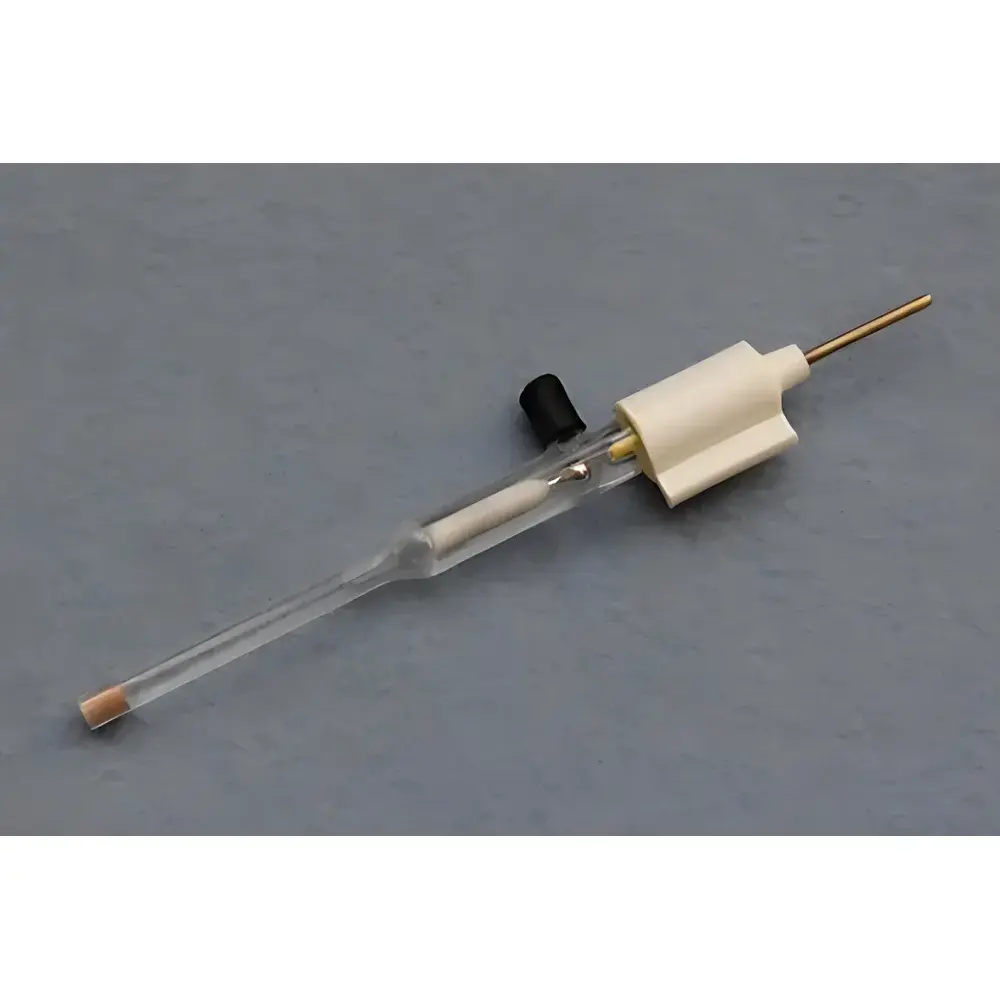
Reference Electrode (Ag/AgCl, Saturated KCl, and SCE Types)
| Origin | Beijing, China |
|---|---|
| Manufacturer Type | Distributor |
| Origin Category | Domestic |
| Light Source Type | Other Light Source |
| Illumination Mode | Internal Illumination |
| Electrode Types | Ag/AgCl (R0302, R0303, R0305), Saturated Calomel (R0232) |
| Outer Diameter | 4 mm (R0302), 6 mm (R0303), 5/9 mm (R0232) |
| Internal Electrolyte | 3.5 mol/L KCl (R0302/R0303), Saturated KCl (R0305/R0232) |
| Construction Features | Removable fill port (R0302), side-fill port (R0303), powder-pressed Ag/AgCl element (R0305), classical Hg/Hg₂Cl₂ design (R0232) |
Overview
This reference electrode series comprises rigorously engineered electrochemical half-cells designed for stable, reproducible potential control in potentiometric measurements, electrochemical impedance spectroscopy (EIS), and corrosion monitoring applications. Though categorized under optical laboratory equipment due to integration into photoelectrochemical cells (PECs) and photocatalytic reaction systems—where precise bias control under illumination is critical—these electrodes are fundamentally electrochemical standards. The Ag/AgCl and saturated calomel electrode (SCE) configurations operate on well-established redox equilibria: Ag + Cl⁻ ⇌ AgCl + e⁻ and Hg + Cl⁻ ⇌ ½Hg₂Cl₂ + e⁻, respectively. Their thermodynamic stability, low liquid-junction potential drift (< ±1 mV/h), and compatibility with aqueous and mixed-solvent electrolytes make them indispensable for quantitative electroanalysis in research labs, QC environments, and standardized testing protocols aligned with ASTM E273, ISO 13823, and IUPAC recommendations.
Key Features
- Three distinct Ag/AgCl variants: R0302 (4 mm OD, removable refill port for routine maintenance), R0303 (6 mm OD, side-mounted refill port enabling compact cell integration), and R0305 (powder-pressed Ag/AgCl pellet with saturated KCl electrolyte, optimized for long-term stability and minimal thermal hysteresis).
- Saturated calomel electrode (R0232) featuring a dual-diameter glass body (9.0 mm main shaft / 5.0 mm tip) for mechanical robustness and consistent junction geometry; employs high-purity mercury and mercurous chloride with saturated KCl internal solution.
- All models utilize low-resistance fritted junctions (porous ceramic or Vycor®-type) ensuring stable electrolyte outflow rates (0.5–2.0 µL/h) and minimizing clogging in viscous or particulate-containing media.
- Chemically inert borosilicate glass bodies resist hydrolysis, alkali attack, and UV-induced degradation—critical when deployed in illuminated electrochemical reactors alongside xenon or mercury arc lamps.
- Calibration traceability: Each batch undergoes open-circuit potential verification against NIST-traceable secondary standards at 25 °C, with documented deviation ≤ ±2 mV vs. SHE.
Sample Compatibility & Compliance
These reference electrodes are validated for use in pH measurement, ion-selective electrode (ISE) calibration, battery half-cell testing, and photoelectrochemical water splitting studies. They maintain performance across pH 0–14 and temperatures from 5–60 °C. The R0305 and R0232 models comply with ISO 7027 for turbidity-related electrochemical sensor validation and meet the electrolyte stability requirements of USP for pharmaceutical electrochemical assay environments. All units are supplied with CE-marked packaging and RoHS-compliant materials. While not intrinsically safe for explosive atmospheres, they conform to IEC 61010-1 for laboratory electrical safety when used with standard potentiostats.
Software & Data Management
Though inherently analog devices, these electrodes interface seamlessly with commercial electrochemical workstations (e.g., BioLogic SP-300, Gamry Interface 5000P, PalmSens EmStat GO) supporting real-time potential logging, automatic drift correction algorithms, and GLP-compliant audit trails. When paired with data acquisition systems compliant with FDA 21 CFR Part 11, timestamped electrode potential records—including junction potential compensation flags and temperature-stamped calibration logs—can be exported in CSV or .mpt format. No proprietary software is required; configuration is managed via instrument firmware settings for reference electrode type selection (Ag/AgCl vs. SCE) and liquid-junction offset application.
Applications
- Photoelectrocatalysis: Stable bias application during in situ UV-Vis spectroelectrochemistry using xenon or mercury lamp-illuminated quartz cells.
- Corrosion science: Long-duration potentiodynamic polarization in simulated seawater or acidic industrial coolants.
- Environmental analysis: Field-deployable pH and redox potential (Eh) monitoring in wastewater treatment streams.
- Academic teaching labs: Demonstrating Nernstian behavior, junction potential effects, and temperature dependence of reference potentials.
- Electroplating bath control: Real-time monitoring of metal ion activity in cyanide-free plating solutions.
FAQ
What is the recommended storage condition for these reference electrodes?
Store vertically in their original protective caps filled with matching internal electrolyte (3.5 M or saturated KCl); avoid dry storage or exposure to air for >2 hours.
Can R0302 and R0303 be refilled with alternative electrolytes such as LiCl or NaNO₃?
No—only the specified KCl concentration ensures defined potential and junction stability; substitution alters liquid-junction potential unpredictably and voids calibration validity.
How often should recalibration be performed in continuous operation?
Daily zero-point verification is advised; full two-point calibration (vs. fresh standard buffer and certified reference) every 72 operational hours in regulated environments.
Is the R0232 saturated calomel electrode compatible with mercury-free lab policies?
It contains elemental mercury and must be handled per local hazardous waste regulations; Ag/AgCl alternatives (R0305) are recommended for mercury-restricted facilities.
Does internal illumination affect electrode potential stability?
No—glass construction blocks UV below 300 nm; however, ensure lamp cooling prevents localized heating (>40 °C) at the electrode junction, which may induce thermal gradients and transient drift.





