
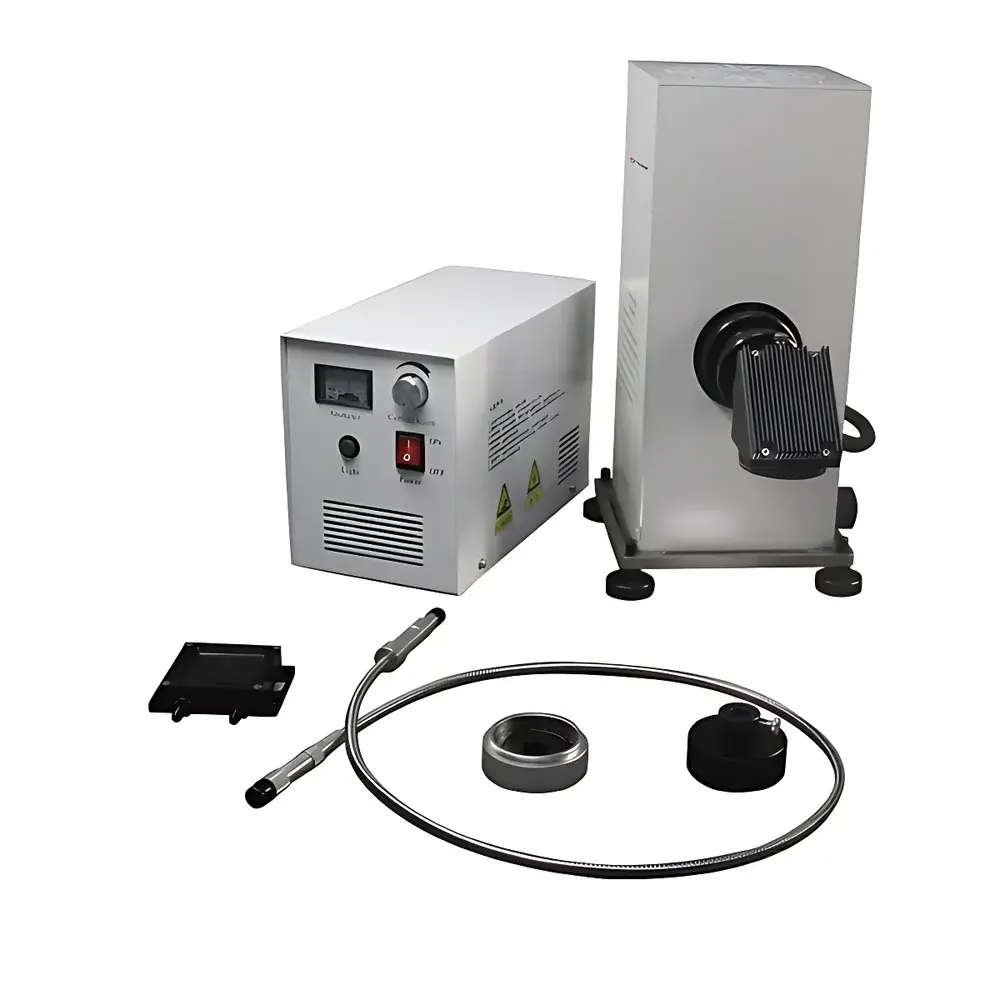
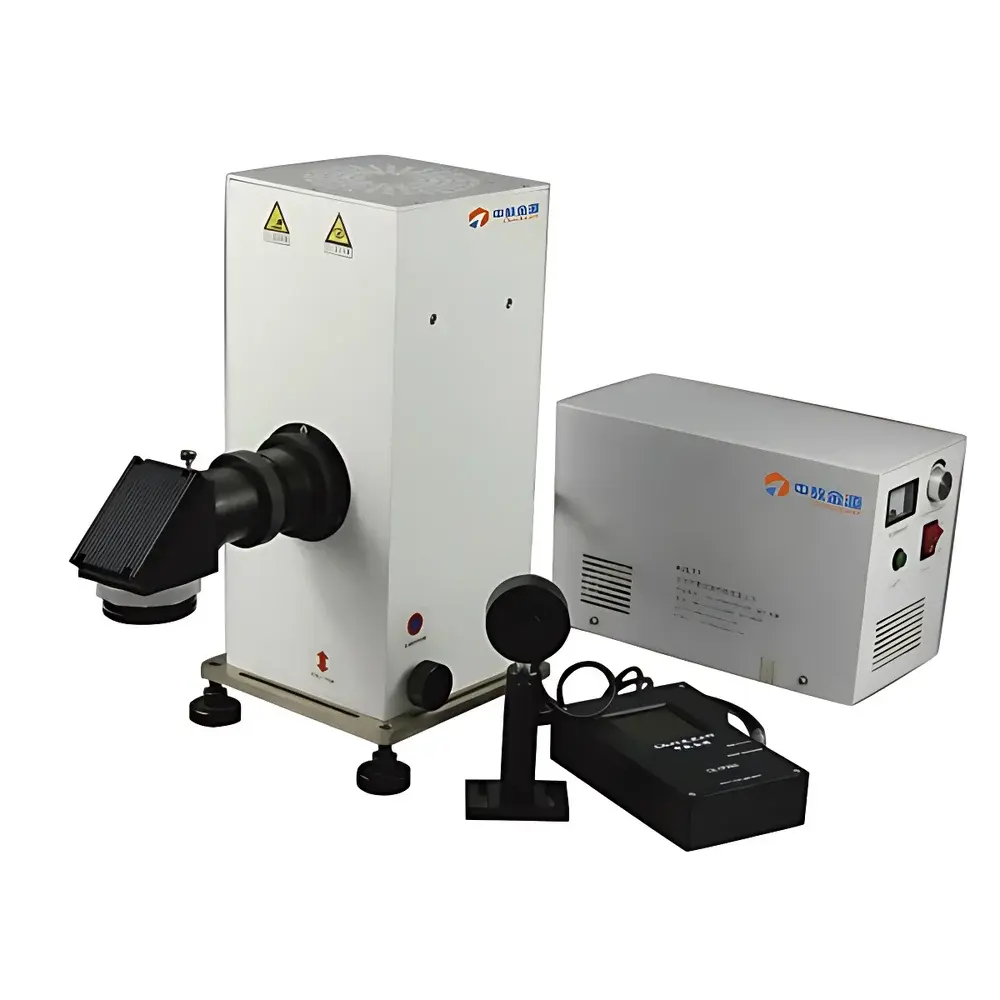
Zhongjiaojinyuan CEL-S500 & CEL-S500R3 Basic Solar-Simulation Xenon Arc Light Sources
| Brand | Zhongjiaojinyuan |
|---|---|
| Origin | Beijing, China |
| Manufacturer Type | OEM Manufacturer |
| Product Origin | Domestic (China) |
| Model | CEL-S500, CEL-S500R3 |
| Light Source Type | Xenon Arc Lamp |
| Illumination Mode | External Irradiation |
| Lamp Power | 500 W |
| Spectral Range | 300–2500 nm |
| Color Temperature | 6000 K |
| AM1.5G Spectral Compliance | Yes |
| Optical Output | Collimated Parallel Beam (Ø50–60 mm) & Focused Point Source (Ø2–3 mm) |
| Lamp Lifetime | 500–1000 h |
| Cooling Method | Forced-Air Convection |
| Power Stability | ±0.01% |
| Intensity Stability | ±0.5% |
| Adjustable Spot Diameter | 3–52 mm |
| Optional Lamp | Osram XBO 500 W Short-Arc Xenon Lamp (CEL-S500R3) |
Overview
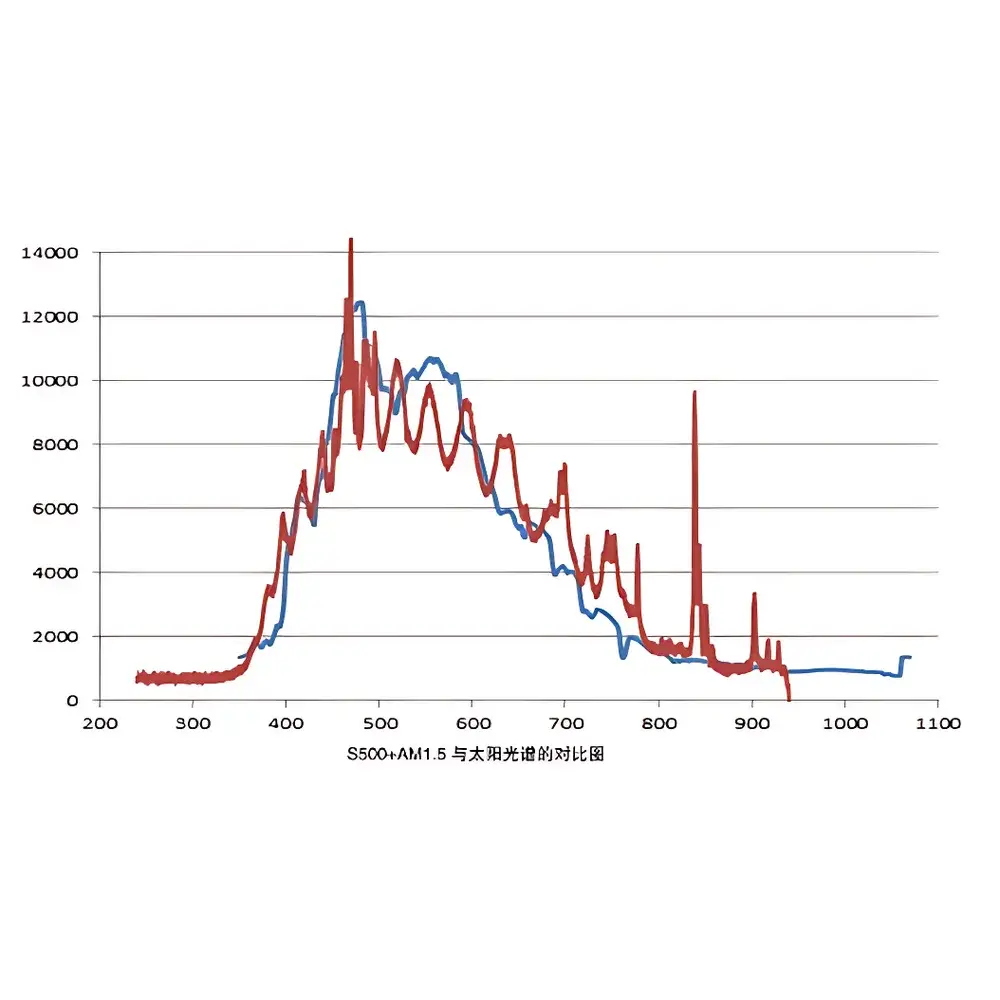
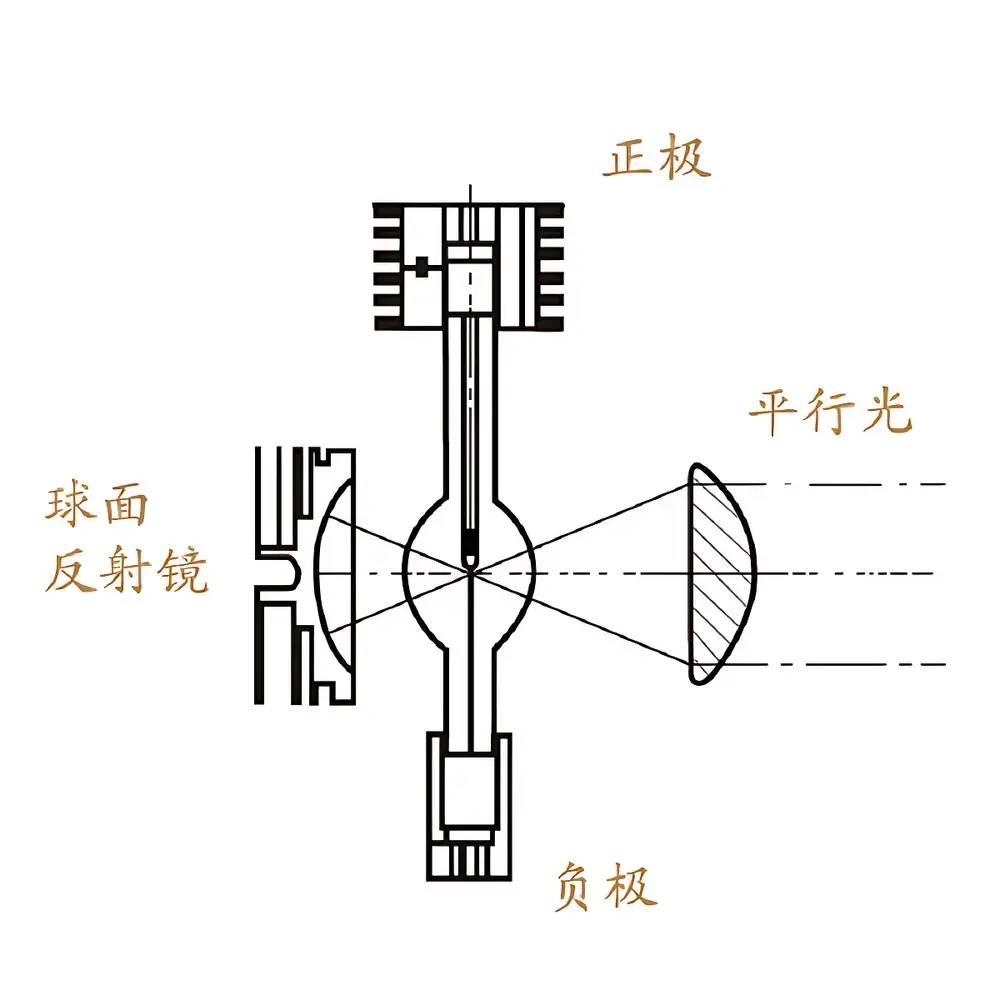
The Zhongjiaojinyuan CEL-S500 and CEL-S500R3 are research-grade, externally irradiating xenon arc light sources engineered for high-fidelity solar simulation in photovoltaic (PV), photoelectrochemical, and photocatalytic applications. These systems utilize a 500 W high-pressure short-arc spherical xenon lamp—ignited via high-frequency, high-voltage discharge—to generate intense, broadband continuum radiation spanning 300–2500 nm. The lamp’s compact arc geometry (<1 mm) functions as a near-point source, enabling precise optical coupling into collimators, fiber optics, or monochromators. With a correlated color temperature of 6000 K and spectral output closely aligned to the ASTM G173-03 AM1.5G reference spectrum (when used with certified AM1.5G filter assemblies), the CEL-S500 series delivers photometrically and radiometrically traceable irradiance suitable for I-V characterization, quantum efficiency mapping, and accelerated aging protocols under standardized solar conditions. The system architecture integrates electrical safety isolation (built-in igniter), thermal management via regulated forced-air convection, and mechanical stability through a precision three-axis translation stage—all designed to meet ISO/IEC 17025-aligned laboratory requirements for reproducible optical metrology.
Key Features
- High-efficiency optical train incorporating fused-silica collimating lenses and rear-reflecting elliptical mirrors to maximize photon collection and directional uniformity.
- Integrated three-axis micrometer-driven adjustment platform (X/Y/Z ±13 mm, angular tilt ±5°) for sub-millimeter beam alignment and spatial optimization relative to sample planes or optical components.
- Electrical safety architecture featuring an internal high-voltage trigger module—eliminating hazardous HV cabling between power supply and lamp housing per IEC 61000-4-5 surge immunity guidelines.
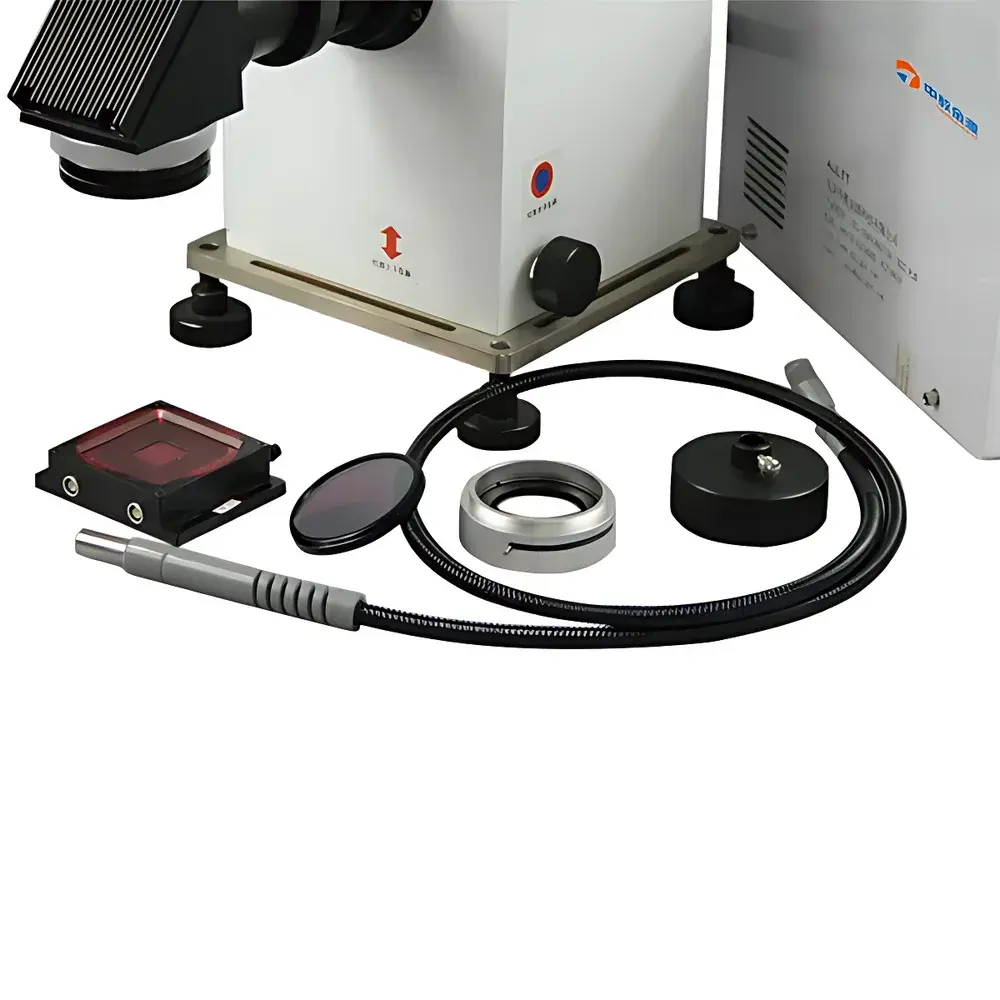
- AM1.5G spectral fidelity achieved via optional certified quartz-based AM1.5G bandpass filters (ISO 9050-compliant transmission profile), enabling compliance with IEC 60904-9:2020 and JIS C 8912 for PV device calibration.
- Modular mechanical interface supporting industry-standard optical mounts (M52, M62, SM25.4, SM50.8) and interchangeable accessories including liquid light guides (e.g., 5 mm Ø × 1200 mm LC fiber), beam expanders, and adjustable apertures (3–52 mm continuous spot diameter control).
- Thermal load management via dual-stage axial fans with thermally monitored airflow, maintaining lamp envelope temperature below 250 °C during continuous operation at rated power.
Sample Compatibility & Compliance
The CEL-S500 series is compatible with standard photovoltaic test platforms (e.g., Keithley 2400/2450 source meters, Newport PV measurement systems) and supports both single-junction and multi-junction cell evaluation under Class AAA spectral match criteria (per IEC 60904-9). Its external illumination configuration permits integration into gloveboxes (N₂/Ar atmosphere), environmental chambers (−40 to +85 °C), and vacuum-compatible optical tables (with optional O-ring sealed lamp housing variants). All optical components—including UV-grade fused silica lenses and dielectric-coated reflectors—meet MIL-O-13830 scratch-dig specifications. The system conforms to electromagnetic compatibility (EMC) requirements per EN 61326-1 and functional safety standards per IEC 61010-1 for laboratory electrical equipment. When operated with traceable calibration certificates (NIST-traceable spectroradiometric validation available upon request), data generated satisfies GLP audit requirements for materials science and renewable energy R&D reporting.
Software & Data Management
While the base CEL-S500 operates via analog/manual control, the CEL-S500E7 and CEL-S500E9 configurations support digital supervision via embedded microcontroller interfaces (RS-232/USB) and dedicated PHCS500 control software. This application enables programmable irradiance ramping, scheduled on/off cycling, real-time monitoring of lamp voltage/current/temperature, and automated logging of operational parameters (timestamped CSV export). Software-defined protocols accommodate diurnal irradiance profiles (e.g., sunrise-to-sunset intensity modulation), facilitating accelerated lifetime testing per IEC 61215-2 MQT 10. Audit trails include user authentication, parameter change history, and firmware version stamping—meeting FDA 21 CFR Part 11 electronic record integrity requirements when deployed in regulated QC environments.
Applications
- Photovoltaic device characterization: J-V curve tracing, external quantum efficiency (EQE), spectral response analysis.
- Photoelectrochemical water splitting studies requiring stable, broadband excitation across UV-vis-NIR bands.
- Heterogeneous photocatalysis kinetics (e.g., TiO₂, g-C₃N₄ degradation assays) under controlled AM1.5G illumination.
- Surface photovoltage spectroscopy (SPS) and transient absorption measurements requiring high peak irradiance and temporal stability.
- Biological photostimulation experiments (e.g., circadian rhythm modeling, photobiomodulation dose-response studies) with calibrated spectral weighting.
- Optical sensor calibration, including silicon photodiodes, pyranometers, and spectroradiometers traceable to NIST SRM 2201.
FAQ
What lamp options are supported?
Standard configuration uses a domestically manufactured 500 W short-arc xenon lamp; the CEL-S500R3 variant integrates an Osram XBO 500 W lamp for enhanced spectral stability and extended lifetime (≥800 h at 90% rated power).
Can the system be integrated with third-party monochromators or spectrometers?
Yes—fiber-coupled output (via optional 5 mm liquid light guide) and free-space collimated beam paths enable direct interfacing with Horiba, Ocean Insight, or Avantes spectrometers and monochromators equipped with SMA905 or FC/PC inputs.
Is AM1.5G spectral matching certified?
The system achieves Class A spectral match when paired with our calibrated AM1.5G filter (certified per ISO 9050:2003); full spectral validation reports (measured with AULTT-P series fiber spectrometer) are provided with each filter assembly.
What maintenance intervals are recommended?
Lamp replacement every 500–1000 h (dependent on operating current); quarterly inspection of fan filters and lens cleanliness; annual recalibration of power meter sensors if used for quantitative irradiance reporting.
Does the system support vacuum or inert-atmosphere operation?
The standard lamp housing is ambient-air rated; custom vacuum-flanged versions (CF-35 or KF-40) and purge-compatible enclosures are available as engineering options upon request.



