
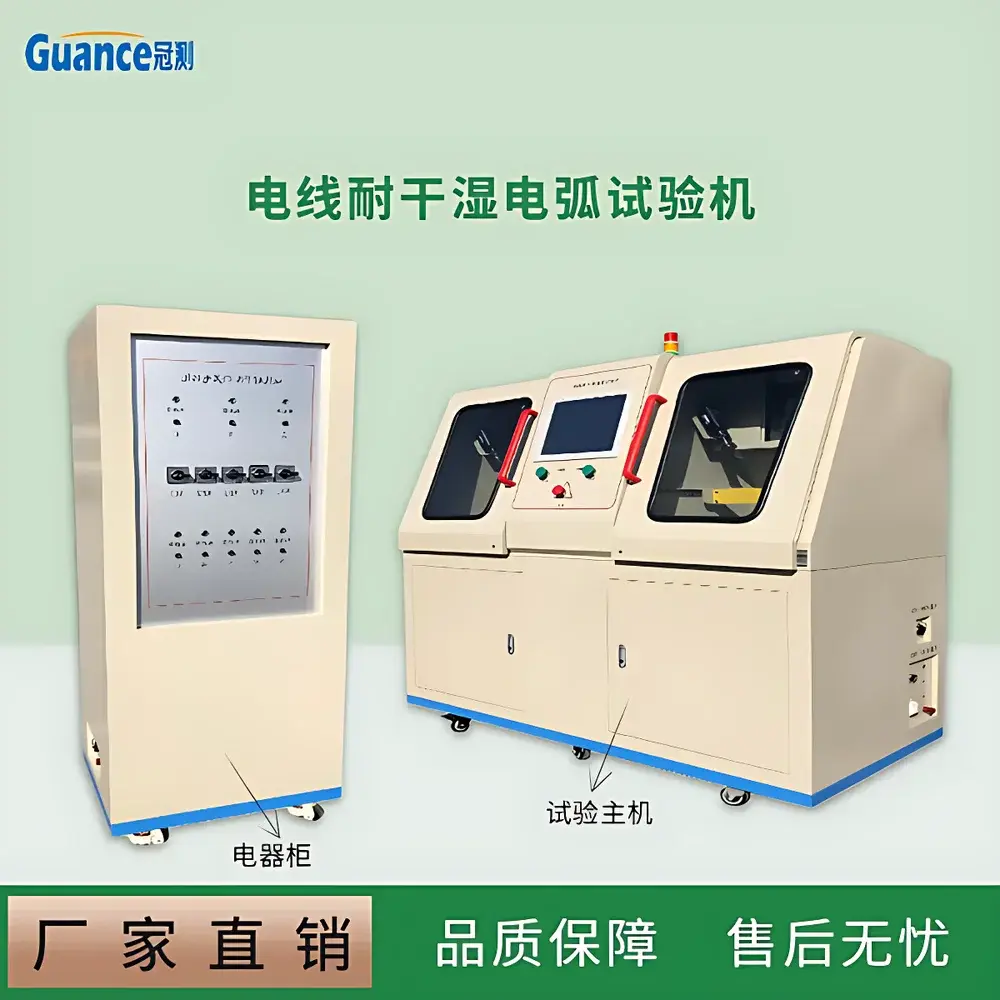
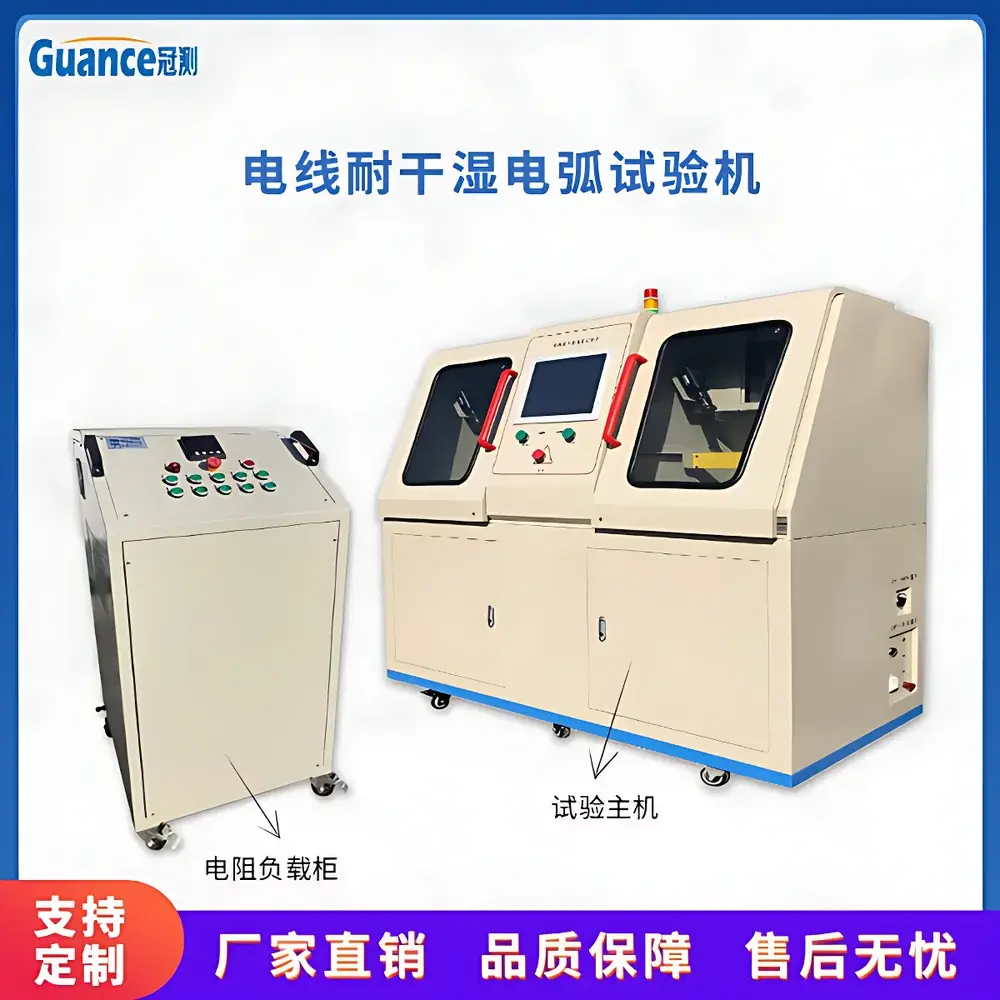
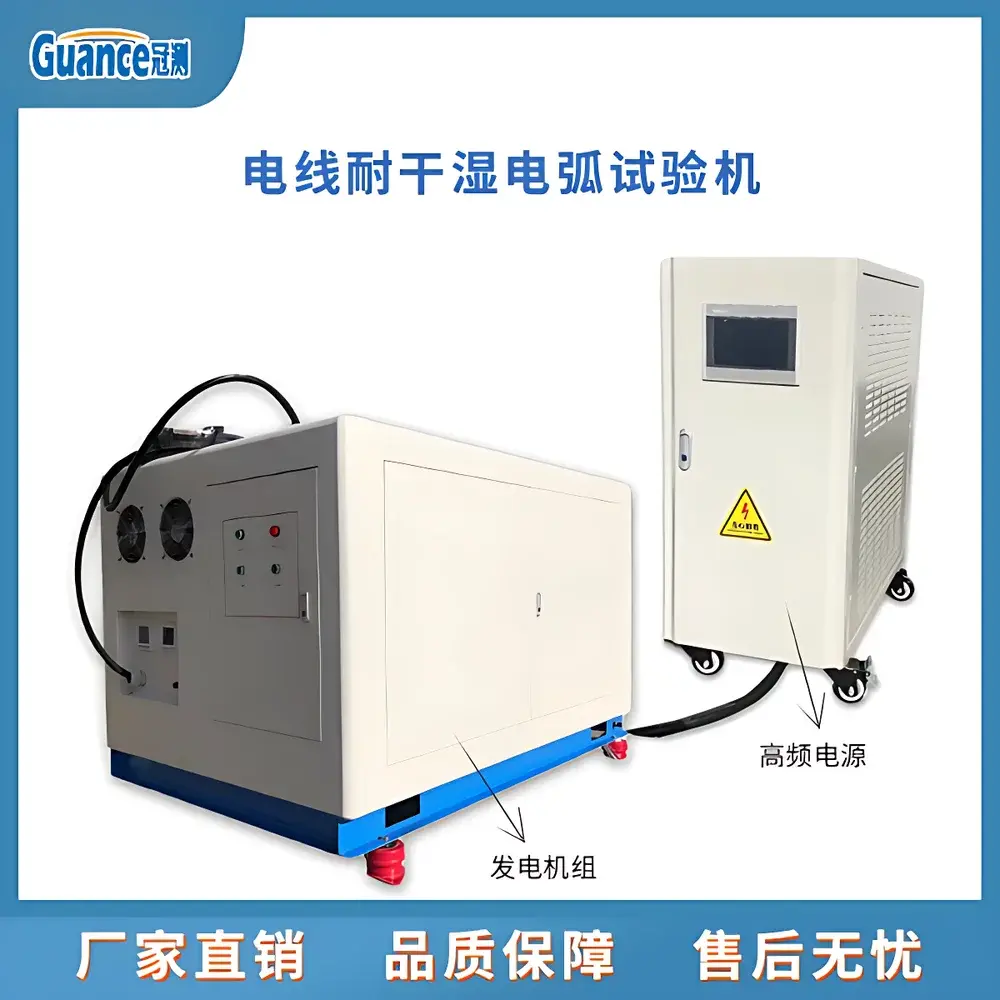
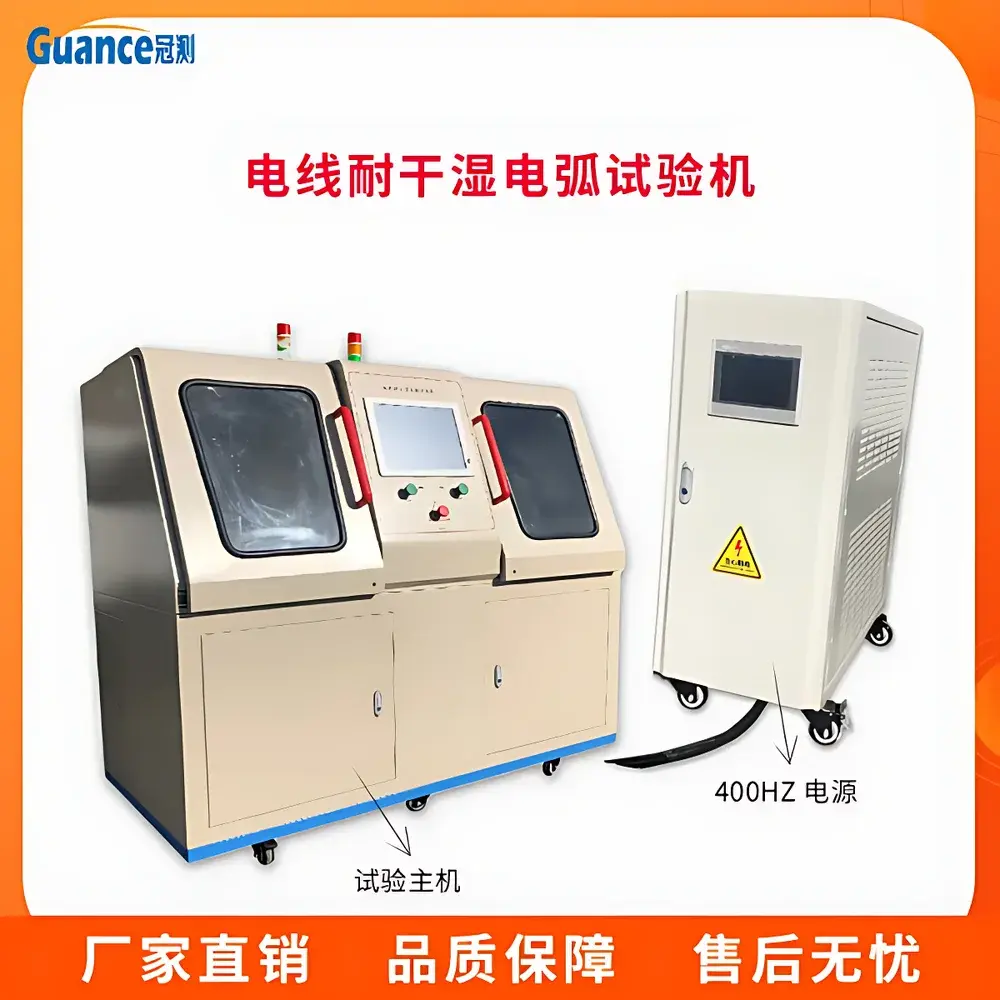
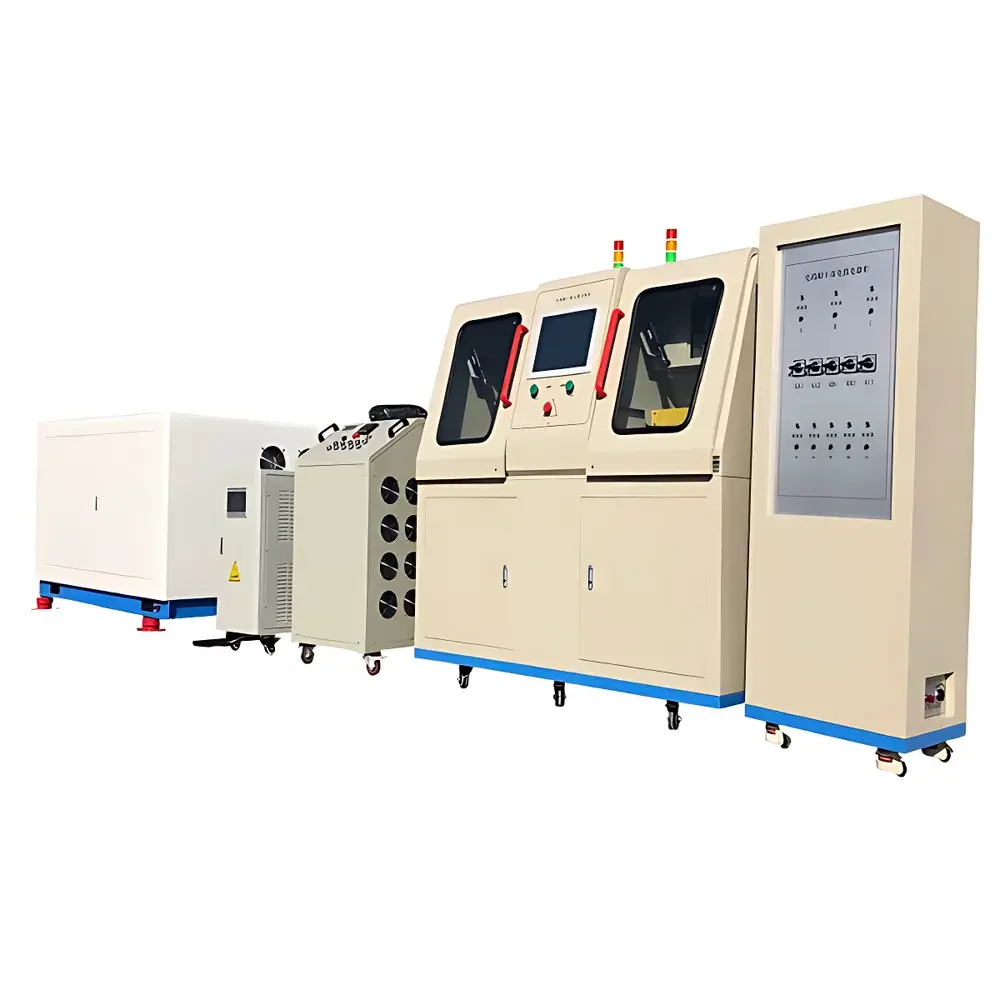
GuanCe Instruments YHT-RC100d Arc Resistance Universal Testing Machine for Aerospace Wires
| Brand | GuanCe Instruments |
|---|---|
| Origin | Beijing, China |
| Manufacturer Type | Authorized Distributor |
| Country of Origin | China |
| Model | YHT-RC100d |
| Instrument Type | Electromechanical Universal Testing Machine |
| Compliance Standards | AS4373D, GJB773A, ASD-STAN PRF-6059-502, EN 6059-502 |
| Power Input | AC 220 V ±10%, 50 Hz ±0.5 Hz, 2 kW |
| Test Modes | Dry & Wet Arc Resistance |
| Arc Current | 1.0 A ±0.2 A |
| Voltage Accuracy | ±1% (0.1 V resolution) |
| Current Accuracy | ±1% (0.01 A resolution) |
| Timing Range | 1–99,999,999 s (programmable) |
| Electrode Travel Stroke | 1–10 cm (standard: 3.81 ±0.3 cm) |
| Electrode Speed | 0.5 ±0.05 cycles per second (full reciprocation) |
| Load Mass on Electrode | 250 ±25 g |
| Dropping Rate | 100 ±10 mg/min (8–10 drops/min, via Lead Fluid BV-100 peristaltic pump) |
| Control System | Siemens S7-1200 PLC (original imported) |
| HMI | Moxa 10-inch capacitive HD touchscreen |
| Safety Protection | Five 7.5 A circuit breakers |
| Grounding Resistance | <1 Ω |
| Ambient Operating Conditions | Altitude ≤1000 m |
| Dimensions (L×W×H) | 1400 × 830 × 1500 mm |
| Weight | 300 kg |
Overview
The GuanCe Instruments YHT-RC100d Arc Resistance Universal Testing Machine is an electromechanical test system engineered for standardized evaluation of arc resistance performance in aerospace-grade wire insulation materials under both dry and wet conditions. It operates on the principle of controlled high-frequency arcing across a defined electrode gap while simultaneously applying mechanical abrasion and, in wet-mode tests, metered electrolyte droplet impingement. The system integrates power conditioning (400 Hz, 230/400 V), precision servo-driven electrode motion, real-time electrical parameter acquisition (voltage, current), and programmable fluid delivery—enabling reproducible simulation of in-service arc tracking phenomena observed in aircraft wiring harnesses. Designed specifically to meet stringent aerospace qualification protocols, the YHT-RC100d delivers traceable, repeatable test execution aligned with AS4373D Section 803 (Arc Resistance), GJB773A Method 3014, and EN 6059-502, supporting certification workflows required by OEMs and Tier-1 suppliers.
Key Features
- Integrated 400 Hz power subsystem comprising a 20 kVA generator, frequency converter, and ballast-controlled output—ensuring stable arc initiation and sustainment per AS4373D requirements.
- Servo-motor-driven electrode assembly with linear guide rails and ball-screw transmission, enabling precise control over stroke length (1–10 cm), speed (0.5 ±0.05 cps), and applied load (250 ±25 g).
- Dual-mode operation: dry arc testing (no electrolyte) and wet arc testing using programmable peristaltic dosing (100 ±10 mg/min) via a calibrated Lead Fluid BV-100 pump with stainless-steel needle and adjustable drip position.
- Siemens S7-1200 PLC-based control architecture with deterministic scan cycle (<10 ms), providing real-time closed-loop regulation of voltage, current, timing, and fluid flow—all accessible through a Moxa 10-inch capacitive touchscreen HMI.
- Comprehensive safety architecture including five independently monitored 7.5 A thermal-magnetic circuit breakers, one 30 A short-circuit breaker, grounding resistance <1 Ω, and exhaust ventilation with external ducting for hazardous fume removal.
- Full parameter logging at ≥1 Hz sampling rate: voltage (±1%, 0.1 V resolution), current (±1%, 0.01 A resolution), elapsed time, droplet count, and trip event timestamps—exportable as CSV for audit trail compliance.
Sample Compatibility & Compliance
The YHT-RC100d accommodates up to seven parallel wire specimens (five under active load, two reference), with dedicated dry and wet mounting fixtures designed to maintain consistent geometry, tension, and electrode alignment per AS4373D Figure 803-1. Specimen preparation follows ASTM D495 and IEC 60587 methodologies adapted for aviation wire geometries (e.g., MIL-DTL-27500, AS50881). All electrical measurements are traceably referenced to NIST-traceable calibrations performed prior to each qualification run. The system satisfies data integrity requirements under GLP and supports 21 CFR Part 11-compliant electronic records when paired with validated laboratory information management system (LIMS) interfaces. Full compliance documentation—including factory calibration certificates, PLC firmware version logs, and touch-screen HMI configuration backups—is provided with each unit.
Software & Data Management
The embedded HMI firmware supports multi-user access levels (Operator, Technician, Administrator) with password protection and session-based audit trails. All test parameters—including voltage setpoint, current limit, total duration, electrode stroke, and droplet volume—are stored in non-volatile memory with timestamped revision history. Real-time trending graphs for voltage, current, and cumulative droplet mass are rendered directly on the touchscreen during test execution. Post-test data export includes raw time-series values, pass/fail flags per specimen, trip cause identification (overcurrent, arc extinction, timeout), and metadata (operator ID, environmental readings, calibration status). Export formats include UTF-8 CSV and PDF summary reports compatible with enterprise QA systems.
Applications
- Qualification testing of fluoropolymer-insulated wires (e.g., ETFE, FEP, PTFE) used in commercial and military aircraft wiring systems.
- Comparative arc tracking resistance analysis of novel insulating compounds during material development.
- Failure mode analysis of insulation degradation under combined electrical stress, mechanical wear, and ionic contamination.
- Production line verification per AS50881 Section 4.4.2.1 and GJB773A Clause 3.2.1 for batch release of aerospace wire assemblies.
- Root cause investigation of field-reported arc-induced charring or carbon tracking in avionics harnesses.
FAQ
What standards does the YHT-RC100d fully support?
AS4373D (Section 803), GJB773A (Method 3014), EN 6059-502, and ASD-STAN PRF-6059-502.
Is the 400 Hz power supply internally generated or externally sourced?
Internally generated via integrated 20 kVA generator + frequency converter—no external 400 Hz source required.
Can test parameters be modified during runtime?
No—parameters are locked upon test initiation to ensure protocol fidelity; modifications require abort and reconfiguration.
How is solution conductivity verified before wet-mode testing?
Via integrated conductivity meter (0–20 mS/cm range) connected to the PLC, with pass/fail validation enforced prior to droplet initiation.
Does the system support automated report generation with digital signatures?
Yes—PDF reports include operator ID, timestamp, calibration certificate references, and configurable digital signature fields compliant with internal QA policy.



