
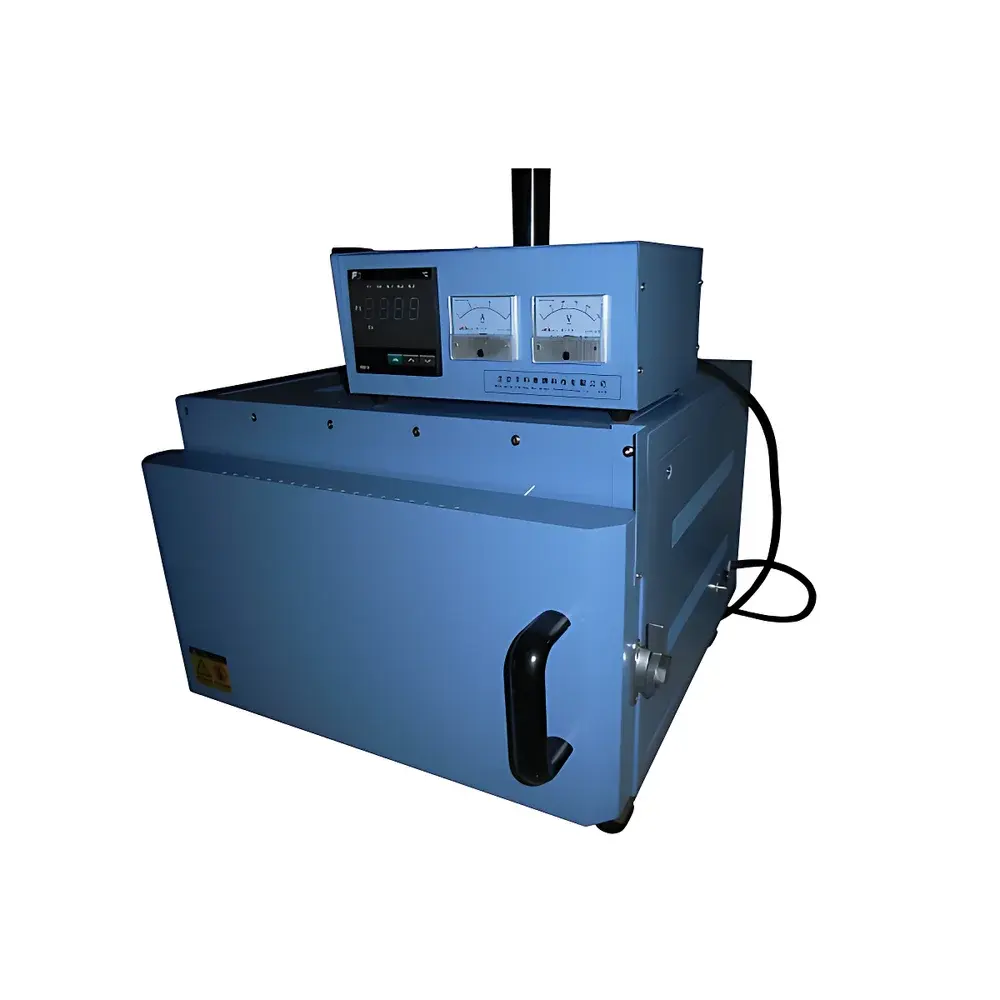
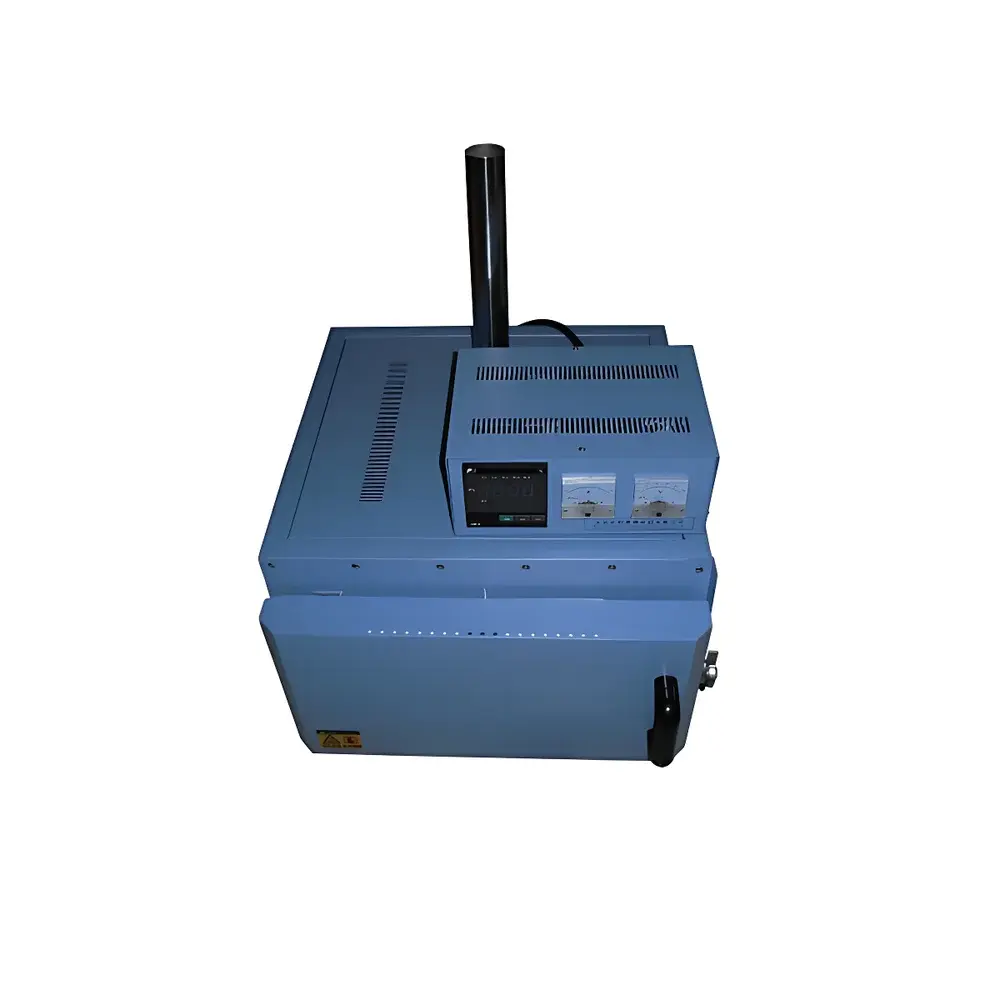
Zhongke Aobo TL0610 High-Temperature Ash Furnace for Coal Analysis
| Brand | Zhongke Aobo |
|---|---|
| Model | TL0610 |
| Temperature Range | Up to 1000 °C |
| Furnace Volume | 6 L |
| Heating Rate | <30 min (100 °C to 1000 °C) |
| Power Supply | AC 220 V, 16 A |
| Control Accuracy | ±1 °C |
| Thermal Insulation | Ceramic Fiber |
| Heating Element | HRE Resistance Wire |
| Thermocouple Type | K |
| Net Weight | 50 kg |
| Compliance | ASTM D3174, ISO 3987, GB/T 212–2008 |
Overview
The Zhongke Aobo TL0610 High-Temperature Ash Furnace is a precision-engineered laboratory furnace designed specifically for standardized ash content determination and ash fusion temperature (AFT) analysis in coal, coke, and solid fuel characterization. It operates on the principle of controlled high-temperature oxidation—subjecting weighed samples to precisely regulated thermal profiles under ambient or mildly oxidizing atmospheres to combust organic matter and volatiles, leaving behind inorganic residue (ash) for gravimetric quantification. The furnace meets the thermal stability, ramp rate, and temperature uniformity requirements defined in ASTM D3174 (Standard Test Method for Ash in the Analysis Sample of Coal and Coke), ISO 3987 (Coal and Coke — Determination of Ash), and China’s national standard GB/T 212–2008. Its ceramic fiber insulation architecture enables rapid heating, low thermal mass, and surface temperatures below 60 °C at steady-state 1000 °C operation—ensuring operator safety and energy efficiency without compromising thermal repeatability across consecutive cycles.
Key Features
- Ultra-fast heating performance: Achieves 100 °C to 1000 °C in less than 30 minutes—optimized for high-throughput coal quality laboratories performing daily proximate analysis.
- Ceramic fiber insulation: Reduces thermal inertia by >50% versus traditional brick-lined muffle furnaces; improves energy efficiency by ~40% and extends service life by 3.5×.
- PID-intelligent temperature controller (TL06/09 series): Digital setpoint interface with 8–30 programmable steps, ±1 °C control accuracy, and 0.2% full-scale temperature stability.
- Integrated safety systems: Automatic power cutoff upon door opening, independent control module for simplified maintenance, and configurable ventilation ports for active oxygen replenishment during ashing.
- Modular mechanical design: Removable HRE resistance wire heating elements allow field replacement without disassembling the furnace structure; K-type thermocouples ensure traceable calibration.
- Compact footprint & lightweight construction: 6 L chamber (200 × 250 × 120 mm) housed in a 540 × 550 × 415 mm chassis weighing only 50 kg—ideal for space-constrained QC labs and mobile analytical units.
Sample Compatibility & Compliance
The TL0610 accommodates standard crucibles (e.g., porcelain, platinum, or silicon carbide) used in coal ash protocols—including ASTM D3174-compliant 30 mL porcelain crucibles and ISO 3987-specified flat-bottom vessels. It supports sequential thermal treatments required for full proximate analysis: moisture loss (105–110 °C), volatile matter release (900 °C, inert atmosphere), fixed carbon calculation, and ash residue determination (750–815 °C, air atmosphere). Optional gas inlet/outlet ports permit integration with inert gas purging systems for specialized ash composition studies or sulfur retention analysis. All operational parameters comply with GLP documentation requirements, and temperature logs are exportable for audit trails aligned with ISO/IEC 17025 accreditation criteria.
Software & Data Management
While the TL0610 operates via standalone digital controller, its temperature profile data—including ramp rates, dwell times, and real-time thermocouple feedback—can be manually logged or interfaced via RS-485 (optional) for integration into LIMS or laboratory automation platforms. The controller supports time-stamped step programming up to 99 hours 59 minutes per segment, enabling unattended overnight ashing cycles. For regulated environments, optional validation packages include IQ/OQ documentation templates compliant with FDA 21 CFR Part 11 (when paired with validated data acquisition software), supporting traceability of calibration history, operator access logs, and deviation reporting.
Applications
- Coal and coke laboratories performing routine ASTM D3174 ash assays and GB/T 212–2008 proximate analysis.
- Power generation facilities conducting feedstock quality control prior to combustion or gasification.
- Environmental testing labs analyzing fly ash, bottom ash, and slag for heavy metal leaching potential (TCLP, SPLP).
- Research institutions studying ash fusibility behavior—including deformation, softening, hemisphere, and flow temperatures—using standardized AFT cones.
- Pharmaceutical and food testing labs requiring controlled dry-ashing for elemental analysis (e.g., ICP-OES, AAS) of biological matrices.
- Materials science labs performing thermal pre-treatment of catalysts, ceramics, and battery electrode precursors.
FAQ
What standards does the TL0610 support for coal ash analysis?
It fully complies with ASTM D3174, ISO 3987, and GB/T 212–2008 for ash content determination, and can be configured for ASTM D1857 ash fusion testing with optional cone holder accessories.
Can the furnace be used for sulfur or chlorine analysis in coal?
Yes—when coupled with appropriate sample boats and controlled airflow, it supports ASTM D3177 (total sulfur by Eschka method) and ASTM D3179 (chlorine by oxygen bomb combustion followed by furnace ashing).
Is the TL0610 suitable for GMP-regulated pharmaceutical ash testing?
It meets core thermal performance criteria for USP <281> and EP 2.4.10; full GMP compliance requires additional qualification (IQ/OQ/PQ) and integration with audit-trail-capable data recording systems.
How often must the thermocouple be calibrated?
Per ISO/IEC 17025, K-type thermocouples should be verified against NIST-traceable references before each shift or daily—whichever is more frequent—in high-precision coal QA workflows.
Does the furnace support inert atmosphere operation?
Standard configuration includes vent ports; optional gas inlet/outlet fittings enable nitrogen or argon purging for reducing or inert ashing protocols.
Related Products





