
UV Aging Test Chamber – Fluorescent UV Accelerated Weathering Chamber
| Brand | Other Brands |
|---|---|
| Origin | Imported |
| Manufacturer Type | Authorized Distributor |
| Price | USD 2,650 (Reference Only) |
| UV Lamp Type | UVA-340 or UVB-313 |
| Temperature Range | 40°C to 80°C (operational control) |
| Humidity Control | Condensation Cycle (50–95% RH) |
| Irradiance Control | Digital Radiometer with Feedback Loop |
| Sample Capacity | Standard 48-position rack (75 mm × 150 mm specimen area) |
| Compliance | ASTM G154, ISO 4892-3, JIS D0205, SAE J2020 |
| Optional Features | Water Spray System, Black Panel Thermometer, Programmable Cycle Sequencing |
Overview
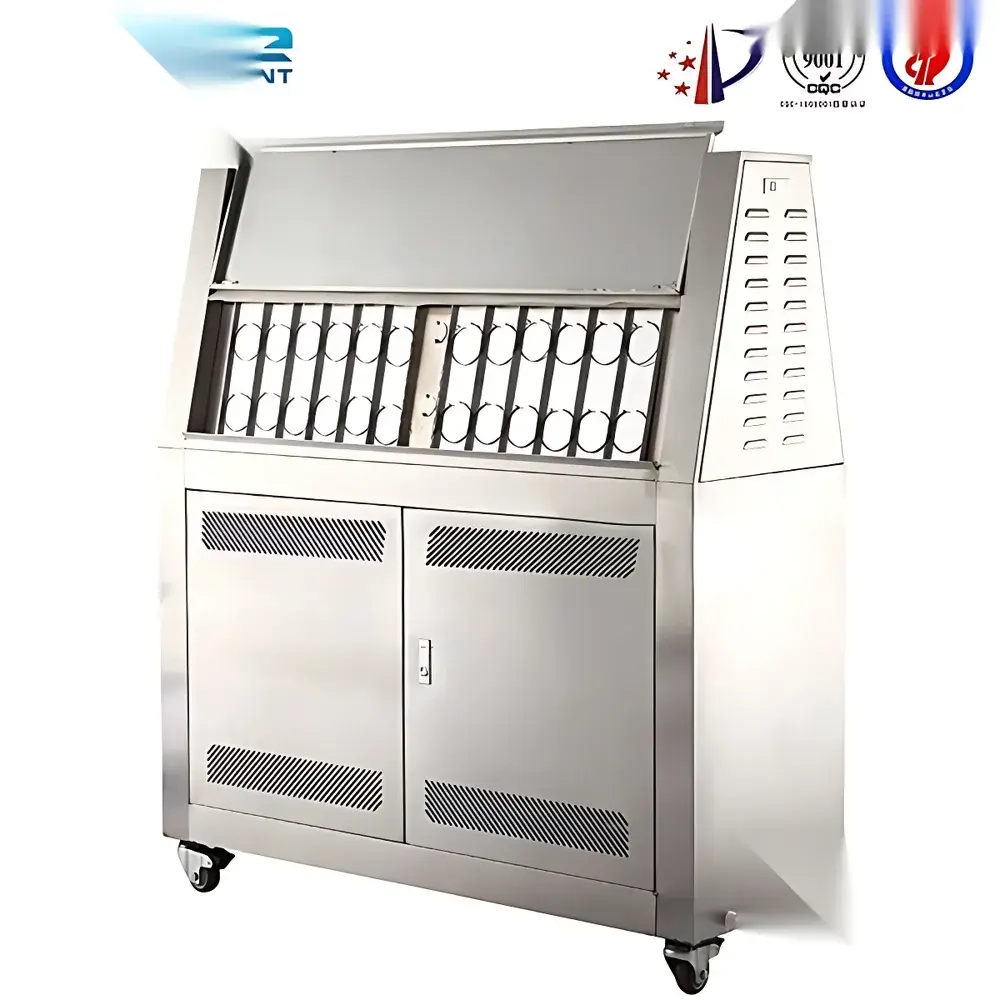
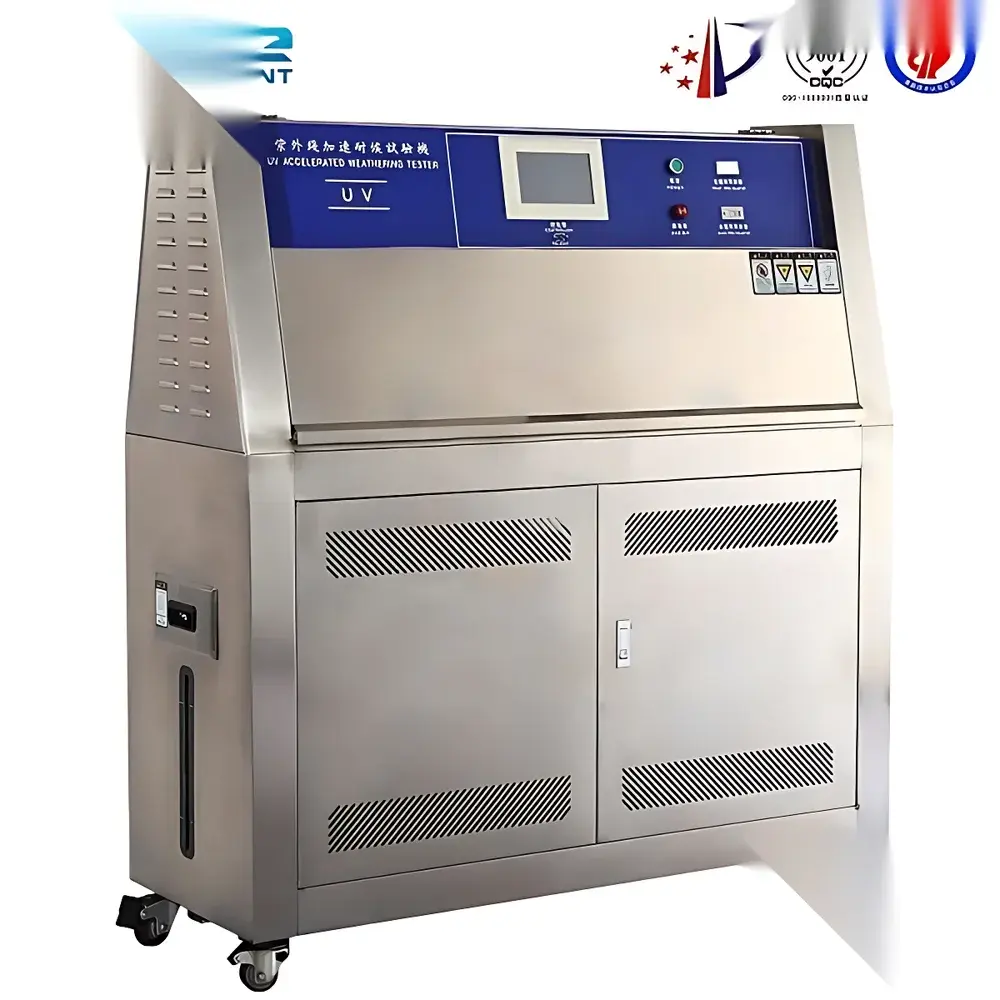
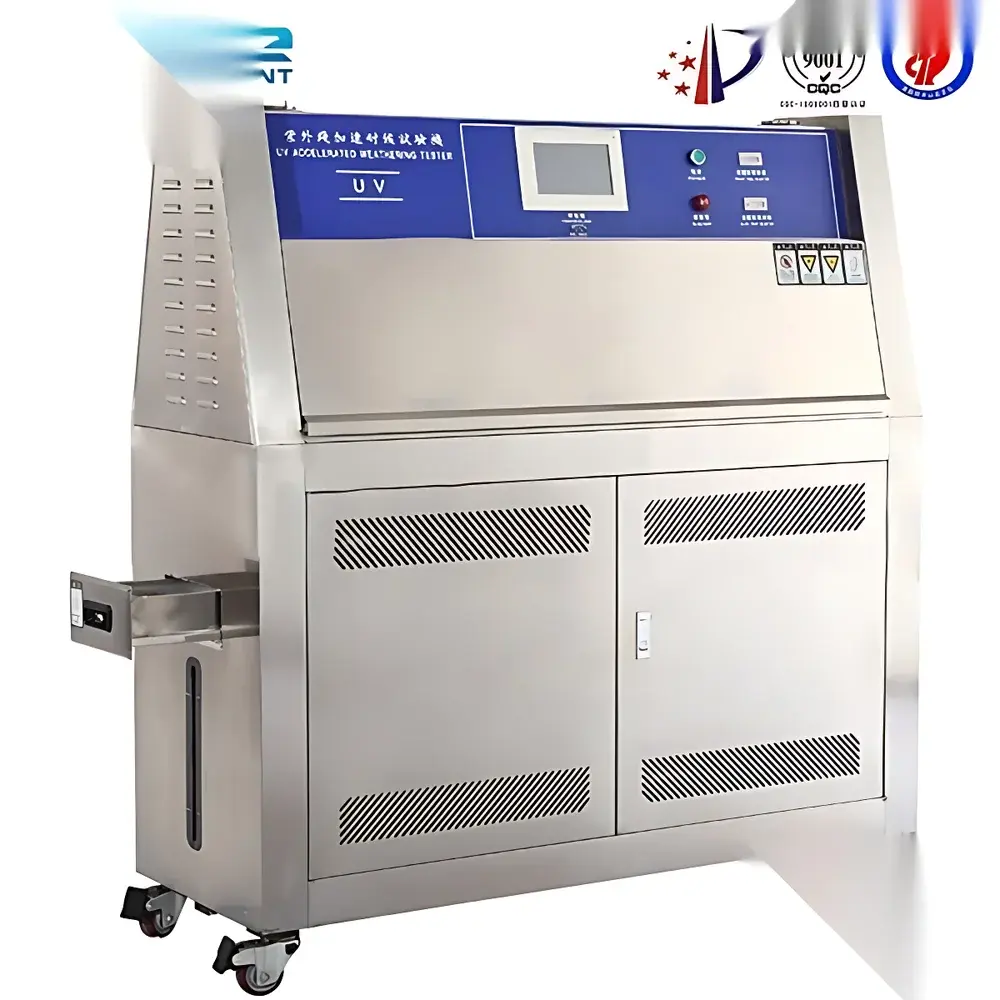
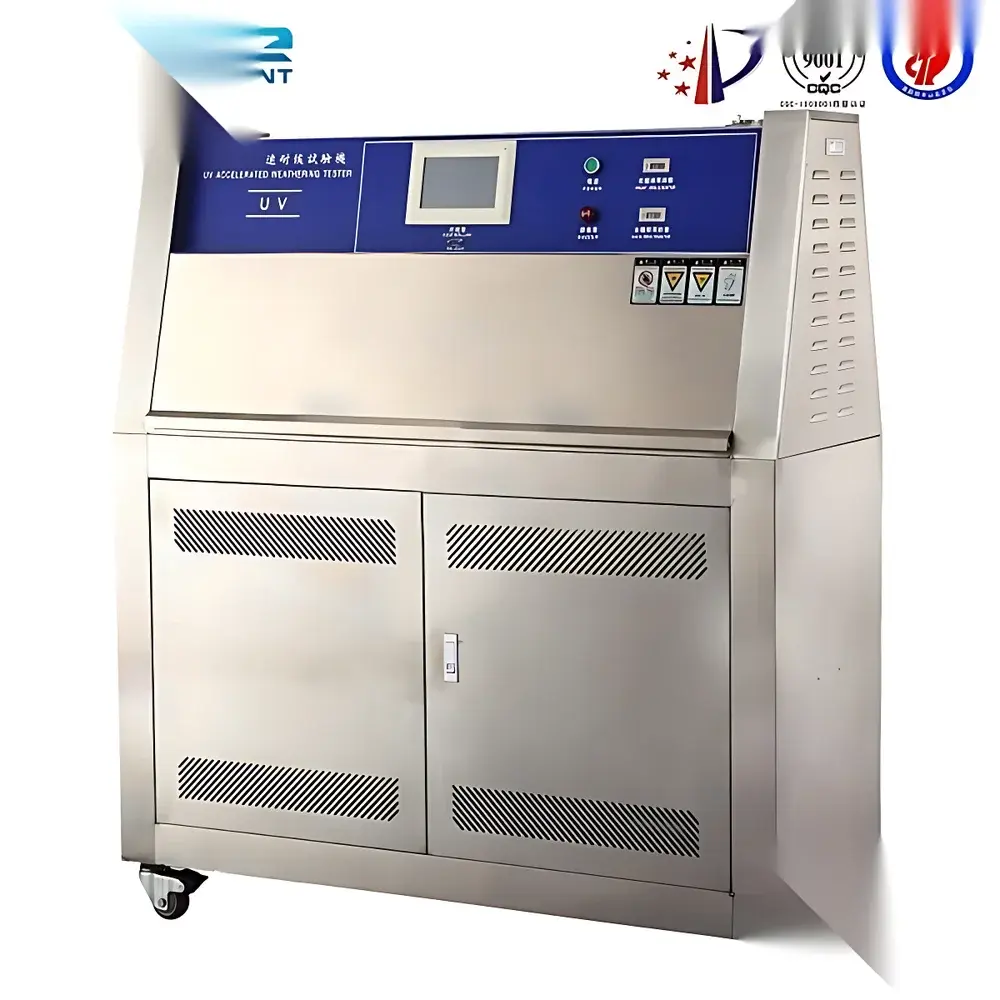
The UV Aging Test Chamber is an accelerated weathering instrument engineered for precision simulation of solar ultraviolet radiation and moisture-induced degradation mechanisms. It operates on the principle of controlled fluorescent UV irradiation—primarily using UVA-340 lamps (spectrally matching terrestrial sunlight down to 295 nm) or UVB-313 lamps (for aggressive, short-wavelength stress testing)—combined with cyclic condensation to replicate dew formation. Unlike broad-spectrum xenon arc systems, this chamber isolates the most photochemically active portion of the solar spectrum, enabling reproducible, high-intensity UV exposure under tightly regulated thermal and hygrothermal conditions. The chamber supports standardized exposure protocols where specimens undergo alternating phases of UV irradiation at elevated temperatures (typically 60°C black panel temperature) and dark condensation periods at ambient humidity saturation. This dual-stress methodology accelerates photodegradation pathways—including polymer chain scission, chromophore bleaching, surface oxidation, and hydrolytic cleavage—allowing laboratory evaluation of material durability in days or weeks equivalent to months or years of outdoor service life.
Key Features
- Fluorescent UV lamp arrays with spectral output compliant to ASTM G154 Class I (UVA-340) and Class II (UVB-313) requirements
- Digital irradiance monitoring and closed-loop intensity control via integrated radiometer, ensuring ±3% irradiance stability over time
- Condensation system utilizing heated water reservoir and controlled chamber wall cooling to generate uniform dew formation across specimen surfaces
- Optional water spray module meeting ASTM D822 and ISO 4892-3 specifications for wetting simulation during irradiation
- Black panel thermometer (BPT) and air temperature sensors with independent PID control loops for thermal accuracy within ±0.5°C
- Programmable cycle sequencing interface supporting up to 99 custom exposure profiles (e.g., 4h UV @ 60°C / 4h condensation @ 50°C)
- Stainless steel 316L interior chamber with seamless welded construction and corrosion-resistant hardware
- Integrated safety interlocks including UV lamp shutoff upon door opening, overtemperature cutoff, and emergency stop circuitry
Sample Compatibility & Compliance
The chamber accommodates flat-panel specimens up to 75 mm × 150 mm per position, with standard racks supporting 48 samples per cycle. Compatible substrates include thermoplastics (PP, ABS, PC), coatings (automotive clearcoats, architectural paints), elastomers (EPDM, silicone), textiles, and composite laminates. All operational parameters adhere strictly to internationally recognized standards: ASTM G154 (Practice for Operating Fluorescent Ultraviolet (UV) Lamp Apparatus for Exposure of Nonmetallic Materials), ISO 4892-3 (Plastics — Methods of Exposure to Laboratory Light Sources — Part 3: Fluorescent UV Lamps), JIS D0205 (Automotive exterior materials), and SAE J2020 (Accelerated Exposure of Automotive Exterior Materials Using Fluorescent UV and Condensation). Data generated is suitable for GLP-compliant reporting and supports regulatory submissions requiring traceable, auditable exposure history.
Software & Data Management
The embedded controller provides real-time logging of irradiance (W/m²), black panel temperature, chamber air temperature, and condensation duration. Exportable CSV files include timestamped metadata aligned to NIST-traceable calibration records. Optional PC-based software enables remote monitoring, multi-chamber fleet management, and automated report generation compliant with FDA 21 CFR Part 11 requirements—including electronic signatures, audit trail activation, and user role-based access control. Calibration certificates for radiometric and thermal sensors are provided annually and archived with each test run.
Applications
This chamber serves critical roles in R&D labs and quality assurance departments across automotive OEMs, aerospace component suppliers, paint and coating formulators, plastic compounders, and solar module manufacturers. Typical use cases include: validation of UV stabilizer packages in polyolefin compounds; comparative ranking of pigment fade resistance in architectural coatings; qualification of adhesive bondline integrity under cyclic UV/humidity stress; assessment of encapsulant yellowing in photovoltaic modules; and regulatory pre-compliance screening for UL 746C, IEC 61215, and MIL-STD-810H Method 505.5.
FAQ
What UV lamp types are supported, and how do they differ?
UVA-340 lamps replicate solar UV down to 295 nm and are recommended for general weathering simulation. UVB-313 lamps emit shorter wavelengths (down to 280 nm) and induce more severe, non-natural degradation—used primarily for rapid screening or failure-mode analysis.
Is condensation the only moisture mechanism available?
Standard operation uses condensation-only cycles. An optional water spray system can be activated to simulate rain or dew wash-off effects per ASTM G154 Cycle 3 and ISO 4892-3 Annex B.
How often must the UV lamps be replaced?
Lamp lifetime is rated at 1,600–2,000 hours of continuous operation. Replacement is mandatory after this interval or when irradiance drops below 90% of initial calibrated output, as verified by the onboard radiometer.
Can the chamber operate unattended for extended cycles?
Yes—fully programmable controllers support uninterrupted runs up to 999 hours. Safety interlocks and remote alarm outputs (dry contact relay) integrate with facility monitoring systems for 24/7 oversight.
What maintenance is required between test cycles?
After each run: drain condensate reservoir, wipe stainless interior with deionized water, inspect lamp sockets for oxidation, verify gasket integrity, and clean quartz lamp sleeves with isopropyl alcohol to maintain optical transmission.



