
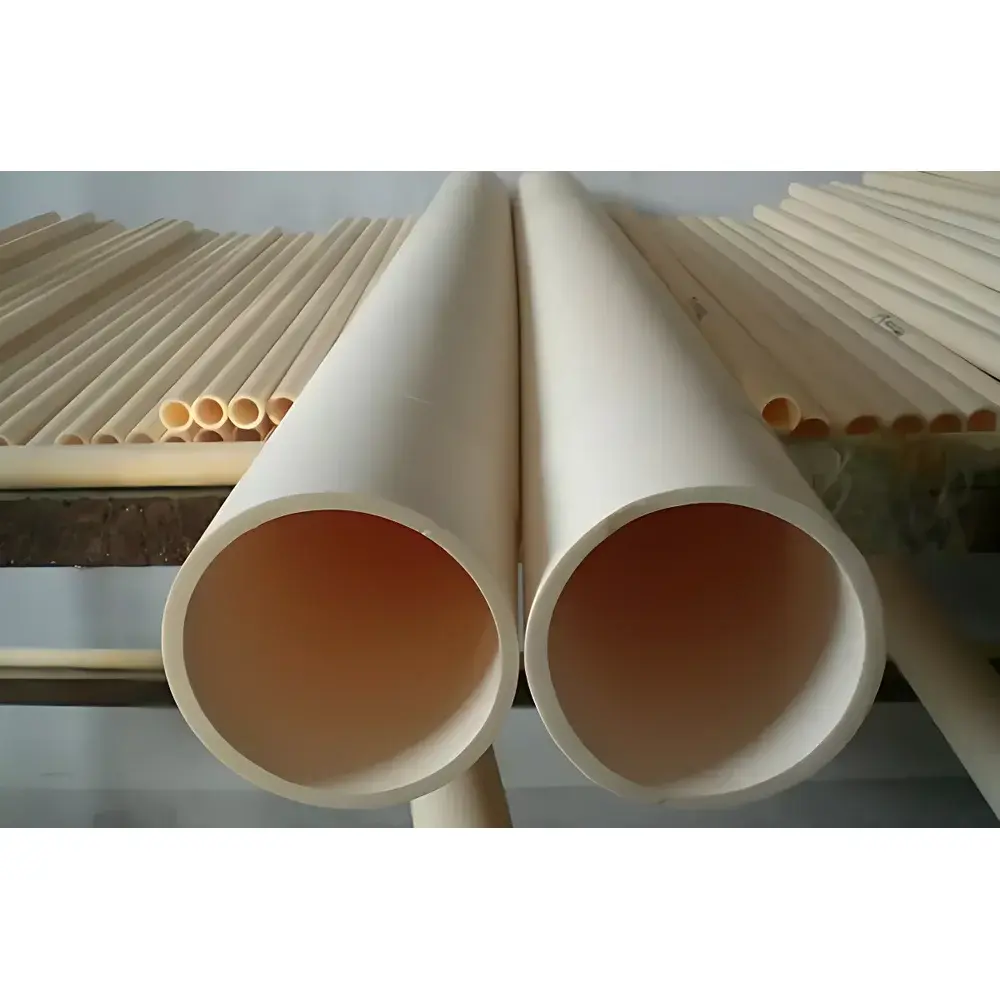
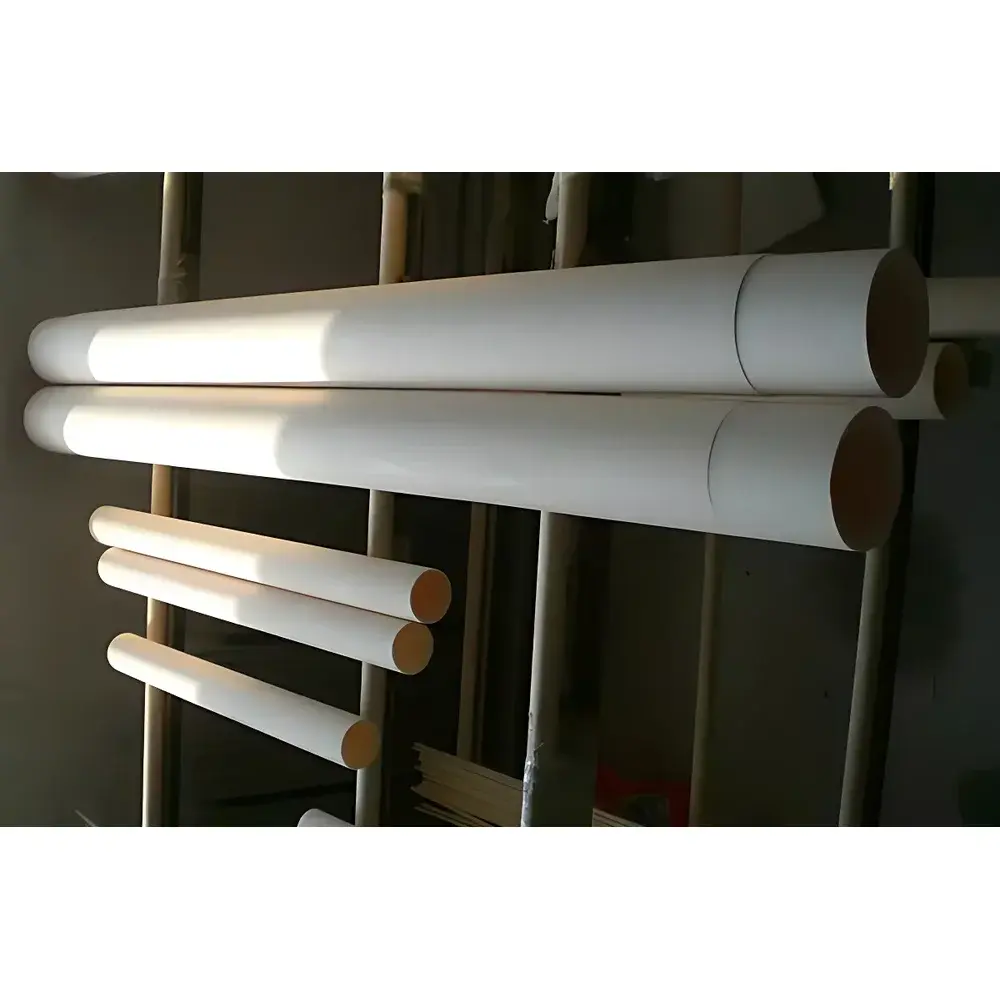
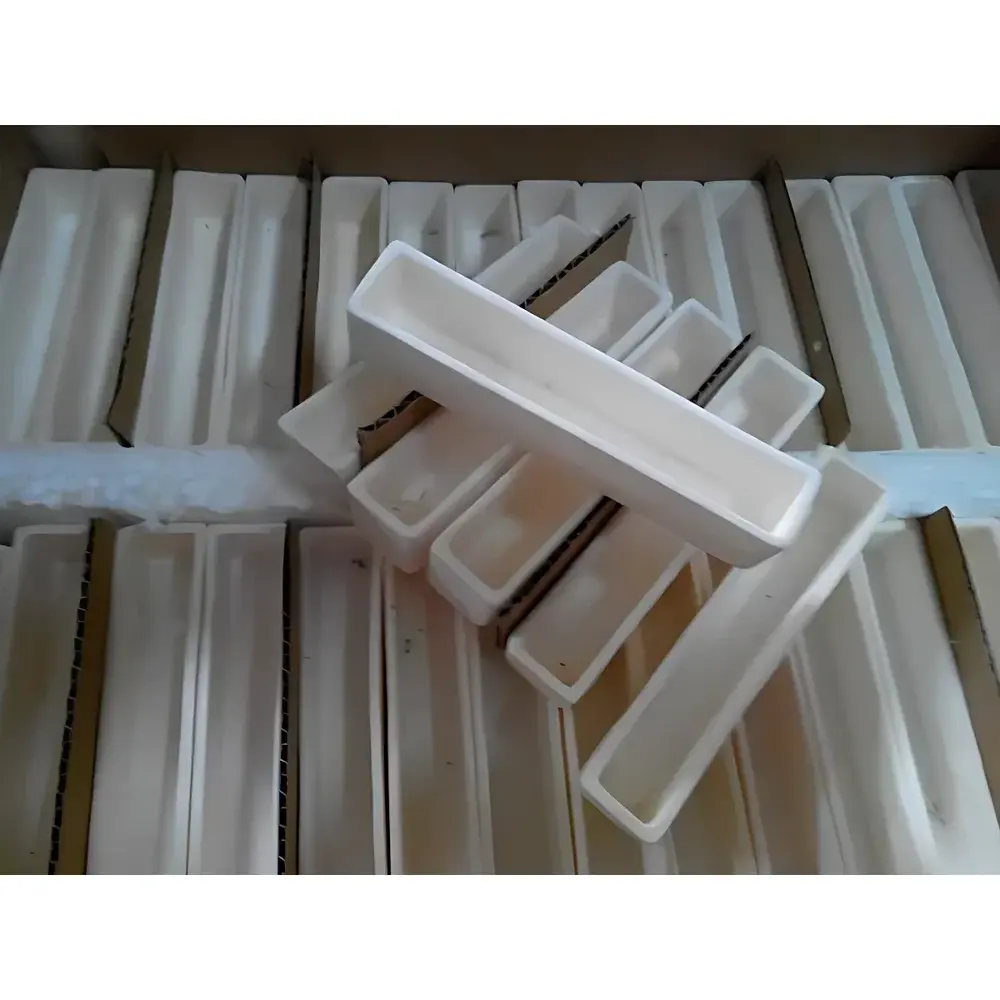
Zhongke Aobo 99% Alumina Ceramic Tube (60 mm OD × 1000 mm L) for High-Temperature Reactor and Sensor Protection
| Brand | Zhongke Aobo |
|---|---|
| Origin | Beijing, China |
| Manufacturer Type | Authorized Distributor |
| Country of Origin | China |
| Model | Φ60 × 1000 mm |
| Volume Capacity | 1 L |
| Working Pressure | Low-pressure (≤0.1 MPa gauge) |
| Vacuum Rating | 0.1 MPa (absolute) |
| Material | 99% Al₂O₃ (Fused Alumina / Corundum) |
| Max Continuous Use Temperature | 1600 °C |
| Short-Term Peak Temperature | 1800 °C |
| Mohs Hardness | 9 |
| Water Absorption | 0.01–0.02 % |
| Thermal Shock Resistance | Excellent |
| Electrical Resistivity (1000 °C) | >10¹² Ω·cm |
| Dielectric Constant (1 MHz, 25 °C) | ~9.8 |
Overview
The Zhongke Aobo 99% Alumina Ceramic Tube is a high-purity structural ceramic component engineered for demanding thermal, mechanical, and chemical environments in laboratory-scale synthesis reactors, sensor protection systems, and high-temperature process instrumentation. Composed of ≥99 wt% aluminum oxide (Al₂O₃), this tube leverages the intrinsic properties of fused corundum—namely exceptional thermal stability, near-zero porosity, high dielectric strength, and outstanding resistance to molten metals, slags, and aggressive acidic/alkaline vapors. Its cylindrical geometry (60 mm outer diameter × 1000 mm length) provides standardized dimensional compatibility with common furnace flanges, thermocouple sheaths, and fixed-bed reactor assemblies. Unlike silica or quartz glass tubes, this alumina variant operates continuously at up to 1600 °C without creep deformation or significant thermal expansion mismatch—making it suitable for applications where dimensional stability under thermal cycling is critical, such as in controlled-atmosphere annealing, catalytic testing, and elemental analysis (e.g., carbon/sulfur determination per ASTM E1019).
Key Features
- Ultra-high purity (99% Al₂O₃) ensuring minimal trace metal contamination—critical for semiconductor precursor delivery and ultra-trace elemental analysis.
- Exceptional mechanical rigidity: Vickers hardness ≥1800 HV, enabling resistance to abrasion during powder handling and catalyst bed packing.
- Low water absorption (<0.02%) and closed microporous microstructure, preventing vapor-phase ingress and maintaining insulation integrity under vacuum (0.1 MPa abs) or inert gas purging.
- Thermal shock resistance validated across ≥30 cycles between 1800 °C and ambient air quench—enabling rapid ramping protocols in programmable tube furnaces.
- Chemically inert toward HF-free mineral acids (HCl, HNO₃, H₂SO₄), alkalis (NaOH/KOH melts ≤600 °C), and reducing atmospheres (H₂, CO), supporting use in digestion vessels and redox reaction cartridges.
- High-frequency dielectric stability (loss tangent <0.0005 at 1 GHz, 25 °C), permitting integration into RF-heated reactors and plasma-facing components.
Sample Compatibility & Compliance
This alumina tube is compatible with solid, powdered, and granular samples—including metal oxides, zeolites, supported noble-metal catalysts, and refractory carbides. It is routinely employed in ASTM C20, ISO 2739, and GB/T 7322-compliant thermal conductivity and thermal expansion test fixtures. As a Class I ceramic component, it meets GLP requirements for material traceability (batch-certified via XRF and XRD compositional verification) and supports audit-ready documentation for ISO/IEC 17025-accredited laboratories. While not rated for pressurized service above 0.1 MPa gauge, its low-permeability wall enables reliable containment of volatile analytes (e.g., SO₂, COCl₂) during evolved-gas analysis when coupled with sealed end-caps and graphite gaskets.
Software & Data Management
As a passive structural component, the tube does not incorporate embedded electronics or firmware. However, its dimensional and thermal specifications are fully integrated into common reactor control platforms—including Carbolite Gero HTF series, Lindberg/Blue M TF55000, and Thermo Scientific Lindberg tube furnace software—via user-defined thermal mass and heat transfer coefficient inputs. Batch-specific certification reports (including density, grain size distribution by SEM, and thermal diffusivity curves from laser flash analysis) are supplied in PDF and CSV formats compliant with 21 CFR Part 11 metadata standards for electronic record retention.
Applications
- Protective sheathing for Type S/R/B thermocouples in sintering furnaces and crystal growth apparatuses.
- Reaction tube for solid-state synthesis of Li-ion cathode materials (e.g., NMC, LFP) under O₂/N₂/H₂ mixtures.
- Combustion tube in ASTM D3176-compliant coal carbon/sulfur analyzers.
- Insulating barrier in high-frequency induction heating coils and microwave-transparent reaction cells.
- Substrate support for thin-film deposition (PVD/CVD) and rapid thermal processing (RTP) fixtures.
- Calibration standard for infrared pyrometer validation across 500–1600 °C ranges.
FAQ
Can this tube be used under positive pressure?
No—it is rated only for low-pressure operation (≤0.1 MPa gauge) and vacuum service (0.1 MPa absolute); pressure-rated variants require custom-engineered thick-wall designs with ISO 15552-compliant end fittings.
Is machining or drilling supported post-delivery?
Diamond grinding or laser cutting is possible but voids the manufacturer’s thermal cycle warranty; all modifications must be performed under controlled humidity to prevent microcrack propagation.
What surface finish options are available?
Standard finish is ground external surface (Ra ≤0.8 µm); polished (Ra ≤0.1 µm) and metallized (Mo-Mn brazed) variants are available on request with lead time extension.
Does it comply with RoHS or REACH?
Yes—certified free of Cd, Pb, Hg, Cr⁶⁺, PBB, and PBDE per EU Directive 2011/65/EU; full SVHC screening report available upon order.
How is thermal expansion compensated in multi-material reactor assemblies?
Its CTE of 8.5 × 10⁻⁶ /K (20–1000 °C) is matched to molybdenum and TZM alloys; design guidelines for interference fits and expansion gap allowances are provided in the technical appendix.



