
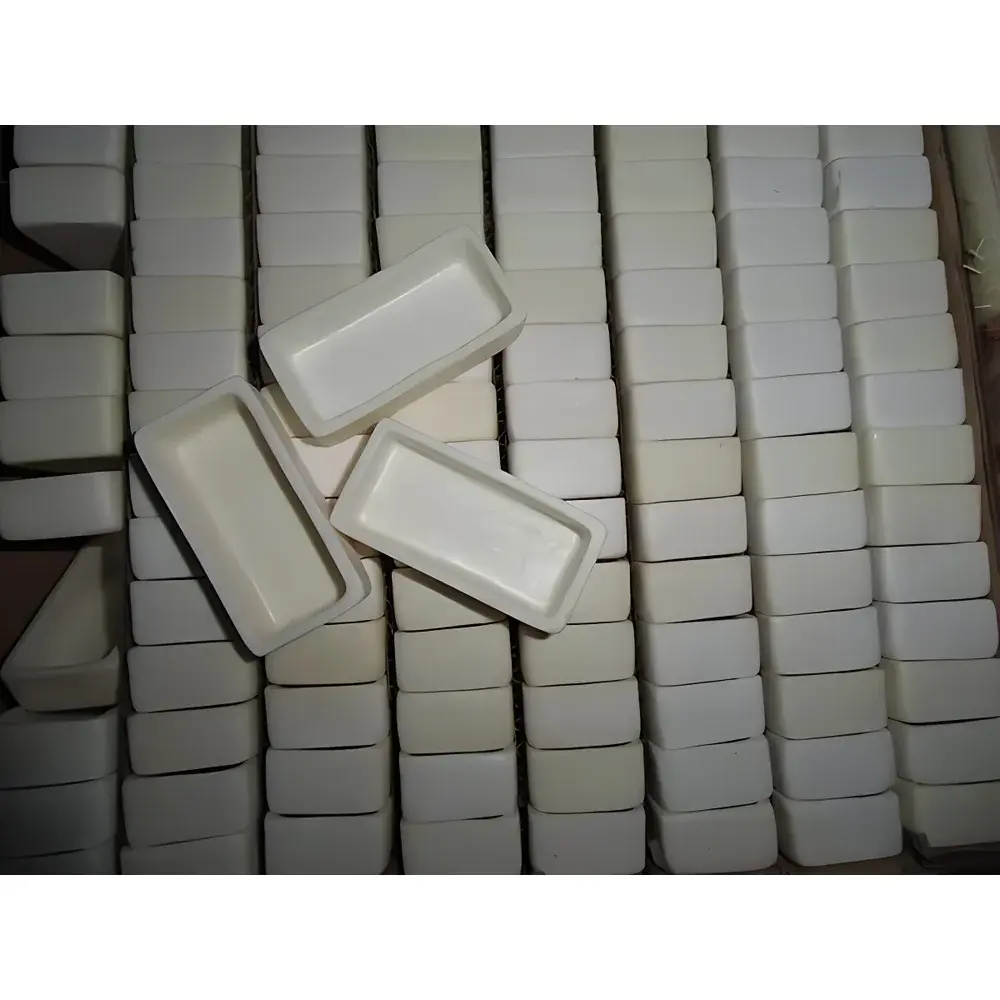
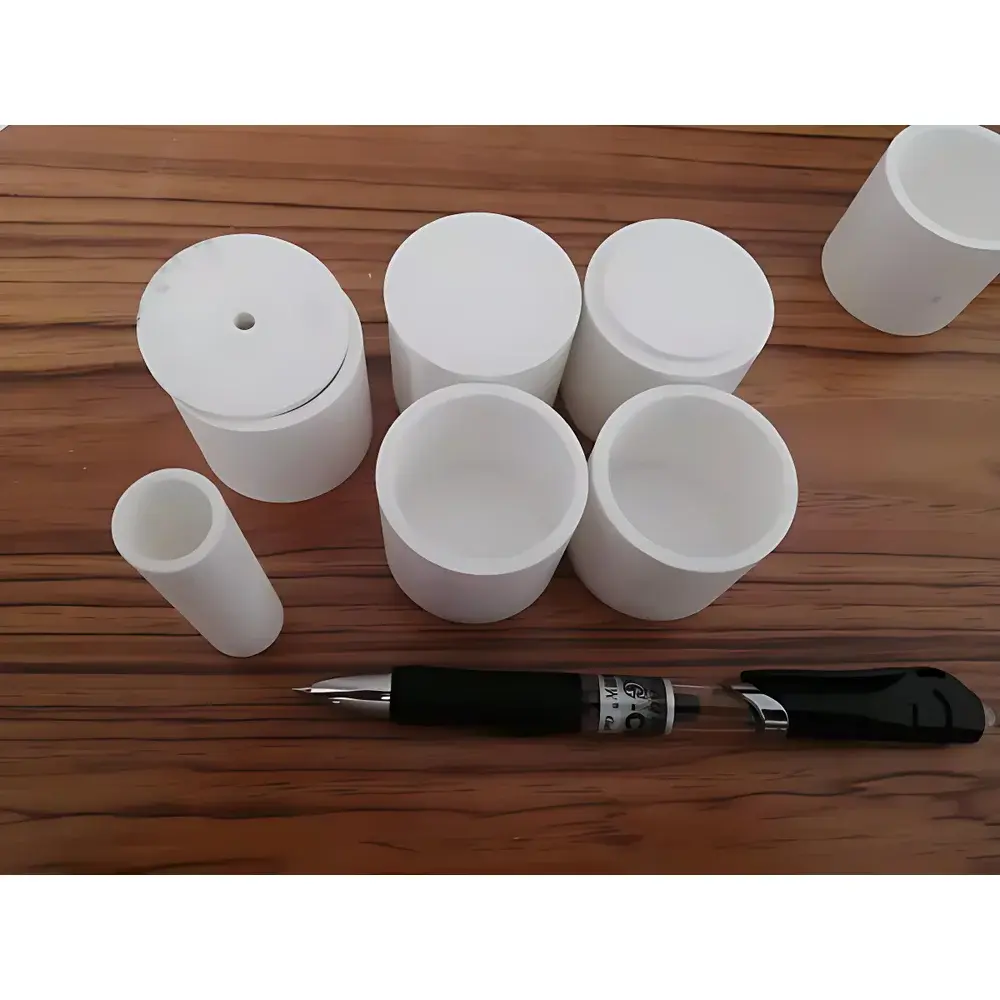
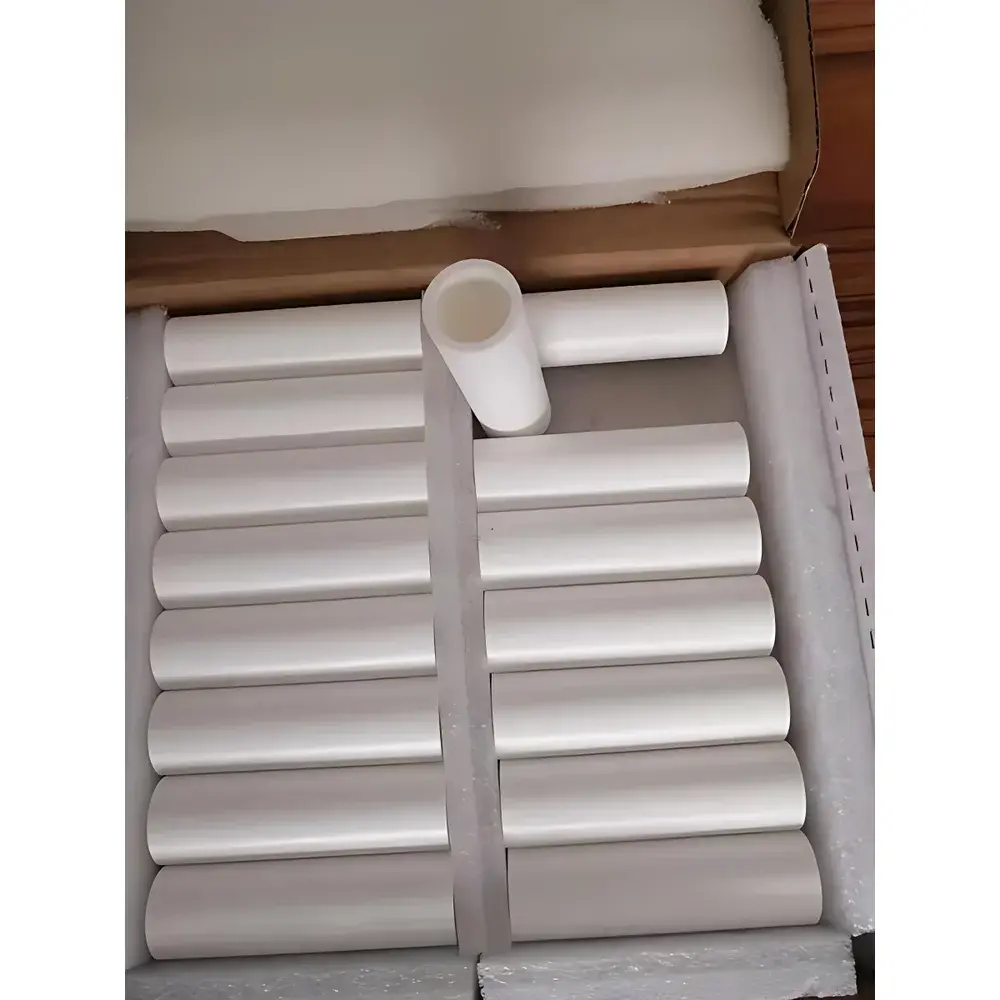
Zirconia Crucible Boat for Ash Fusion Temperature Testers
| Brand | Zhongke Aobo |
|---|---|
| Origin | Beijing, China |
| Manufacturer Type | Authorized Distributor |
| Country of Origin | China |
| Model | Customizable per Client Specification |
| Price | USD 42 (FOB Beijing) |
| Material | 99.9% Pure ZrO₂ |
| Density | 6.00 g/cm³ |
| Max Continuous Use Temperature | 2200 °C |
| Melting Point | 2700 °C |
| Thermal Expansion Coefficient | 10 × 10⁻⁶/K |
| Vickers Hardness (HV₀.₅) | 1300 |
| Flexural Strength | 1000 MPa |
| Compressive Strength | 3000 MPa |
| Elastic Modulus | 200 GPa |
| Fracture Toughness | 8 MPa·m¹/² |
| Thermal Conductivity | <2 W/m·K |
| Volume Resistivity (20 °C) | >10¹³ Ω·cm |
| Mohs Hardness | 7 |
| Chemical Stability | Resistant to molten Al, Fe, Ni, Pt, SiO₂-based slags, and acidic/basic melts up to 1900 °C |
Overview
The Zirconia Crucible Boat for Ash Fusion Temperature Testers is a high-purity, structural ceramic component engineered specifically for ASTM D1857, ISO 540, and GB/T 219-compliant ash fusion analysis in coal, coke, and biomass testing laboratories. Constructed from 99.9% stabilized zirconium dioxide (ZrO₂), this boat operates continuously at temperatures up to 2200 °C—well above the typical ash deformation (DT), softening (ST), hemispherical (HT), and flow (FT) temperature range (1000–1600 °C). Its exceptional thermal stability arises from the intrinsic properties of monoclinic-to-tetragonal phase-stabilized ZrO₂, commonly doped with 5 mol% CaO or Y₂O₃ to suppress destructive martensitic transformation during thermal cycling. Unlike alumina or silicon carbide boats, zirconia exhibits near-zero dimensional change upon heating (CTE = 10 × 10⁻⁶/K), eliminating microcracking under rapid thermal ramping—a critical requirement for repeatable ash cone geometry assessment in automated or manual fusibility furnaces.
Key Features
- Ultra-High Purity & Structural Integrity: 99.9% ZrO₂ content ensures minimal catalytic interference during ash mineral phase evolution; density of 6.00 g/cm³ confirms full densification and low open porosity (<0.5%), minimizing ash infiltration and cross-contamination between runs.
- Thermal Shock Resistance: Low thermal conductivity (<2 W/m·K) combined with low CTE enables stable performance through ≥50 cycles of 20 °C ↔ 1500 °C ramps without spalling or warping—validated per ASTM C1104 for refractory thermal shock testing.
- Chemical Inertness: Resists reaction with alkaline coal ash components (e.g., K₂O, Na₂O, CaO), acidic slags (SiO₂–Al₂O₃ systems), and metallic residues (Fe, Ni, Pt) up to 1900 °C—critical for preserving original ash morphology and avoiding false FT readings.
- Precision Geometry & Surface Finish: CNC-machined arc-profile design conforms precisely to ISO 540 specimen placement requirements; mirror-polished interior surface (Ra < 0.2 µm) prevents powder adhesion and ensures uniform ash cone formation during heating.
- Electrical Insulation & Safety Compliance: Volume resistivity >10¹³ Ω·cm at ambient temperature supports safe integration into electrically heated fusibility furnaces compliant with IEC 61000-6-3 EMC standards and UL 61010-1 safety certification.
Sample Compatibility & Compliance
This crucible boat accommodates standard ash samples (≤0.5 g) prepared per ASTM D3174 and ISO 1171, including fused ash pellets, pressed briquettes, and sintered discs. It is fully compatible with horizontal and vertical tube furnace configurations used in commercial ash fusion analyzers (e.g., Carbolite AFT, LECO AF-700, Nabertherm RHTV). All units are manufactured under documented quality control procedures aligned with ISO 9001:2015 and undergo batch-certified XRF verification for ZrO₂ purity and trace metal content (Fe, Si, Al < 100 ppm). Documentation includes material test reports (MTRs), thermal cycle validation logs, and conformity statements for use in GLP-regulated coal quality assurance labs.
Software & Data Management
While the crucible boat itself is a passive consumable, its performance directly impacts data fidelity in digital ash fusion systems. When used with analyzers supporting ASTM E2932-compliant image capture and AI-assisted cone classification (e.g., automated DT/ST/HT/FT detection), consistent boat geometry and surface reflectivity ensure reproducible edge detection and thermal profile correlation. Each lot is traceable via QR-coded packaging containing MTRs, thermal history certificates, and compliance summaries for FDA 21 CFR Part 11–aligned electronic lab notebooks (ELNs) and LIMS integration.
Applications
- Standardized ash fusibility testing per ASTM D1857 (coal), ISO 540 (solid fuels), and GB/T 219 (Chinese coal standards)
- High-temperature sintering of rare-earth oxides (Y₂O₃, CeO₂, Nd₂O₃) and phosphor precursors in controlled-atmosphere pusher or shuttle kilns
- Melting and casting of Pt–Rh thermocouple wire alloys and Ir-based crucibles in induction furnaces
- Thermal analysis of slag viscosity and phase separation behavior in metallurgical simulation studies
- Calibration verification of furnace temperature uniformity using ZrO₂’s well-defined phase transition signatures at ~2370 °C (tetragonal → cubic)
FAQ
Can this zirconia boat be reused after ash fusion testing?
Yes—provided it undergoes post-test cleaning via ultrasonic immersion in dilute HNO₃ (5% v/v), followed by deionized water rinse and 120 °C drying. Visual inspection for microcracks or grain boundary discoloration is required before reuse.
Is it compatible with reducing atmospheres (e.g., CO/H₂ mixtures)?
Yes. Fully stabilized ZrO₂ maintains structural integrity in atmospheres down to pO₂ ≈ 10⁻¹⁸ atm; however, prolonged exposure to pure hydrogen above 1400 °C may induce slight oxygen vacancy accumulation—monitor weight change over 10 cycles.
Does the boat require pre-firing before first use?
No pre-firing is necessary. However, a 2-hour soak at 1200 °C in air prior to critical ash tests is recommended to eliminate residual organics from handling and stabilize thermal expansion behavior.
How does it compare to alumina boats in terms of measurement accuracy?
Zirconia boats reduce systematic error in FT determination by ≤15 °C versus Al₂O₃ due to superior resistance to alkali vapor attack and absence of reactive surface Al³⁺ sites that catalyze eutectic formation.
What documentation accompanies each order?
Certificate of Conformance, batch-specific XRF report, thermal shock validation summary, and ISO 9001 manufacturing audit excerpt—all provided digitally and on request as PDF or CSV for LIMS ingestion.





