
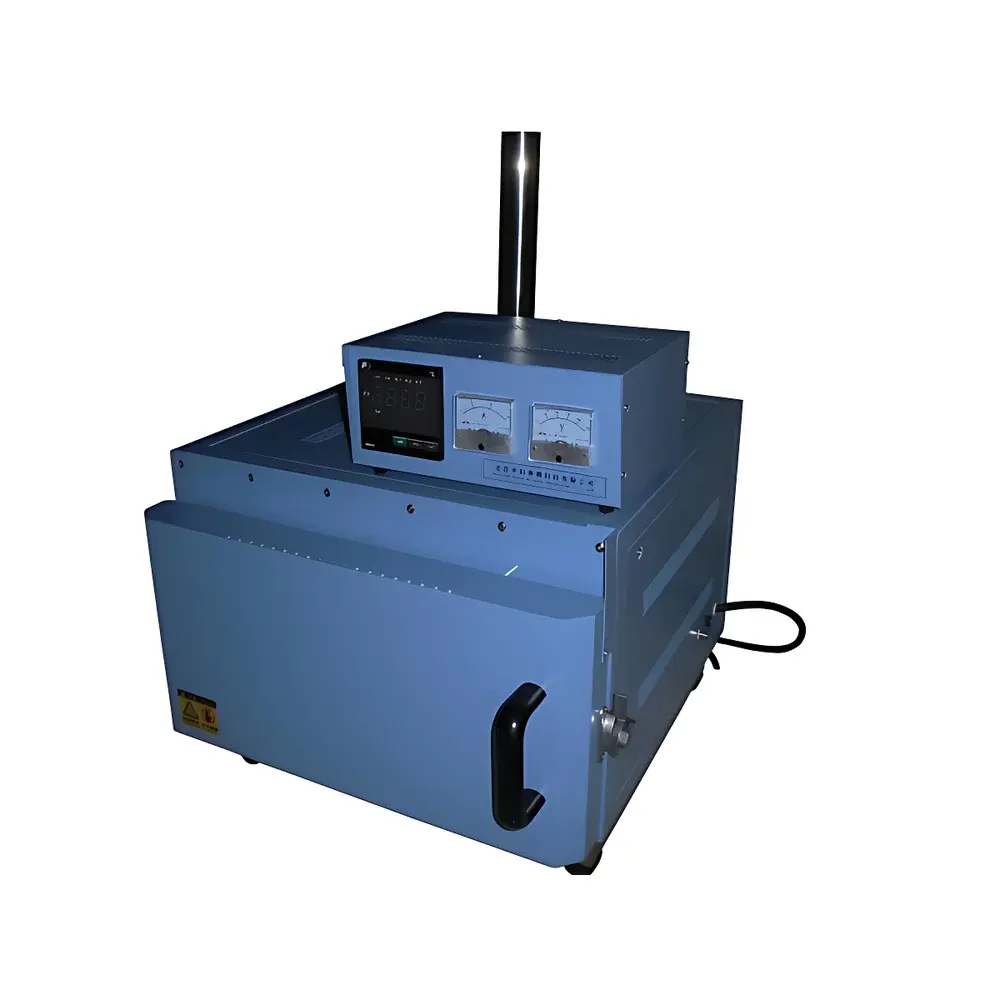
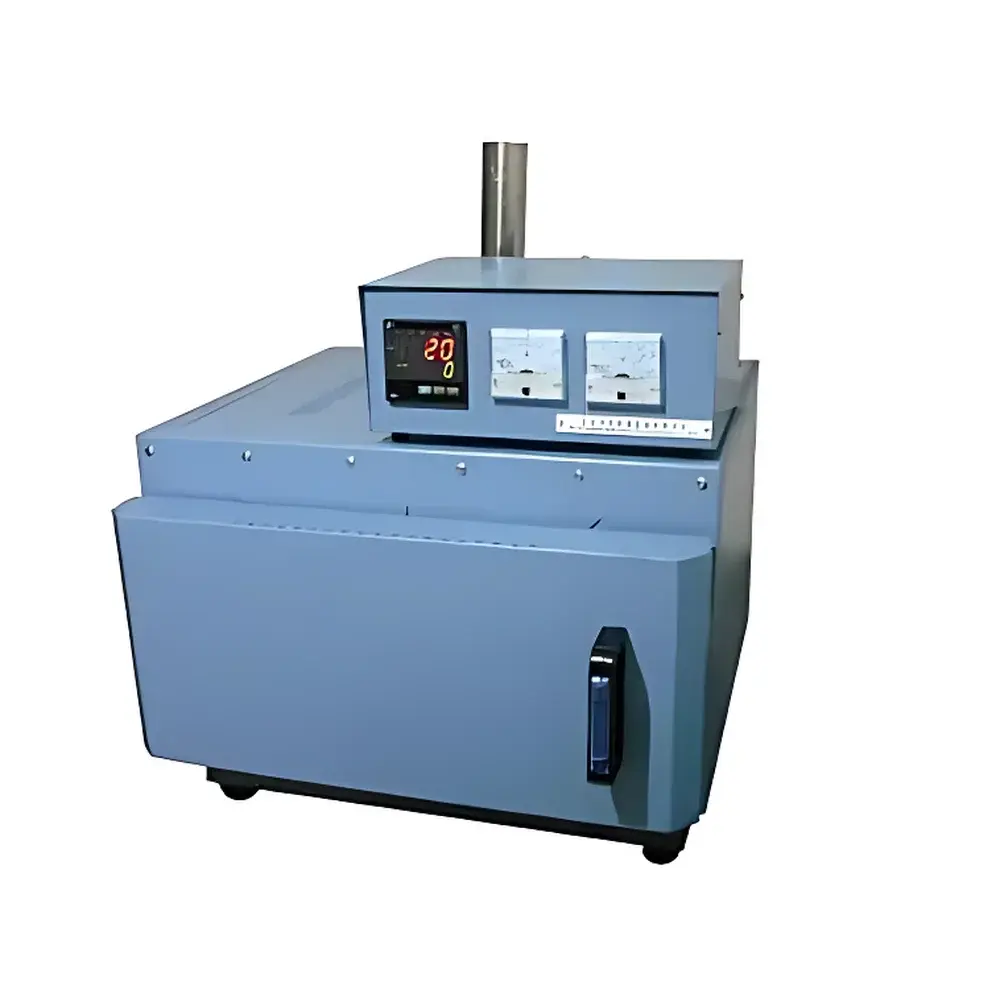
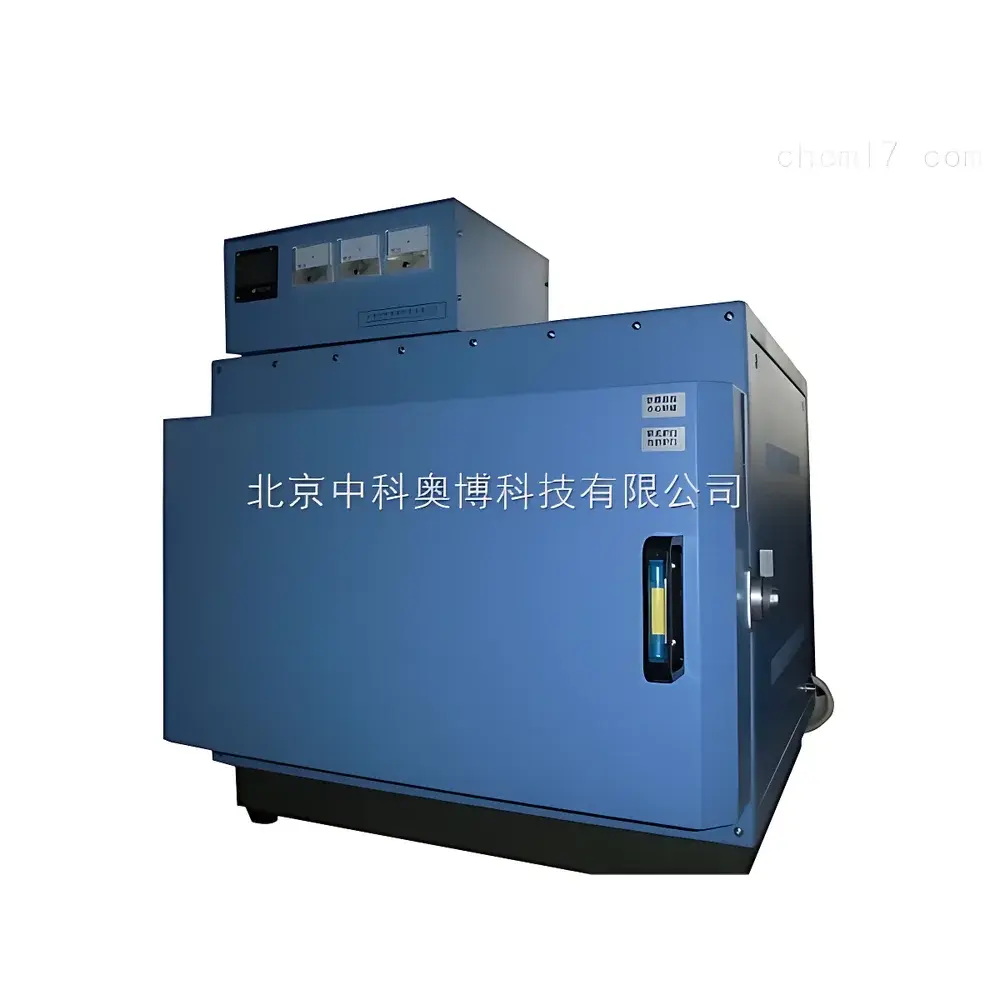
Zhongke Aobo TL2014 Intelligent Muffle Furnace
| Brand | Zhongke Aobo |
|---|---|
| Model | TL2014 |
| Type | Box-type Muffle Furnace |
| Max Temperature | 1400 °C |
| Temperature Control Accuracy | ±1 °C |
| Rated Power | 6000 W |
| Heating Rate to Max Temp | ≤60 min |
| Heating Elements | Resistance Wire & Silicon Carbide Rods |
| Internal Dimensions | 400 × 250 × 200 mm |
| Chamber Volume | 20 L |
| Power Supply | 380 V, 3-phase |
| Insulation | Ceramic Fiber Module |
| Door Configuration | Side-opening |
| Compliance | CE-marked design principles (IEC 61000-6-3/6-4), GLP-ready operation |
Overview
The Zhongke Aobo TL2014 Intelligent Muffle Furnace is a high-performance, ceramic fiber-insulated box furnace engineered for precise thermal treatment in research laboratories, quality control environments, and industrial R&D settings. Operating on the principle of resistive heating via dual-element architecture—comprising both high-strength resistance wire and silicon carbide (SiC) rods—the TL2014 delivers stable, uniform temperature distribution across its 20 L chamber (400 × 250 × 200 mm internal dimensions). Its maximum operating temperature of 1400 °C enables applications ranging from ashing and calcination to heat treatment of ceramics, metals, and geological samples. Unlike traditional brick-lined muffle furnaces, the TL2014 employs low-density, high-purity ceramic fiber insulation, resulting in rapid thermal response (≤60 minutes to reach 1400 °C), reduced standby heat loss, and surface temperatures below 55 °C under continuous operation—meeting ergonomic safety benchmarks for unattended lab use.
Key Features
- Side-opening door design with reinforced ceramic fiber gasket ensures consistent sealing and minimizes thermal leakage during ramp-hold cycles.
- Dual-zone heating configuration: independent lateral heating elements allow symmetrical heat flux distribution and improved temperature homogeneity (±5 °C within working zone at 1400 °C).
- Intelligent controller with PID algorithm, digital setpoint input, and real-time display—supports programmable multi-segment ramp-soak profiles with up to 30 steps.
- Ceramic fiber chamber construction reduces unit mass by ~50% versus refractory brick equivalents, facilitating installation in space-constrained labs or mobile analytical platforms.
- Integrated safety architecture includes over-temperature cut-off (independent of main controller), door-open interlock, and ground-fault circuit interruption (GFCI)-compatible 3-phase 380 V power interface.
- Standard exhaust port (M12 threaded) supports optional gas purge or flue integration; configurable inert atmosphere inlet (N₂, Ar) upon request for oxidation-sensitive protocols.
Sample Compatibility & Compliance
The TL2014 accommodates crucibles (alumina, platinum, graphite), petri dishes, and custom sample holders up to 120 mm in height. Its uniform heating profile meets ASTM E1112 (standard practice for calibration of muffle furnaces), ISO 5659-2 (fire testing—smoke production rate), and USP heavy metal residue ashing requirements. For coal and biomass analysis, it satisfies ISO 1171 (determination of ash), ASTM D3174 (ash in coal and coke), and GB/T 212–2008 (Chinese standard for proximate analysis). All electrical subsystems conform to IEC 61010-1 safety standards for laboratory equipment; firmware logging supports audit trails compatible with GLP/GMP documentation workflows.
Software & Data Management
The embedded controller provides USB export of time-temperature logs in CSV format, enabling traceable data archival and post-run analysis in Excel or MATLAB. Optional RS485 Modbus RTU interface allows integration into centralized Lab Information Management Systems (LIMS) or SCADA networks. No proprietary software is required—configuration and monitoring are performed via front-panel keypad and OLED display. Firmware supports user-defined alarm thresholds, password-protected parameter locking, and automatic shutdown after idle timeout—ensuring compliance with 21 CFR Part 11 electronic record integrity guidelines when paired with validated IT infrastructure.
Applications
- Thermal gravimetric analysis (TGA) pre-treatment: ash content determination in food, feed, and pharmaceutical excipients per AOAC 942.05.
- Mineralogical preparation: fusion bead synthesis for XRF analysis of ores, slags, and environmental particulates.
- Materials science: sintering trials of oxide ceramics (e.g., ZrO₂, Al₂O₃), annealing of thin-film substrates, and catalyst support calcination.
- Environmental testing: EPA Method 1631E (mercury analysis) ashing protocols and TCLP leachate residue conditioning.
- Quality assurance: residual solvent removal from polymer composites and validation of sterilization cycle efficacy in medical device manufacturing.
FAQ
What is the recommended maintenance interval for heating elements?
Silicon carbide rods should be inspected visually every 200 operational hours; resistance wire elements require replacement only if measured resistance deviates >15% from nominal value.
Can the TL2014 operate under inert gas flow?
Yes—standard exhaust port and optional inlet fitting support continuous N₂ or Ar purging at 0.5–2 L/min flow rates, maintaining oxygen concentration <100 ppm in chamber.
Is third-party calibration certification available?
Factory calibration certificates (NIST-traceable PtRh/Pt thermocouples) are included; UKAS or ISO/IEC 17025 accredited calibration services can be arranged through authorized regional partners.
How does the TL2014 compare to brick-lined furnaces in energy consumption?
Ceramic fiber insulation reduces average power draw by 35–40% during hold phases and cuts warm-up energy use by ~50%, as verified per EN 60068-3-11 thermal efficiency testing.
Does the controller support remote monitoring via Ethernet or Wi-Fi?
Not natively—but RS485 Modbus output enables connection to industrial gateways (e.g., Siemens Desigo, BACnet converters) for networked supervision in smart lab infrastructures.



