
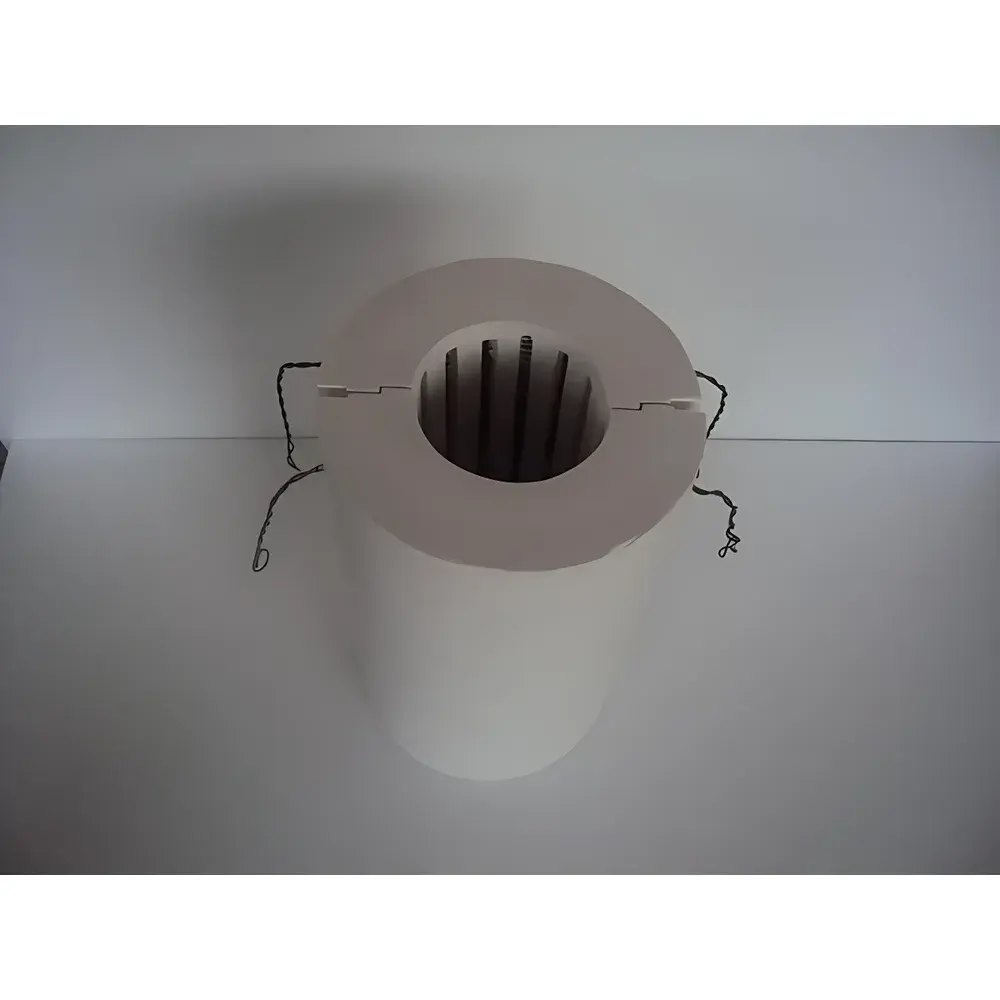
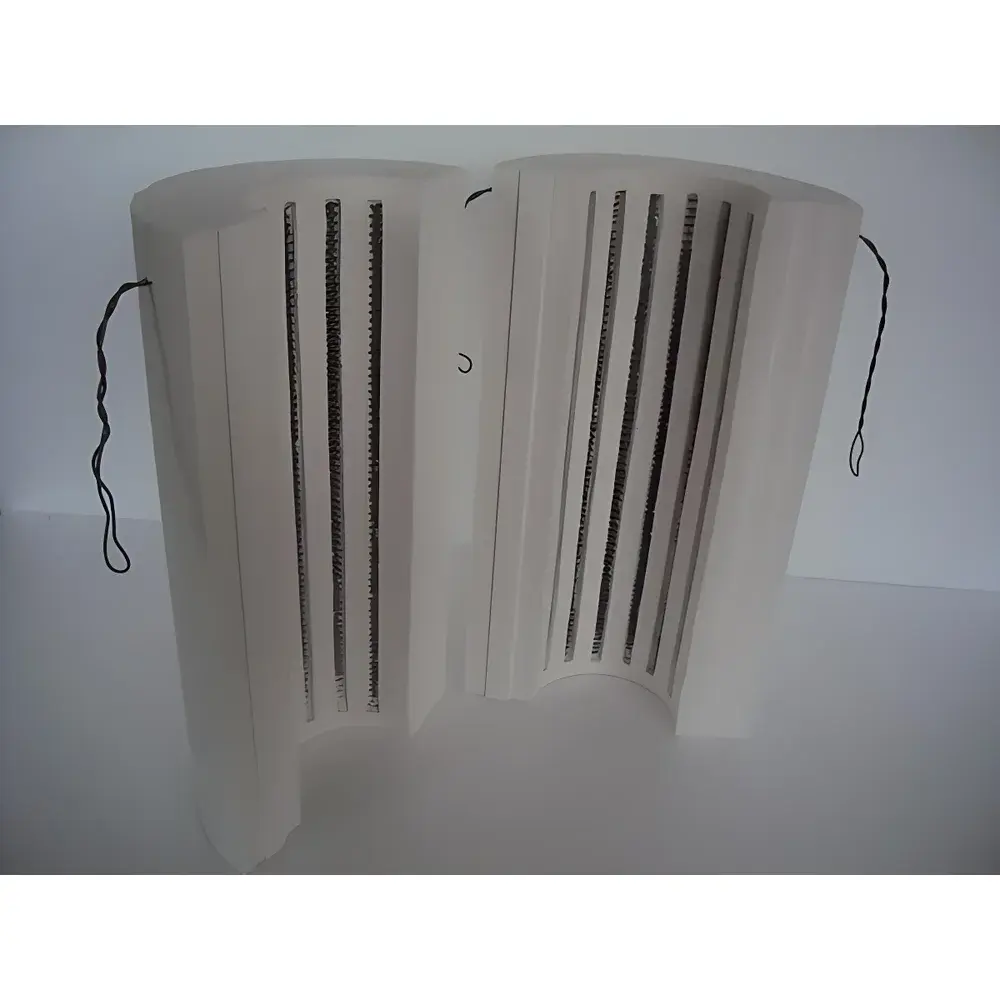
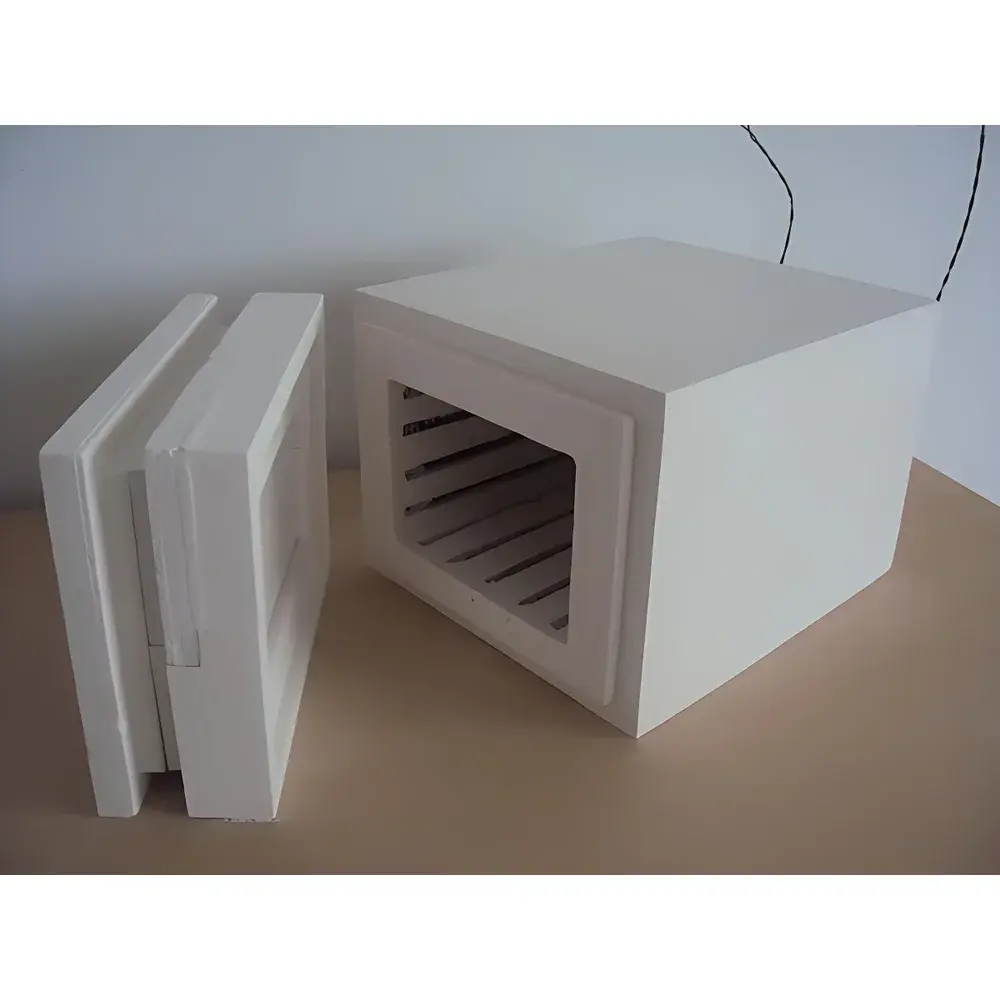
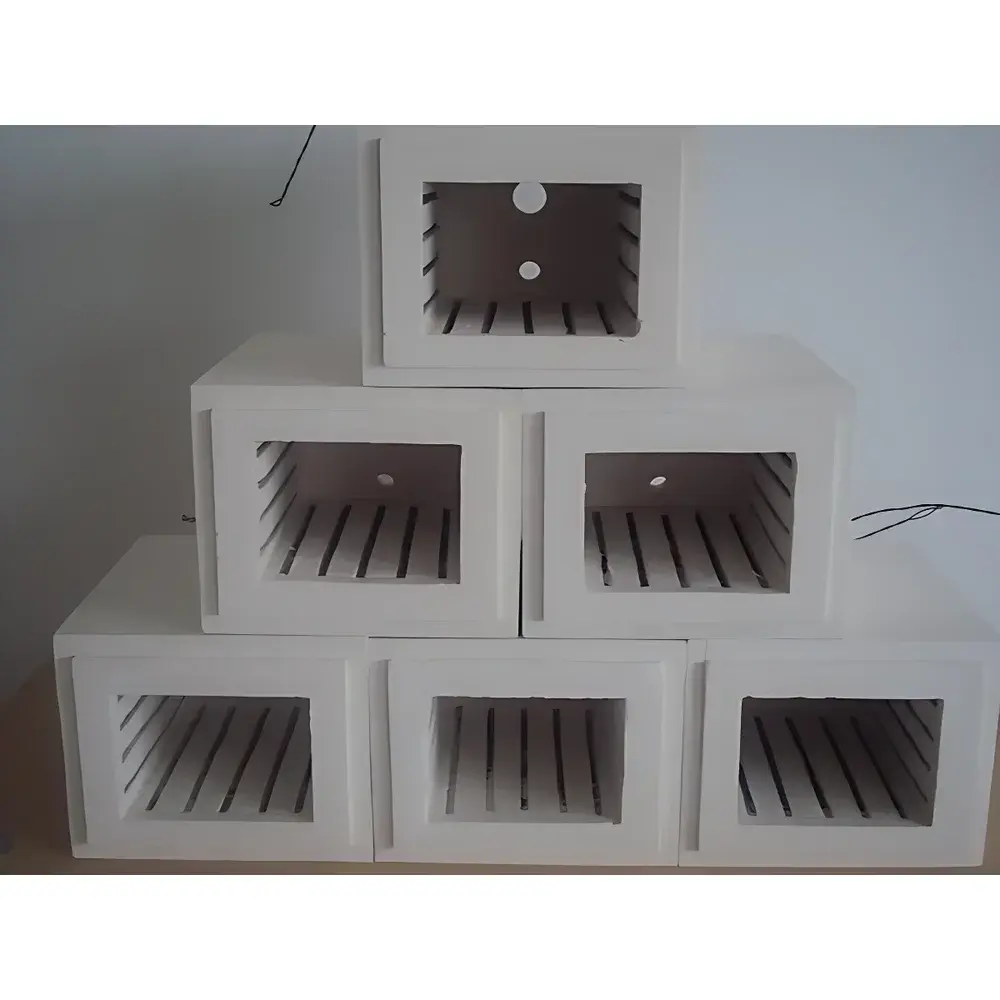
Zhongke Aobo Custom-Shaped Heating Chamber Muffle Furnace
| Brand | Zhongke Aobo |
|---|---|
| Origin | Beijing, China |
| Type | Box-Type Muffle Furnace |
| Max Temperature | 1700 °C |
| Temperature Control Accuracy | ±0.1 °C |
| Max Power | 10 kW |
| Heating Rate (to Max Temp) | 30 °C/min |
| Heating Method | Resistive Load |
| Internal Chamber Dimensions | Customizable |
| Chamber Volume Options | 6 L, 9 L, 20 L, 30 L, 60 L |
| Insulation Material | High-Purity Ceramic Fiber |
| Power Supply | 220 V/16 A (for ≤9 L) |
| Surface Temperature at 1000 °C Hold | ≤55 °C |
| Safety Features | Over-Temperature Protection, Auto Cut-Off, Independent Controller Interlock, Optional Gas Inlet/Exhaust Ports |
Overview
The Zhongke Aobo Custom-Shaped Heating Chamber Muffle Furnace is a high-temperature, precision-controlled box-type furnace engineered for laboratory and small-scale industrial thermal processing applications. It operates on resistive heating principles using high-stability, oxidation-resistant imported heating elements mounted in a dual-side衬板 configuration—ensuring uniform radial temperature distribution across custom-designed chamber geometries. The furnace core employs high-purity ceramic fiber insulation (density ≥128 kg/m³), enabling rapid thermal response, low thermal mass, and exceptional energy efficiency. With a maximum operating temperature of 1700 °C and control stability within ±0.1 °C, it supports repeatable thermal treatments under ambient or controlled-atmosphere conditions (with optional gas inlet/exhaust ports). Its modular architecture separates the furnace chamber from the intelligent controller unit—reducing electromagnetic interference, simplifying maintenance, and enhancing long-term calibration stability.
Key Features
- Customizable chamber geometry—including non-standard cross-sections (e.g., D-shaped, trapezoidal, stepped, or multi-zone segmented profiles)—to accommodate irregular samples, specialized fixtures, or process-specific heat transfer requirements.
- Dual-side mounted heating elements with quick-access panel design, facilitating field replacement without disassembling the insulation structure; elements rated for >3,000 h service life at 1700 °C in air.
- Ceramic fiber insulation system achieving surface temperatures ≤55 °C during sustained operation at 1000 °C—meeting IEC 61000-3-2 harmonic emission limits and reducing facility cooling load.
- Independent PID-based temperature controller with digital setpoint entry, auto-tuning capability, and programmable ramp-soak profiles (up to 30 segments); compliant with NIST-traceable calibration protocols.
- Integrated safety architecture including over-temperature cut-off (hardware-independent of main controller), door-interlocked power disable, and real-time thermal runaway monitoring.
- Modular electrical interface supporting both single-phase (220 V/16 A) and three-phase (380 V/16 A) supply configurations—optimized for lab-grade circuit protection and compatibility with standard facility infrastructure.
Sample Compatibility & Compliance
This furnace accommodates diverse sample forms—including crucibles (alumina, silica, graphite), ceramic boats, metal trays, and custom jigs—across volume ranges from 6 L to 60 L. Its adaptable chamber design enables compliance with standardized thermal procedures such as ASTM E119 (fire-resistance testing), ISO 5660-1 (heat release rate), USP (heavy metals residue ashing), and ASTM D3174/D3175 (coal ash/volatile matter analysis). Optional gas purge ports support inert (N₂, Ar) or reducing (H₂/N₂) atmospheres per ASTM D7582 (proximate analysis under controlled gas flow). All units are constructed to meet CE machinery directive (2006/42/EC) and EMC directive (2014/30/EU) requirements; documentation includes Declaration of Conformity and factory calibration certificates traceable to CNAS-accredited standards.
Software & Data Management
The embedded controller supports RS485 Modbus RTU communication for integration into centralized lab data acquisition systems (e.g., LabVIEW, DeltaV, or custom SCADA). Optional USB data logging enables timestamped temperature profiles with 1-second resolution, exportable in CSV format for audit-ready record retention. Firmware supports 21 CFR Part 11-compliant user access levels (Operator, Supervisor, Administrator), electronic signature capture for critical parameter changes, and immutable audit trails—fully compatible with GLP and GMP environments requiring full traceability of thermal treatment history.
Applications
- Materials Science: Sintering of advanced ceramics, annealing of metallic alloys, and phase transformation studies requiring precise thermal ramping and soak uniformity.
- Coal & Energy Analysis: Determination of moisture, ash, volatile matter, ash fusion temperature (ISO 540), and elemental composition via loss-on-ignition (LOI) protocols.
- Pharmaceutical QC: Residue-on-ignition (ROI) testing per USP , excipient degradation profiling, and pre-digestion of biological matrices prior to ICP-MS analysis.
- Environmental Testing: Gravimetric analysis of total suspended solids (TSS), total dissolved solids (TDS), and organic carbon content in wastewater and soil extracts (EPA Method 1684).
- Geochemical Research: Fusion bead preparation for XRF analysis, mineral dehydration kinetics, and clay mineral transformation studies under controlled thermal gradients.
FAQ
Can the furnace chamber be designed with non-rectangular cross-sections?
Yes—custom geometries (e.g., circular, elliptical, tapered, or multi-compartment layouts) are routinely engineered based on mechanical drawings and thermal simulation inputs provided by the client.
Is third-party calibration certification available?
Yes—NIST-traceable calibration reports (including temperature uniformity mapping per ASTM E220) can be supplied upon request, with optional on-site verification by accredited metrology providers.
What atmosphere control options are supported?
Standard units include threaded ports for inlet/outlet tubing; optional mass flow controllers, pressure regulators, and O₂ analyzers integrate seamlessly via DIN-rail mounting brackets and analog I/O interfaces.
How is thermal uniformity validated across custom chamber shapes?
Uniformity is characterized using a 9-point thermocouple array per ASTM E220 Annex A1, with results documented in the Factory Acceptance Test (FAT) report—typically ±5 °C at 1700 °C in 30 L chambers.
Are spare parts and technical support available internationally?
Zhongke Aobo maintains an authorized global distributor network with local inventory of heating elements, ceramic fiber modules, and controller PCBs; remote diagnostics and firmware updates are supported via secure VPN-assisted maintenance sessions.



