
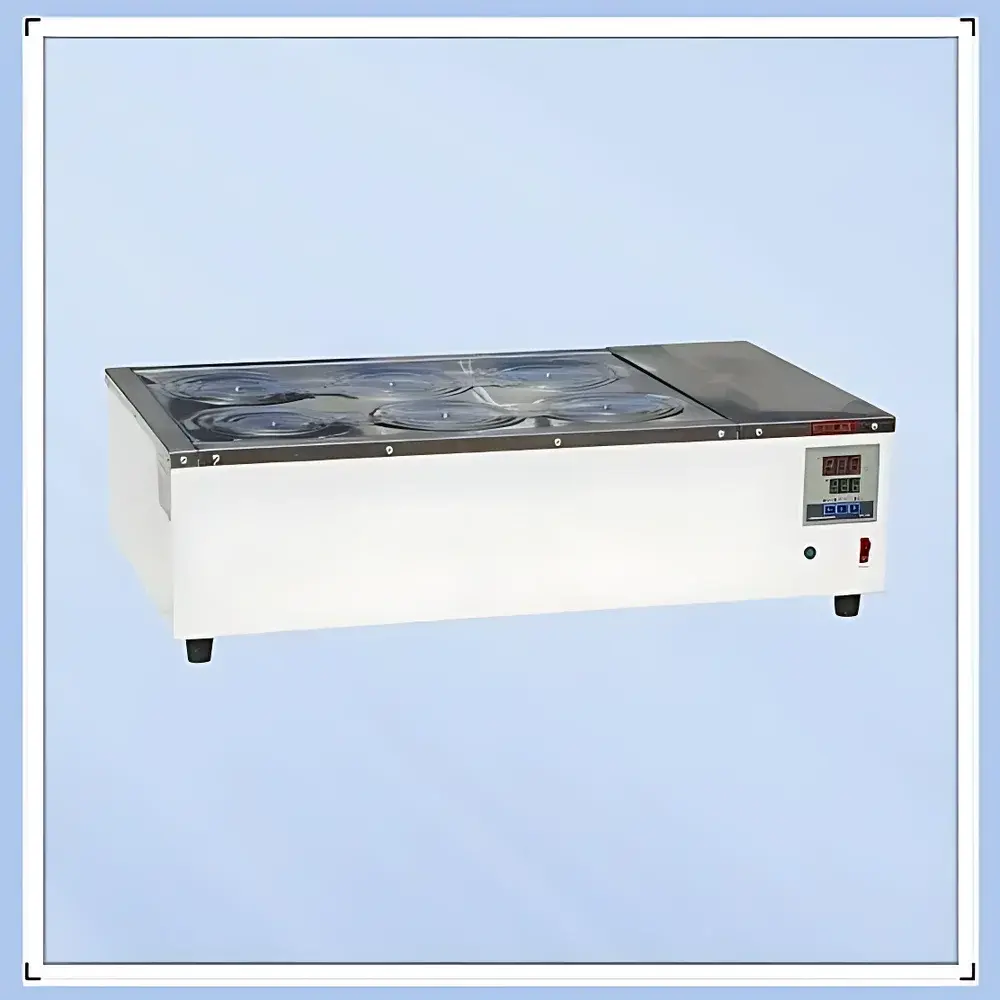
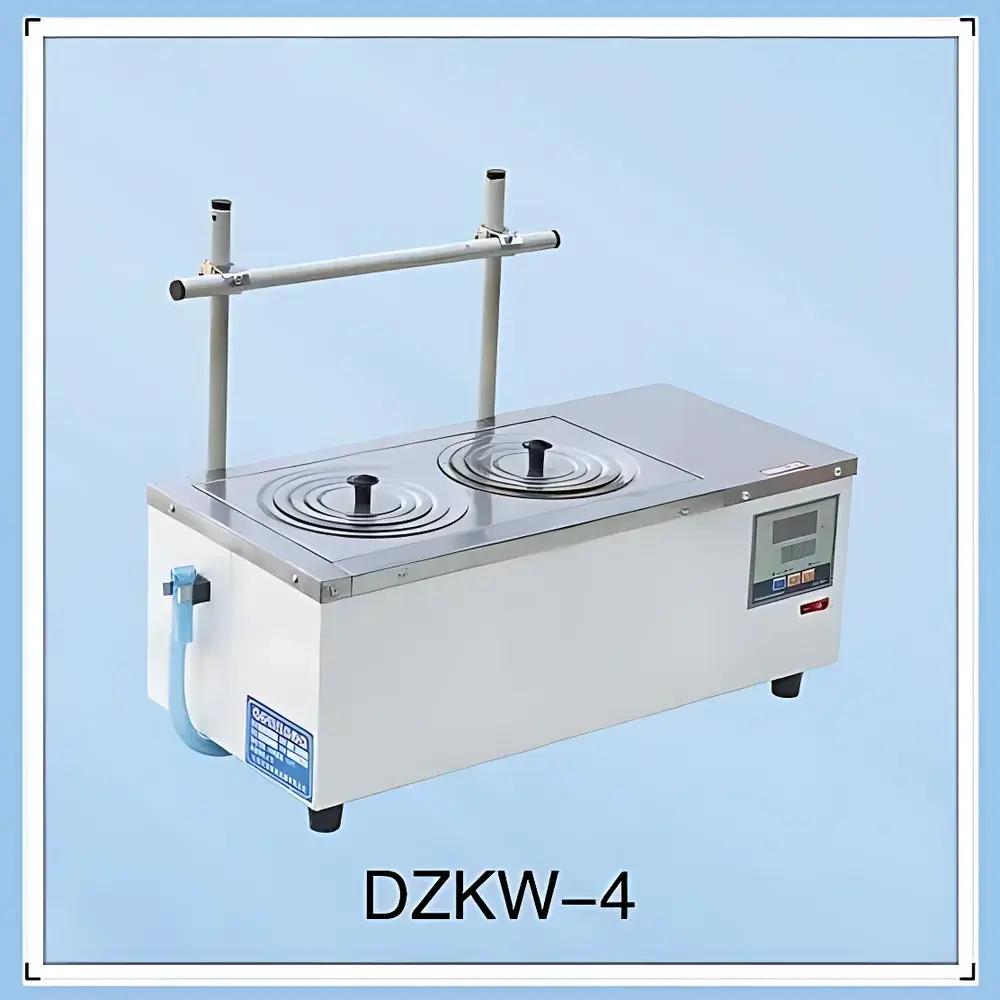
Zhongke Aobo DZKW Series Digital/Analog Controlled Electric Water Bath Incubator
| Brand | Zhongke Aobo |
|---|---|
| Origin | Beijing, China |
| Model | DZKW-D-1 to DZKW-D-4 (Single/Double Row, 1–8 Wells) |
| Bath Volume | 2–18 L |
| Temperature Range | Ambient +10°C to 100°C |
| Temperature Uniformity | ≤ ±1°C |
| Temperature Stability (Fluctuation) | ≤ ±1°C |
| Control Accuracy (Setpoint Deviation) | ≤ ±2°C |
| Heating Power | 300–2000 W |
| Supply Voltage | 220 V, 50 Hz |
| Chamber Dimensions (W×D×H, mm) | 170×170×90 to 620×325×90 |
| Construction | Stainless Steel Interior & Lid, Electrostatically Powder-Coated Exterior |
| Control Options | Analog Pointer or Digital LED Display |
| Circulation | Non-Circulating (Static Bath) |
Overview
The Zhongke Aobo DZKW Series Electric Water Bath Incubator is a precision-engineered, static-liquid thermal platform designed for reliable and repeatable temperature maintenance in laboratory environments. Operating on resistive heating principles, the unit transfers thermal energy uniformly through direct contact between the heated stainless steel bath chamber and the liquid medium—typically deionized water or silicone oil—ensuring stable thermal conditions without forced convection. It is engineered for applications requiring sustained, non-refrigerated thermal control between ambient +10°C and 100°C, with typical use cases including enzymatic reactions, sample pre-warming, reagent equilibration, solvent evaporation, and gentle drying of heat-sensitive biological or chemical specimens. Its robust architecture—featuring a fully welded 304 stainless steel inner tank, corrosion-resistant exterior coating, and integrated over-temperature protection—meets fundamental safety and durability requirements for routine lab operations under GLP-aligned workflows.
Key Features
- Stainless steel interior (304 grade) and lid ensure long-term resistance to oxidation, mineral scaling, and chemical exposure from aqueous or organic media.
- Electrostatic powder-coated carbon steel housing provides mechanical durability and ease of surface decontamination.
- Dual control interface options: analog pointer-type thermostat for simplicity and reliability, or digital LED controller with real-time temperature readout and adjustable setpoint resolution of 0.1°C.
- Over-temperature cutoff circuit automatically interrupts power if internal sensor detects deviation beyond safe operational limits—critical for unattended operation.
- Modular well configurations (DZKW-D-1 to DZKW-D-4) support flexible vessel compatibility—from single test tubes to multi-position beaker arrays—with consistent thermal distribution across all wells (uniformity ≤ ±1°C).
- No external circulation pump or refrigeration system; optimized for static-bath applications where laminar thermal equilibrium—not rapid ramping or sub-ambient cooling—is the primary requirement.
Sample Compatibility & Compliance
The DZKW series accommodates standard laboratory glassware including test tubes (10–25 mm OD), Erlenmeyer flasks (50–500 mL), beakers (50–1000 mL), and sample vials. Its open-bath design allows unrestricted access for manual insertion, stirring, or periodic sampling. The unit complies with basic electrical safety standards applicable to Class I laboratory equipment (IEC 61010-1). While not certified for ISO/IEC 17025 accreditation out-of-the-box, its documented temperature uniformity, stability, and repeatability support internal validation protocols required under FDA 21 CFR Part 11–aligned data integrity frameworks when paired with external calibrated thermometers and loggers. Routine verification using NIST-traceable PT100 probes is recommended for QC/QA documentation.
Software & Data Management
This model operates as a standalone analog/digital thermal platform with no embedded firmware, network interface, or proprietary software suite. Temperature setpoints and monitoring are performed manually via front-panel controls. For laboratories requiring audit-ready records, integration with third-party data loggers (e.g., Omega OM-DAQPRO, Testo 176 T4) is supported via standard 0–5 V or 4–20 mA analog outputs (optional accessory). All units include a calibration certificate traceable to national metrology institutes upon request—essential for GMP/GLP environments where instrument qualification (IQ/OQ/PQ) is mandated.
Applications
- Pre-incubation of cell culture media and enzyme solutions prior to assay setup.
- Controlled evaporation of solvents during sample preparation for HPLC or GC analysis.
- Constant-temperature hydrolysis or digestion steps in environmental or food testing workflows (e.g., AOAC 984.27, EPA Method 3050B).
- Standardization of viscosity reference oils in QC labs before rotational rheometry.
- Thermal conditioning of polymer samples prior to tensile or DSC characterization.
- Warm storage of antibody conjugates and diagnostic reagents to prevent cold-induced aggregation.
FAQ
Is this unit suitable for oil baths?
Yes—the stainless steel construction and temperature range up to 100°C support use with silicone oil or mineral oil, provided viscosity and flash point are within safe operating limits.
Does it support external temperature probe input for PID feedback?
No—this is a fixed-setpoint device without external sensor input capability. Precision relies on internal thermostatic sensing only.
Can it be used for sterilization or autoclaving procedures?
No—it lacks the pressure containment, steam generation, or validated lethality cycle required for sterilization. It is strictly a temperature maintenance device.
What is the recommended calibration frequency?
Per ISO/IEC 17025 and internal lab SOPs, calibration should occur at least annually—or after any physical impact, repair, or observed drift exceeding ±1°C—using a certified reference thermometer.
Are replacement parts such as heaters or thermostats available?
Yes—Zhongke Aobo supplies OEM heating elements, bimetallic thermostats, and digital controllers under part numbers aligned with DZKW-D series variants.



