
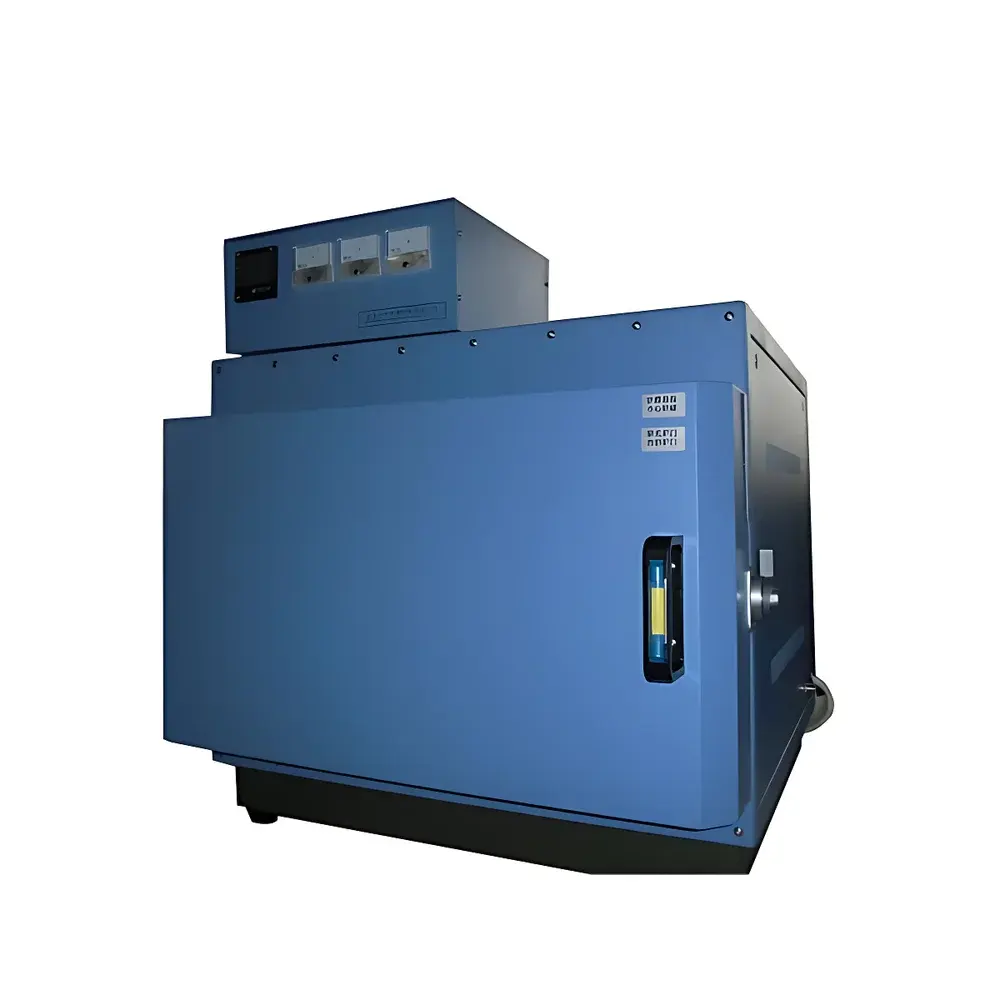
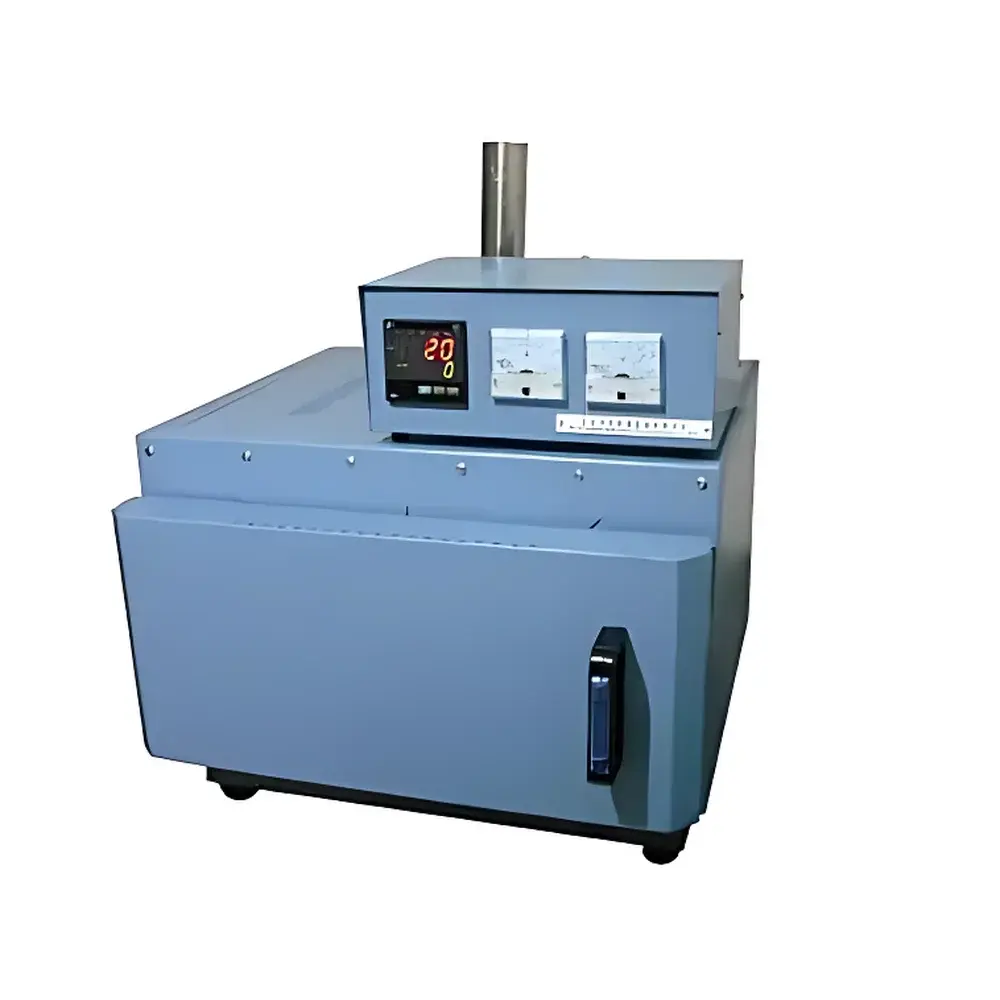
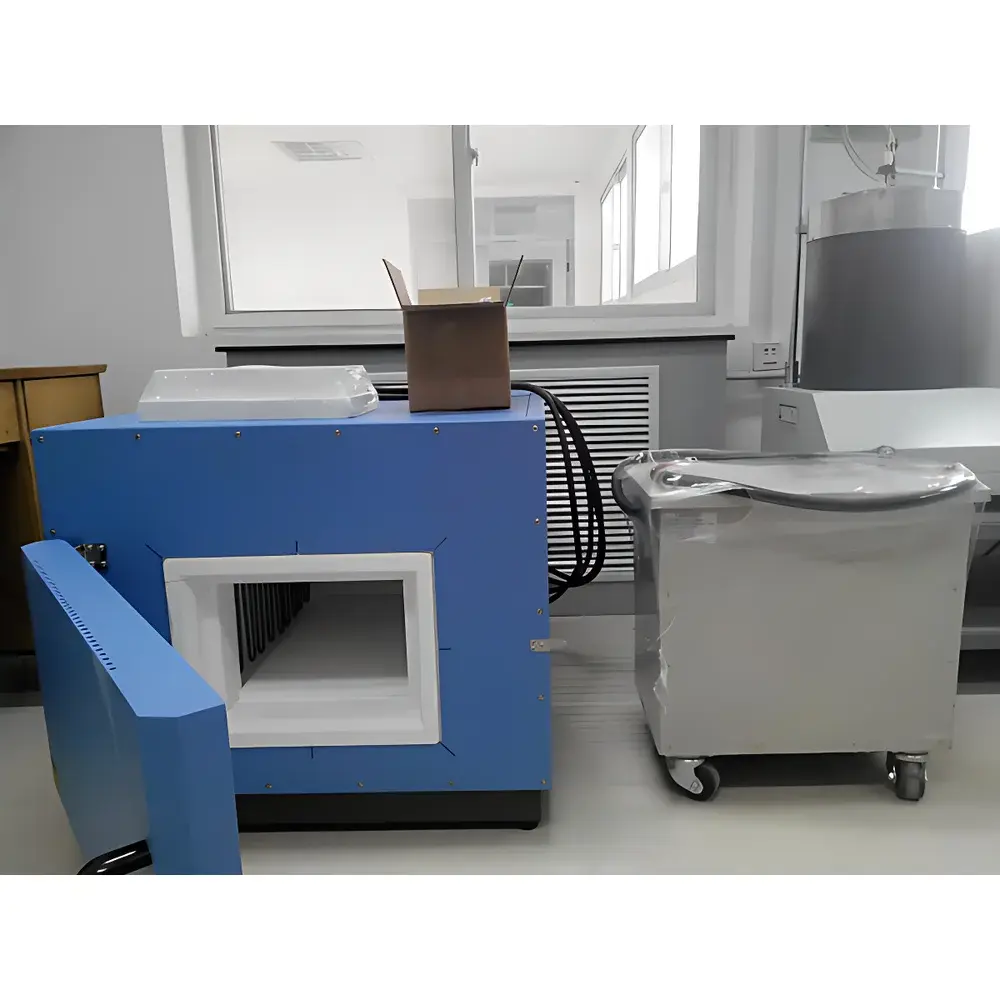
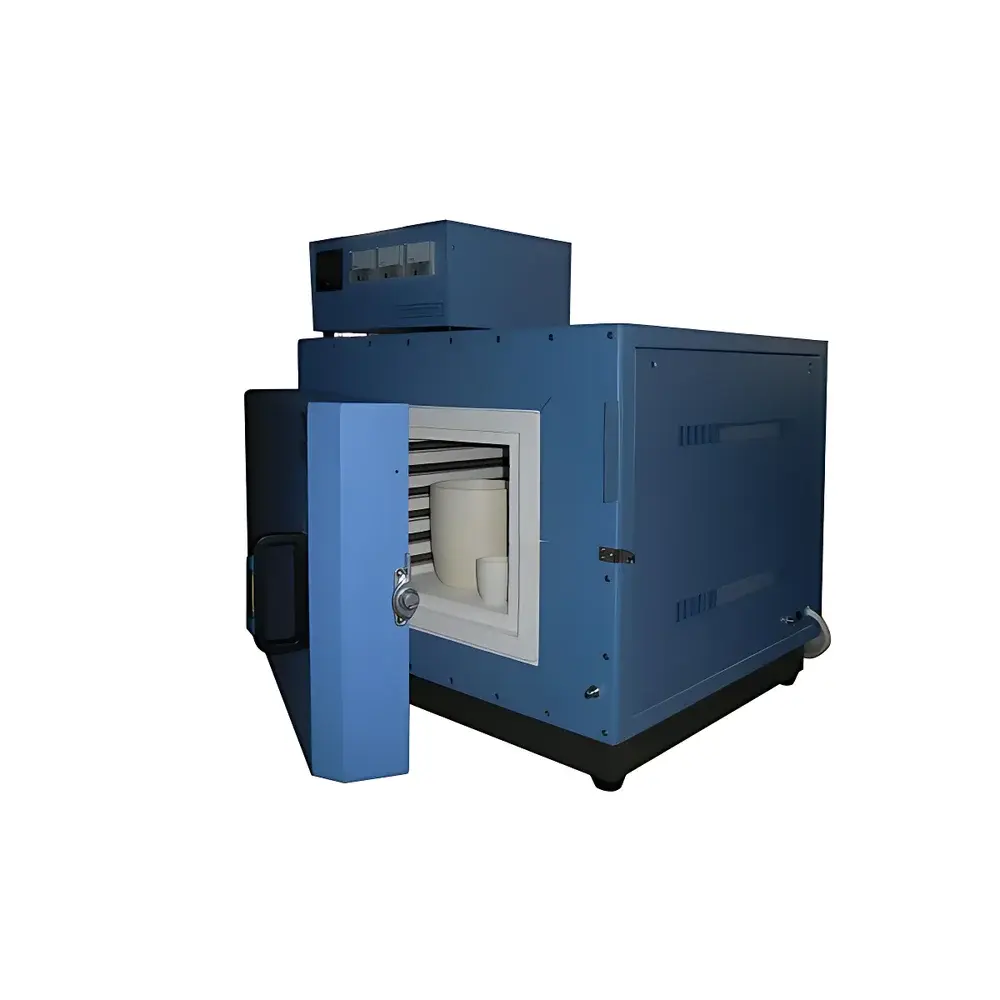
Zhongke Aobo TL3010 Ceramic Fiber Muffle Furnace
| Brand | Zhongke Aobo |
|---|---|
| Origin | Beijing, China |
| Model | TL3010 |
| Instrument Type | Box-Type Muffle Furnace |
| Maximum Temperature | 1200 °C |
| Temperature Control Accuracy | ±1 °C |
| Rated Power | 7.5 kW |
| Heating Time to Max Temp | ≤50 min (from 100 °C to 1200 °C) |
| Heating Method | Electric Alloy Radiant Heating |
| Internal Chamber Dimensions | 400 × 300 × 250 mm (W×D×H) |
| Chamber Volume | 30 L |
| Thermal Insulation | High-Density Ceramic Fiber Module |
| Heating Element | HRE Resistance Wire (replaceable as modular units) |
| Thermocouple Type | K-type |
| Controller | PID Intelligent Programmable Controller (30-step ramp/soak) |
| Safety Features | Automatic Power Cut-off Upon Door Opening |
| Power Supply | 3-Phase 380 V AC, 16 A |
Overview
The Zhongke Aobo TL3010 Ceramic Fiber Muffle Furnace is a high-performance laboratory box furnace engineered for precise thermal treatment of samples in analytical, materials science, and quality control applications. Operating on the principle of resistive radiant heating via HRE (High-Resistance Electrothermal) alloy elements, the furnace delivers stable, uniform temperature distribution across its 30 L ceramic fiber-insulated chamber. Its design conforms to fundamental thermal processing requirements defined in ASTM E1142 (Standard Terminology Relating to Thermal Analysis), ISO 8573-1 (compressed air purity for inert atmosphere compatibility), and USP & EP general chapters on thermal sterilization and ash content determination. The unit is optimized for routine tasks including ashing, calcination, heat treatment, moisture and volatile matter analysis, and pre-treatment of environmental, pharmaceutical, and coal-derived samples under controlled atmospheric conditions.
Key Features
- Ultra-lightweight construction: High-purity alumina-silica ceramic fiber insulation reduces total mass to 100 kg while maintaining structural integrity at 1200 °C — approximately 50% lighter than comparable brick-lined muffle furnaces.
- Rapid thermal response: Achieves 1200 °C from ambient in ≤50 minutes due to low thermal mass and high-efficiency radiant heating geometry; temperature stability at setpoint is maintained within ±1 °C over extended dwell periods.
- Modular heating system: Dual-side mounted HRE resistance wire elements are independently serviceable without disassembling the furnace shell — minimizing downtime during preventive maintenance or element replacement.
- Intelligent PID controller: 30-segment programmable ramp-and-soak functionality with digital setpoint input, real-time temperature logging, and auto-tuning capability; supports time-based hold steps up to 99 hours 59 minutes per segment.
- Enhanced safety architecture: Integrated door interlock circuit ensures immediate power cutoff upon door actuation; surface temperature remains below 60 °C at ambient room conditions (23 °C, 50% RH) during continuous operation at 1200 °C — compliant with IEC 61000-6-3 emission limits and EN 60519-2 electrical safety standards for laboratory heating equipment.
- Configurable gas management: Standard rear-mounted exhaust port enables connection to fume hoods or external scrubbers; optional inlet/outlet fittings support nitrogen, argon, or forming gas purging for oxygen-sensitive processes.
Sample Compatibility & Compliance
The TL3010 accommodates standard crucibles (alumina, quartz, platinum, stainless steel) up to Ø90 mm × 60 mm height, supporting ASTM D3174 (ash content in coal), ASTM D7582 (proximate analysis of coal and coke), EPA Method 1631 (total organic carbon combustion), and ISO 1171 (determination of ash in solid mineral fuels). Its ceramic fiber chamber exhibits negligible catalytic activity and low outgassing rates (<1×10⁻⁶ Pa·L/s at 1000 °C), ensuring sample integrity during trace-element analysis (e.g., ICP-MS sample prep) and avoiding contamination from refractory binder migration. The furnace meets GLP documentation requirements through controller audit trail export (CSV format) and supports 21 CFR Part 11-compliant electronic signatures when integrated with validated LIMS platforms.
Software & Data Management
Controller firmware supports RS485 Modbus RTU communication protocol for integration into centralized lab automation systems. Temperature profiles, real-time thermocouple readings, alarm logs, and power-on/off timestamps are exportable via USB flash drive. Optional PC software provides graphical profile visualization, deviation alerts, and CSV-based reporting compatible with Excel, LabArchives, and Benchling. All data records include ISO/IEC 17025-aligned metadata: operator ID, instrument serial number, calibration due date, and environmental monitoring flags (if external humidity/temperature sensors are connected).
Applications
- Coal and biomass characterization: Determination of moisture, ash, volatile matter, fixed carbon, and fusibility according to ASTM D3172–D3176 and ISO 1171–1173.
- Environmental testing: Total suspended solids (TSS) gravimetric analysis (EPA 160.2), filterable residue ignition (APHA 2540 E), and sediment organic matter loss-on-ignition (LOI).
- Pharmaceutical QC: Residue on ignition (USP ), sulfate ash testing (EP 2.4.14), and excipient thermal degradation screening.
- Materials research: Sintering pre-treatment of ceramics and metal oxides, catalyst activation, and thermal stability assessment of polymer composites.
- Geochemical preparation: Fusion bead preparation for XRF analysis and silicate mineral decomposition prior to ICP-OES quantification.
FAQ
What is the maximum recommended continuous operating temperature?
The TL3010 is rated for continuous operation at 1200 °C. Short-term excursions to 1250 °C are permissible for ≤30 minutes per cycle, provided cooling intervals exceed 60 minutes between cycles.
Can the furnace be used under inert or reducing atmospheres?
Yes — the standard exhaust port and optional gas inlet allow purging with N₂, Ar, or 5% H₂/95% N₂. For sustained reducing environments, consult factory for upgraded gasket material (graphite-reinforced ceramic fiber) and thermocouple protection tubes.
Is calibration traceable to national standards?
Each unit ships with a factory calibration certificate referencing NIST-traceable reference thermocouples (K-type, Class 1 tolerance). On-site verification using a calibrated portable thermometer (e.g., Fluke 1523) is recommended quarterly per ISO/IEC 17025 clause 6.5.
How often should the ceramic fiber insulation be inspected?
Visual inspection for cracking, delamination, or compression set is advised every 200 operating hours. No routine replacement is required; typical service life exceeds 5,000 hours at ≤1100 °C.
Does the controller support remote monitoring via Ethernet or Wi-Fi?
The base model uses RS485 only. An optional Ethernet-to-RS485 gateway module (part no. TL-EM100) enables TCP/IP connectivity and SNMP-based status polling for facility-wide equipment monitoring systems.



