
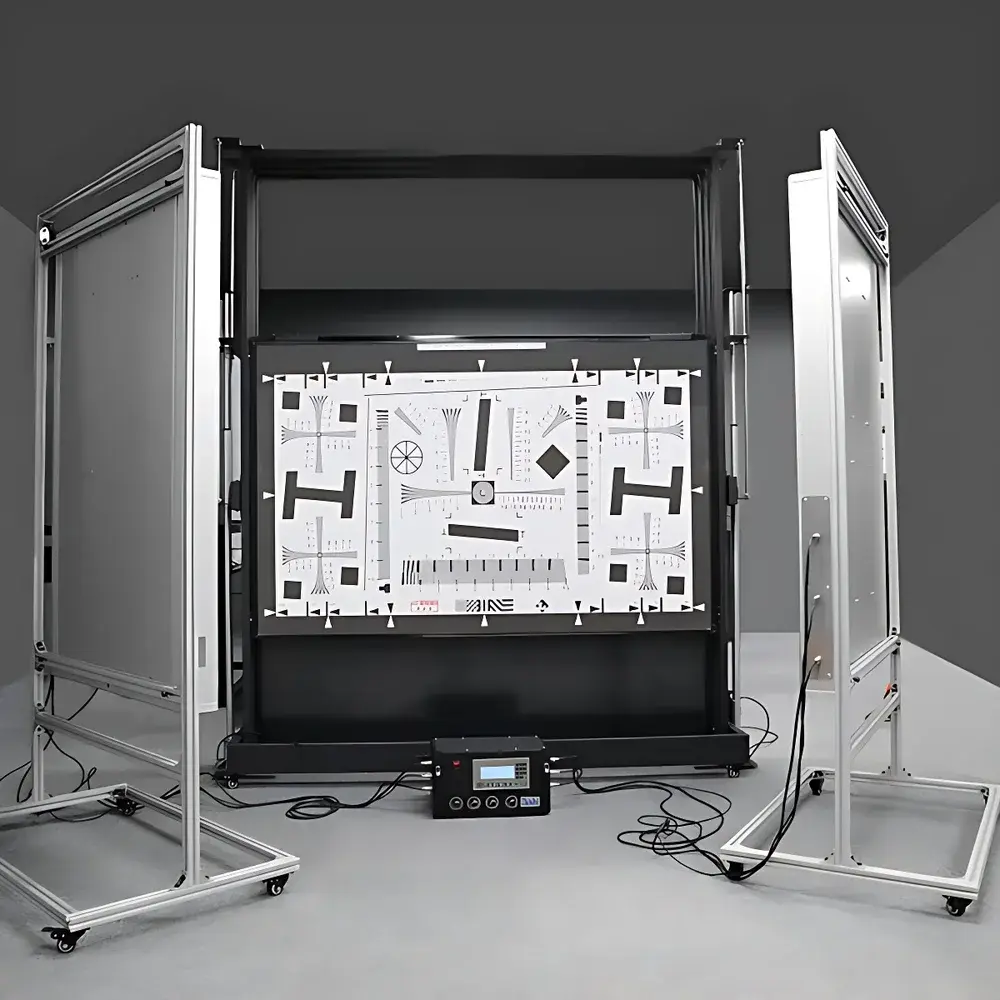
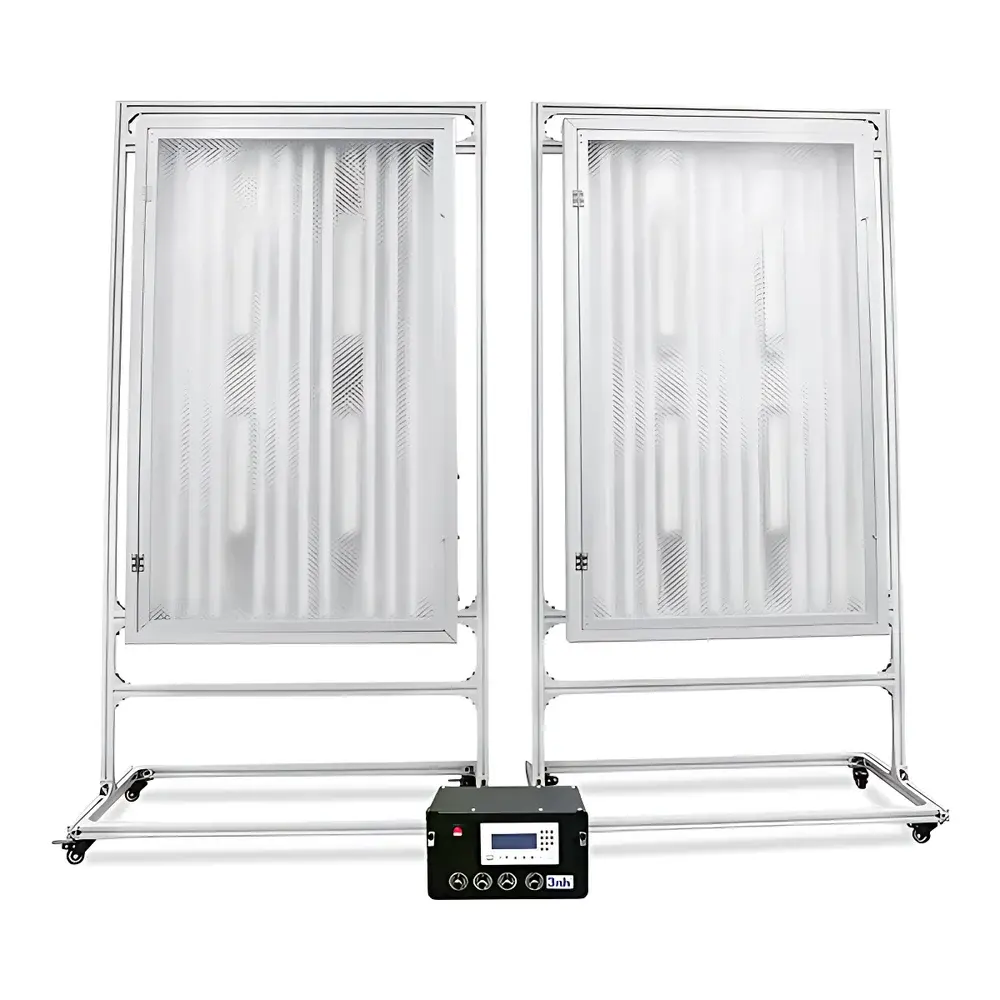
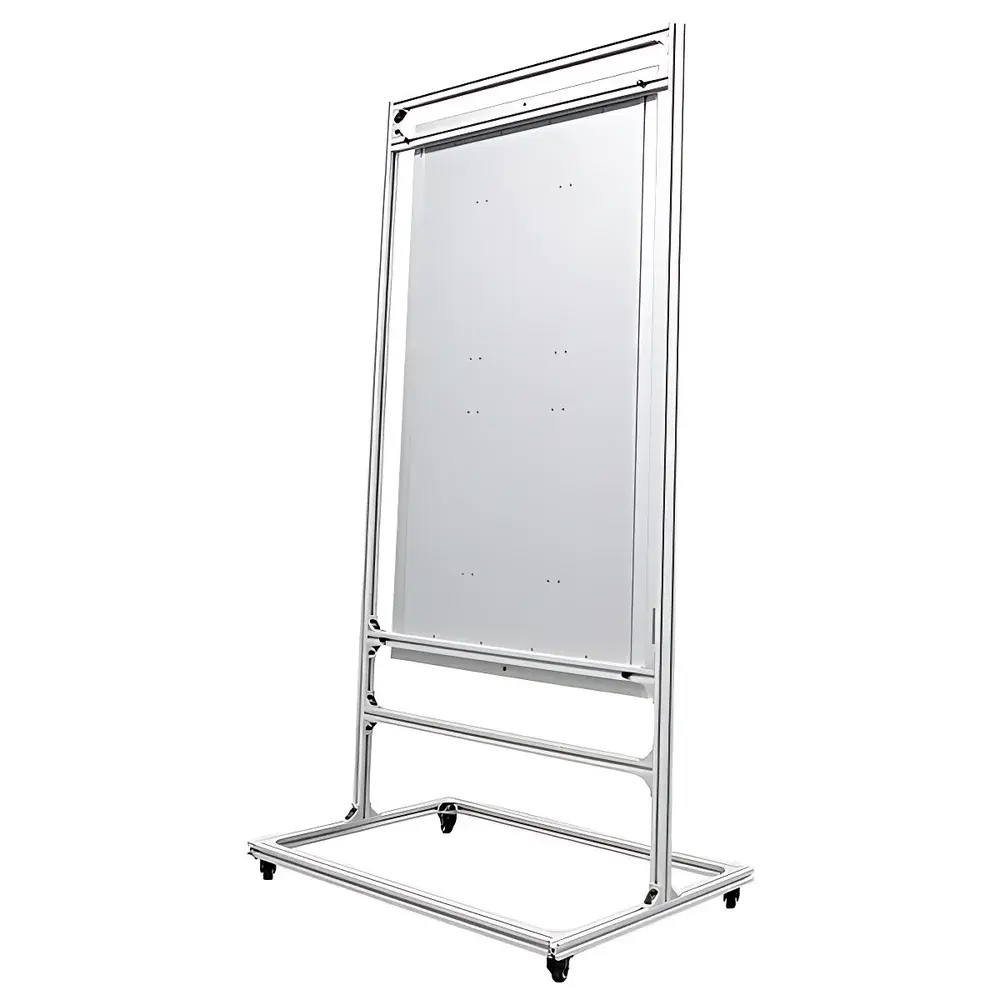
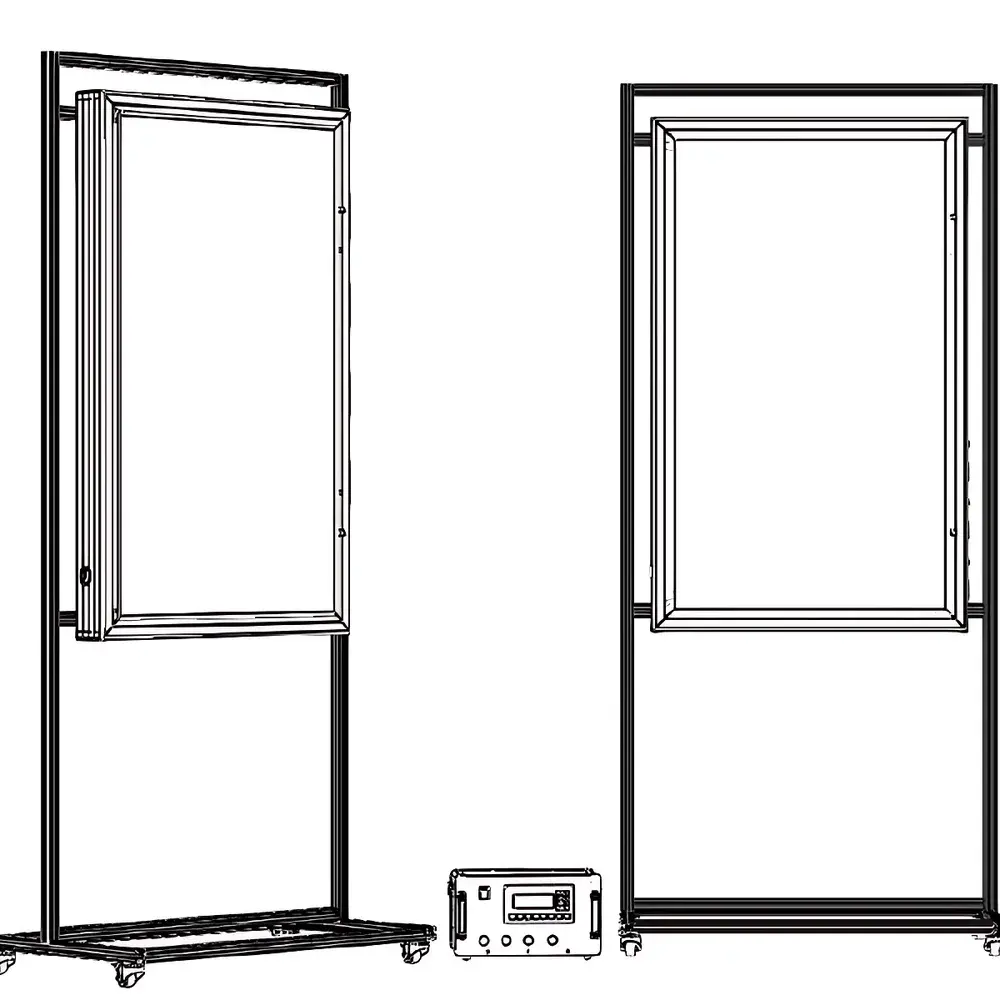
3nh T120-4 Imaging Test & Photographic Color-Matching Light Booth
| Brand | 3nh |
|---|---|
| Origin | Guangdong, China |
| Manufacturer Type | Direct Manufacturer |
| Country of Origin | China |
| Model | T120-4 |
| Dimensions (Booth) | 1302 mm × 803 mm × 100 mm |
| Viewing Area | 1187 mm × 688 mm |
| Stand Height | 1.84 m (customizable) |
| Control Box | 370 mm × 210.5 mm × 227 mm |
| Operating Temperature | 0–40 °C |
| Relative Humidity | ≤80% RH (non-condensing) |
| Input Power | AC 220 V, 50/60 Hz |
| Max Power Consumption | 800 W |
| Net Weight (dual booth + stands + controller) | 55 kg |
Overview
The 3nh T120-4 Imaging Test & Photographic Color-Matching Light Booth is an engineered solution for standardized visual evaluation in imaging system validation, lens performance assessment, and color-critical photography workflows. Designed in accordance with ISO 3664:2009 and CIE S 002:2018 guidelines for viewing conditions, the T120-4 provides stable, spectrally accurate illumination across multiple standardized light sources—including D50, D65, TL84, U30, F, UV, and optional custom spectra—to support consistent color rendering evaluation under controlled photometric conditions. Its dual-booth architecture enables side-by-side comparative analysis, while its high-efficiency optical design—featuring internally mounted specular-reflection-enhancing white panels and front-facing ultra-diffuse acrylic diffusers—ensures uniform illuminance (≥85% uniformity across the viewing area) and minimal glare or hotspots. The system operates on a dedicated microprocessor-controlled lighting management platform, eliminating flicker through continuous dimming circuits compliant with IEEE 1789-2015 recommendations for low-risk visible light modulation.
Key Features
- Dual independent light booths (1187 mm × 688 mm viewing area each), enabling simultaneous multi-source comparison or stereo imaging calibration
- Seven pre-programmed standard light sources: D50 (5000 K), D65 (6500 K), TL84 (CWF), U30 (U30), F (cool white fluorescent), A (incandescent), and UV (365 nm)
- Stepless analog dimming per channel with real-time digital feedback—brightness adjustable from 10% to 100% without spectral shift or perceptible flicker
- Integrated usage logging: automatic tracking of cumulative operating hours and activation cycles per light source for maintenance planning and GLP-compliant recordkeeping
- High-reflectance interior surfaces (≥95% diffuse reflectance, BaSO₄-coated white panels) and 3 mm thick optical-grade diffusion front panel ensure spatial uniformity and minimized metamerism error
- Modular lamp configuration: GX16-8 base sockets support rapid replacement of linear fluorescent or LED modules; optional spectral customization available upon request for specialized applications (e.g., narrowband UV-A, IR-transparent, or wide-gamut LED arrays)
Sample Compatibility & Compliance
The T120-4 accommodates reflective and transmissive samples up to 1150 mm × 650 mm × 50 mm in dimension. It supports industry-standard sample holders, camera mounting rails (M6 thread pattern), and third-party spectrophotometer integration via external trigger I/O. All light sources meet ISO 3664:2009 requirements for colorimetric viewing conditions—including spectral power distribution (SPD) fidelity, illuminance stability (<±2% over 30 min), and chromaticity tolerance (Δu'v' < 0.005). The control system complies with IEC 61000-4-2/3/4/6 for electromagnetic compatibility and meets UL/EN 61000-1-2 safety standards. Optional audit-trail firmware upgrade supports FDA 21 CFR Part 11 compliance for regulated environments requiring electronic signature and change history logging.
Software & Data Management
The embedded controller features a 4.3-inch capacitive touchscreen interface with multilingual support (English, Chinese, Spanish, German). Firmware v2.1+ enables USB export of usage logs (CSV format), remote firmware updates via Ethernet (RJ45 port), and RS-485 Modbus RTU integration for SCADA or LIMS synchronization. No proprietary software installation is required for basic operation; however, optional 3nh LightMaster Pro (v3.2+) provides advanced spectral analysis, CCT/CRI/R9/R12 reporting, and automated pass/fail thresholding against user-defined tolerances. All data files are timestamped and include metadata (source ID, intensity setting, ambient temperature/humidity if external sensor connected).
Applications
- Camera module and lens MTF/TV distortion testing under standardized illumination
- Color accuracy validation for smartphone, drone, and industrial machine vision systems
- Print proofing and packaging prepress evaluation in graphic arts facilities
- Textile, paint, and plastic sample comparison in QC laboratories
- Medical endoscope and ophthalmic imaging calibration under clinically relevant lighting
- Academic research in color science, visual perception, and multispectral imaging
FAQ
What is the recommended minimum ambient lighting condition for optimal use?
Maintain ambient illumination below 20 lux at the viewing plane, with no direct daylight exposure or unshielded artificial light sources within the field of view.
Can the T120-4 be integrated into an automated test station?
Yes—RS-485 Modbus RTU and discrete TTL-level trigger inputs/outputs enable synchronization with robotic sample handlers, shutter controllers, and image acquisition systems.
How often should lamp output be verified for metrological traceability?
We recommend annual verification using a NIST-traceable spectroradiometer; lamp replacement intervals are typically 5,000–8,000 hours depending on source type and thermal management.
Is the internal reflectance coating resistant to UV degradation?
The barium sulfate (BaSO₄) coating is stabilized against UV-induced yellowing and maintains >92% reflectance after 10,000 hours of D65-equivalent exposure per ISO 105-B02 accelerated aging protocols.
Does the system support DICOM GSDF calibration for medical imaging displays?
While not a display calibrator itself, the T120-4 provides the standardized ambient lighting environment required by AAPM TG18 and IEC 62563-1 for diagnostic monitor validation procedures.



