
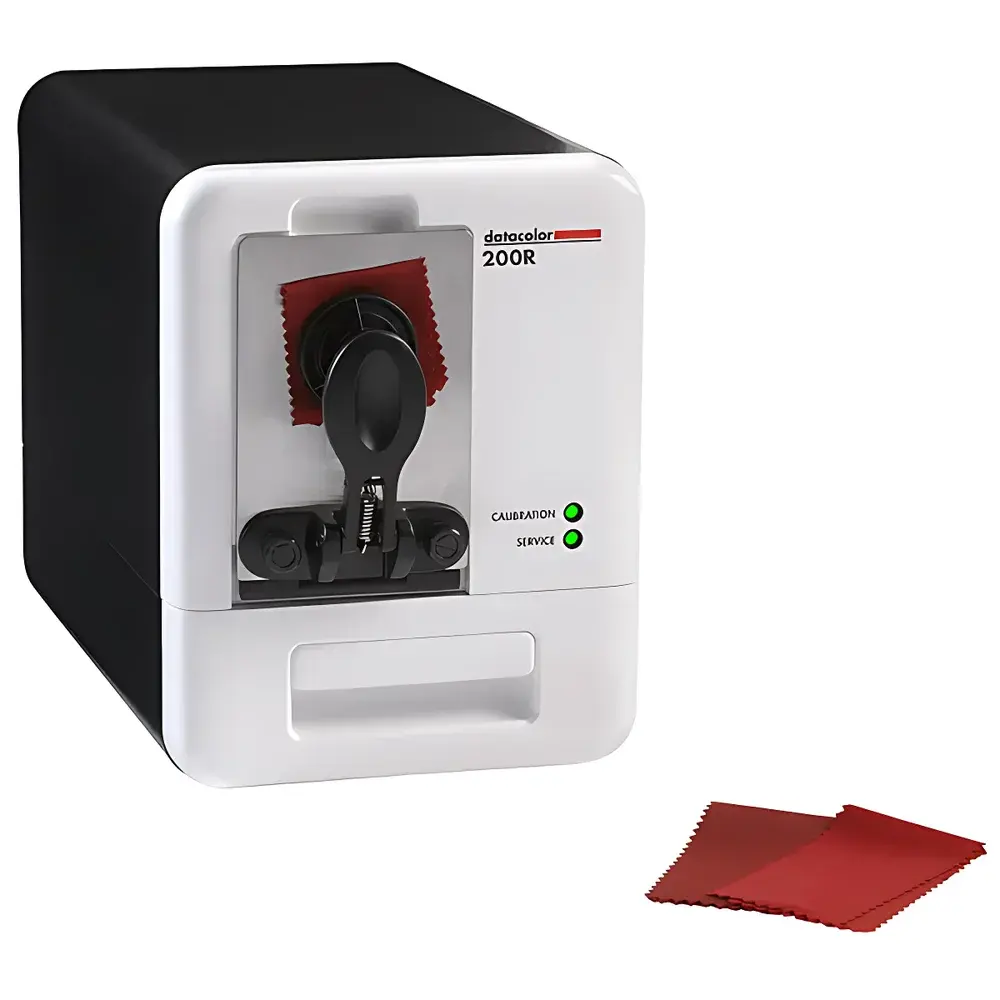
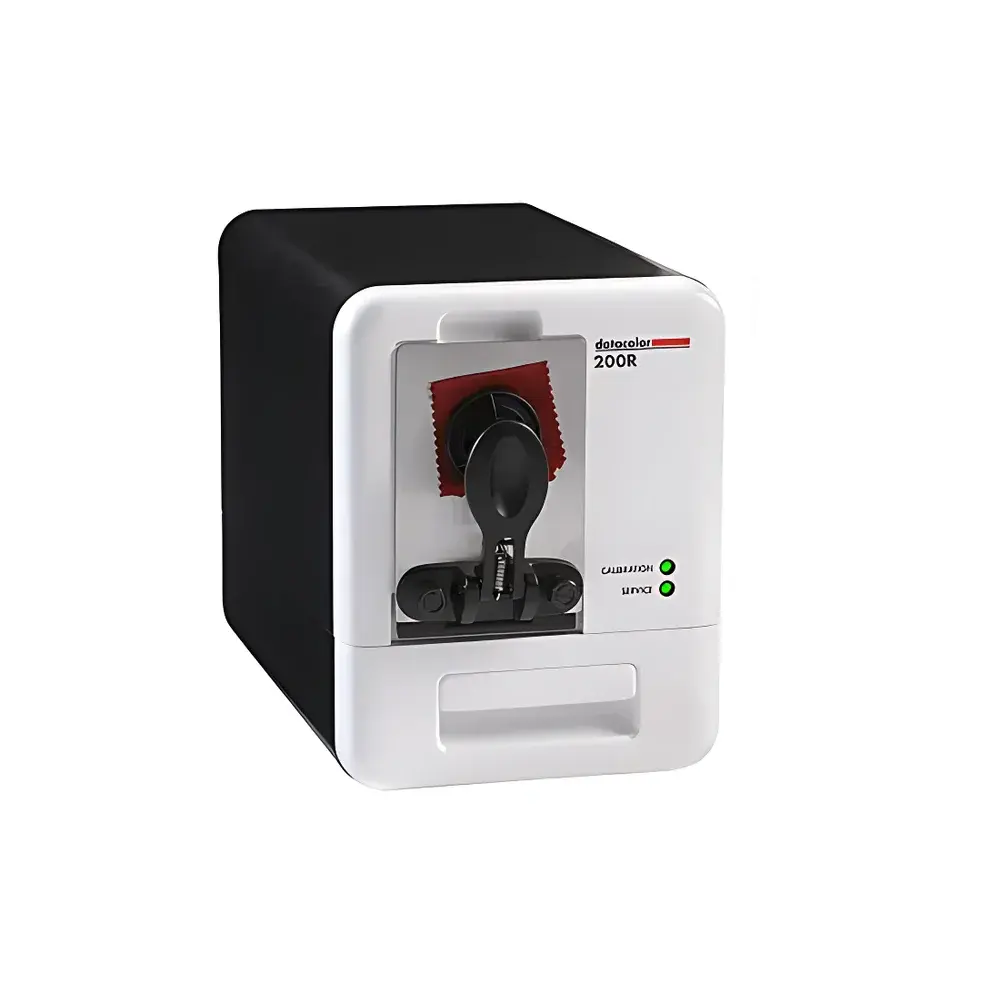
Datacolor 200 Series Portable Spectrophotometer
| Origin | USA |
|---|---|
| Manufacturer Type | Authorized Distributor |
| Origin Category | Imported |
| Model | Datacolor 200 Series |
| Price Range | USD 6,800 – 13,600 |
| Measurement Geometry | d/8° Dual-Beam |
| Illuminant | Pulsed Xenon Lamp (D65 Equivalent) |
| Wavelength Range | 400–700 nm |
| Reporting Interval | 10 nm |
| Photometric Range | 0–200% |
| Spectral Sensor | Dual 256-Element Diode Array with Patented SP2000 Technology |
| Color Repeatability | ≤ 0.05 CIELAB ΔE* |
| Inter-Instrument Agreement (200R) | ≤ 0.2 CIELAB ΔE* (avg. of 12 BCRA tiles) |
| Inter-Instrument Agreement (200M) | ≤ 0.5 CIELAB ΔE* (max), ≤ 0.2 CIELAB ΔE* (avg. of 12 BCRA tiles) |
| Aperture Options | LAV (22 mm), SAV (9 mm), USAV (6.5 mm) |
| Interface | Secure USB or RS-232 (cable optional) |
| Operating Environment | 5–40 °C, ≤ 85% RH (non-condensing) |
| Dimensions | 17.2 × 22.3 × 32.7 cm |
| Weight | 6.8 kg |
Overview
The Datacolor 200 Series is a compact, dual-beam d/8° portable spectrophotometer engineered for high-fidelity spectral measurement in retail and industrial color-critical environments. It employs pulsed xenon illumination spectrally filtered to closely match the CIE standard illuminant D65, ensuring metrologically traceable color data across diverse substrates—including paints, textiles, plastics, and coatings. Its core optical architecture integrates Datacolor’s patented SP2000 spectral analysis engine and a dual 256-element diode array detector, enabling simultaneous capture of full spectral reflectance curves from 400 nm to 700 nm at 10 nm intervals. This design eliminates lamp drift and thermal instability inherent in single-beam systems, delivering consistent photometric accuracy (0–200%) and exceptional inter-instrument agreement—critical for multi-site color matching, supply chain harmonization, and regulatory compliance in globally distributed manufacturing.
Key Features
- Dual-beam d/8° optical geometry with integrated SCI/SCE mode switching for automatic specular component inclusion/exclusion—enabling precise gloss compensation without manual reconfiguration.
- Patented SP2000 spectral processing technology ensures robust signal-to-noise ratio and minimizes spectral noise, particularly in low-reflectance or textured samples.
- Modular aperture system supporting LAV (22 mm), SAV (9 mm), and USAV (6.5 mm) measurement areas—optimized for large-area batch verification or small-detail spot checks.
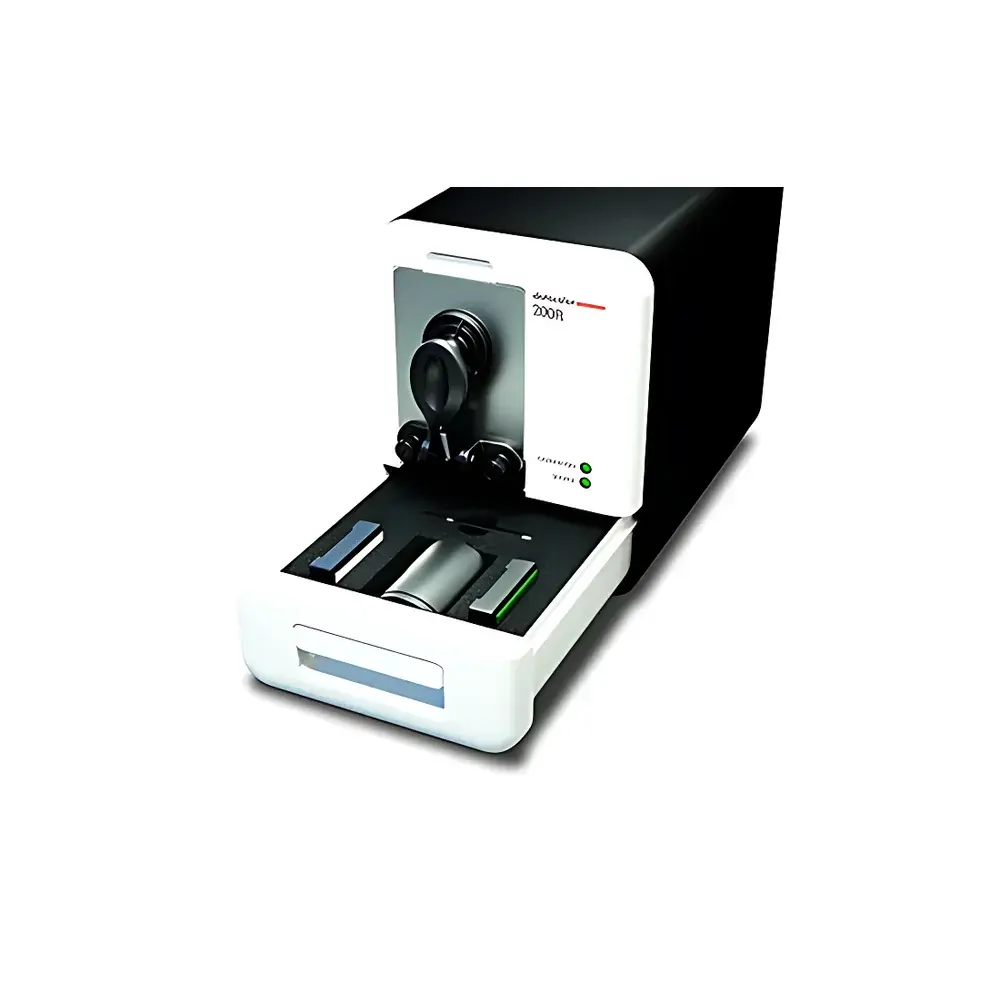
- Integrated accessory drawer housing black trap, white calibration tile, green verification tile, and user documentation on USB drive—reducing setup time and minimizing calibration error risk.
- Factory-loaded calibration data and self-diagnostic LED maintenance indicators provide immediate operational readiness and proactive instrument health monitoring.
- Secure USB interface compliant with USB 2.0 standards; optional RS-232 connectivity supports legacy laboratory network integration and industrial automation protocols.
Sample Compatibility & Compliance
The Datacolor 200 Series accommodates opaque, translucent, and semi-glossy solid materials—including liquid-coated panels, woven and knitted fabrics, injection-molded plastic parts, and architectural paint swatches. Its d/8° geometry conforms to ASTM E308, ISO/CIE 15, ISO 7724-1, and GB/T 3978–2008 for spectral reflectance measurement. Instrument performance is validated per ISO 13655:2017 (spectral measurement of colorants) and certified against the BCRA (British Colour Council) reference tile set. Full traceability is maintained through NIST-traceable calibration certificates supplied with each unit. The system supports GLP/GMP audit trails when paired with Datacolor TOOLS software, and complies with FDA 21 CFR Part 11 requirements for electronic records and signatures when configured with appropriate user access controls and audit logging.
Software & Data Management
The Datacolor 200 Series operates natively with Datacolor TOOLS—a platform-agnostic desktop application supporting Windows and macOS. TOOLS enables spectral data export in industry-standard formats (CIE XYZ, CIELAB, CIELCh, CMYK, sRGB), spectral curve overlays, tolerance setting per CMC, DE2000, or DECMC, and batch comparison reporting. All measurements include embedded metadata (operator ID, timestamp, aperture, illuminant, observer angle), facilitating automated QA/QC workflows. When integrated with Datacolor MATCH TEXTILE or MATCH PIGMENT, the 200 Series feeds directly into formulation databases—accelerating recipe development and reducing lab-to-production iteration cycles. Raw spectral data remains fully accessible for third-party analysis or custom algorithm development.
Applications
- Retail paint tinting stations: Real-time spectral validation of mixed batches against master standards, minimizing customer returns and repainting costs.
- Textile dye houses: Fast verification of shade consistency across dye lots, conforming to AATCC Evaluation Procedure 1 and ISO 105-J03.
- Plastics compounders: Monitoring color stability during extrusion and injection molding, aligned with ASTM D2244 and ISO 11664-4.
- Automotive interior suppliers: Measuring color uniformity across trim components under controlled lighting conditions compatible with SAE J1545.
- Quality assurance labs: Supporting ISO 9001:2015 clause 8.5.1 (control of production and service provision) via documented, repeatable spectral measurement procedures.
FAQ
What is the difference between the Datacolor 200R and 200M models?
The 200R is optimized for retail paint applications with enhanced durability, simplified UI navigation, and pre-configured workflows for tint base matching. The 200M is a benchtop-optimized variant with expanded aperture options and tighter inter-instrument agreement specifications, targeting textile, coating, and plastics manufacturers requiring higher metrological rigor.
Does the instrument require annual recalibration by an authorized service center?
No—factory calibration is stable for 12 months under normal operating conditions. However, daily verification using the included white and green tiles is required per ISO 13655:2017 Annex B. Full recalibration is recommended only after physical impact, exposure to extreme temperature/humidity, or persistent diagnostic LED alerts.
Can spectral data be exported to ERP or PLM systems?
Yes—TOOLS supports CSV, XML, and JSON exports with configurable field mapping. API integration is available via Datacolor’s RESTful Web Services for SAP, Oracle, and PTC Windchill environments.
Is the device compliant with EU RoHS and REACH directives?
Yes—the entire 200 Series meets RoHS Directive 2011/65/EU and REACH Regulation (EC) No. 1907/2006, with full material declarations available upon request.
What environmental conditions affect measurement stability?
Ambient temperature fluctuations exceeding ±2°C/hour or relative humidity above 85% non-condensing may induce short-term drift. The instrument includes internal thermal stabilization but must be acclimated for ≥30 minutes after transport before critical measurements.
Related Products





