
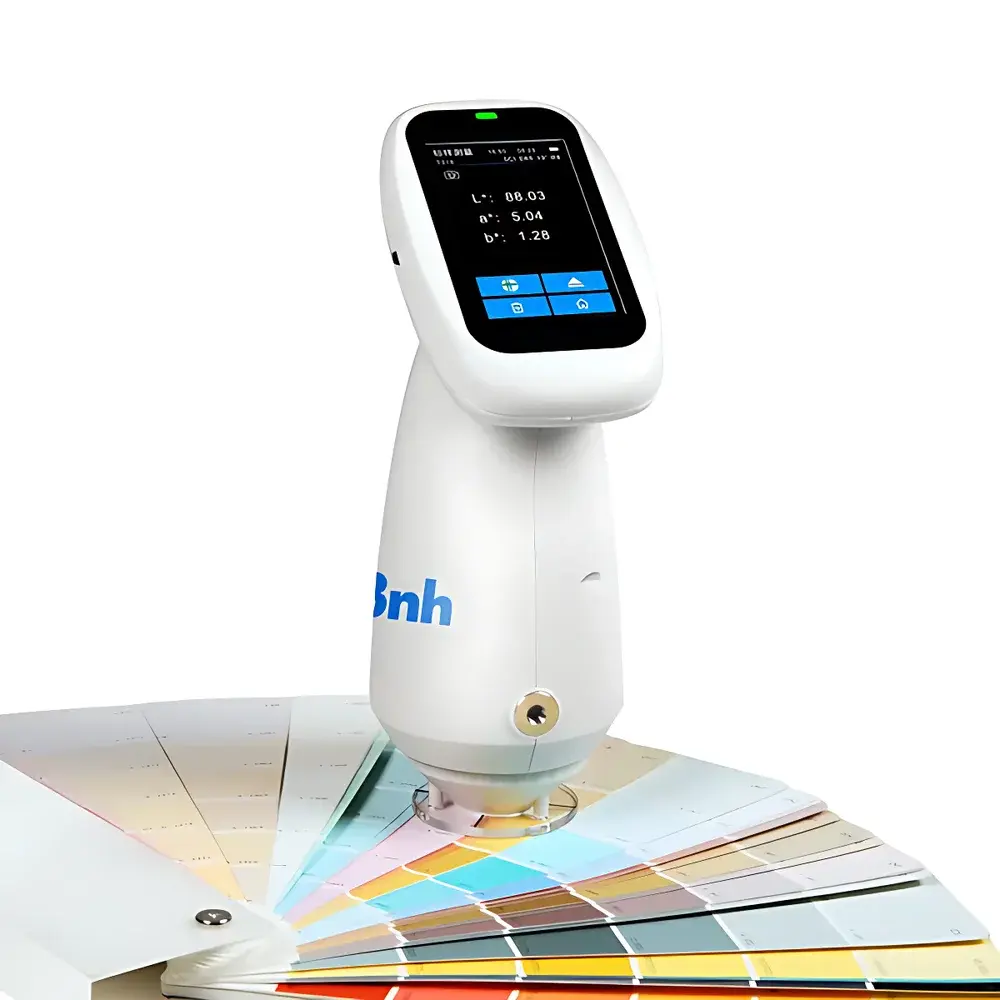
3nh PS2080 Handheld High-Precision Spectrophotometric Colorimeter
| Brand | 3nh |
|---|---|
| Origin | Guangdong, China |
| Manufacturer Type | Direct Manufacturer |
| Product Category | Domestic |
| Model | PS2080 |
| Product Type | Spectrophotometric Colorimeter |
| Instrument Form Factor | Portable |
| Optical Geometry | d/8° Integrating Sphere |
| Illuminant | Full-Spectrum LED + UV LED |
| Spectral Range | 400–700 nm |
| Repeatability | ΔE*ab ≤ 0.02 (std dev, MAV/SCI, after warm-up & calibration, 30 measurements of white tile at 5 s intervals) |
Overview
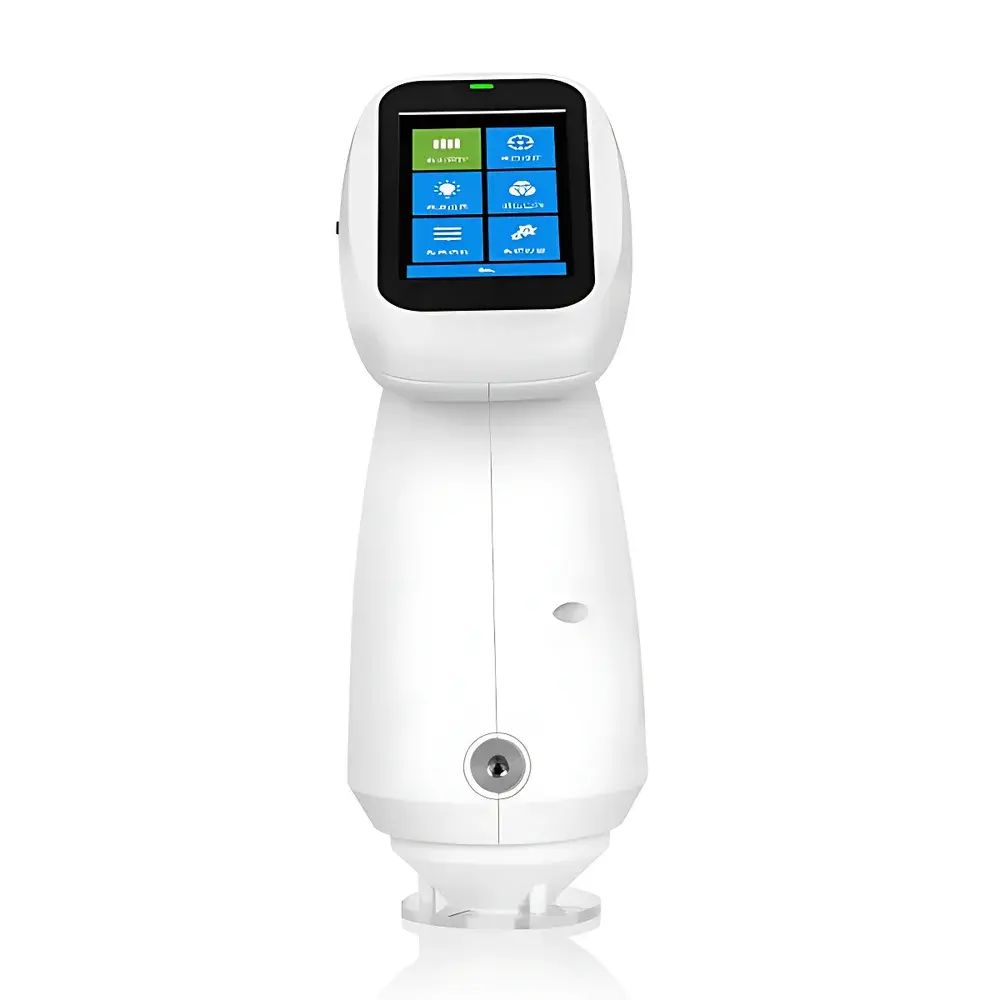
The 3nh PS2080 is a handheld spectrophotometric colorimeter engineered for high-precision, traceable color measurement across industrial R&D and quality control environments. It operates on the CIE-compliant d/8° geometry with integrated sphere illumination and dual-mode detection—simultaneous SCI (Specular Component Included) and SCE (Specular Component Excluded)—enabling accurate characterization of both diffuse and specular reflectance components. This architecture conforms to ISO 7724-1, ASTM E1164, DIN 5033-7, and GB/T 3978, ensuring metrological consistency across global supply chains. The instrument employs a CMOS-based dual-channel spectral sensor with 10-nm nominal resolution across the visible spectrum (400–700 nm), delivering calibrated spectral reflectance data at 10-nm intervals. Its inclusion of a dedicated UV LED channel enables quantitative evaluation of fluorescent whitening agents (FWAs) and optically brightened materials—critical in textile, paper, detergent, and cosmetic applications where UV-excited emission contributes significantly to perceived whiteness and color fidelity.
Key Features
- Dual-Mode Optical Architecture: Simultaneous acquisition of SCI and SCE spectra eliminates manual mode switching and reduces operator-induced variability during routine QC checks.
- Full-Spectrum + UV Illumination: A thermally stabilized, spectrally uniform LED array covering 400–700 nm—complemented by a discrete UV LED (365 nm)—ensures robust excitation of fluorescent pigments without spectral gaps common in broad-spectrum white LEDs.
- Six Interchangeable Apertures: Includes MAV (Φ8 mm / Φ10 mm), SAV (Φ4 mm / Φ5 mm), and SSAV (1×3 mm), all available in both flat-surface and conical-tip configurations—supporting precise targeting of curved, textured, or small-area samples such as electronic housings, ink dots, or ceramic glazes.
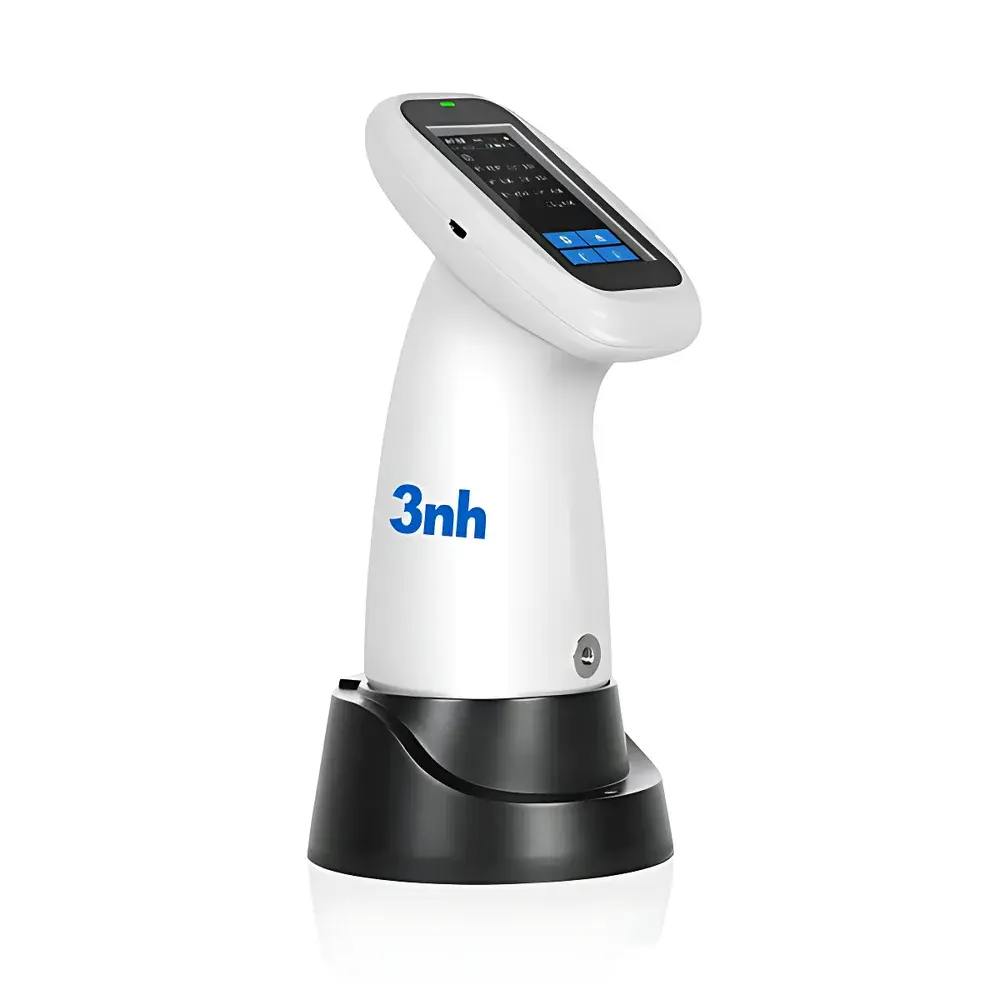
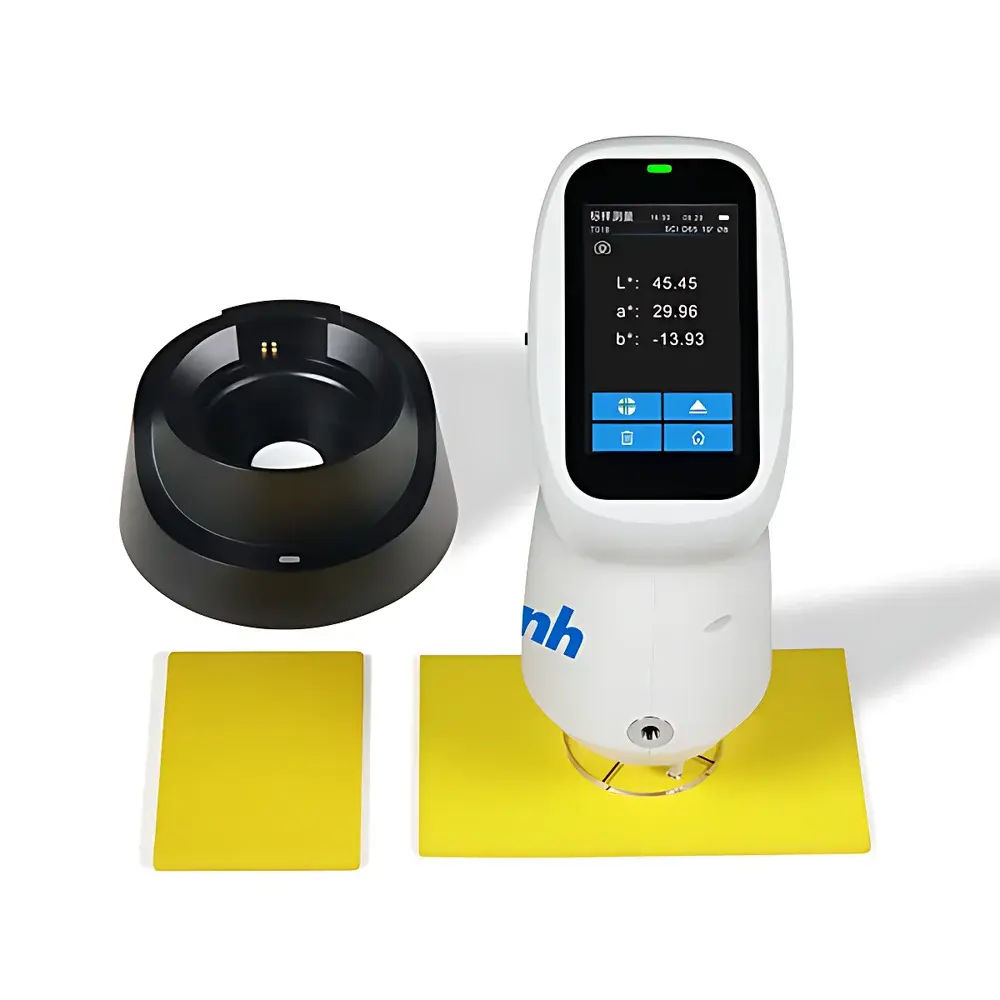
- Non-Contact Auto-Calibration Base: Integrated motorized lift mechanism performs fully automated white tile verification using a certified reference standard (R ≥ 95% across 400–700 nm, spatial uniformity < 0.2% RSD), eliminating manual alignment errors and drift-related recalibration downtime.
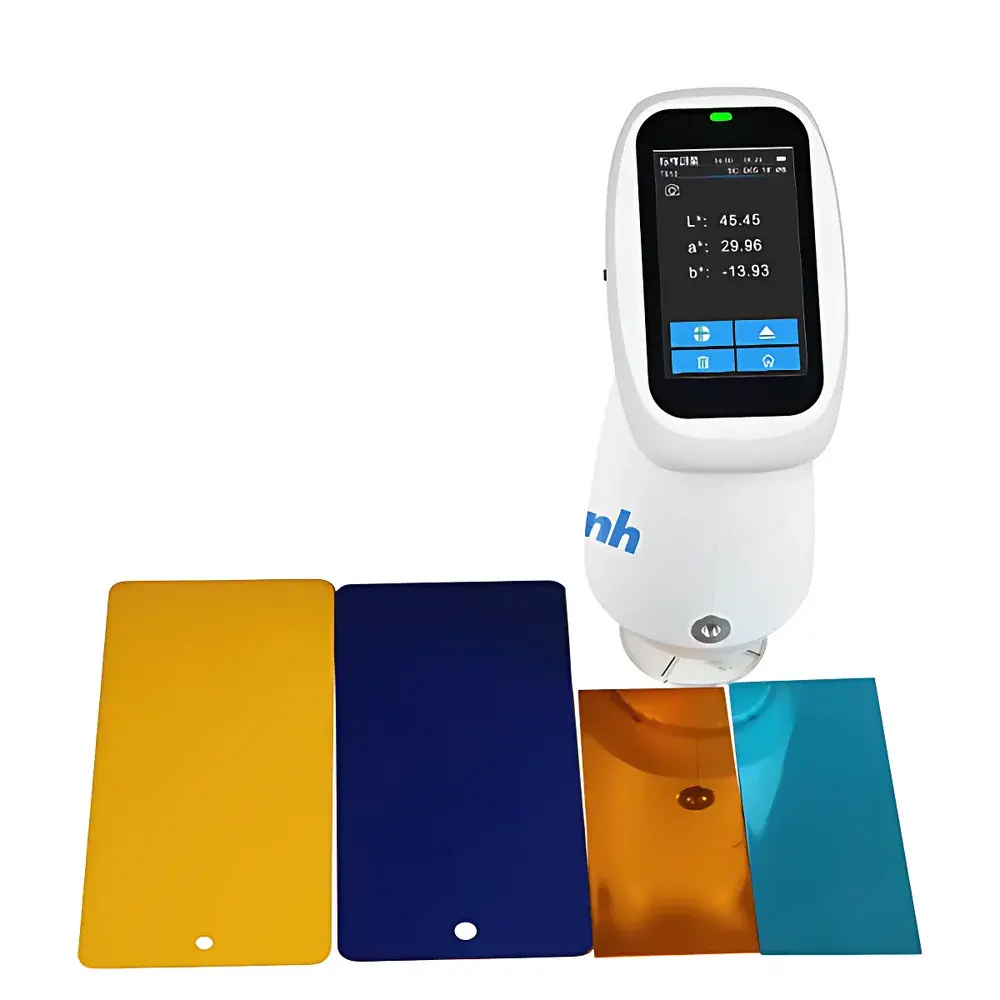
- Real-Time Camera-Assisted Targeting: A 2-megapixel coaxial imaging system overlays a live preview on the 2.8-inch capacitive touchscreen, enabling sub-millimeter positioning accuracy and visual confirmation of measurement location prior to trigger activation.
- Multi-Platform Software Ecosystem: Native support for Android, iOS, Windows, HarmonyOS, WeChat Mini Programs, and cloud-based ColorCloud™ platform ensures seamless synchronization of spectral libraries, audit trails, and cross-device reporting without vendor lock-in.
Sample Compatibility & Compliance
The PS2080 is validated for use with opaque, translucent, and fluorescent substrates—including injection-molded plastics, solvent- and water-based coatings, woven and knitted textiles, printed packaging films, glazed ceramics, and cosmetic emulsions. Its aperture versatility accommodates irregular geometries (e.g., buttons, connectors, fabric swatches) while maintaining compliance with ASTM D2244 (color difference calculation), ASTM E313 (whiteness index), ASTM D1925 (yellowness index), and ISO 105-J03 (colorfastness assessment). All units ship with NIM-traceable calibration certificates (China National Institute of Metrology), and raw spectral data export supports GLP/GMP-aligned workflows requiring full data lineage per FDA 21 CFR Part 11 Annex 11 requirements.
Software & Data Management
The bundled ColorExpert™ software suite provides full spectral data visualization, multi-standard pass/fail tolerancing (CIEDE2000, CMC, DIN99), batch statistical analysis (X̄, R, Cp/Cpk), and automated report generation (PDF/CSV/XLSX). Cloud-synced databases retain unlimited standards and specimens—with version-controlled history, user-level permissions, and time-stamped audit logs. Mobile apps implement role-based access control, offline measurement capability (up to 10,000 readings stored locally), and real-time collaboration via shared project workspaces. Raw .spc files include embedded metadata (instrument ID, calibration timestamp, aperture used, observer angle, illuminant ID), enabling third-party integration with LIMS and ERP systems via RESTful API.
Applications
- Plastics & Electronics: Monitoring color consistency of ABS, PC, and silicone housings under multiple illuminants (D65, TL84, F2) to detect batch-to-batch variation in pigment dispersion.
- Paints & Inks: Quantifying metamerism between OEM and aftermarket formulations using CIEDE2000 under D65 and A illuminants; validating UV-stabilizer efficacy via accelerated aging spectral tracking.
- Textiles & Apparel: Assessing dye lot conformity against master standards, evaluating optical brightener decay after laundering cycles (ASTM F1317), and grading colorfastness to light (ISO 105-B02).
- Printing & Packaging: Verifying spot-color fidelity (Pantone®, DIC), detecting substrate-dependent hue shifts on coated vs. uncoated papers, and auditing print-to-digital color matching (sRGB, Adobe RGB).
- Ceramics & Tiles: Measuring glaze opacity, gloss influence on chroma, and thermal stability of transition-metal oxide pigments through repeated firing-cycle spectral profiling.
FAQ
Is the PS2080 compliant with international color measurement standards?
Yes—the instrument adheres to CIE No. 15:2018, ISO 7724-1:2019, ASTM E1164-22, and GB/T 3978–2008 for geometric and photometric performance. Calibration traceability extends to NIM (China National Institute of Metrology) via individual unit certification.
Can it measure fluorescent materials accurately?
Yes—its dedicated 365 nm UV LED, combined with SCI/SCE dual-mode capture and spectral deconvolution algorithms, enables quantitative separation of reflected and fluoresced components per CIE Technical Report 204-2013.
What is the inter-instrument agreement (IIA) specification?
At MAV/SCI, mean ΔE*ab ≤ 0.20 across BCRA Series II tiles (12 standards), measured per ISO 13655:2017 Annex B protocol.
Does the device support regulatory audit trails for pharmaceutical or food-grade applications?
Yes—ColorExpert™ software implements electronic signatures, immutable audit logs, and 21 CFR Part 11–compliant user authentication when deployed in validated environments.
How is spectral data stored and exported?
Raw spectra are saved in industry-standard .spc format with embedded EXIF-like metadata; bulk exports support CSV (reflectance vs. wavelength), XML (CxF/XRGA), and PDF (annotated reports) with configurable templates.




