
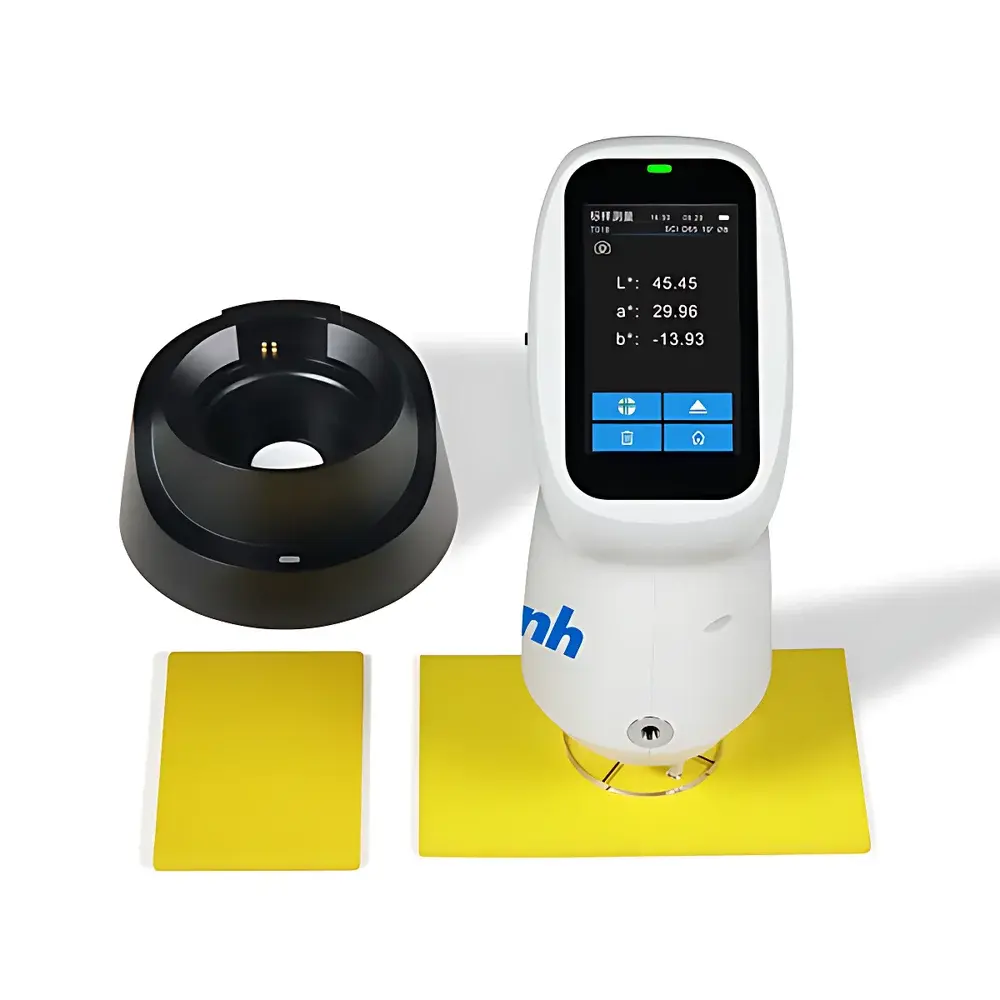
3nh PS2050 High-Precision Dual-Aperture Spectrophotometric Colorimeter
| Brand | 3nh |
|---|---|
| Origin | Guangdong, China |
| Manufacturer Type | Manufacturer |
| Product Type | Colorimeter |
| Instrument Type | Portable |
| Optical Geometry | d/8° integrating sphere |
| Light Source | Full-spectrum LED + UV LED |
| Spectral Range | 400–700 nm |
| Repeatability | ΔE*ab ≤ 0.03 (std dev, MAV/SCI, after warm-up & calibration, 30 measurements of white tile at 5 s intervals) |
Overview
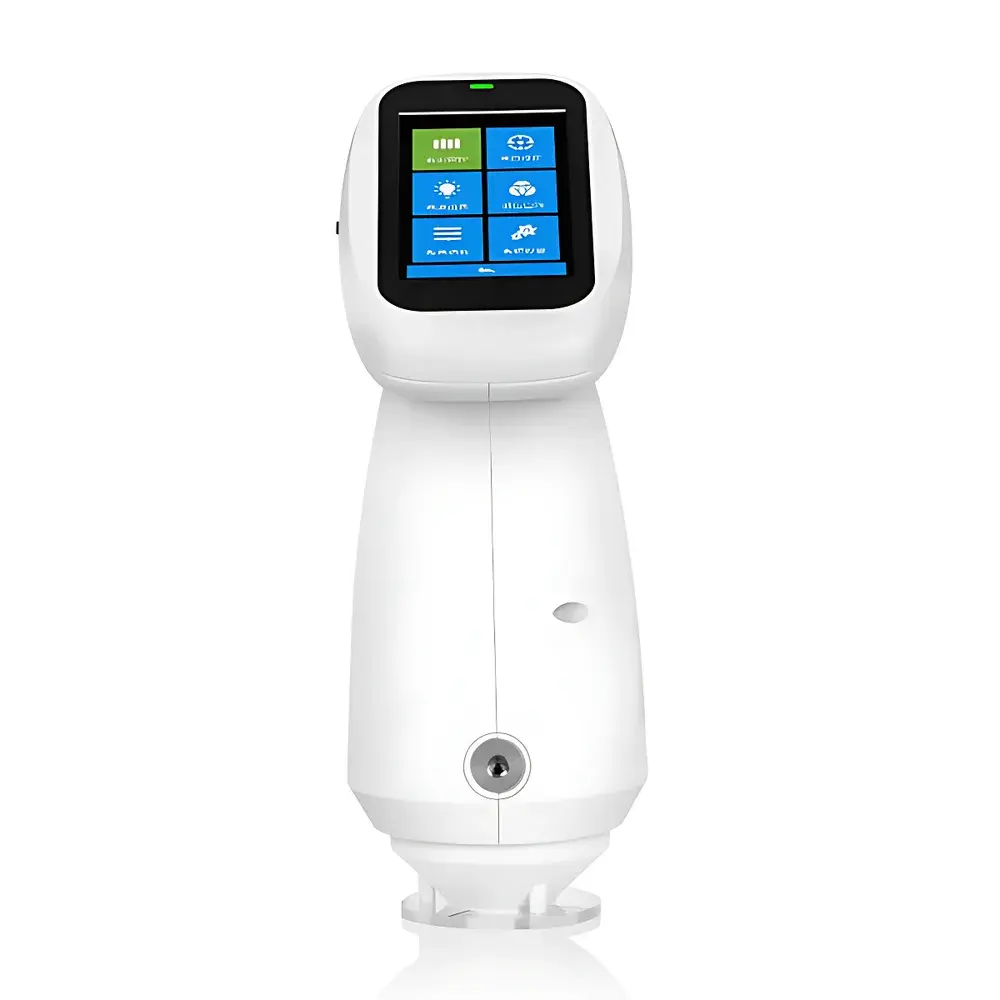
The 3nh PS2050 is a high-precision spectrophotometric colorimeter engineered for rigorous color quality control in industrial manufacturing and R&D environments. It operates on the CIE-compliant d/8° illumination geometry with simultaneous SCI (Specular Component Included) and SCE (Specular Component Excluded) measurement modes—enabling accurate assessment of both diffuse and specular reflectance characteristics. This dual-mode capability ensures consistent evaluation across diverse surface finishes, from matte plastics to glossy coatings and textured textiles. The instrument employs a CMOS-based dual-channel spectral sensor paired with a 40 mm integrating sphere, delivering high-fidelity spectral reflectance data at 10 nm resolution across the visible spectrum (400–700 nm). Its optical architecture conforms to ISO 7724-1, ASTM E1164, DIN 5033-7, GB/T 3978, and CIE Publication No. 15—making it suitable for laboratories requiring traceable, standards-aligned color measurement.
Key Features
- Dual-aperture platform design: MAV (Φ8 mm / Φ10 mm) and SAV (Φ4 mm / Φ5 mm) measurement ports enable flexible sampling of large-area uniform surfaces or small, critical features without repositioning.
- Full-spectrum LED illumination augmented with dedicated UV LED: Ensures spectrally continuous output across 400–700 nm, eliminating gaps common in standard white LEDs; essential for reliable fluorescence excitation and quantification of optical brighteners, pigments, and UV-reactive materials.
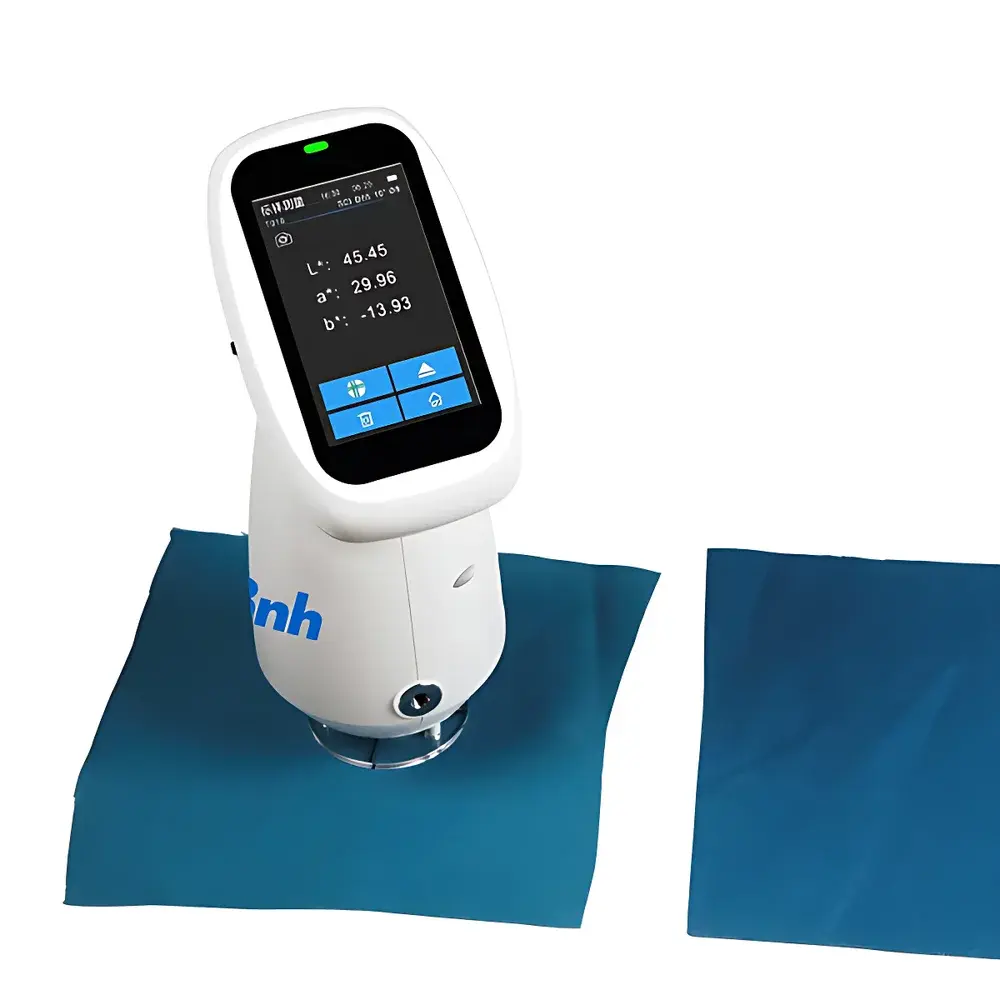
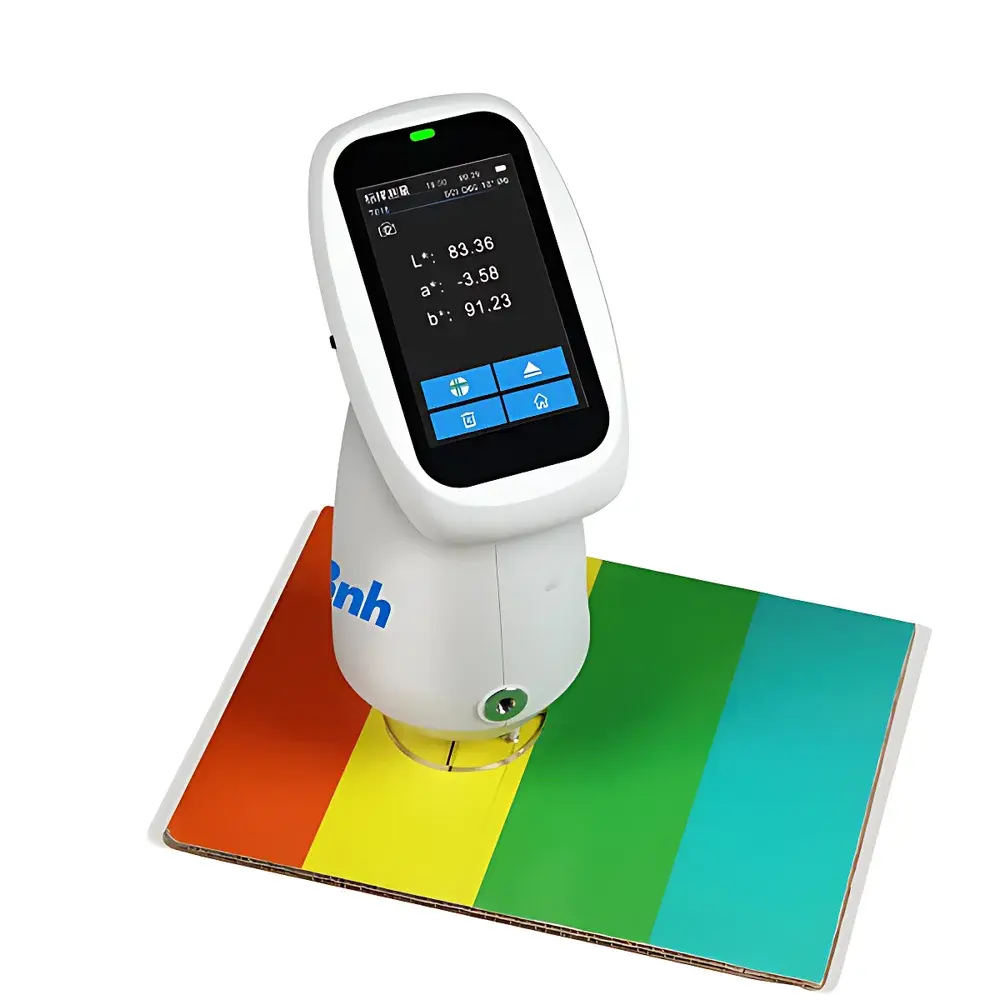
- Integrated 2.8-inch capacitive touchscreen and real-time camera-assisted targeting: Visual framing via onboard camera allows precise alignment with target measurement zones, reducing operator-induced positioning error.
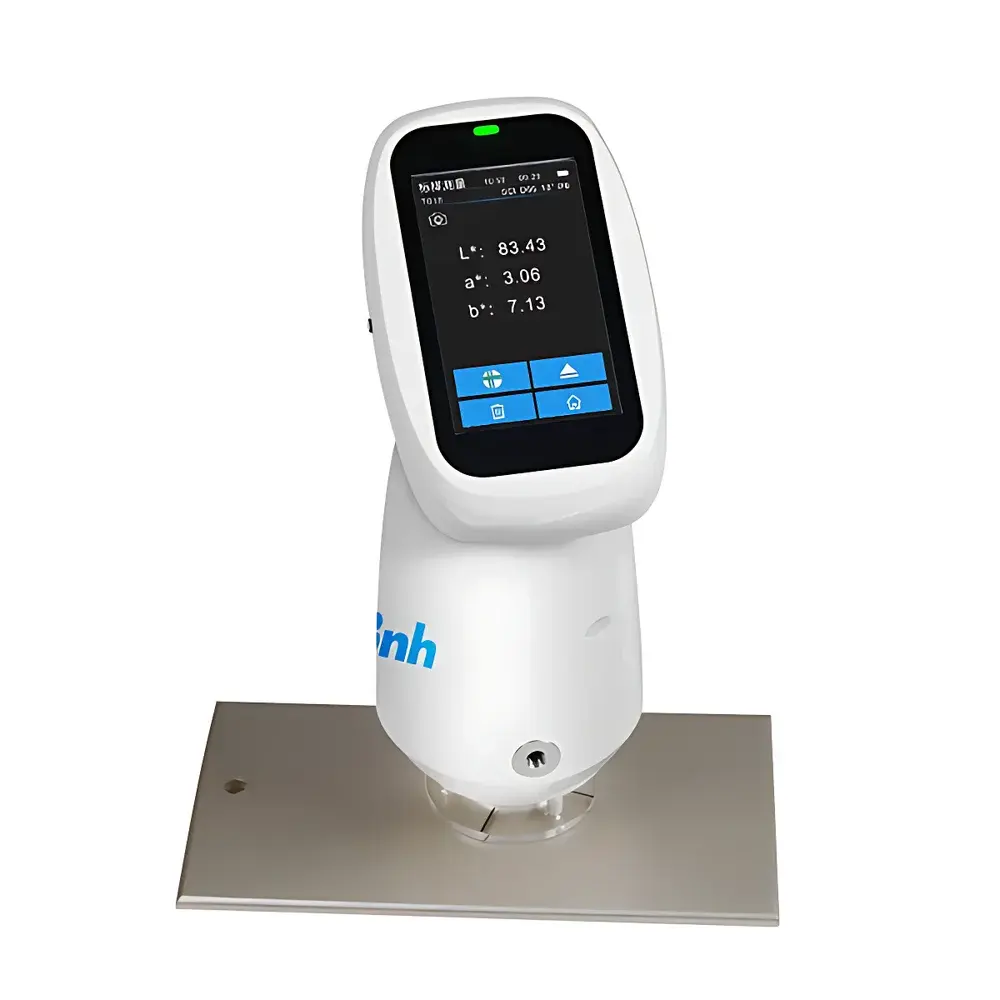
- Automated contact-based white calibration: Uses a certified reference tile (R ≥ 95%, spatial uniformity < 0.2%) mounted on an intelligent docking base; eliminates manual calibration drift and supports GLP-compliant audit trails.
- Bluetooth 5.0 and USB connectivity: Enables wireless synchronization with mobile apps (iOS/Android/HarmonyOS), cloud-based color databases, and desktop quality management software for centralized reporting and trend analysis.
- Extended spectral repeatability: ΔE*ab ≤ 0.03 (MAV/SCI, 30 consecutive readings of NIST-traceable white standard) and spectral reflectance repeatability ≤ 0.08% (400–700 nm), validated per ISO 13655 and ASTM D2244 protocols.
Sample Compatibility & Compliance
The PS2050 accommodates solid, flat, and semi-textured samples—including injection-molded polymers, painted panels, woven fabrics, ceramic tiles, printed packaging, and coated paper—without requiring sample preparation. Its UV-enabled mode supports quantitative evaluation of fluorescent whitening agents (FWAs) in detergents, textiles, and paper products per ISO 105-J03 and AATCC Test Method 110. The instrument meets regulatory requirements for color consistency validation under ISO 9001, IATF 16949, and GMP-aligned quality systems. Measurement data are fully traceable to China National Institute of Metrology (NIM) standards, with each unit supplied with a factory-issued metrological verification certificate compliant with JJG 595–2019 (Chinese national calibration regulation for colorimeters).
Software & Data Management
The PS2050 integrates with cross-platform color management software supporting Windows, macOS, iOS, Android, HarmonyOS, and WeChat Mini Programs. Data export formats include CSV, XML, and PDF reports compliant with FDA 21 CFR Part 11 requirements when used with configured electronic signatures and audit logs. The software provides multi-metric analysis—including CIE LAB, LCH, XYZ, Yxy, CIE LUV, Hunter Lab, DIN 99, and sRGB—and calculates industry-standard color differences (ΔE*ab, ΔE00, ΔE94, ΔEcmc) alongside whiteness (ASTM E313, CIE Ganz), yellowness (ASTM D1925), metamerism index (Mt), and colorfastness metrics (ISO 105-A02, ISO 105-C06). Cloud storage enables role-based access control, versioned database backups, and collaborative review workflows across global supply chains.
Applications
This instrument serves as a primary color verification tool in QC labs across electronics (plastic housing color matching), automotive (interior trim and coating validation), textile dyeing (batch-to-batch consistency), printing (Pantone® spot color verification), ceramics (glaze hue monitoring), and cosmetics (powder and liquid formulation QC). Its portability and battery life (>8 hours, 8,000 measurements per charge) support in-line use on production floors, vendor audits, and field service applications. The dual-aperture configuration is especially valuable for comparative measurement of adjacent material lots or multi-layer laminates where micro- and macro-scale color uniformity must be assessed independently.
FAQ
Does the PS2050 support fluorescence measurement?
Yes—its integrated UV LED source (peak ~365 nm) enables excitation and quantification of fluorescent materials under standardized CIE illuminants including D65+UV and F12, complying with ISO 105-J03 and AATCC TM110.
Is spectral data export available for third-party analysis?
Yes—raw 10 nm interval reflectance spectra (400–700 nm) can be exported in CSV format for integration with MATLAB, Python, or proprietary spectral modeling tools.
What calibration standards does the PS2050 support?
It accepts NIST-traceable ceramic or pressed-powder white standards (e.g., BCRA Series II tiles) and includes automated pass/fail validation against user-defined tolerance thresholds per ISO 13655.
Can the device operate in regulated environments requiring audit trails?
When used with the full-featured PC software and enabled audit log settings, it supports ALCOA+ principles (Attributable, Legible, Contemporaneous, Original, Accurate) and meets basic 21 CFR Part 11 expectations for electronic records.
How is inter-instrument agreement maintained across a fleet of PS2050 units?
Each unit undergoes factory inter-instrument agreement testing using BCRA Series II tiles; typical inter-unit ΔE*ab ≤ 0.3 (MAV/SCI), verified and documented in the calibration certificate.




