
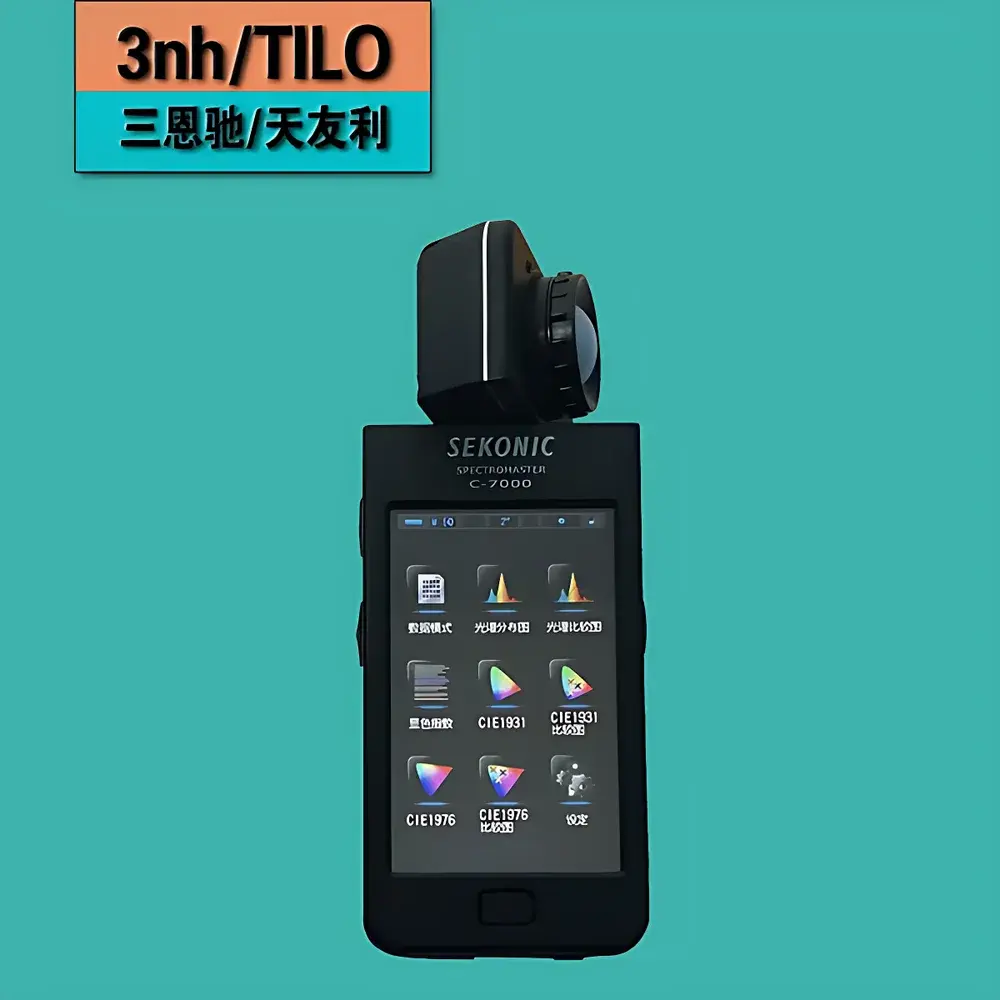
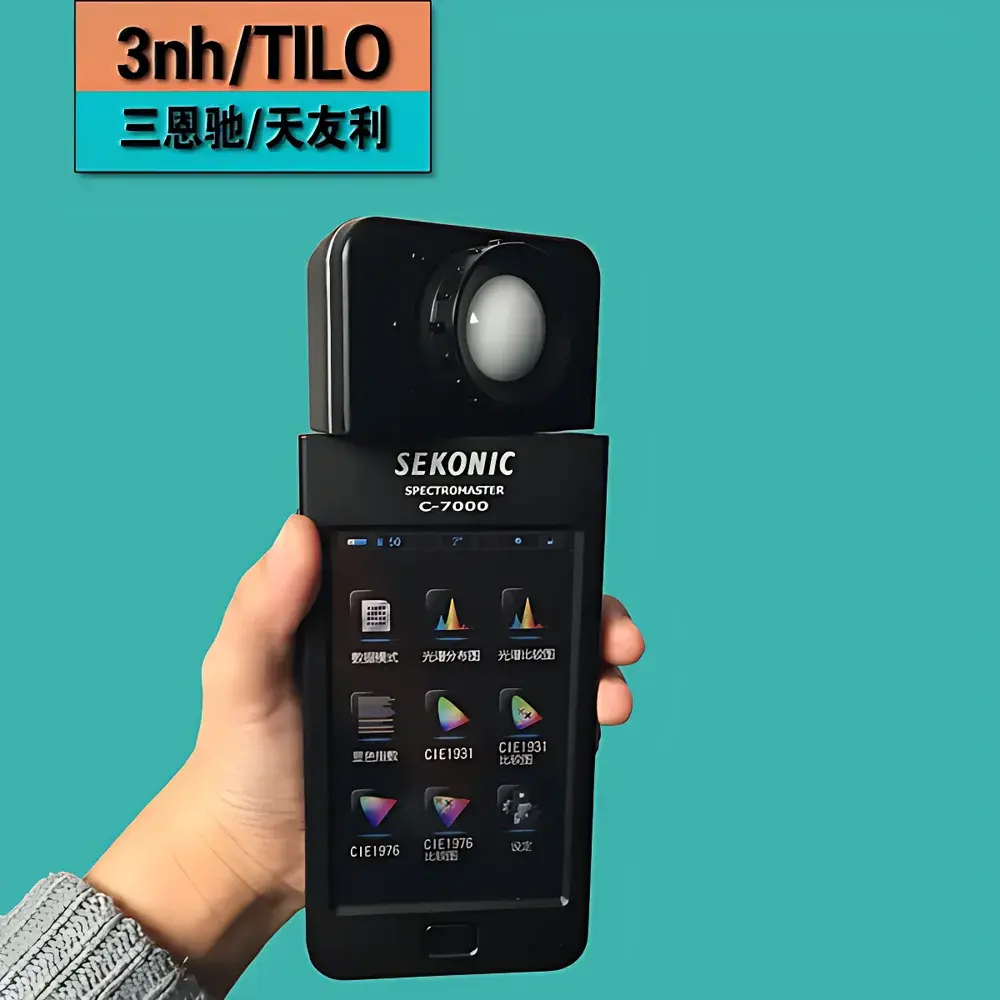
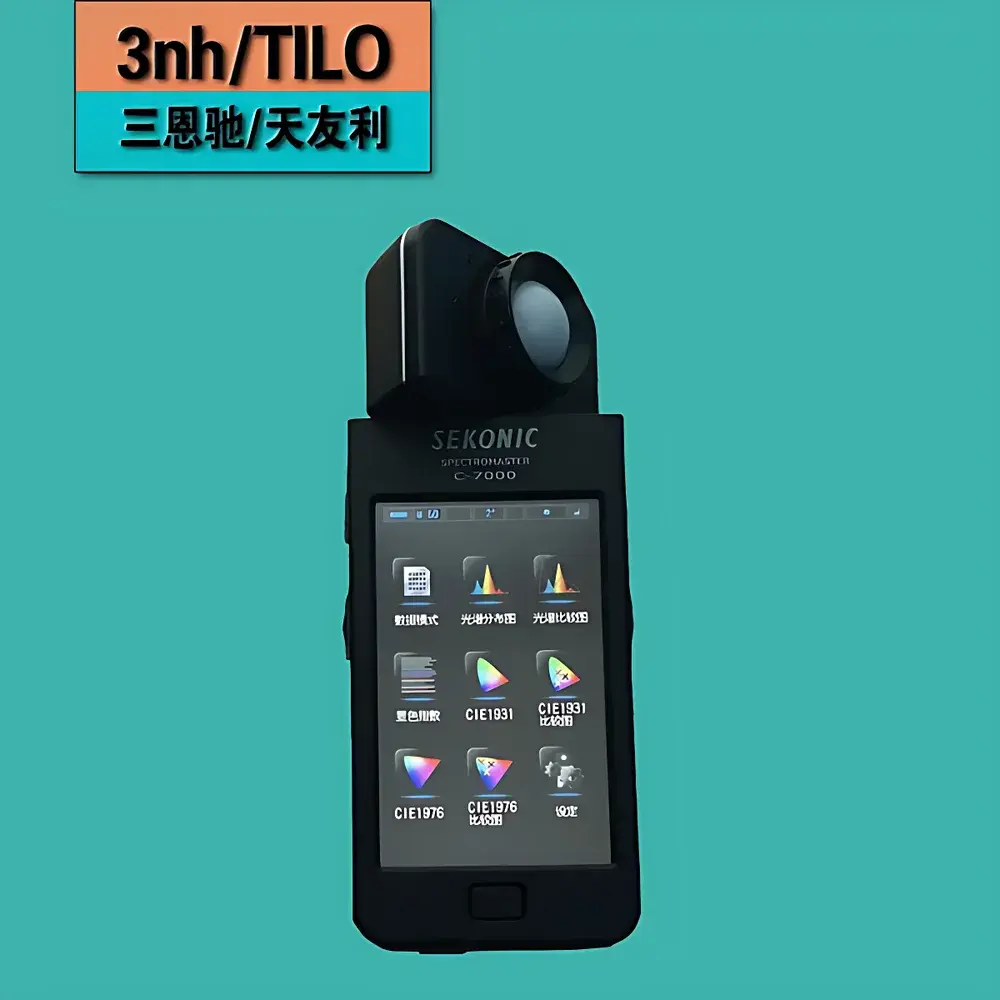
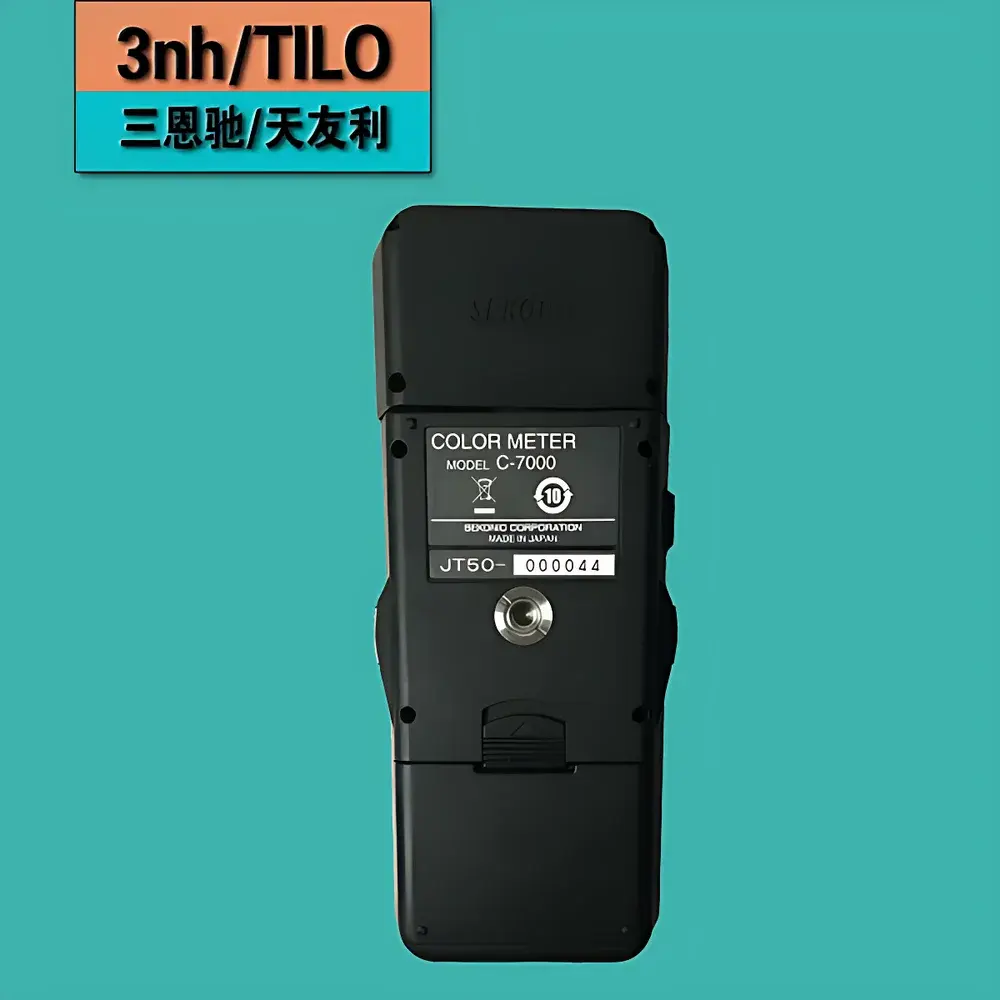
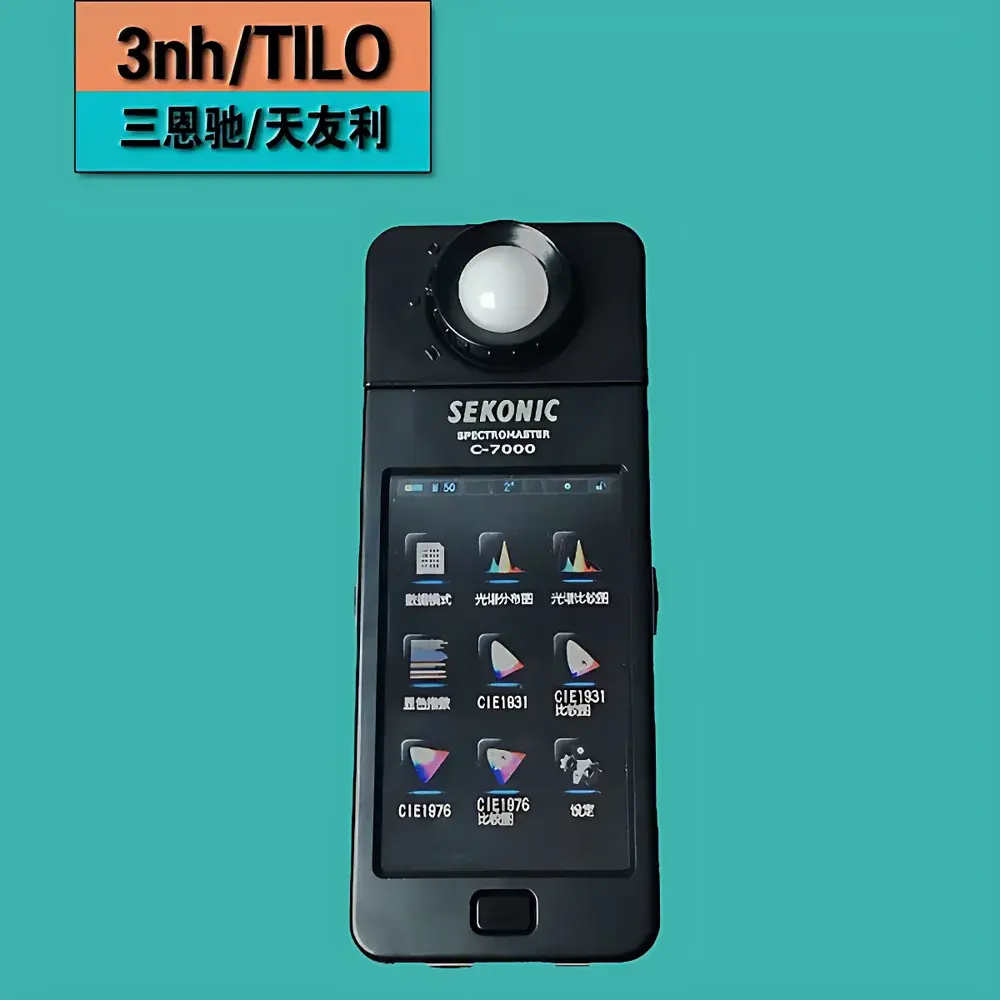
Konica Minolta C-7000A Spectrophotometric Color and Illuminance Meter
| Brand | Konica Minolta |
|---|---|
| Origin | Japan (Imported) |
| Model | C-7000A |
| Product Type | Spectrophotometric Colorimeter |
| Instrument Type | Benchtop (Not Online) |
| Optical Geometry | d/8° integrating sphere |
| Light Source | Built-in spectral sensor with xenon flash lamp |
| Spectral Range | 380–780 nm |
| Wavelength Interval | 10 nm |
| Spectral Resolution | ≤5 nm |
| Repeatability (ΔE*ab) | ≤0.01 |
| Illuminance Measurement Range | 0.1–99,990 lx |
| Chromaticity Accuracy | ±0.002 in CIE x,y (Standard Illuminant A) |
| Data Interface | USB 2.0, Bluetooth 4.2 |
| Compliance | ISO 7724-1, ISO 11664-4, CIE No. 15:2018, JIS Z 8722, ASTM E308 |
Overview
The Konica Minolta C-7000A is a high-precision benchtop spectrophotometric color and illuminance meter engineered for metrologically traceable color measurement in R&D laboratories, quality control environments, and lighting evaluation facilities. Unlike tristimulus-based meters, the C-7000A employs a diffraction grating monochromator coupled with a linear CCD array to acquire full spectral reflectance/transmittance data across the visible spectrum (380–780 nm) at 10 nm intervals. Its d/8° integrating sphere optical geometry ensures compliance with ISO 7724-1 and CIE 15:2018 for diffuse illumination and uniform collection—critical for measuring textured, glossy, or geometrically complex samples. The instrument utilizes a pulsed xenon flash lamp as its primary illumination source, eliminating thermal drift and enabling stable, repeatable spectral acquisition without sample heating. Designed for laboratory-grade reproducibility, the C-7000A delivers ΔE*ab repeatability of ≤0.01 under controlled ambient conditions—meeting stringent requirements for inter-laboratory color matching validation and regulatory documentation.
Key Features
- Full-spectrum acquisition (380–780 nm) with 10 nm data interval and ≤5 nm optical resolution for accurate spectral characterization
- d/8° integrating sphere with calibrated BaSO₄-coated interior, supporting both reflectance and transmittance modes
- Xenon flash illumination system ensuring consistent spectral power distribution and minimal photodegradation risk
- Integrated illuminance measurement capability (0.1–99,990 lx) with V(λ)-corrected silicon photodiode, traceable to NIST standards
- Onboard color calculation engine supporting CIE 1931 xy, CIE 1976 u’v’, L*a*b*, L*C*h*, ΔE*ab, ΔE00, and CMCCMC tolerancing
- USB 2.0 and Bluetooth 4.2 connectivity for direct integration into LIMS or MES platforms
- Self-diagnostic routines including spectral calibration verification, sphere contamination detection, and lamp energy monitoring
Sample Compatibility & Compliance
The C-7000A accommodates flat, curved, and irregularly shaped specimens up to Ø50 mm (standard port) with optional accessories for larger or non-planar surfaces. It supports measurements on opaque solids, translucent films, liquids in cuvettes, and self-luminous sources—including OLEDs, LEDs, and architectural lighting fixtures. All optical components are certified per ISO 11664-4 (CIE S 014-4/E:2019) for spectral responsivity and comply with JIS Z 8722 for color difference evaluation in industrial applications. The instrument’s firmware and measurement protocols adhere to GLP-aligned audit trail requirements, with timestamped raw spectral data logging and user-accessible calibration history. It satisfies key clauses of ASTM E308 for color computation and is validated for use in FDA-regulated environments where color consistency is critical to product release (e.g., pharmaceutical packaging, medical device labeling).
Software & Data Management
The C-7000A operates with Konica Minolta’s SpectraMagic NX software (v2.9+), which provides full spectral database management, multi-instrument comparison, and statistical process control (SPC) charting. Raw spectral files (.spc) are stored in ASCII format for third-party analysis in MATLAB, Python (NumPy/Pandas), or JMP. The software enforces 21 CFR Part 11-compliant user authentication, electronic signatures, and immutable audit trails—including operator ID, measurement timestamp, instrument serial number, and calibration certificate reference. Export options include CSV, PDF reports with embedded spectra, and XML for ERP integration. Optional SDK support enables custom API-driven automation in continuous QC workflows.
Applications
- Color formulation validation in paint, ink, and plastic compounding labs
- LED binning and white point stability assessment in lighting manufacturing
- Pharmaceutical tablet coating uniformity analysis per USP
- Automotive interior trim color matching against OEM master standards
- Display panel chromaticity verification under multiple illuminants (D65, A, F2)
- Architectural daylighting simulation input via spectral irradiance profiling
- Textile dye lot acceptance testing per AATCC Evaluation Procedure 1
FAQ
Is the C-7000A suitable for online or in-line process monitoring?
No—the C-7000A is a benchtop laboratory instrument designed for discrete sample analysis. It does not support real-time streaming or industrial PLC integration.
Does it require annual recalibration by an accredited lab?
Yes. Konica Minolta recommends traceable recalibration every 12 months using NIST-traceable standards; internal verification routines should be performed daily prior to critical measurements.
Can it measure fluorescent or phosphorescent materials?
Yes—its xenon flash source excites fluorescence effectively, and the instrument captures full emission spectra when used with appropriate excitation filters and dark-adapted protocols.
What spectral data formats does it export?
Raw spectral reflectance/transmittance data is saved as .spc (ASCII), with metadata headers compliant with ASTM E2593. Conversion tools for .jdx and .csv are included.
Is Bluetooth pairing compatible with enterprise mobile device management (MDM) systems?
Yes—Bluetooth 4.2 LE mode supports certificate-based pairing and complies with IEEE 802.1X authentication frameworks used in regulated GxP environments.





