
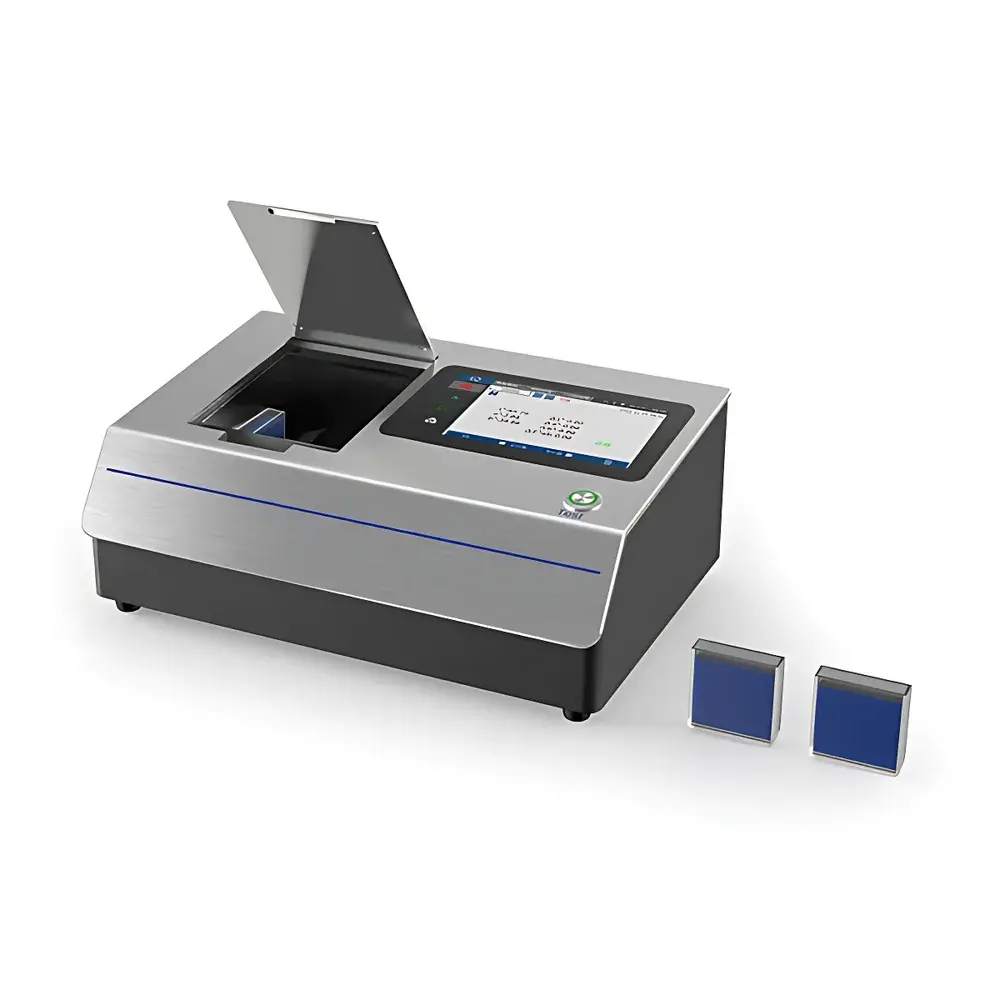
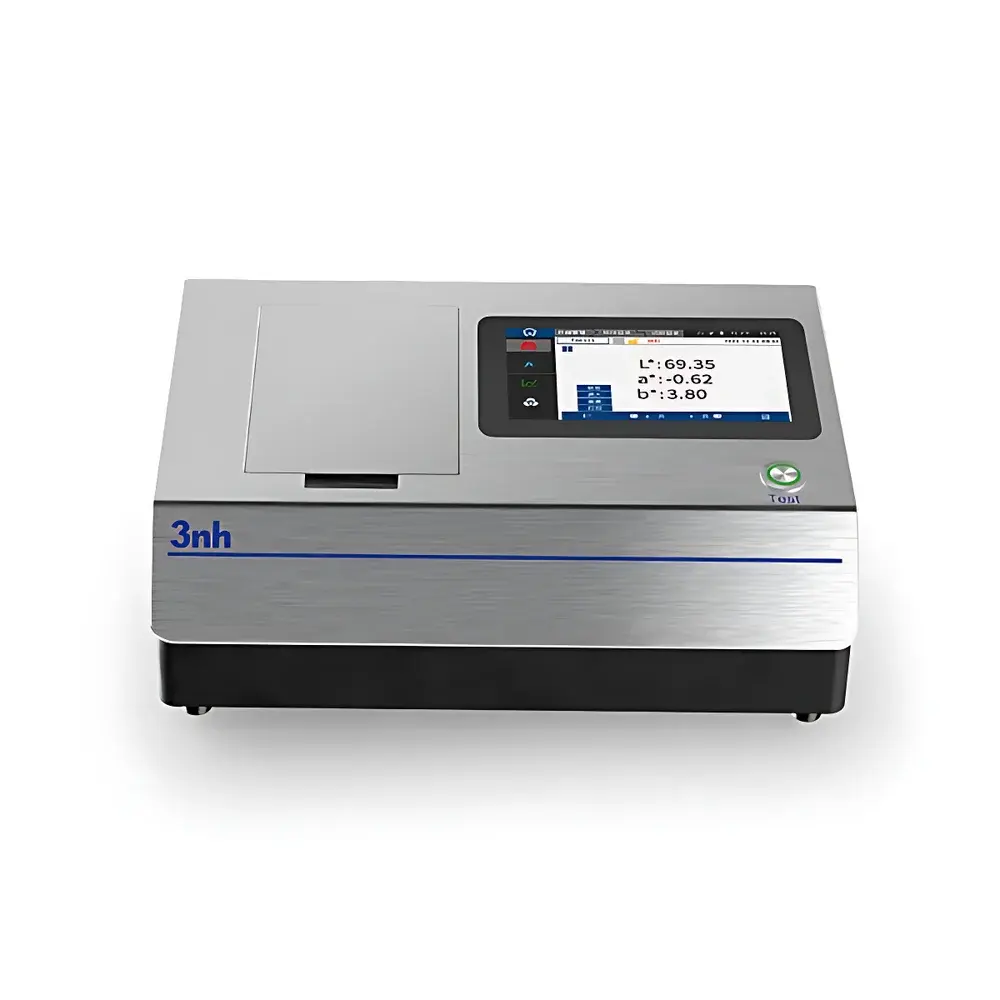
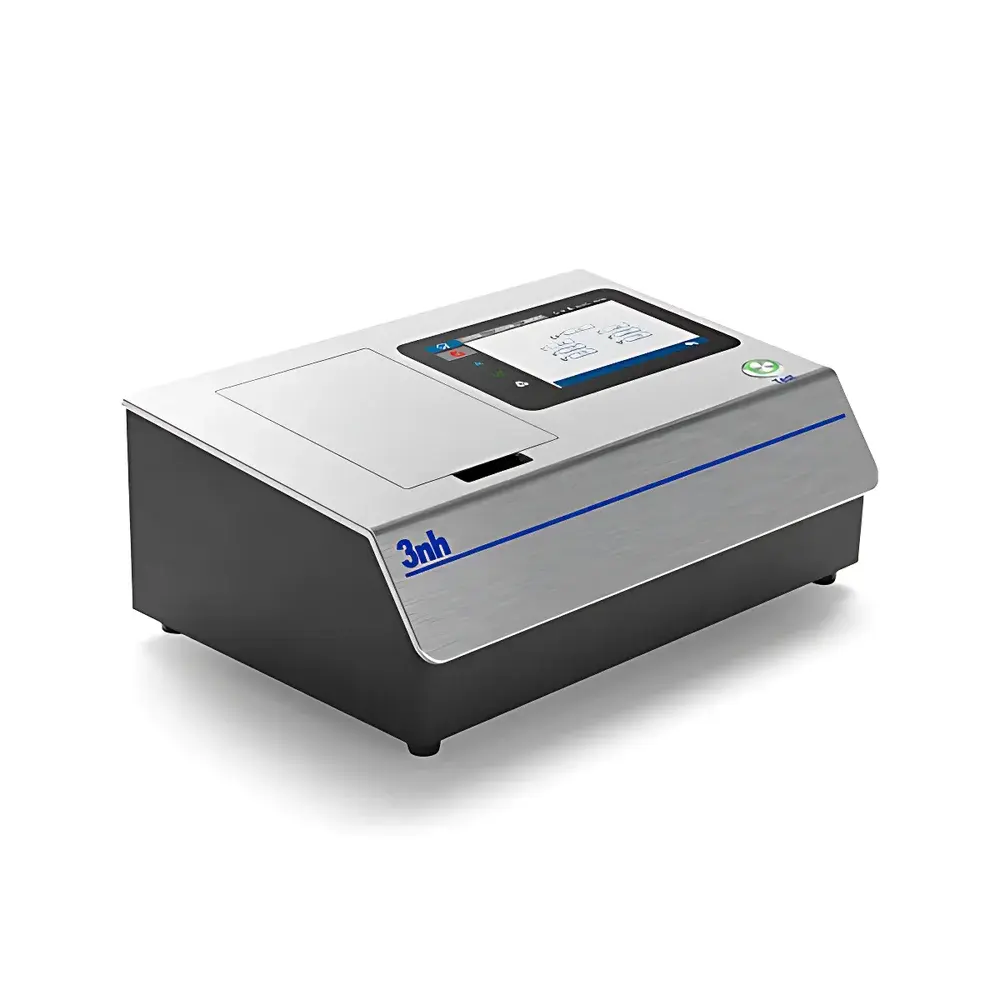
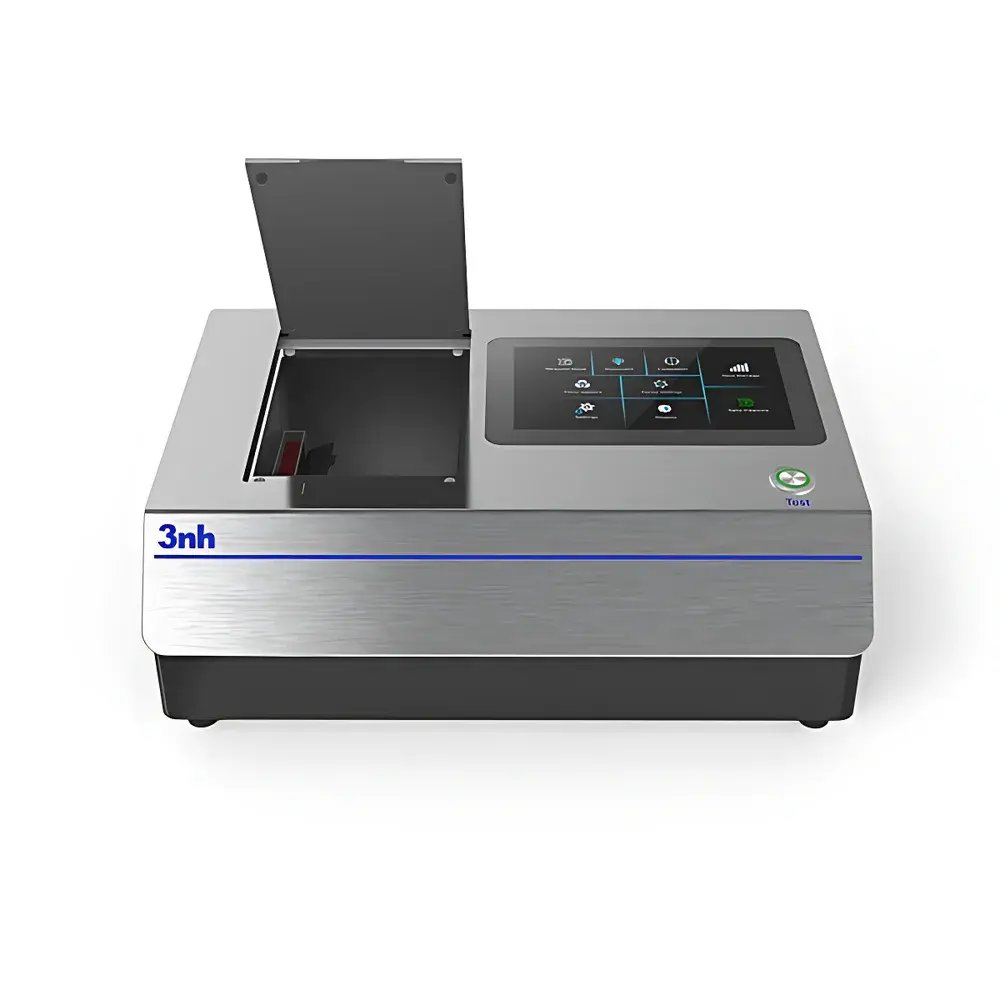
3nh TS4020 Liquid Colorimeter
| Brand | 3nh |
|---|---|
| Origin | Guangdong, China |
| Manufacturer Type | Manufacturer |
| Product Category | Spectrophotometric Colorimeter |
| Instrument Type | Benchtop |
| Light Source | Full-Spectrum Combined LED |
| Spectral Range | 360–780 nm |
| Repeatability | ≤0.05% (standard deviation, 360–780 nm) |
| Illumination Geometry | D/0 (Diffuse Illumination / 0° Detection), compliant with CIE No.15, ASTM D1003/D1044, GB/T 3978, DIN 5033 Teil 7 |
| Integrating Sphere Diameter | Φ40 mm |
| Spectral Resolution | 10 nm interval, FWHM ≈5 nm |
| Transmittance Range | 0–200% |
| Observer Angles | 2°/10° |
| Color Spaces | CIE LAB, XYZ, Yxy, LCh, CIE LUV, Munsell, s-RGB, HunterLab, βxy, DIN Lab99, CMYK (via PC software) |
| Color Difference Formulas | ΔE*ab, ΔE*uv, ΔE*94, ΔE*cmc(2:1), ΔE*cmc(1:1), ΔE*00, DIN ΔE99, ΔE(Hunter), ΔE*CH |
| Additional Indices | APHA/Hazen/Pt-Co, Gardner, Saybolt, ASTM D1500, USP/EP/ChP Pharmacopeial Color, EBC, ICUMSA Color, Whiteness (ASTM E313, CIE/ISO, etc.), Yellowness (ASTM D1925/D313), Tint, Metamerism Index (Mt), Absorbance, Staining/Fading Fastness |
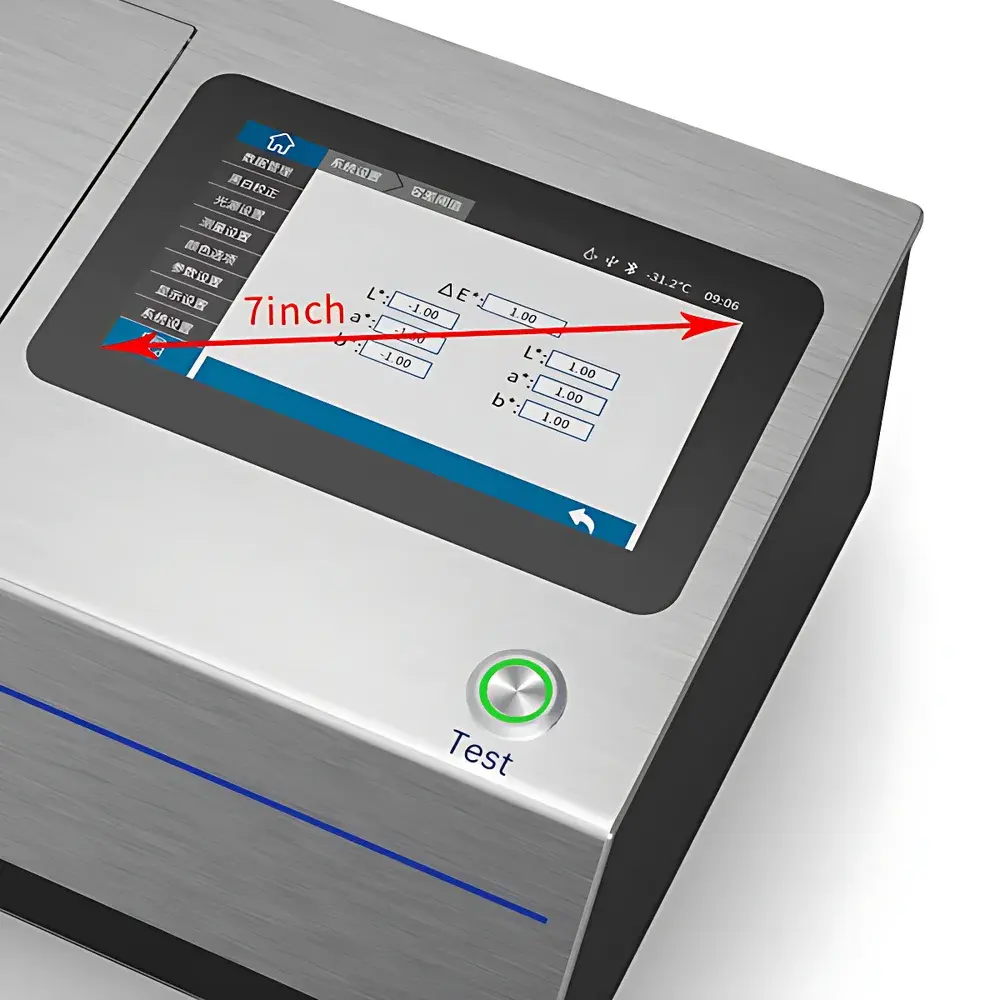
| Display | 7-inch capacitive TFT touchscreen |
| Data Storage | 1,000 standards + 20,000 samples (instrument) |
| Interface | USB, RS-232 serial (printer), Bluetooth |
| Power | DC 24 V / 3 A adapter |
| Operating Temperature | 0–40 °C |
| Weight | 9.6 kg |
| Dimensions | 370 × 300 × 200 mm |
Overview
The 3nh TS4020 Liquid Colorimeter is a benchtop spectrophotometric transmittance color measurement instrument engineered for high-precision, trace-volume liquid color analysis across regulated and industrial laboratories. It operates on the D/0 (diffuse illumination / 0° detection) optical geometry—aligned with CIE Publication No.15 and validated by ASTM D1003, ASTM D1044, and DIN 5033 Teil 7—ensuring compliance with international photometric and colorimetric standards for transparent and semi-transparent liquids. The system employs a full-spectrum combined LED light source (360–780 nm), delivering stable, flicker-free illumination with spectral continuity critical for accurate spectral transmittance profiling. Coupled with a dual-array silicon photodiode sensor (40-element per array) and flat-field grating dispersion, the TS4020 captures high-fidelity spectral data at 10 nm intervals (FWHM ≈5 nm), enabling robust calculation of chromaticity coordinates, tristimulus values, and industry-specific color indices under standardized observer functions (2° and 10°) and illuminants (including D65, A, C, F-series, and 41 total, with 31 embedded and 10 enabled via PC software).
Key Features
- D/0 optical geometry with Φ40 mm integrating sphere ensures uniform diffuse illumination and minimizes angular dependency in transmittance measurements, critical for repeatability in pharmaceutical elixirs, solvent-based coatings, and purified water streams.
- Micro-volume transmittance capability: supports precise measurement with as little as 1 mL sample volume using optional 4 mm micro-cuvette fixtures—ideal for high-value or hazardous liquids where material conservation is essential.
- Intelligent zero-point calibration dynamically compensates for ambient light fluctuations and thermal drift, maintaining baseline stability without manual recalibration between batches or shifts.
- Full-spectrum LED illumination provides consistent spectral power distribution over >3 million measurements (rated lifetime ≥5 years), eliminating lamp aging artifacts common in tungsten-halogen or xenon sources.
- 7-inch capacitive touchscreen interface displays real-time spectral curves, CIE chromaticity diagrams (x,y and u’,v’), color difference vectors, pass/fail status overlays, and simulated color appearance—enabling immediate visual assessment without external software.
- Low inter-instrument variability: ΔE*ab ≤0.2 between units (measured on standard liquid reference sets), supporting multi-site quality control harmonization in global manufacturing networks.
Sample Compatibility & Compliance
The TS4020 is optimized for clear to lightly turbid liquid samples in standardized cuvettes (10 mm, 30 mm, 50 mm, and 100 mm pathlengths available; 4 mm micro-fixtures included). It meets technical requirements for pharmacopeial compliance testing per United States Pharmacopeia (USP ), European Pharmacopoeia (Ph. Eur. 2.2.2), and Chinese Pharmacopoeia (ChP IV.0401) for solution color evaluation. In industrial applications, it satisfies ASTM D1500 (petroleum products), ASTM D5386 (liquid color by tristimulus colorimetry), EBC Method 2.1 (beer), and ICUMSA GS2/3-12 (refined sugar solutions). Its spectral acquisition architecture supports GLP-compliant audit trails when used with the bundled PC software—recording operator ID, timestamp, instrument ID, calibration history, and raw spectral data per measurement.
Software & Data Management
The TS4020 integrates with 3nh’s QC-Cloud™ Quality Management Software (Windows-based, downloadable from official domain), providing FDA 21 CFR Part 11–ready functionality including electronic signatures, user role-based access control, versioned report templates, and immutable data archiving. Users can generate customizable PDF/Excel reports containing spectral plots, numerical color indices (e.g., Pt-Co, Gardner, Saybolt), statistical process control (SPC) charts, and deviation alerts against stored specification limits. Raw .spc files retain full 360–780 nm spectral data at 10 nm resolution, enabling retrospective reanalysis using updated color formulas or observer models without re-measurement.
Applications
- Pharmaceutical QA/QC: Quantitative color assessment of injectables, oral solutions, and excipient batches per USP/EP/ChP monographs; detection of oxidation or degradation-induced hue shifts.
- Food & Beverage R&D: Objective evaluation of juice clarity, vinegar browning, edible oil refinement grade (ASTM D1500), and beer color consistency (EBC units).
- Chemical & Petrochemical: Monitoring catalyst leaching in solvents, purity verification of organic intermediates, and ASTM D1500 grading of lubricants and distillates.
- Sugar & Bio-refining: ICUMSA Color determination for cane and beet syrups; correlation with sucrose content and processing efficiency.
- Paint & Coatings: Quantification of tint strength and batch-to-batch consistency in transparent resin systems and dye concentrates.
FAQ
What liquid volumes can the TS4020 measure?
The instrument supports standard pathlength cuvettes (10–100 mm) and includes a micro-cuvette fixture enabling reliable transmittance measurement with as little as 1 mL of sample.
Does the TS4020 comply with pharmacopeial standards for color testing?
Yes—it implements the photometric and geometric requirements of USP , Ph. Eur. 2.2.2, and ChP IV.0401, and calculates pharmacopeial color indices directly on-device or via QC-Cloud™ software.
How is instrument-to-instrument agreement ensured?
Each unit undergoes factory calibration against NIST-traceable liquid standards; inter-instrument agreement is verified at ΔE*ab ≤0.2 under identical measurement conditions per ISO 13655 and ASTM E2539 protocols.
Can spectral data be exported for third-party analysis?
Yes—raw reflectance/transmittance spectra (.spc format) are exportable via USB or Bluetooth, preserving full 360–780 nm resolution at 10 nm intervals for advanced modeling in MATLAB, Python, or commercial chemometrics platforms.
Is the TS4020 suitable for measuring colored suspensions or emulsions?
It is designed for optically homogeneous, low-scatter liquids. For turbid or particulate-containing samples, complementary haze measurement (per ASTM D1003) requires a separate hazemeter; the TS4020 does not quantify scattering effects.





