
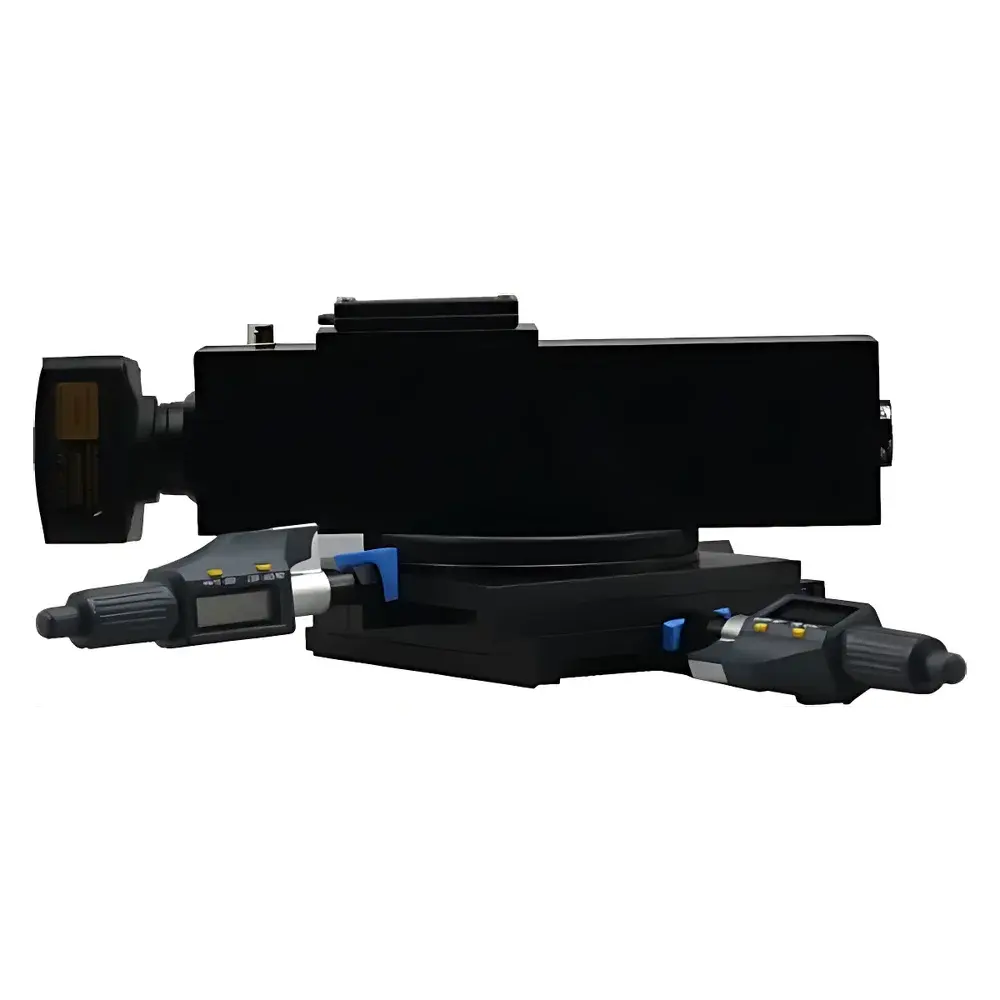
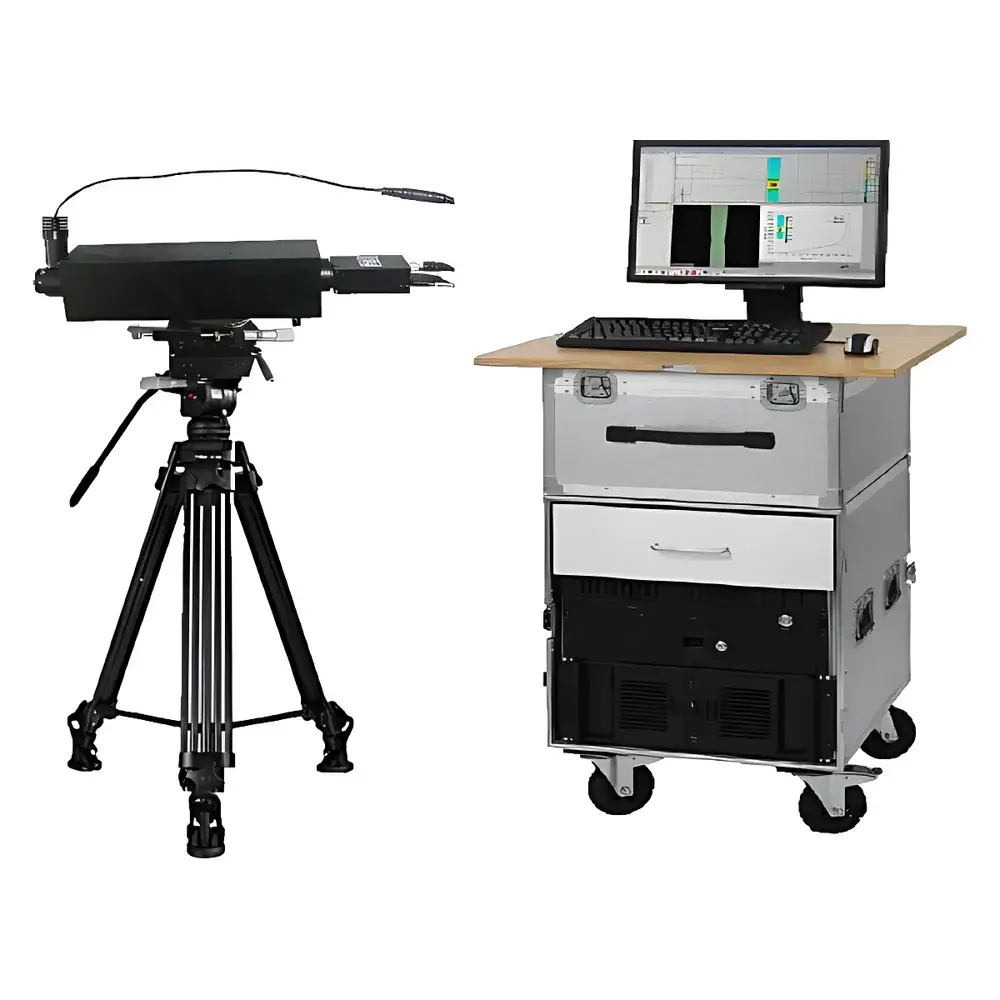
LEI-TECH LK-CC6000 Long Working Distance Digital Microscopy System
| Brand | LEI-TECH |
|---|---|
| Origin | Tianjin, China |
| Manufacturer Type | Original Equipment Manufacturer (OEM) |
| Product Category | Domestic |
| Model | LK-CC6000 |
| Pricing | Available Upon Request |
| Optical Design | Maksutov-Cassegrain Reflecting Refracting System |
| Working Distance (W.D.) | 200–2000 mm |
| Field of View (FOV) | 0.65 × 0.4 mm to 6 × 4 mm |
| Minimum Field Angle | 0.7° |
| Resolution | 3.5 µm @ 200 mm W.D. (1 mm FOV), 7 µm @ 500 mm W.D. (1.5 mm FOV), 15 µm @ 1000 mm W.D. (3 mm FOV) |
| Imaging Interface | USB 3.0, HDMI, Optional Ultra-High-Speed Camera (4,000–20,000 fps) |
| Sensor | Scientific-grade SONY CMOS/CCD with Ultra-Fine™ Color Engine & Real-time HDR |
| Software | Integrated Measurement Calibration (5-sec scale calibration at any W.D.), 2D Dimensional Metrology, Dynamic Image Capture & Annotation |
Overview
The LEI-TECH LK-CC6000 Long Working Distance Digital Microscopy System is an engineered optical solution designed for non-contact, high-fidelity macro-to-micro observation under demanding physical and environmental constraints. Unlike conventional compound or stereo microscopes—whose working distances are typically limited to <30 mm—the LK-CC6000 implements a proprietary Maksutov-Cassegrain reflecting-refracting optical architecture. This hybrid design overcomes the classical trade-off among magnification, depth of field (DOF), and working distance, enabling stable, diffraction-limited imaging across a continuous 200–2000 mm working range. At 200 mm W.D., the system achieves an effective lateral resolution of 3.5 µm within a 1 mm field; resolution scales predictably with distance while preserving true optical DOF—up to five times greater than standard telecentric or long-working-distance objectives at equivalent magnification. The system delivers native color fidelity, real-time dynamic range optimization via hardware-accelerated HDR, and zero-compromise geometric accuracy—making it suitable for applications where vacuum compatibility, chemical containment, thermal isolation, or mechanical clearance preclude proximity-based microscopy.
Key Features
- Maksutov-Cassegrain optical path: Eliminates chromatic aberration and spherical distortion across full zoom range; enables stable focus over 1.8 m axial travel without refocusing.
- True optical depth of field: Achieves >1.2 mm DOF at 10× effective magnification (200 mm W.D.), verified per ISO 10110-5 and ASTM E2927 standards for optical metrology systems.
- Real-time dynamic calibration: On-the-fly scale determination in ≤5 seconds at any working distance—no manual recalibration required between sample positions.
- Dual-path imaging interface: Simultaneous USB 3.0 (for measurement-grade stills and video) and HDMI (for live monitoring); optional ultra-high-speed camera module supports 4,000–20,000 fps at full sensor resolution.
- Integrated illumination suite: Machine-vision-grade coaxial, dome, and ring lighting modules—spectrally balanced (CRI >92), thermally stabilized (>30,000 hr LED lifetime), and compatible with digital extinction (HDR) protocols.
- Modular mechanical platform: Motorized zoom control (wireless or wired), precision tilt-and-rotate stage options, and customizable mounting interfaces (ISO 30/50 flange, M6/M8 tapped holes).
Sample Compatibility & Compliance
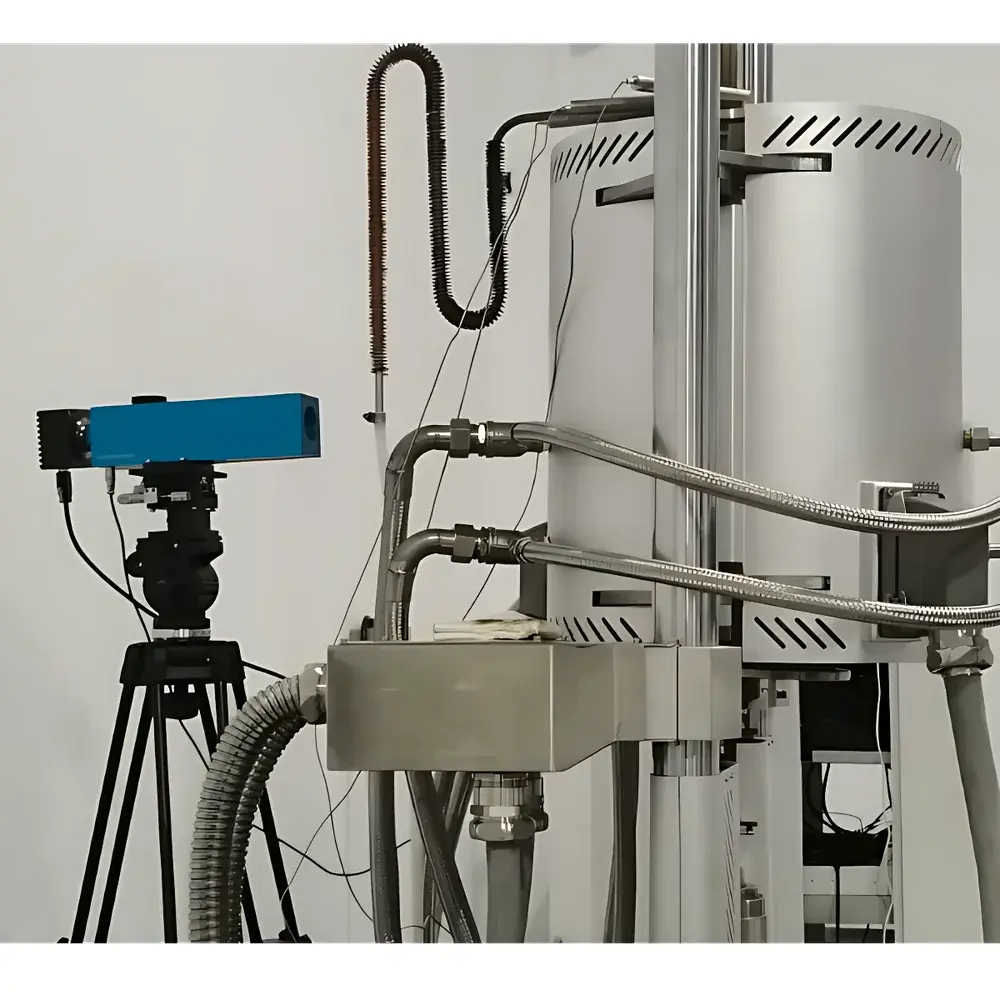
The LK-CC6000 is routinely deployed in environments incompatible with conventional microscope integration: inside vacuum chambers (≤10⁻⁴ Pa), behind blast shields during combustion studies, within gloveboxes handling volatile organics or pyrophoric materials, and adjacent to servo-hydraulic test frames operating at ±100 kN load. Its extended working distance eliminates thermal drift from proximity heating and prevents outgassing contamination. All optical components comply with RoHS 3 and REACH Annex XIV restrictions. The imaging software supports audit-trail logging and user-access controls aligned with GLP and FDA 21 CFR Part 11 requirements when configured with optional secure authentication and electronic signature modules. Mechanical design conforms to IEC 61000-6-2 (immunity) and IEC 61000-6-4 (emissions) for laboratory electromagnetic environments.
Software & Data Management
The bundled LEI-Vision Pro software provides ISO/IEC 17025-compliant measurement workflows: calibrated 2D length, angle, area, and profile analysis with uncertainty propagation per GUM (JCGM 100:2008). All measurements embed NIST-traceable spatial metadata—including working distance, magnification factor, lens ID, and illumination configuration—within TIFF/OME-TIFF export formats. Video capture supports time-stamped frame indexing, region-of-interest (ROI) masking, and motion-triggered acquisition. Raw sensor data (12-bit linear output) is preserved throughout processing; HDR compositing occurs in-camera to avoid post-processing artifacts. Export options include CSV (for statistical process control), PDF reports (with embedded calibration certificates), and DICOM-SR for cross-platform integration with LIMS or ELN systems.
Applications
- Materials science: In-situ observation of crack propagation in tensile test specimens, dendritic growth in molten metal alloys, and thermal barrier coating delamination under cyclic heating.
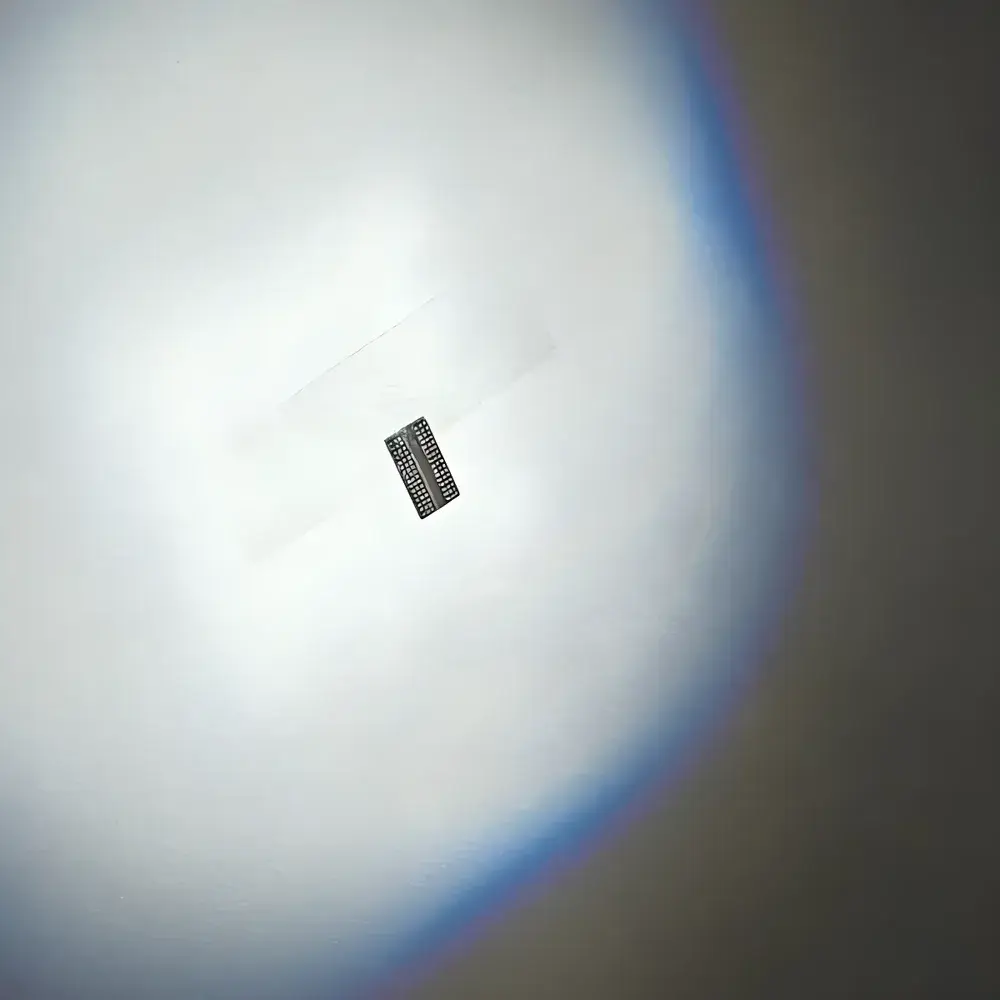
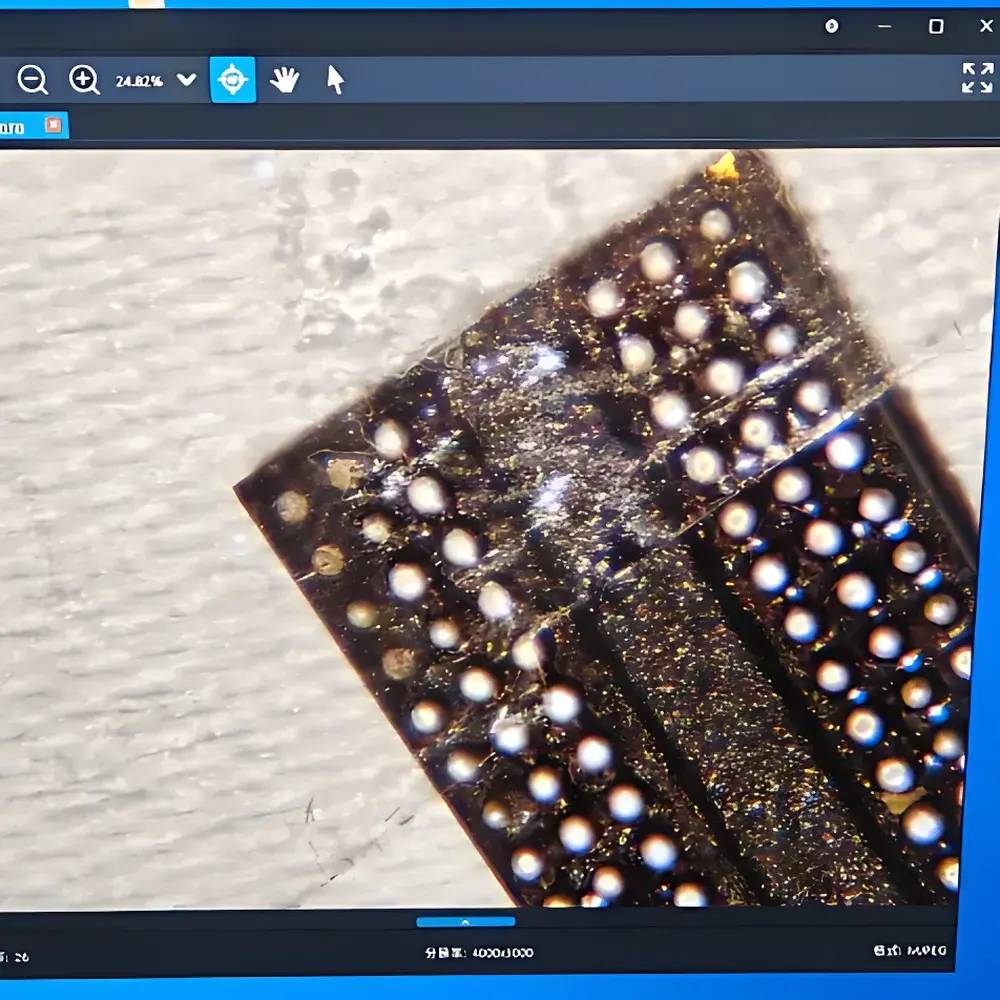
- Electronics manufacturing: Non-contact solder joint inspection on populated PCBs inside reflow ovens; conformal coating thickness assessment on high-aspect-ratio components.
- Pharmaceutical development: Real-time dissolution monitoring of coated tablets in USP Apparatus II vessels; crystallization kinetics tracking in jacketed reactors.
- Aerospace R&D: Surface defect mapping on turbine blades during low-cycle fatigue testing; fiber alignment verification in composite layup under vacuum bagging.
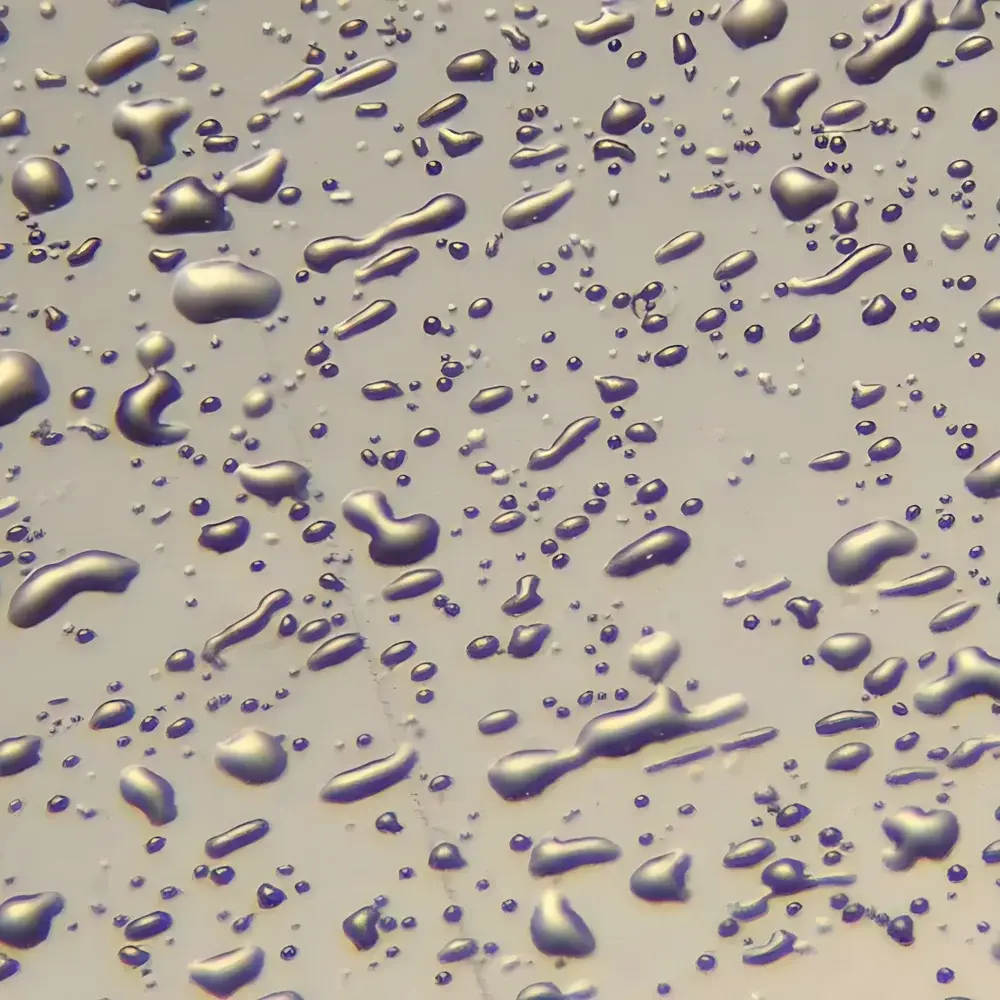
- Academic research: Behavioral phenotyping of small organisms in open-field arenas; microfluidic droplet generation and coalescence dynamics at >10,000 fps.
FAQ
Does the LK-CC6000 require periodic optical recalibration?
No—its Maksutov-Cassegrain design is inherently athermal and mechanically stable. The dynamic calibration algorithm compensates for minor environmental drift; annual verification against NIST-traceable step gauges is recommended for metrology-critical use.
Can the system be integrated into automated production lines?
Yes—RS-232, Ethernet/IP, and Modbus TCP interfaces are available for PLC synchronization; trigger I/O supports hardware-level frame capture synchronization with motion stages or load cells.
Is the ultra-high-speed camera option compatible with all working distances?
Yes—the high-speed module maintains full resolution and light throughput across the entire 200–2000 mm range via synchronized iris and gain control, with exposure times adjustable from 100 ns to 10 ms.
What lighting configurations are validated for quantitative reflectance measurement?
Coaxial brightfield and diffuse dome lighting have been characterized per ASTM E308 and CIE 15:2018; absolute reflectance accuracy is ±1.2% (k=2) when used with certified ceramic reference tiles.
Does the software support multi-user role-based permissions?
Yes—administrator, operator, and viewer roles can be defined with granular access control over calibration functions, report generation, and raw data export.




