
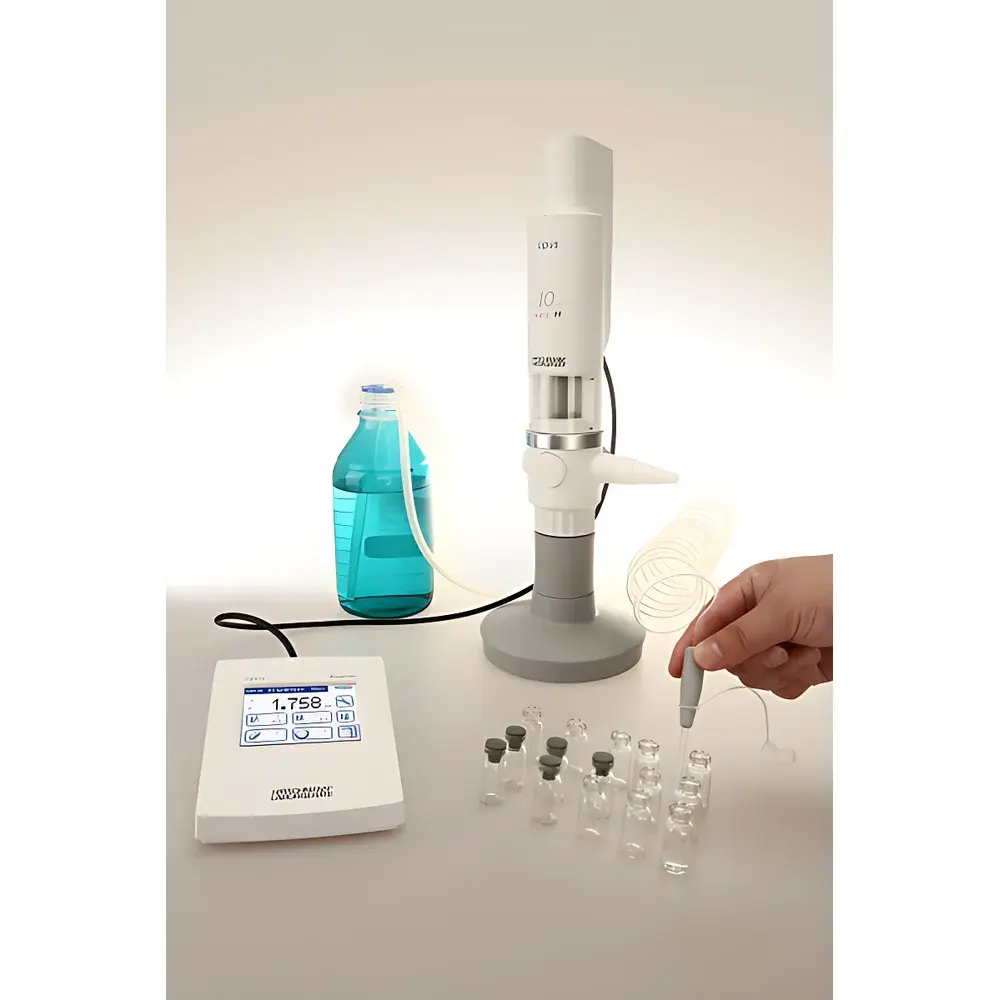
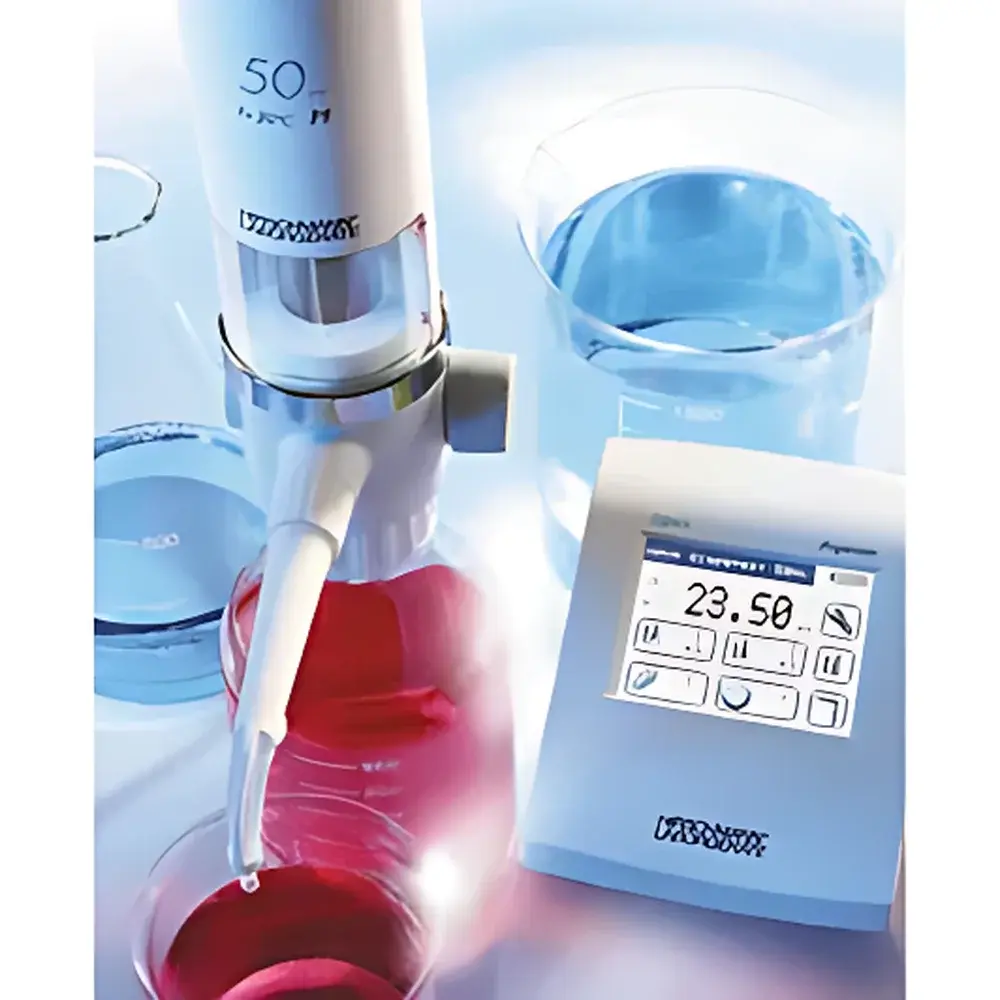
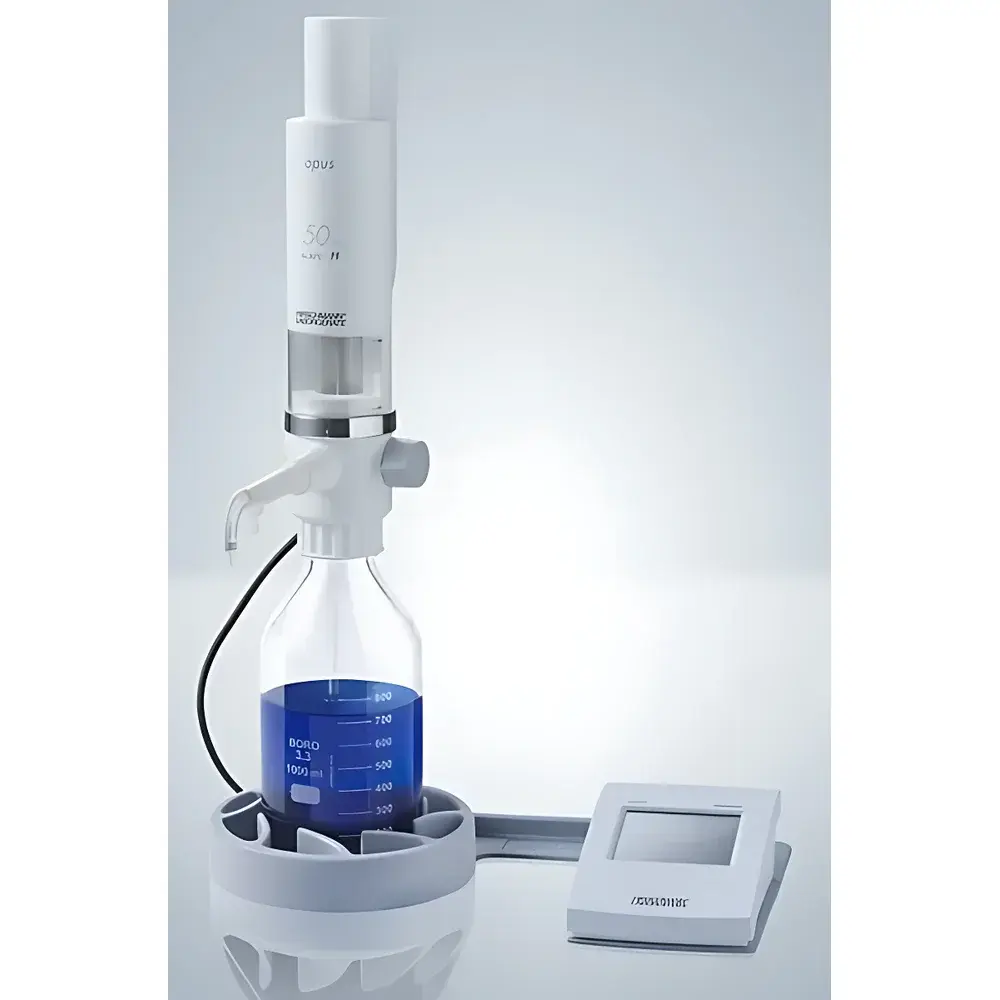
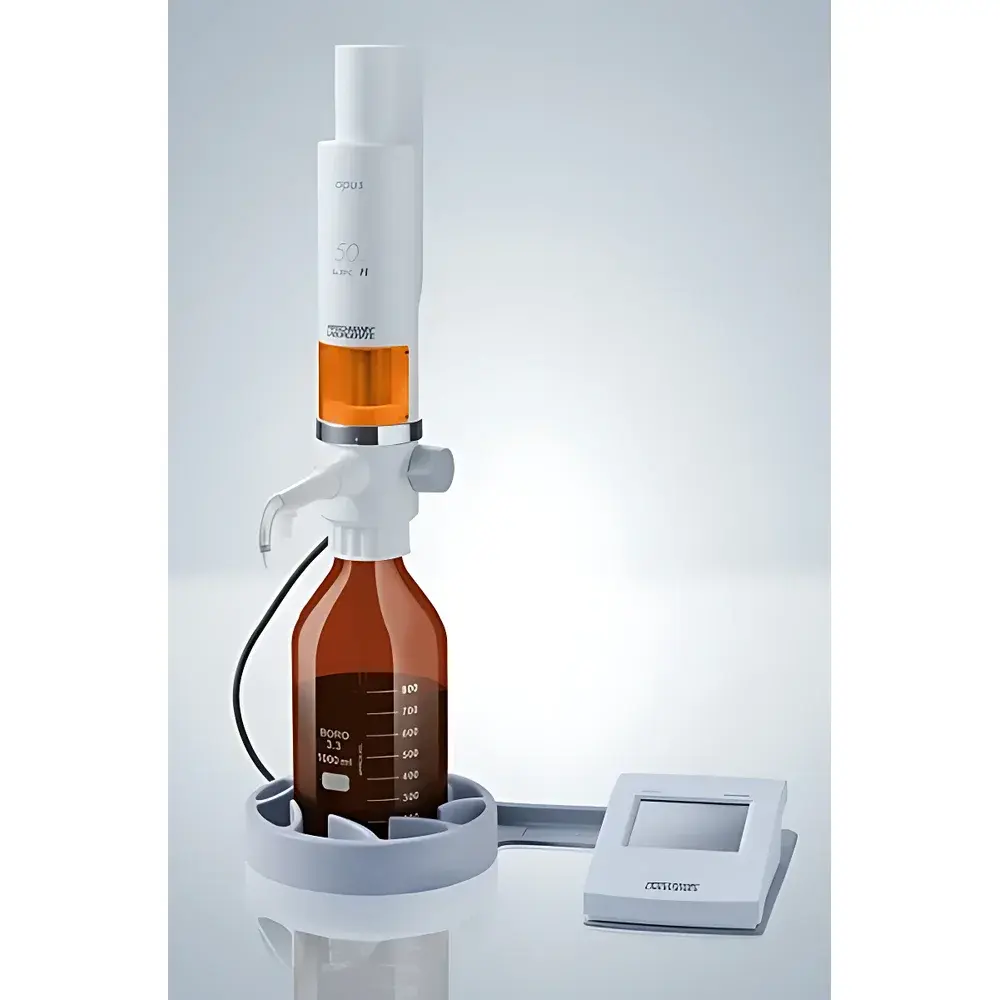
Hirschmann opus Electronic Bottle Top Dispenser
| Brand | Hirschmann (Germany) |
|---|---|
| Origin | Germany |
| Model | opus dispenser |
| Type | Electronic Bottle Top Dispenser |
| Volume Range | 10–50 mL |
| Minimum Increment | 0.001 mL |
| Accuracy (A) | ±0.5% |
| Coefficient of Variation (CV) | ≤0.25% |
| Compliance | ISO, GLP, GMP, DIN EN ISO 9000 |
| Materials in Contact | ECTFE, FEP, PTFE, borosilicate glass |
Overview
The Hirschmann opus Electronic Bottle Top Dispenser is a precision-engineered, maintenance-free liquid handling instrument designed for high-reproducibility volumetric dispensing in regulated laboratory and production environments. Operating on a micro-stepper motor-driven piston principle, the opus delivers repeatable, gravimetrically verified volumes without manual pipetting or mechanical calibration drift. Its core architecture integrates closed-system positive displacement mechanics with real-time electronic feedback control—ensuring consistent delivery across varying viscosity, vapor pressure, and temperature conditions. Unlike air-displacement pipettes, the opus eliminates aerosol generation and cross-contamination risk by maintaining a sealed fluid path from reagent bottle to dispense tip. It is purpose-built for applications requiring full traceability, audit readiness, and compliance with international quality management frameworks—including ISO 9001, GLP (Good Laboratory Practice), and GMP (Good Manufacturing Practice) environments governed by FDA 21 CFR Part 11 and EU Annex 11 requirements.
Key Features
- High-resolution TFT touchscreen interface with intuitive icon-based navigation—enabling one-touch volume selection and immediate dispensing (“what you select is what you dispense”)
- Three independent operation modes: single-shot dispensing, programmable step dispensing (up to 10 distinct volumes per sequence), and continuous repeat dispensing (up to 9,999 cycles with adjustable interval timing up to 9,999 seconds)
- Motorized piston with 16-speed dispensing profiles (model-dependent); speed independently adjustable for aspiration and dispensing to optimize flow dynamics for low- and high-viscosity liquids
- Full 360° rotational head design for ergonomic positioning—reducing operator fatigue during extended use or multi-vessel workflows
- Integrated self-calibration routine with automatic zero-point verification; supports user-performed performance checks traceable to NIST-certified standards
- Modular accessory compatibility: optional brown-view window for light-sensitive reagents, sterile filtration adapters, desiccant drying tubes, and safety vent valves for volatile or hazardous substances
- Robust wetted-path construction using chemically inert fluoropolymers (ECTFE, FEP, PTFE) and Class A borosilicate glass—resistant to organic solvents, strong acids (excluding HF), bases, and oxidizers
Sample Compatibility & Compliance
The opus is validated for use with a broad spectrum of laboratory reagents—including aqueous buffers, ethanol/water mixtures, acetonitrile, chloroform, concentrated HCl/HNO₃/H₂SO₄, and sodium hydroxide solutions—provided they do not contain hydrofluoric acid or molten alkali metals. All wetted components comply with USP Class VI biocompatibility testing and meet DIN EN ISO 8536-4 (glass containers for pharmaceutical use) dimensional and surface finish specifications. Each unit ships with a factory-issued Certificate of Conformance and individual QC report—including gravimetric test data at three volume points (low/mid/high range), CV and accuracy values, and serial-numbered traceability. These documents are structured to integrate directly into ISO 9000/17025 quality files and support internal audit preparation for regulatory inspections.
Software & Data Management
The opus supports bidirectional digital communication via USB-B and RS-232 interfaces. When connected to a host PC, it enables remote command execution (SCPI-compatible protocol), real-time volume logging, and timestamped dispensing event export (CSV/Excel format). Optional software modules provide electronic signature capability, audit trail generation (including operator ID, parameter changes, and calibration history), and alignment with 21 CFR Part 11 requirements for electronic records and signatures. Data export includes metadata fields such as ambient temperature, atmospheric pressure, and cumulative dispense count—facilitating long-term instrument performance trending and preventive maintenance scheduling.
Applications
- Standard curve preparation in analytical chemistry (e.g., HPLC, ICP-MS sample dilution series)
- Reagent dispensing in ELISA, PCR setup, and cell culture media formulation under aseptic conditions
- Quality control testing in pharmaceutical manufacturing (USP , )
- Calibration standard preparation in metrology labs accredited to ISO/IEC 17025
- Automated liquid transfer integration in modular workstations (e.g., via LabVIEW or third-party LIMS interfaces)
- Hazardous substance handling inside fume hoods using footswitch or external mouse control—eliminating direct contact with volatile or toxic reagents
FAQ
Is the opus suitable for viscous liquids such as glycerol or silicone oil?
Yes—the adjustable aspiration/dispensing speed profile and high-torque stepper motor enable reliable handling of liquids up to 500 mPa·s viscosity. For optimal accuracy, users should select slower speeds and verify performance with gravimetric testing per ISO 8655-6.
Can the opus be used in sterile environments?
It supports aseptic workflows when equipped with optional sterile filters, autoclavable dispensing tips, and UV-resistant brown-view windows. The entire dispensing head can be sterilized via dry heat (160°C, 2 hours) or ethylene oxide—per validation protocols outlined in ISO 11135.
Does the opus require periodic recalibration?
While no routine recalibration is required due to its drift-free motorized piston design, annual performance verification against certified reference standards is recommended to maintain ISO/IEC 17025 compliance.
What documentation is provided for regulatory submissions?
Each unit includes a Certificate of Conformance, full QC report with gravimetric test data, material declarations (RoHS/REACH), and traceable calibration certificate—formatted for direct inclusion in FDA, EMA, or PMDA submission dossiers.
How is error quantified—accuracy vs. precision?
Accuracy (A) refers to systematic deviation from nominal volume (±0.5% typical); coefficient of variation (CV) reflects repeatability (≤0.25% for 50 mL model)—both measured per ISO 8655-6 using Class A volumetric flasks and analytical balances calibrated to ISO/IEC 17025-accredited standards.



