
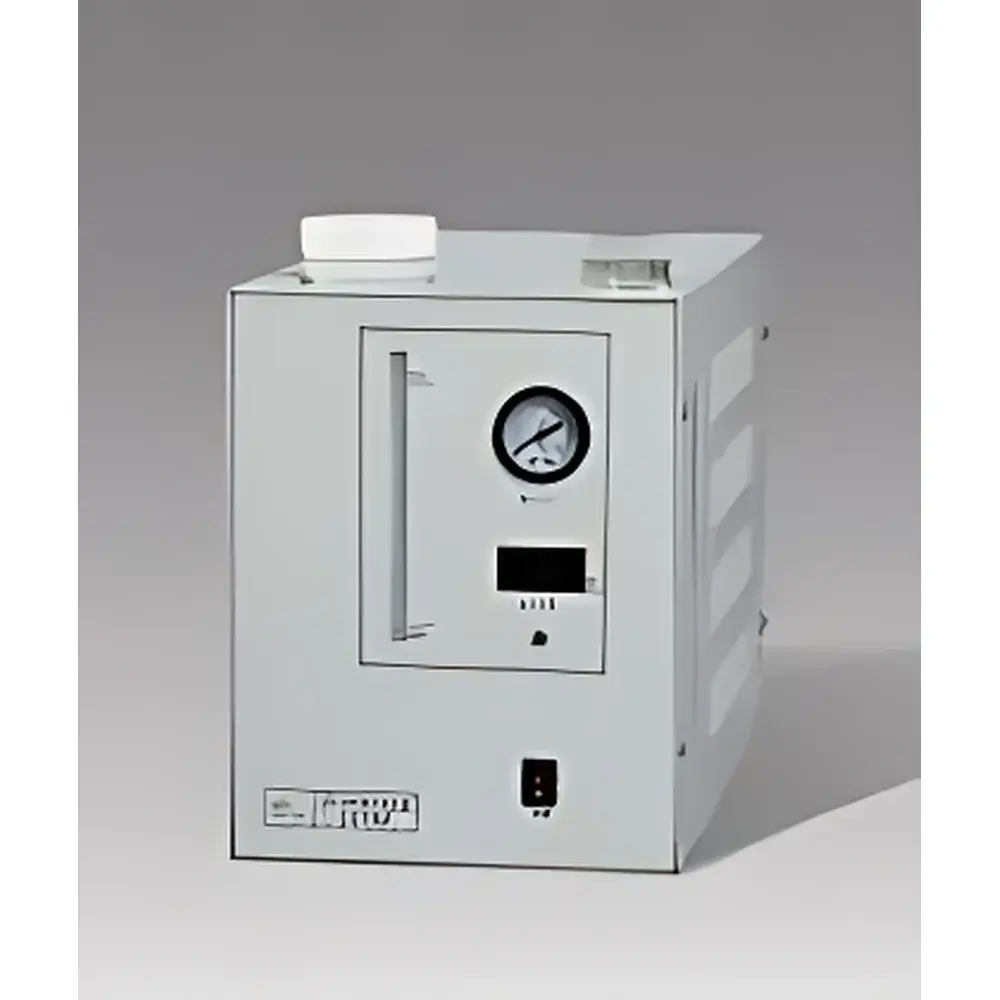
SPH-300A High-Purity Hydrogen Generator
| Origin | Beijing, China |
|---|---|
| Manufacturer Type | Authorized Distributor |
| Origin Category | Domestic (China) |
| Model | SPH-300A |
| Pricing | Available Upon Request |
| Hydrogen Purity | 99.999% |
| Flow Rate | 0–300 mL/min |
| Output Pressure | 0–0.4 MPa |
| Pressure Stability | < 0.001 MPa |
| Power Supply | 220 V ±10%, 50 Hz |
| Power Consumption | 150 W |
| Dimensions (W×D×H) | 360 × 200 × 260 mm |
| Net Weight | ~9 kg |
Overview
The SPH-300A High-Purity Hydrogen Generator is an electrolysis-based gas generation system engineered for continuous, on-demand production of ultra-high-purity hydrogen (99.999%) in analytical laboratory environments. It utilizes a proton exchange membrane (PEM) or alkaline electrolytic cell—depending on configuration—to split deionized water into high-purity H₂ and O₂, with oxygen vented safely and hydrogen delivered under precise pressure and flow control. Designed specifically to replace high-pressure hydrogen cylinders, the SPH-300A eliminates storage hazards, supply-chain dependencies, and regulatory burdens associated with compressed gas handling. Its stable output supports uninterrupted operation of gas chromatography (GC) systems—including flame ionization detectors (FID), thermal conductivity detectors (TCD), and pulsed discharge helium ionization detectors (PDHID)—as well as hydrogenation reactors, fuel cell test benches, and inert atmosphere purging applications requiring consistent, low-part-per-trillion (ppt) impurity levels.
Key Features
- Automated pressure and flow regulation with real-time digital display: maintains setpoint stability within ±0.001 MPa and enables dynamic adjustment from 0 to 300 mL/min without manual intervention.
- Stainless-steel particulate and moisture filtration integrated upstream of the outlet, coupled with low-sulfur silicone O-rings throughout the gas path to prevent sulfur contamination—a critical requirement for sulfur-sensitive GC detectors and catalyst studies.
- Integrated safety architecture including automatic alkali backflow prevention, over-pressure cut-off, electrolyte level monitoring, and thermal shutdown—ensuring compliance with IEC 61010-1 for laboratory electrical equipment.
- Compact benchtop footprint (360 × 200 × 260 mm) and lightweight design (~9 kg) facilitate integration into crowded fume hoods or GC instrument racks without compromising accessibility or serviceability.
- Low power draw (150 W) and energy-efficient electrolysis enable 24/7 operation with minimal thermal load and operational cost—ideal for core facilities and multi-user labs operating under strict utility budgets.
Sample Compatibility & Compliance
The SPH-300A delivers hydrogen suitable for trace-level analytical applications where baseline stability and detector response reproducibility are paramount. Its 99.999% purity specification meets or exceeds ASTM D7217–22 requirements for carrier and fuel gases in gas chromatography. The absence of hydrocarbons, moisture (< 1 ppmv), oxygen (< 0.5 ppmv), and total sulfur compounds (< 0.1 ppbv) ensures compatibility with high-resolution capillary GC columns and sensitive detection schemes. All wetted materials—including electrolyte chamber, gas lines, and fittings—are selected per USP Class VI and ISO 10993 biocompatibility guidelines where applicable. The unit conforms to CE marking directives (EMC 2014/30/EU, LVD 2014/35/EU) and supports GLP/GMP workflows through configurable logging of operational parameters (e.g., pressure, flow, runtime hours) for audit-ready documentation.
Software & Data Management
While the SPH-300A operates as a standalone analog-controlled generator, it includes optional RS-232 or USB interface modules for integration into centralized lab management systems. When equipped, these interfaces support remote monitoring of real-time pressure and flow values, event logging (e.g., startup/shutdown, alarm triggers), and export of timestamped CSV datasets. Firmware supports user-defined setpoint profiles and alarm thresholds aligned with internal SOPs. For regulated environments, the optional data acquisition module complies with FDA 21 CFR Part 11 requirements when deployed with validated third-party software platforms—enabling electronic signatures, audit trails, and role-based access control for calibration and maintenance records.
Applications
- Carrier and fuel gas source for GC-FID, GC-TCD, GC-PDHID, and GC-MS systems requiring ultra-low background interference.
- Hydrogen supply for catalytic hydrogenation reactors in synthetic organic chemistry and pharmaceutical process development.
- Reducing atmosphere generation in thermal analysis (TGA/DSC) and material science sintering furnaces.
- Calibration gas standard preparation in environmental air monitoring laboratories (e.g., EPA Method TO-15).
- On-site hydrogen feed for PEM fuel cell performance testing and durability evaluation under controlled stoichiometry.
FAQ
What is the recommended feed water quality for optimal performance and longevity?
Deionized water with resistivity ≥ 15 MΩ·cm and total organic carbon (TOC) < 50 ppb is required. Use of tap water or distilled water will cause rapid electrode fouling and invalidates warranty coverage.
Can the SPH-300A be used with GC systems requiring hydrogen at pressures above 0.4 MPa?
No. The maximum rated output pressure is 0.4 MPa (4 bar). For higher-pressure applications, a certified external booster system must be installed downstream—and must include appropriate pressure relief and leak detection safeguards.
How often does the electrolyte require replacement or maintenance?
Under normal operation with compliant feed water, the alkaline electrolyte requires no scheduled replacement; however, annual inspection of cell integrity and conductivity verification is recommended per manufacturer’s maintenance schedule.
Is the unit compatible with nitrogen or air generators in hybrid gas supply configurations?
Yes—provided independent pressure regulation and check valves are installed to prevent cross-contamination. Co-location with other gas generators is permissible if minimum 150 mm clearance and dedicated ventilation are maintained.
Does the SPH-300A support automated start/stop triggered by GC instrument status signals?
Yes, via optional dry-contact input/output ports. Integration with GC system TTL or relay outputs enables synchronized activation upon instrument power-up and safe shutdown during idle periods.



