
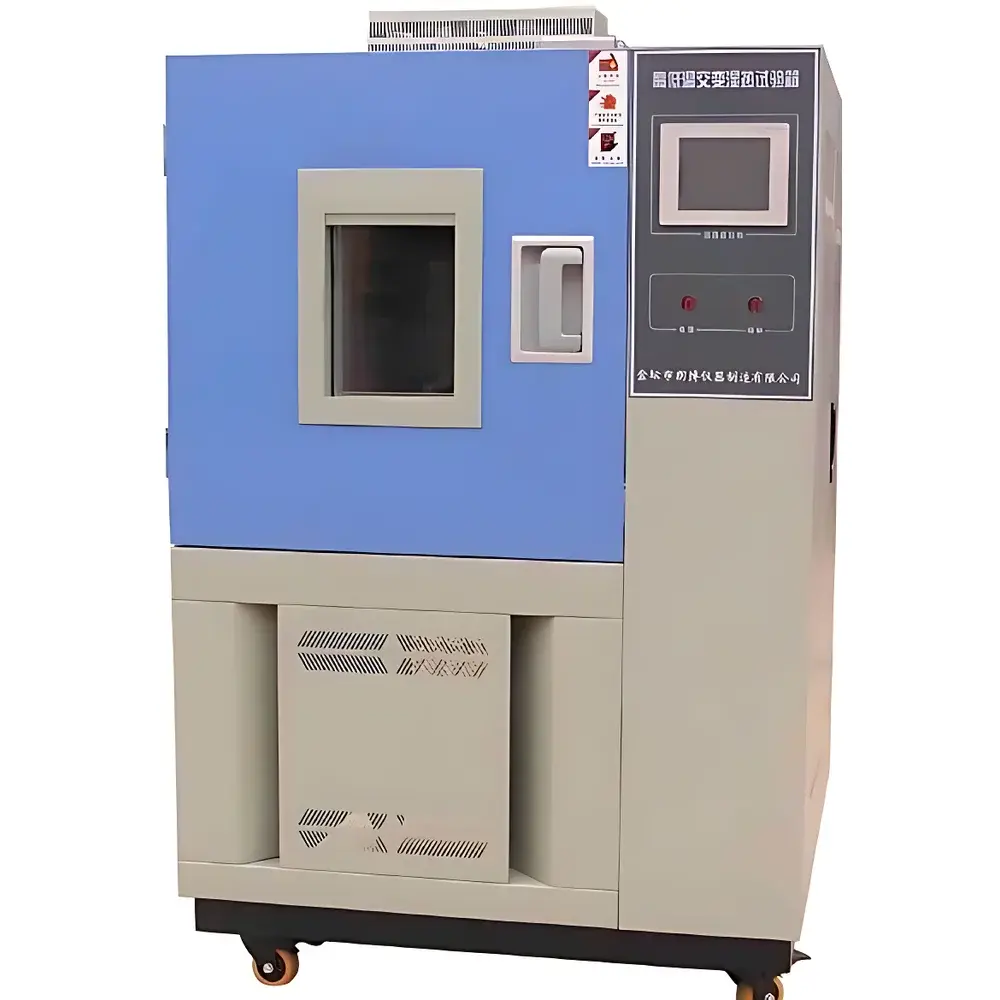
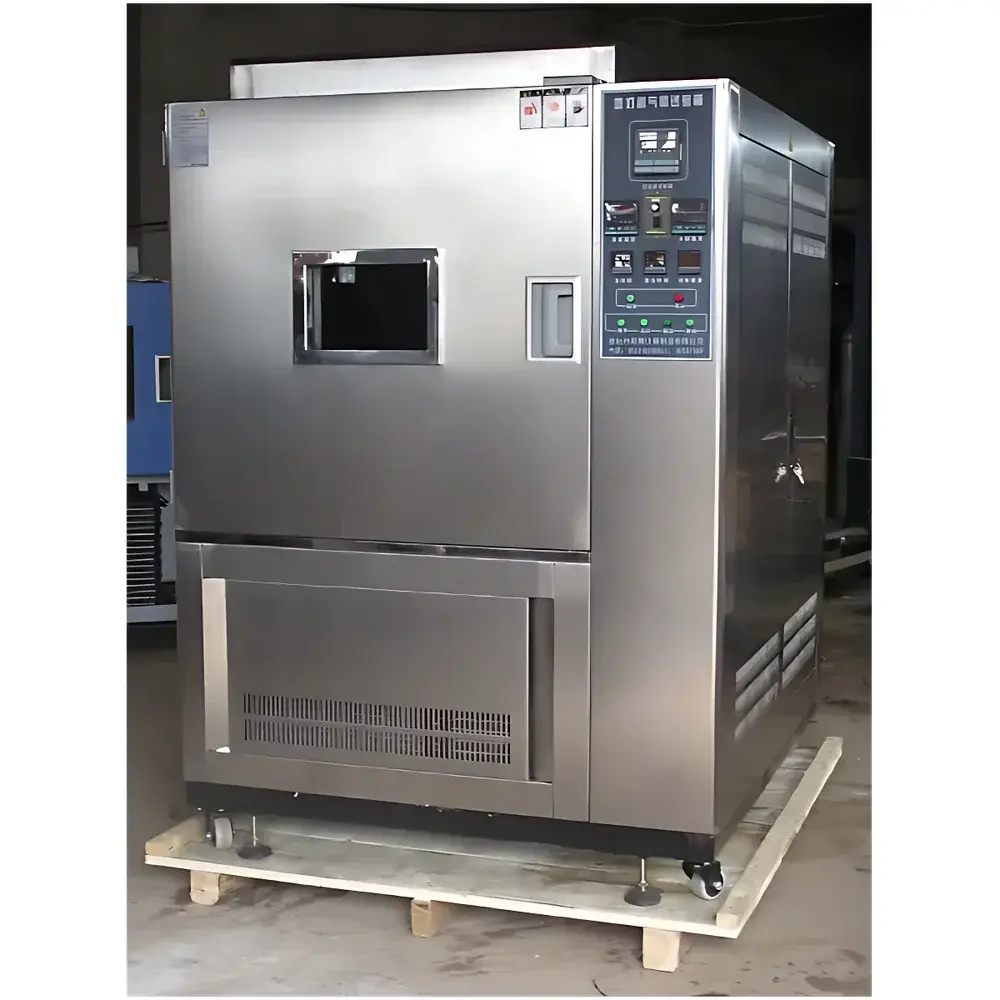
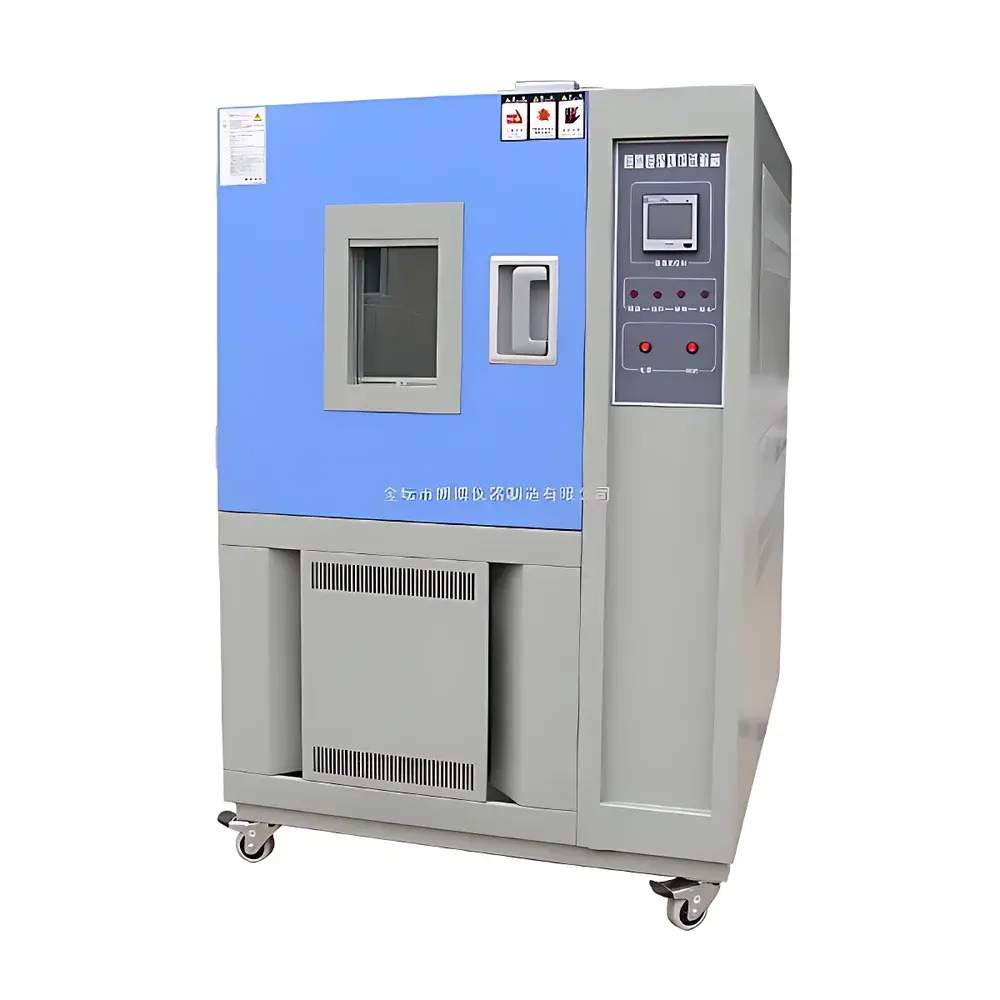
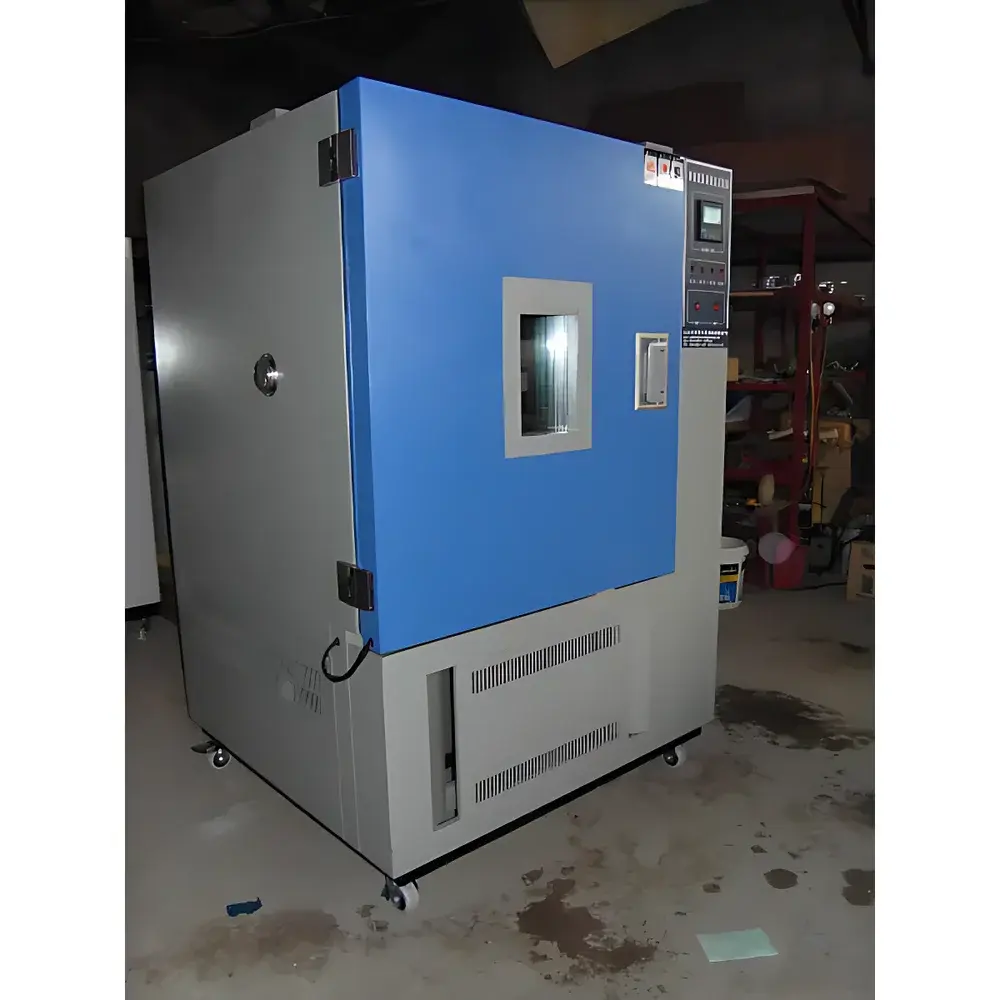
Langbo GDJS-010 Advanced Environmental Test Chamber for Temperature & Humidity Cycling
| Brand | Langbo |
|---|---|
| Origin | Jiangsu, China |
| Model | GDJS-010 |
| Temperature Range | −20 °C to +150 °C |
| Refrigeration | Hermetic Compressor Cooling |
| Explosion-Proof | Standard (Non-Explosion-Proof) |
| Temperature Uniformity | ±1 °C |
| Temperature Fluctuation | ±0.5 °C |
| Temperature Deviation | ±1 °C |
| Heating Rate | ≤60 min (−20 °C → +150 °C) |
| Cooling Rate | ≤80 min (+150 °C → −20 °C) |
| Interior Dimensions | 450 × 450 × 450 mm |
| Internal Volume | 91.1 L |
| Humidity Range | 30–98 %RH |
| Humidity Control Accuracy | ±2–3 %RH |
| Controller | Fuji PID-based Touchscreen HMI with Programmable Profile Storage |
| Construction | SUS304 Stainless Steel Interior |
| Insulation | Polyurethane Foam (≥100 mm Thickness) |
| Viewing Window | Double-Layer Hollow Glass with Anti-Condensation Heater |
| Safety Protections | Low-Water Cut-off, Over-Temperature Cut-off, Compressor High-Pressure Protection |
Overview
The Langbo GDJS-010 Advanced Environmental Test Chamber is a precision-engineered climatic simulation system designed for rigorous temperature and humidity cycling validation in compliance with international environmental testing standards—including IEC 60068-2-1 (cold), IEC 60068-2-2 (dry heat), IEC 60068-2-14 (thermal shock), and IEC 60068-2-78 (damp heat). Operating on the principle of forced-air convection combined with vapor compression refrigeration and steam-based humidification, the chamber delivers stable, repeatable exposure profiles across a wide operational envelope. Its dual-loop control architecture—separately regulating thermal and hygrometric parameters—ensures minimal cross-coupling between temperature and relative humidity (RH), enabling high-fidelity replication of real-world environmental stress conditions encountered during product development, reliability qualification, and quality assurance workflows.
Key Features
- High-stability temperature control from −20 °C to +150 °C, with programmable ramp rates up to 3 °C/min (heating) and 1 °C/min (cooling), verified per ASTM E145 Class II specifications.
- Humidity regulation from 30 %RH to 98 %RH at temperatures ≥+10 °C, implemented via stainless-steel steam generator and calibrated capacitive RH sensor with traceable NIST-equivalent calibration.
- Uniformity-optimized airflow design ensures ±1 °C temperature uniformity and ±2–3 %RH humidity uniformity throughout the 91.1-liter working chamber (450 × 450 × 450 mm internal dimensions).
- Fuji Electric PID-based touchscreen controller with 10.4-inch LCD interface supports multi-segment profile programming, real-time data logging, and on-device storage of ≥100 test programs with password-protected user levels.
- Robust mechanical construction: 304 stainless steel interior lining; cold-rolled carbon steel exterior with epoxy-polyester powder coating; 100 mm thick polyurethane insulation (λ ≈ 0.022 W/m·K); double-glazed anti-condensation observation window with integrated heating element and LED illumination.
- Comprehensive safety architecture includes independent over-temperature cut-off, low-water-level interlock for humidifier, compressor high-pressure switch, and phase-failure protection—all compliant with EN 61000-6-2/6-4 EMC requirements.
Sample Compatibility & Compliance
The GDJS-010 accommodates electronic assemblies, automotive ECUs, medical device housings, polymer components, PCBs, and packaging materials—provided specimens do not exceed 60 kg gross load or obstruct airflow grilles. Chamber geometry and air velocity distribution (≥1.5 m/s at sample zone) conform to ISO 16750-4 (road vehicles), MIL-STD-810H Method 502.7 (temperature), and Method 507.6 (humidity). All control firmware and data logs support audit-ready traceability per GLP and GMP environments; optional 21 CFR Part 11-compliant software module available for regulated life science and pharmaceutical applications.
Software & Data Management
Standard embedded firmware enables local profile editing, real-time graphing of T/RH trends, and USB export of CSV-formatted time-series datasets (sampling interval: 1–60 s configurable). Optional PC-based LangboTest Suite v3.2 provides remote monitoring via Ethernet, automated report generation (PDF/Excel), alarm event correlation, and integration with LIMS platforms via Modbus TCP. All logged parameters—including chamber setpoints, actual values, alarm status, and system faults—are timestamped with microsecond resolution and stored with immutable digital signatures to satisfy FDA 21 CFR Part 11 electronic record requirements when enabled.
Applications
- Accelerated aging studies for adhesives, sealants, and elastomers under combined thermal-hygrometric stress.
- Qualification testing of consumer electronics per JEDEC JESD22-A104 (temperature cycling) and JESD22-A101 (damp heat).
- Pre-conditioning of lithium-ion battery cells prior to electrical performance characterization.
- Validation of sterilization packaging integrity per ISO 11607-1 under cyclic humidity exposure.
- Environmental screening of aerospace avionics per RTCA DO-160 Section 4 (temperature) and Section 5 (humidity).
- Material compatibility assessment of coatings and composites in corrosive humid atmospheres.
FAQ
What is the maximum allowable sample mass inside the GDJS-010 chamber?
The recommended maximum load is 60 kg, distributed evenly to maintain airflow symmetry and thermal uniformity.
Can the chamber operate continuously at 98 %RH above 85 °C?
No—maximum sustainable humidity at elevated temperatures is limited to 85 %RH at +85 °C due to saturation constraints; operation at 98 %RH is validated only up to +60 °C.
Is the Fuji controller pre-calibrated and certified?
Yes—the integrated Fuji PXR4 controller ships with factory calibration certificate traceable to national metrology institutes; annual recalibration is recommended per ISO/IEC 17025 guidelines.
Does the system support custom alarm notification (e.g., email or SMS)?
Not natively; however, the optional LangboTest Suite enables SMTP-based email alerts and can interface with third-party SCADA systems via Modbus TCP.
What maintenance intervals are specified for the refrigeration system?
Compressor oil and filter-drier replacement is recommended every 24 months under continuous operation; condenser coil cleaning every 3 months in dusty environments.



