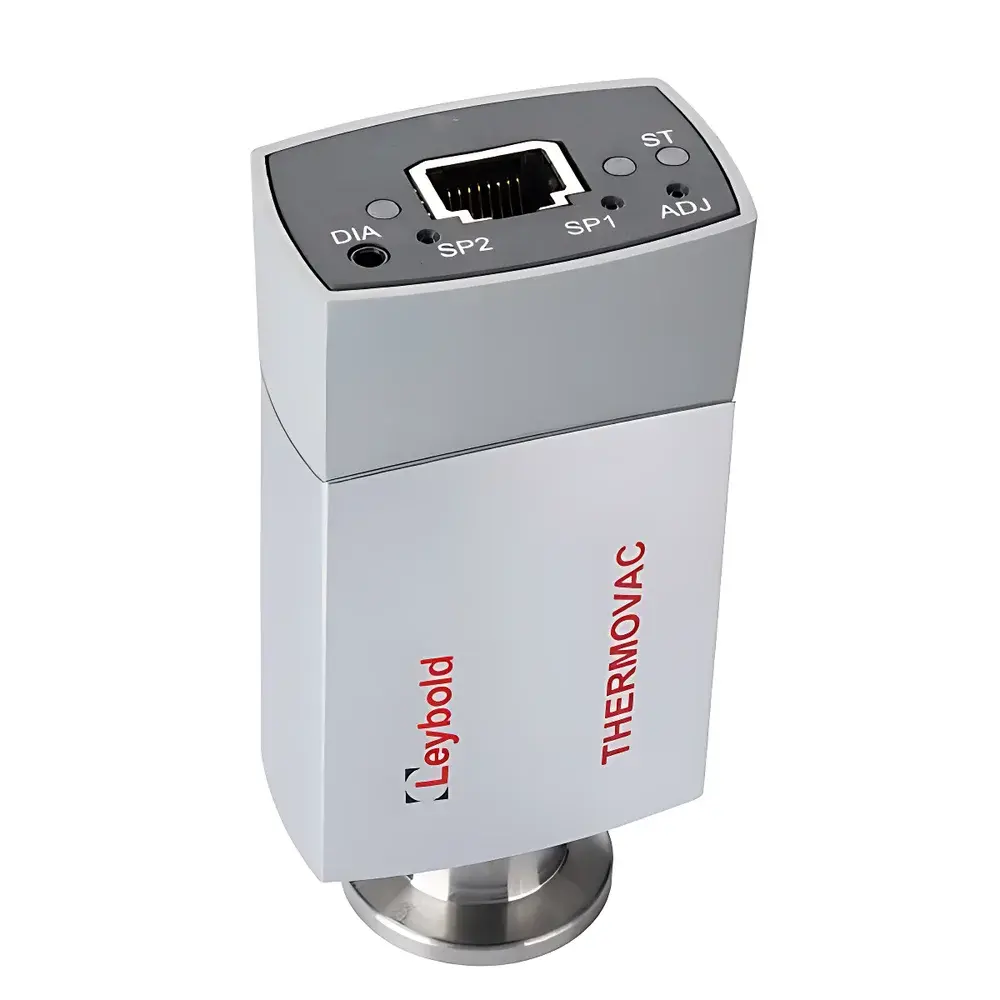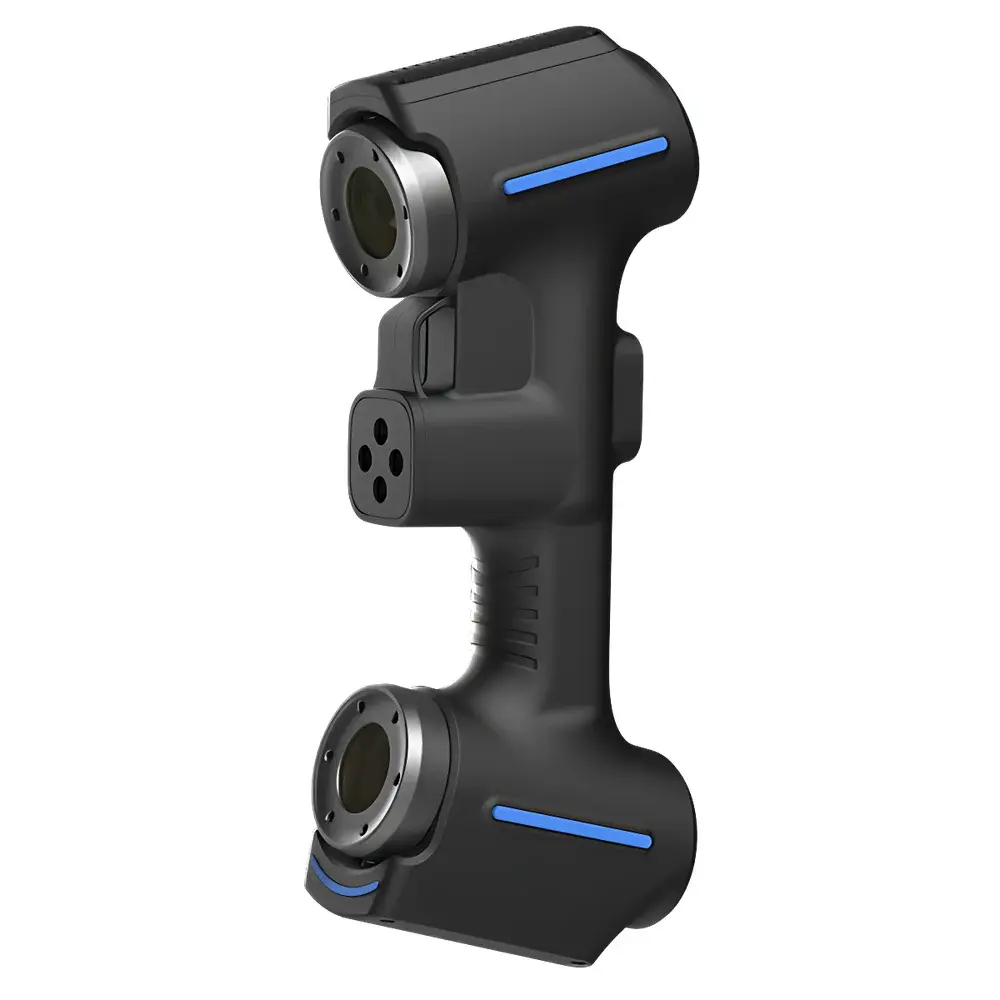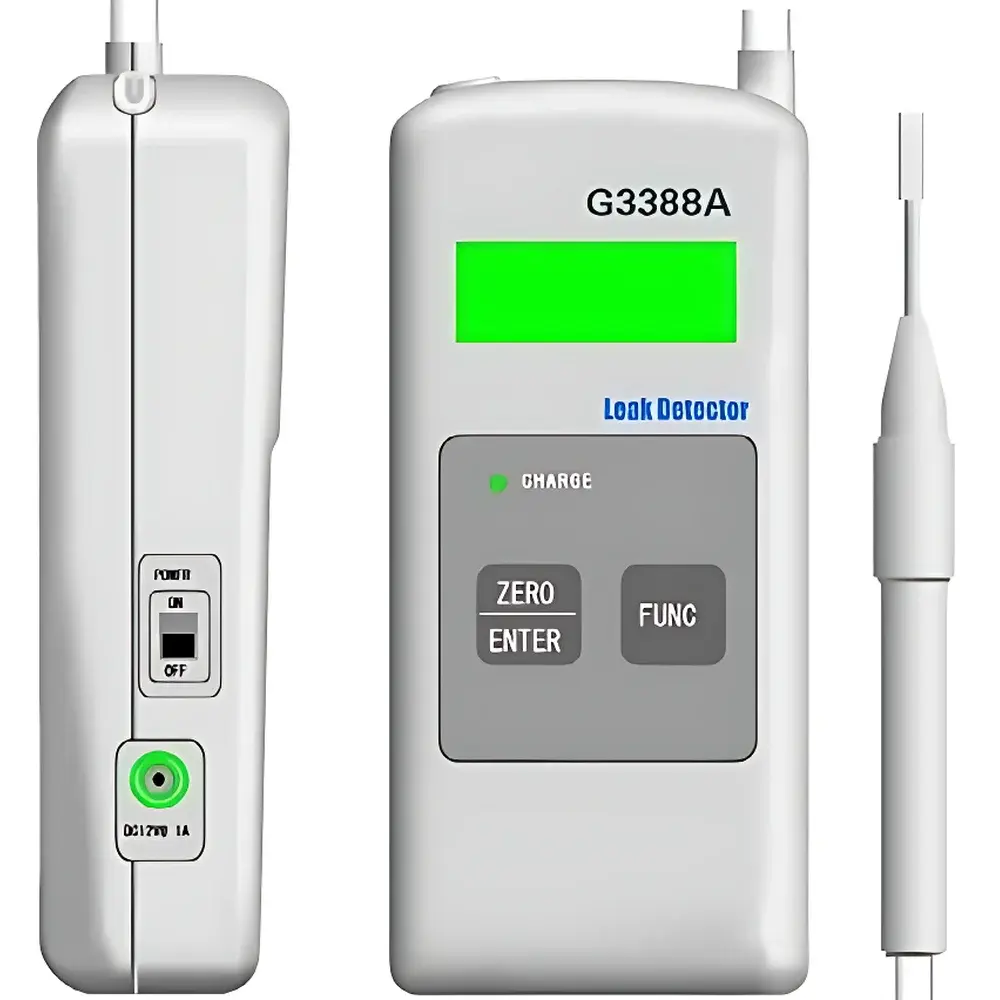
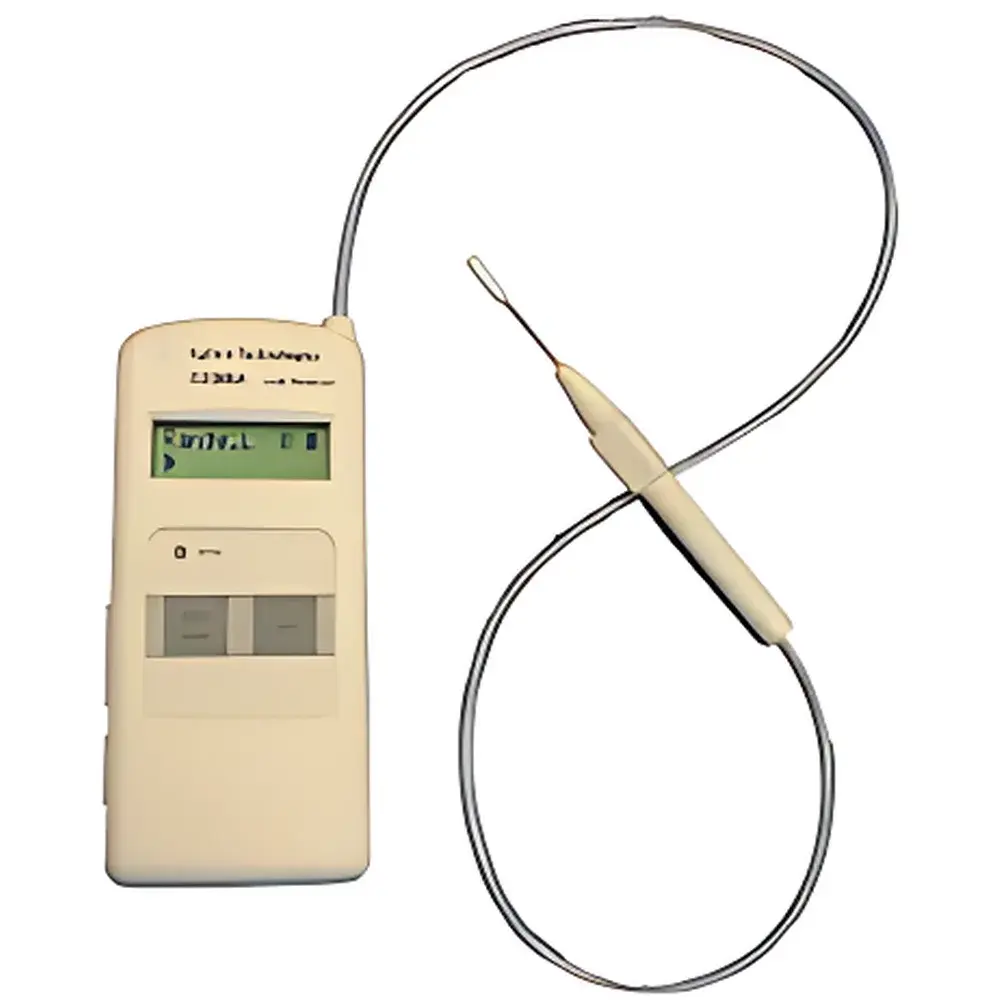
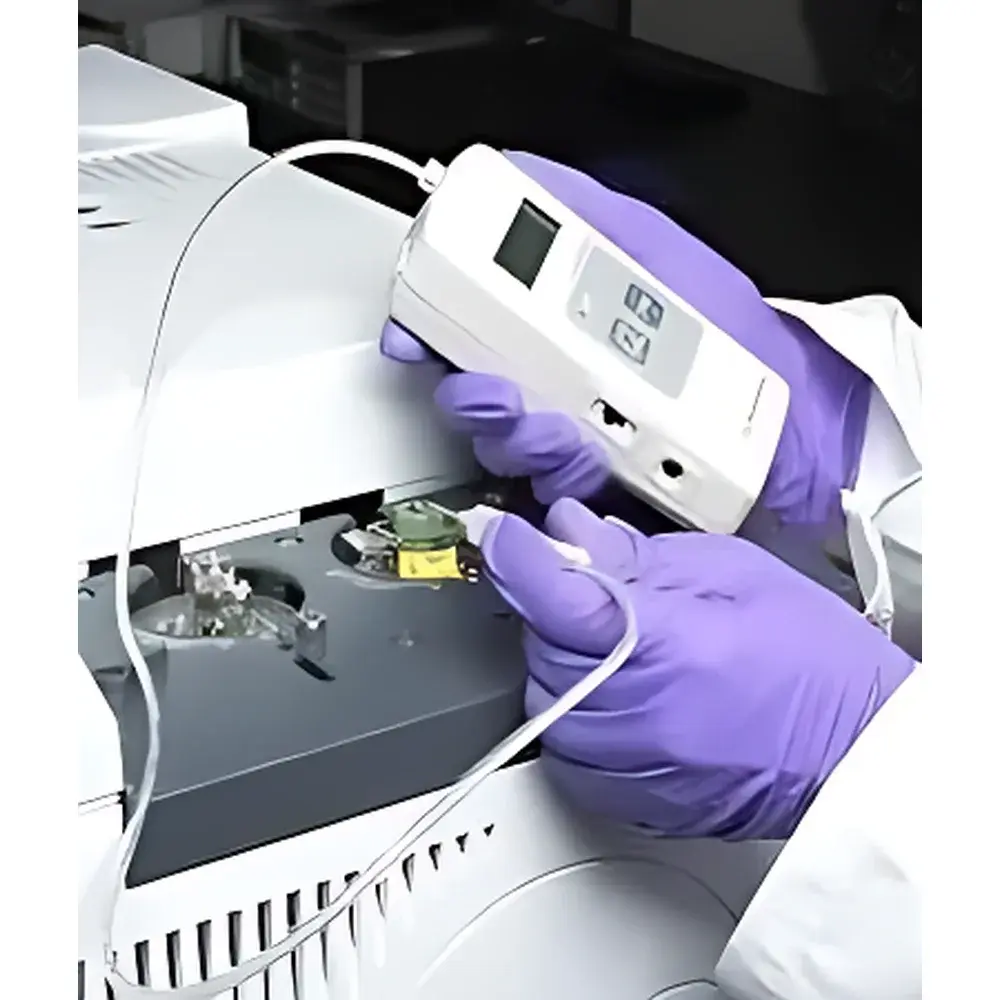
Agilent G3388A Handheld Electronic Gas Leak Detector
| Brand | Agilent Technologies |
|---|---|
| Origin | USA |
| Model | G3388A |
| Detection Principle | Thermal Conductivity Differential Sensing |
| Response Time | <1 s |
| Minimum Detectable Leak Rate | 0.01 mL/min (H₂/He) |
| Dimensions | 6.35 cm × 3.81 cm × 14.6 cm (2.5 in × 1.5 in × 5.75 in) |
| Weight | 310 g |
| Power Source | Rechargeable NiMH Battery (5 h runtime) |
| Compliance | Designed for use with Agilent GC systems |
Overview
The Agilent G3388A Handheld Electronic Gas Leak Detector is an engineered solution for rapid, field-deployable identification of gaseous leaks in analytical instrumentation environments—particularly gas chromatography (GC) systems, carrier gas manifolds, pneumatic fittings, and vacuum interconnects. Operating on the principle of thermal conductivity differential sensing, the detector compares the thermal dissipation characteristics of ambient air against that of a localized gas plume (e.g., helium or hydrogen), enabling real-time discrimination of trace-level leaks without requiring system shutdown or disassembly. Unlike pressure-decay or mass spectrometry–based methods, this approach delivers immediate qualitative feedback with minimal setup time, making it indispensable during instrument commissioning, preventive maintenance, troubleshooting, and post-repair validation. Its design reflects Agilent’s long-standing commitment to GC system integrity—addressing root causes of baseline instability, column degradation, excessive carrier gas consumption, and potential safety hazards associated with undetected flammable or asphyxiant gas releases.
Key Features
- Thermal conductivity-based detection optimized for helium and hydrogen—gases commonly used as carrier or tracer gases in GC and leak-check protocols
- Sub-second response time (<1 s) for rapid spatial scanning across fittings, valves, ferrules, and detector interfaces
- Dual-mode indication: audible tone (variable pitch proportional to signal amplitude) and visual LED bar graph for intuitive interpretation under varied lab lighting conditions
- High sensitivity threshold of 0.01 mL/min for helium and hydrogen—enabling detection of micro-leaks that may otherwise evade soap-bubble or pressure-hold testing
- Compact ergonomic form factor (6.35 × 3.81 × 14.6 cm) and lightweight construction (310 g) for extended handheld operation and access to confined spaces
- Integrated rechargeable NiMH battery providing up to five hours of continuous operation per charge; includes Agilent-certified charging circuitry for consistent voltage regulation and cycle longevity
- Modular consumables architecture supporting field replacement of filter head (p/n 5067-0218), battery (p/n 5067-0219), and AC adapter (p/n 5067-0220)
Sample Compatibility & Compliance
The G3388A is calibrated and validated for use with helium and hydrogen—gases selected for their high thermal conductivity contrast relative to ambient air (N₂/O₂ mixture). It is not intended for quantitative concentration measurement or for use with reactive, corrosive, or condensable vapors (e.g., HCl, NH₃, or solvent vapors), which may damage the sensor element or produce false readings. The device complies with electromagnetic compatibility requirements per IEC 61000-4-3 and meets mechanical robustness criteria aligned with ISO 9934-3 for portable NDT equipment. While not a certified safety instrument per OSHA 1910.120 or ATEX directives, its deployment supports adherence to laboratory safety management systems (e.g., ANSI Z10, ISO 45001) by facilitating proactive hazard mitigation. It is routinely employed in GLP- and GMP-regulated laboratories to support instrument qualification (IQ/OQ) and routine operational verification per Agilent GC system documentation guidelines.
Software & Data Management
The G3388A operates as a standalone analog-digital hybrid instrument with no embedded firmware, network interface, or data logging capability. All detection output is conveyed in real time via analog signal processing and immediate audiovisual feedback—eliminating software dependencies, cybersecurity vulnerabilities, or calibration drift associated with digital signal chains. This architecture ensures deterministic behavior across temperature gradients (10–40 °C operating range) and electrical noise environments typical of analytical labs housing GC ovens, autosamplers, and high-voltage detectors. Maintenance records—including filter replacements, battery swaps, and functional verification checks—should be documented manually in lab notebooks or electronic quality management systems (eQMS) to satisfy FDA 21 CFR Part 11 audit trail requirements where applicable.
Applications
- Routine leak screening of GC carrier gas lines, septum purge paths, and detector gas inlets prior to method validation
- Post-maintenance verification after column installation, inlet liner replacement, or detector cleaning procedures
- Troubleshooting baseline noise, retention time shifts, or inconsistent peak areas attributable to uncontrolled gas ingress
- Verification of vacuum integrity in GC-MS transfer lines and ion source housings using helium as a tracer
- Supporting ISO/IEC 17025-accredited calibration laboratories in maintaining measurement traceability for gas delivery systems
- Training tool for new analysts to develop tactile familiarity with common leak points in modular GC configurations
FAQ
Can the G3388A detect leaks in argon or nitrogen carrier gas systems?
No—it is specifically optimized for helium and hydrogen due to their significantly higher thermal conductivity relative to air. Argon and nitrogen exhibit thermal properties too similar to ambient air for reliable discrimination.
Is the sensor replaceable by the end user?
No—the thermal conductivity sensor is factory-calibrated and sealed. Only the filter head (p/n 5067-0218), battery (p/n 5067-0219), and power adapter (p/n 5067-0220) are authorized field-replaceable components.
Does the G3388A require annual recalibration?
Agilent does not specify a mandatory recalibration interval; however, users should perform functional verification using a known leak standard (e.g., calibrated orifice) before each critical use session, especially in regulated environments.
What is the expected service life of the NiMH battery?
Under normal usage (≤2 charge cycles/week), the battery maintains ≥80% capacity for approximately 300–500 charge cycles, equivalent to 2–3 years of typical lab operation.
Can the G3388A be used in Class I, Division 1 hazardous locations?
No—it lacks intrinsic safety certification (e.g., UL 913, ATEX II 2G) and must only be operated in general-purpose laboratory environments.