
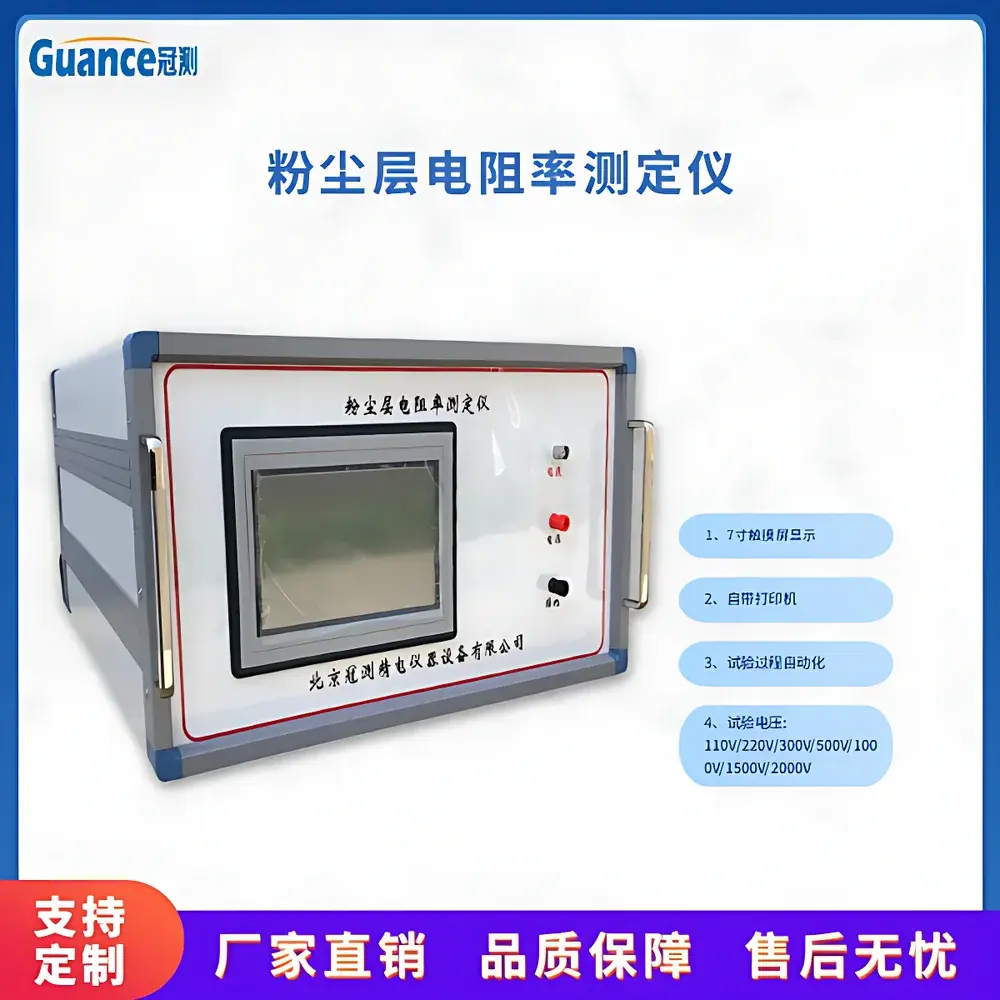
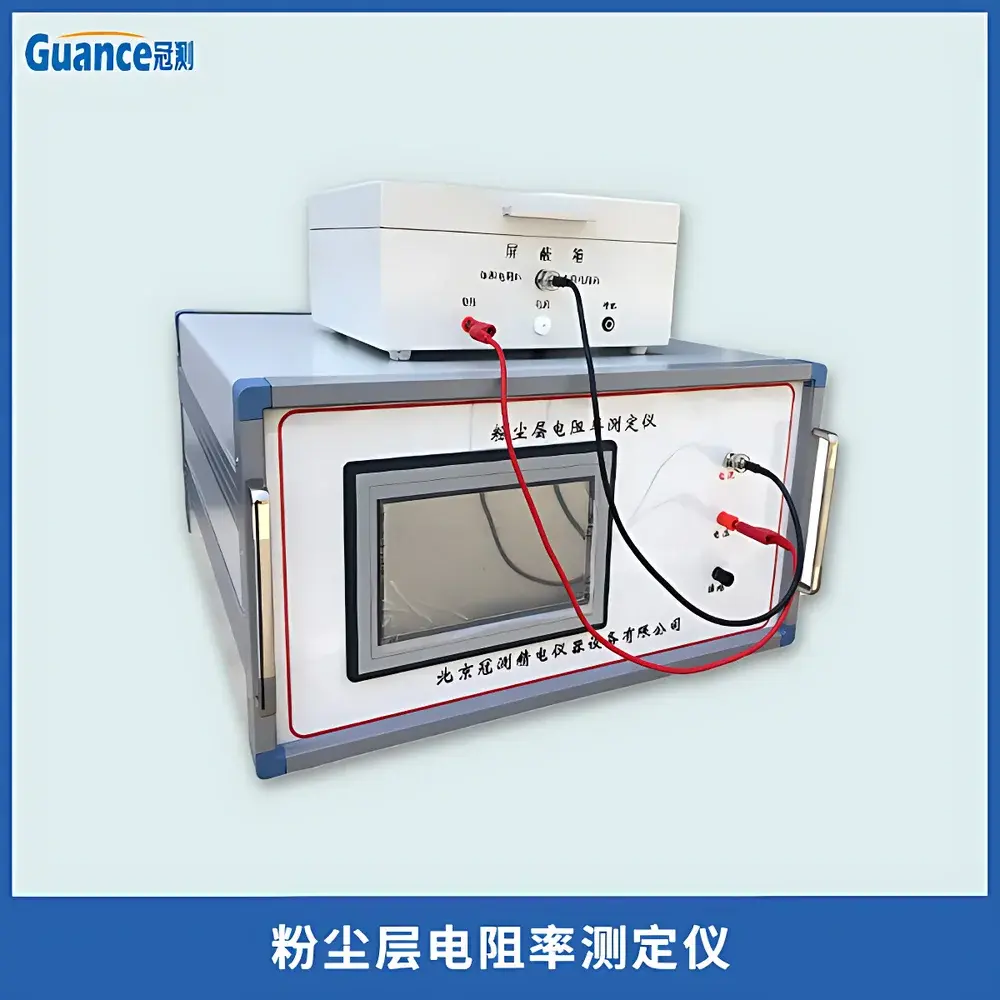
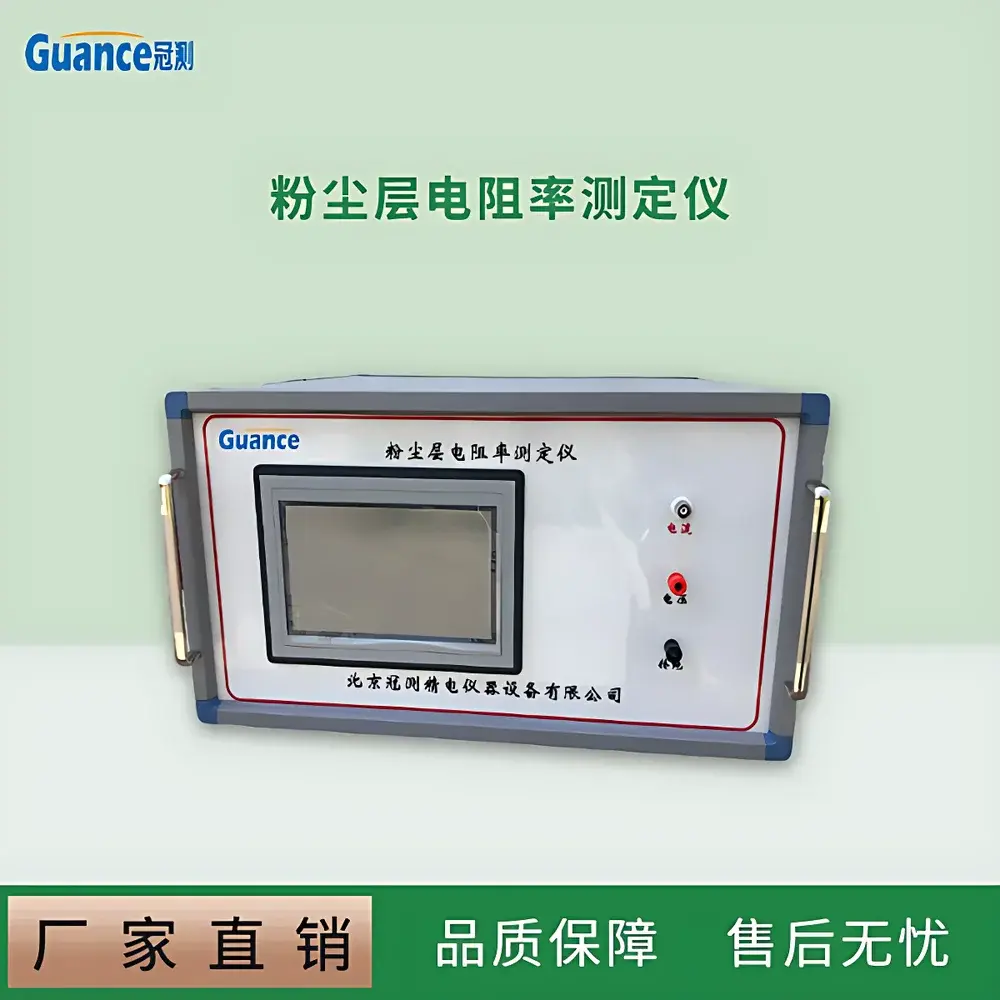
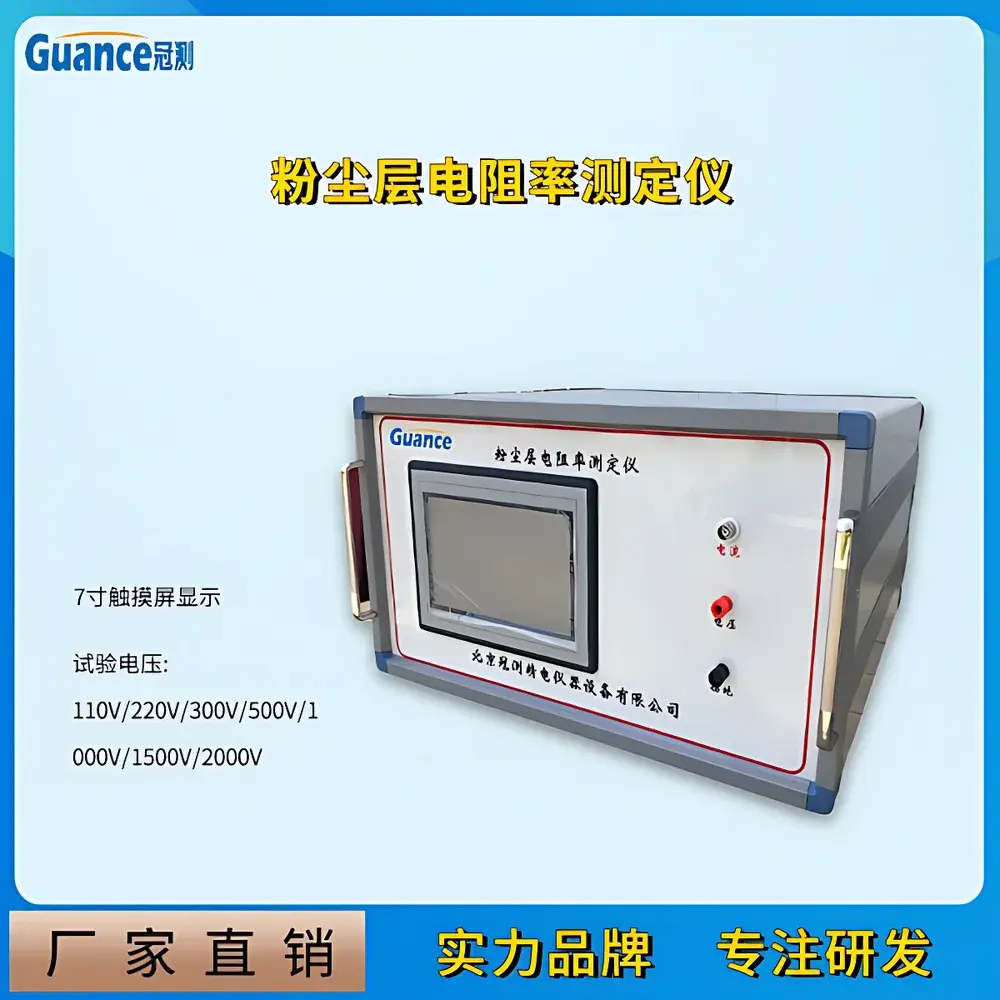
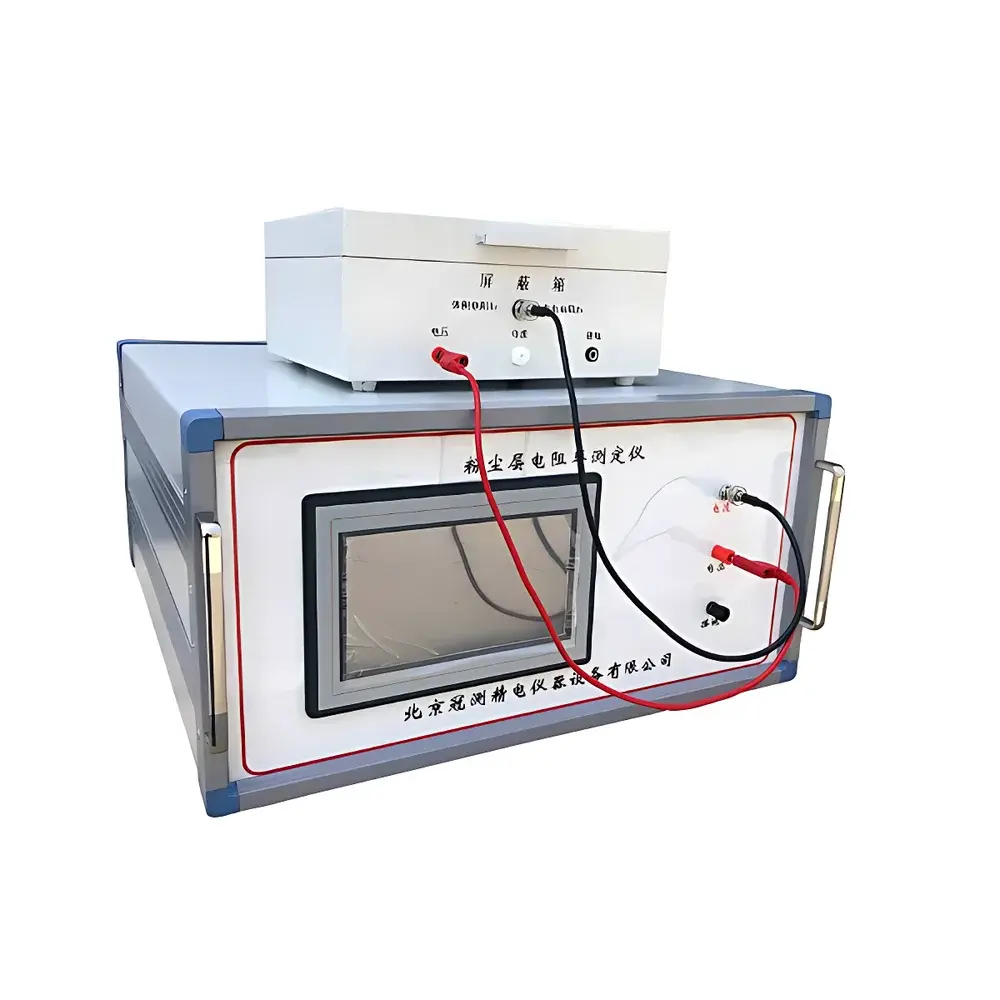
GuanCe GEST-126T Fully Automated Dust Layer Resistivity Tester
| Brand | GuanCe Instruments |
|---|---|
| Origin | Beijing, China |
| Manufacturer Type | Authorized Distributor |
| Country of Origin | China |
| Model | GEST-126T |
| Test Voltages | DC 110 V, 220 V, 300 V, 500 V, 1000 V, 1500 V, 2000 V |
| Series Resistor | 10 kΩ |
| Maximum Breakdown Current | 200 mA |
| Electrode Material | Stainless Steel |
| Measurement Accuracy | ±1% |
| Compliance | GB/T 12476.9–2010, GB/T 16427–2018 |
Overview
The GuanCe GEST-126T Fully Automated Dust Layer Resistivity Tester is an engineered solution for quantitative determination of the electrical resistivity of consolidated dust layers under controlled compression and applied DC voltage. Designed in strict accordance with the measurement principles defined in GB/T 12476.9–2010 (equivalent to IEC 61241-2-1) and GB/T 16427–2018, this instrument implements a standardized two-electrode configuration to evaluate bulk resistivity—defined as the minimum resistance measured between two parallel stainless-steel electrodes of unit area, separated by unit distance, across a compacted dust specimen. The system supports discrete high-voltage DC excitation (110 V to 2000 V), enabling classification of combustible dusts into conductive (ρ ≤ 10³ Ω·m) and non-conductive (ρ > 10³ Ω·m) categories per national hazard classification frameworks. Its robust mechanical architecture ensures repeatable sample compaction and electrode alignment, critical for inter-laboratory reproducibility in explosion safety assessments and electrostatic hazard analysis.
Key Features
- Seven-step programmable DC test voltage selection (110 V to 2000 V), supporting both low- and high-resistivity dust characterization
- Precision-machined stainless-steel parallel-plate electrodes with flatness tolerance ≤ 2 µm, minimizing contact resistance variability
- Integrated 10 kΩ series current-limiting resistor to suppress transient arcing and ensure compliance with GB/T 16427–2018 safety requirements
- Automated resistance readout with ±1% full-scale accuracy, traceable to national metrological standards
- Modular hardware design facilitating routine calibration, electrode cleaning, and dust residue removal
- Compact benchtop footprint (W × D × H: 320 × 280 × 180 mm) suitable for ISO/IEC 17025-accredited laboratory environments
Sample Compatibility & Compliance
The GEST-126T accommodates dry, free-flowing combustible powders—including metal dusts (e.g., aluminum, magnesium), carbonaceous materials (coal, wood flour), and organic granules (sugar, starch, pharmaceutical APIs)—within particle size distributions typically ranging from 10 µm to 500 µm. Sample preparation follows standardized compaction protocols defined in GB/T 16427–2018: dust is uniformly loaded into the electrode cavity and compressed using calibrated glass rods to achieve consistent bulk density (±5% deviation). The instrument meets the electrical safety and measurement integrity requirements of GB/T 12476.9–2010 for equipment used in explosive atmospheres (Zone 20/21/22), and its methodology aligns with international best practices referenced in NFPA 77 (Recommended Practice on Static Electricity) and CENELEC TR 50404 (Electrostatics — Code of Practice). While not certified to ATEX or IECEx, its test data are routinely accepted in third-party explosion protection certification dossiers.
Software & Data Management
The GEST-126T operates in standalone mode with front-panel digital display and manual voltage selection; no proprietary software or PC interface is required for basic operation. All measurements are recorded manually or via external lab notebooks compliant with GLP documentation standards. For laboratories implementing electronic record-keeping, raw resistance values and corresponding test voltages may be logged into validated LIMS or ELN platforms. The instrument’s fixed-range analog-to-digital conversion and absence of embedded firmware eliminate concerns related to FDA 21 CFR Part 11 electronic signature requirements—making it inherently compatible with regulated QC/QA workflows where paper-based audit trails are maintained. Calibration certificates and verification records are provided with each unit, supporting ISO/IEC 17025 clause 6.5 (Equipment) and clause 7.7 (Ensuring Validity of Results).
Applications
- Hazard classification of combustible dusts for process safety management (PSM) and DHA (Dust Hazard Analysis)
- Design validation of grounding/bonding systems in powder handling facilities
- Material qualification for intrinsically safe equipment used in grain elevators, chemical plants, and pharmaceutical manufacturing suites
- Research into triboelectric charging behavior and charge decay kinetics of particulate systems
- Supporting compliance with OSHA 1910.272 (Grain Handling Facilities) and EU ATEX Directive 2014/34/EU Annex II technical file submissions
FAQ
Does the GEST-126T support automated data export or USB connectivity?
No. The instrument is designed for manual operation and direct visual readout only. Data logging is performed externally per laboratory SOP.
Is calibration traceable to national standards?
Yes. Each unit ships with a factory calibration certificate referencing CNAS-accredited reference resistors and DC voltage standards.
Can the system measure surface resistivity or volume resistivity of solid insulators?
No. It is exclusively configured for dust layer (bulk) resistivity per GB/T 16427–2018 and does not comply with ASTM D257 or IEC 62631-3-1 for solid dielectrics.
What maintenance is required for long-term accuracy?
Monthly cleaning of electrode surfaces with isopropyl alcohol and annual verification of voltage output against a calibrated multimeter are recommended.
Is the instrument suitable for use in Class I, Division 1 hazardous locations?
No. It is a laboratory-grade test apparatus intended for use in non-hazardous, controlled environments only.



