
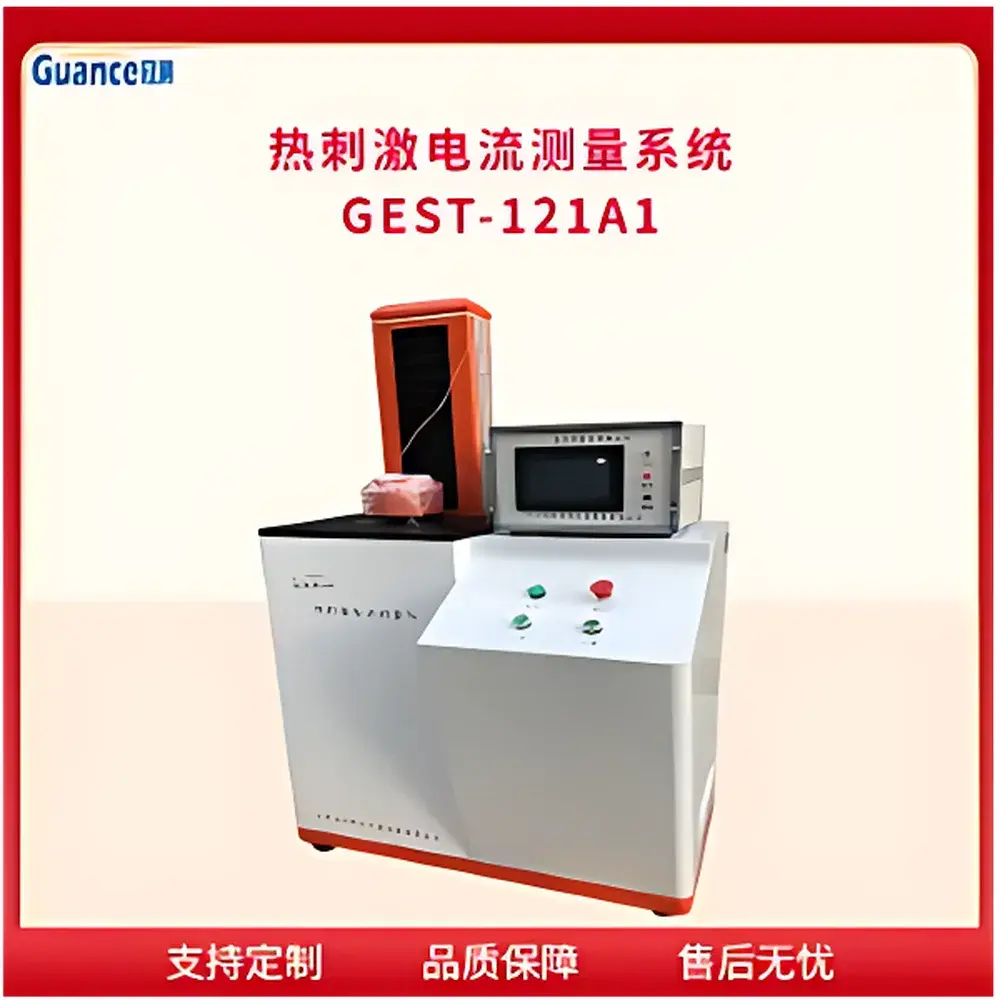
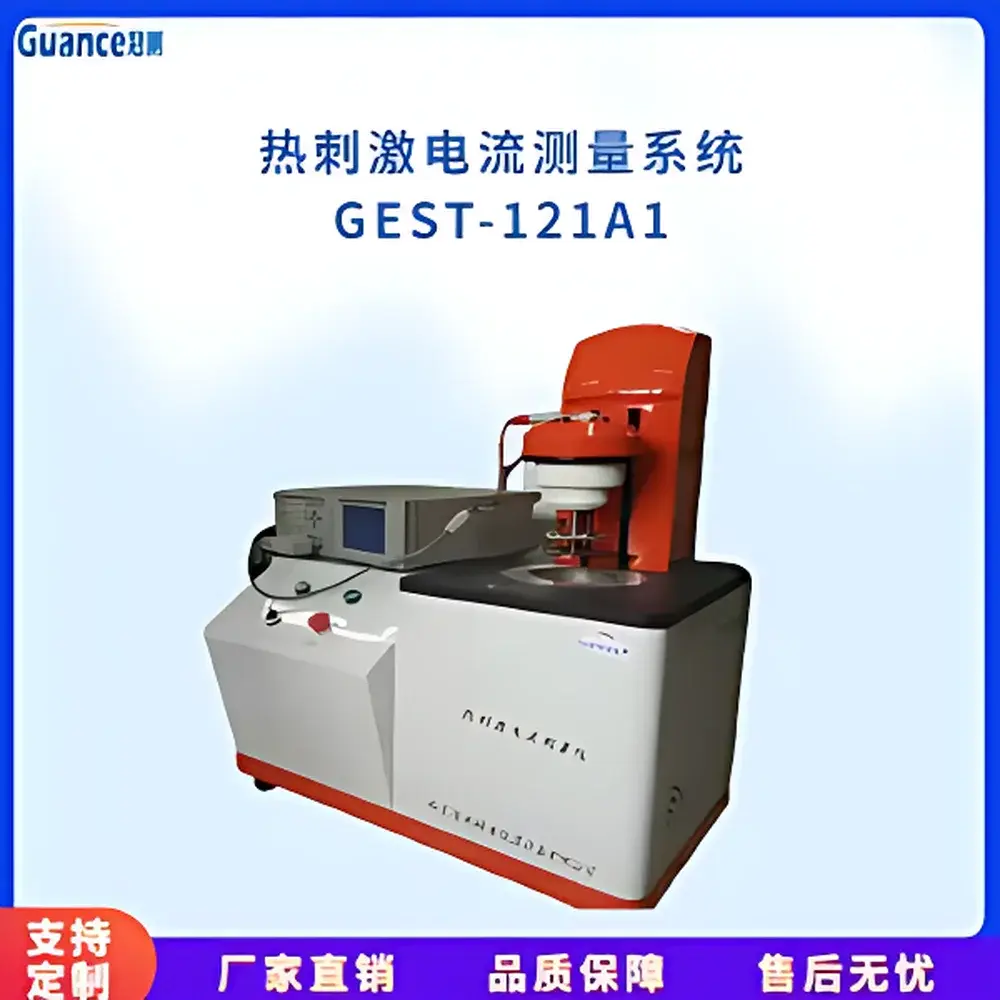
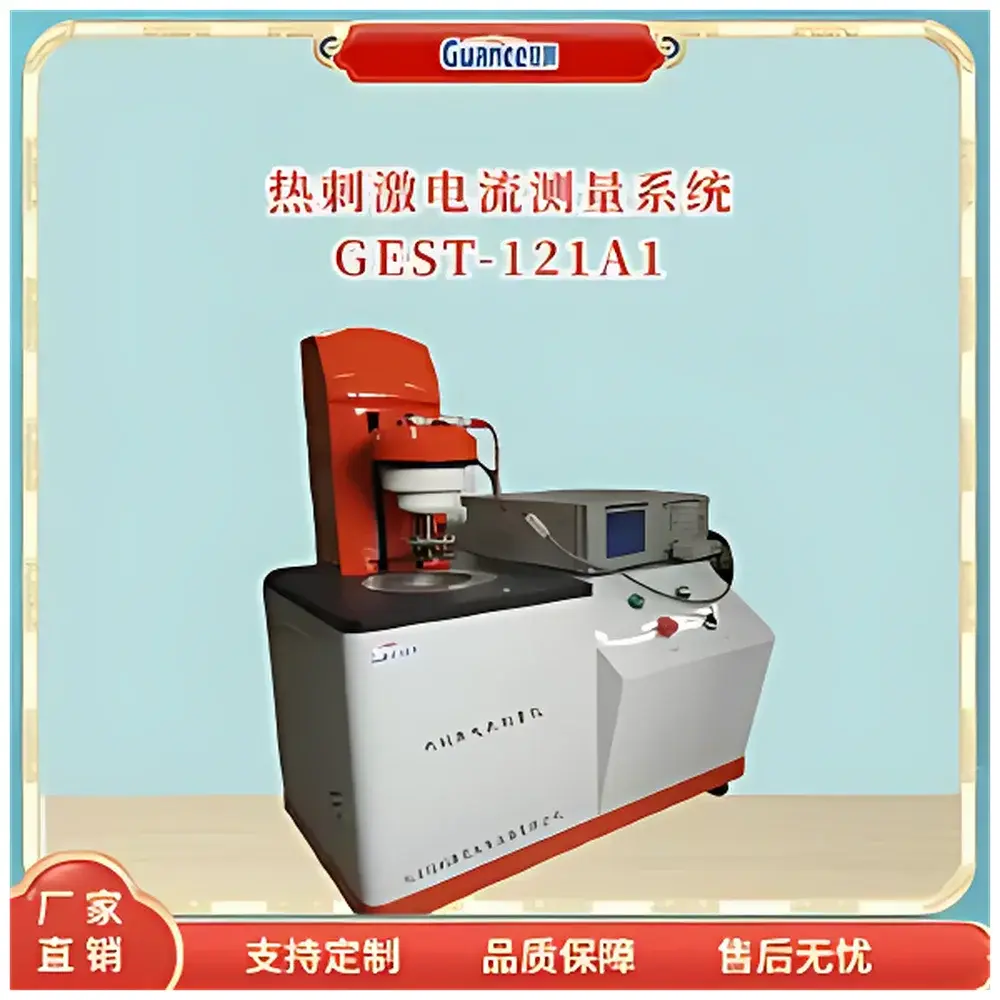
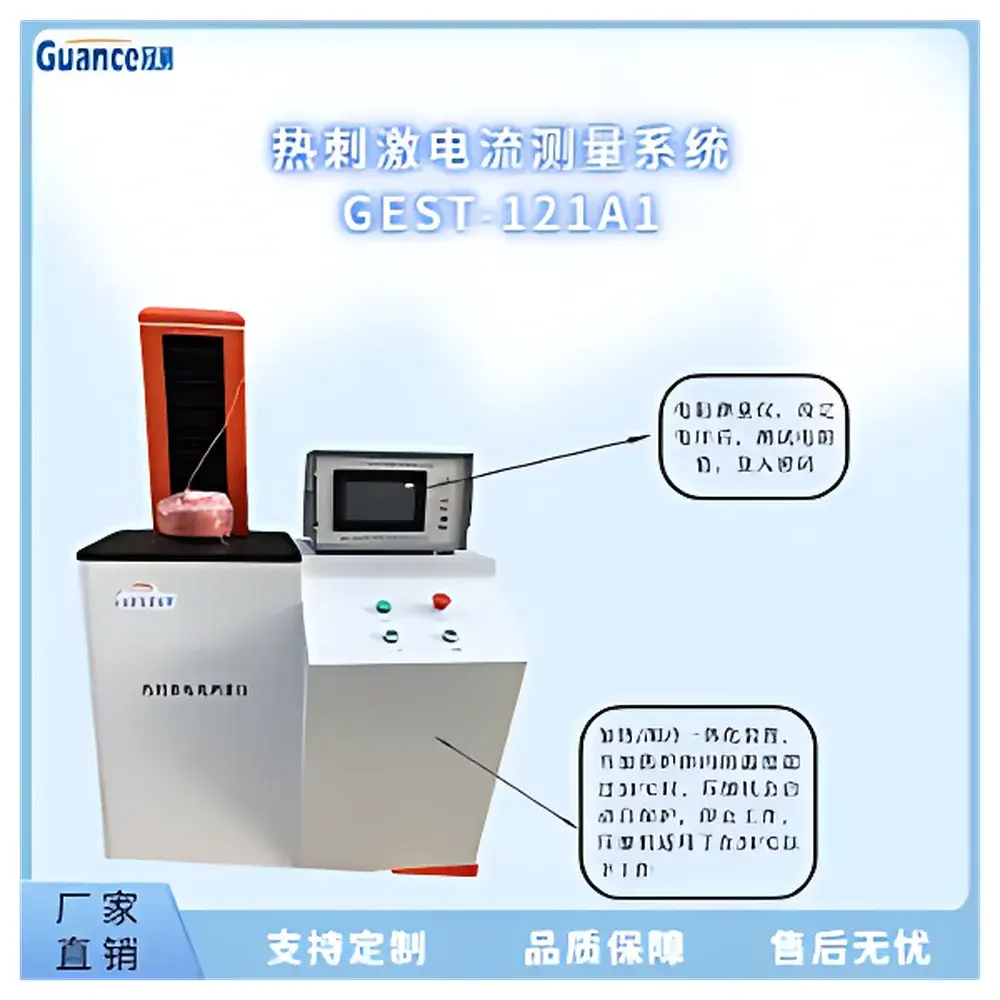
Guance Instrument GEST-121A3 Automated Resistivity-Temperature Characterization System
| Brand | Guance Instrument |
|---|---|
| Origin | Beijing, China |
| Manufacturer Type | Authorized Distributor |
| Product Origin | Domestic (China) |
| Model | GEST-121A3 |
| Price | USD 1,550 (FOB Beijing) |
| Minimum Current Resolution | 1×10⁻¹⁶ A |
| Temperature Range | −40 °C to +250 °C |
| Heating/Cooling Rate | 0.5–10 °C/min |
| DC Voltage Ranges | 10 V / 50 V / 100 V / 250 V / 500 V / 1000 V |
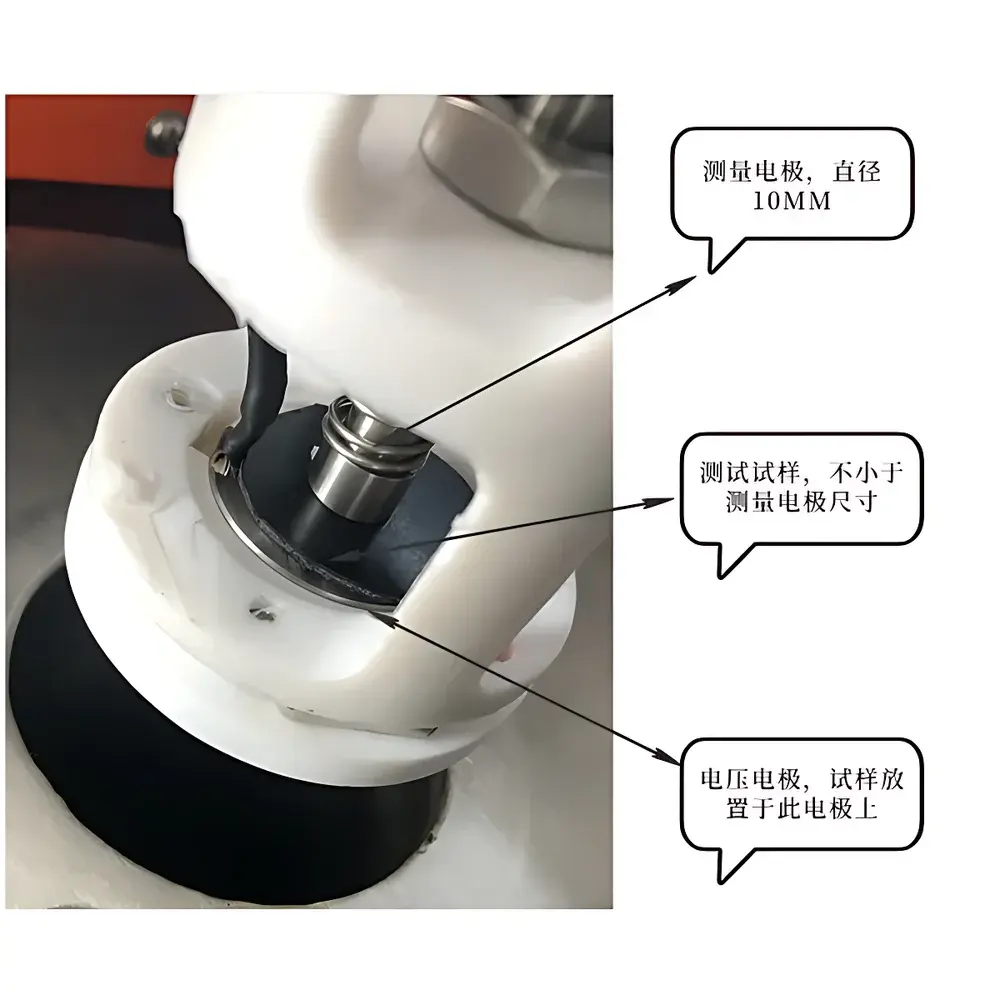
| Electrode Diameter | 10 mm |
| Sample Stage | Motorized Vertical Positioning |
| Heating Method | Resistive Wire Heater (1500 W) |
| Cooling Method | Compressor-Based Refrigeration |
| Thermal Medium | Dimethyl Silicone Oil (2 cSt, 10 L capacity) |
| Data Acquisition | Real-time PC-controlled acquisition with dynamic curve visualization |
| Data Export | Excel-compatible .csv and PDF report generation |
| Weight | 100 kg |
Overview
The Guance Instrument GEST-121A3 Automated Resistivity-Temperature Characterization System is an integrated benchtop platform engineered for precise measurement of electrical resistivity as a function of temperature in solid dielectric and semiconductor materials. It operates on the principle of four-terminal (Kelvin) resistance measurement under controlled thermal ramping, enabling high-reproducibility determination of temperature-dependent conductivity behavior—critical for evaluating thermally activated conduction mechanisms, phase transitions, glass transition points (Tg), and degradation onset in polymers, ceramics, composites, and thin-film coatings. The system combines a programmable environmental chamber with dual-mode (heating/cooling) thermal control, motorized electrode positioning, and synchronized voltage-current sourcing and sensing, all coordinated via embedded microcontroller and host PC software. Designed for compliance with fundamental metrological practices in materials science laboratories, it supports standardized test protocols aligned with ASTM D257 (Standard Test Methods for DC Resistance or Conductance of Insulating Materials) and IEC 60093 (Methods of Test for Volume Resistivity and Surface Resistivity of Solid Electrical Insulating Materials).
Key Features
- Ultra-low current detection capability down to 1×10⁻¹⁶ A, enabling reliable resistivity measurements in highly insulating materials (up to 10¹⁶ Ω·cm)
- Wide operational temperature range (−40 °C to +250 °C) with independent heating and active cooling subsystems for bidirectional thermal profiling
- Precise thermal ramp control (0.5–10 °C/min) and isothermal hold functionality with ±0.3 °C stability at setpoint
- Motorized 10-mm-diameter parallel-plate electrode assembly with automated vertical actuation, ensuring repeatable contact pressure and gap control
- Multi-range DC voltage sourcing (10 V to 1000 V) with guarded input circuitry to minimize leakage and surface conduction artifacts
- Integrated dimethyl silicone oil bath (10 L, 2 cSt viscosity) for uniform thermal transfer and minimal thermal gradient across sample volume
- Fully automated test sequencing: parameter initialization → thermal equilibration → voltage application → current sampling → data logging → report generation
Sample Compatibility & Compliance
The GEST-121A3 accommodates flat, rigid specimens up to 25 mm in diameter and 10 mm in thickness—including polymer films, sintered ceramics, epoxy-matrix composites, and metallized substrates. Sample mounting requires minimal surface preparation (cleaning and drying per ASTM D1711); no vacuum or inert gas purging is required, though optional N2 purge ports can be added upon request. All hardware and firmware comply with CE electromagnetic compatibility (EMC) directives and IEC 61010-1 safety standards for laboratory electrical equipment. Data integrity meets GLP/GMP traceability requirements: each test record includes timestamped metadata (operator ID, ambient conditions, calibration status), digital signature fields, and audit-trail-enabled software logs compatible with FDA 21 CFR Part 11–compliant validation packages.
Software & Data Management
The proprietary GEST-Control Suite (v3.2, Windows 10/11 compatible) provides full instrument orchestration through a modular GUI. Users define test profiles including start/end temperatures, ramp rate, dwell duration, applied voltage, and coordinate axis preference (temperature- or time-based x-axis). Real-time plots display resistivity (Ω), conductivity (S/m), and derived activation energy (eV) calculated via Arrhenius fitting. Raw data streams are stored in HDF5 format for long-term archival; export options include CSV (for MATLAB/Python analysis), Excel (.xlsx), and printable PDF reports with embedded calibration certificates and uncertainty budgets. Remote operation and script-driven batch testing are supported via TCP/IP API (documentation provided under NDA).
Applications
- Quantifying thermal activation energy of charge carriers in polymer electrolytes and solid-state battery separators
- Evaluating thermal stability limits of high-k dielectrics used in microelectronics packaging
- Characterizing crystallinity-induced resistivity shifts in semi-crystalline thermoplastics (e.g., PEEK, PVDF)
- Validating insulation performance of aerospace-grade composites under thermal cycling per MIL-STD-810G
- Supporting ISO 11357-2 (DSC) correlation studies by mapping resistivity inflection points to calorimetric transitions
- Quality control of conductive filler dispersion homogeneity in EMI-shielding elastomers
FAQ
What types of materials require preconditioning before testing?
Hygroscopic samples (e.g., nylon, cellulose derivatives) must be dried per ASTM D618 prior to insertion to avoid moisture-related conductivity artifacts.
Is external temperature calibration required?
No—the integrated Pt100 sensor is factory-calibrated against NIST-traceable reference standards; users may perform verification using certified calibration baths (optional accessory).
Can the system operate unattended overnight?
Yes—fully autonomous operation is supported with built-in thermal runaway protection, overcurrent cutoff, and emergency stop logic compliant with IEC 60204-1.
Does the software support multi-user role-based access control?
Yes—administrator, technician, and viewer roles can be assigned with configurable permissions for method editing, test execution, and data export.
What maintenance intervals are recommended?
Silicone oil replacement every 12 months or 2000 operating hours; electrode cleaning with isopropanol after each sample batch; annual verification of voltage/current source accuracy.



