
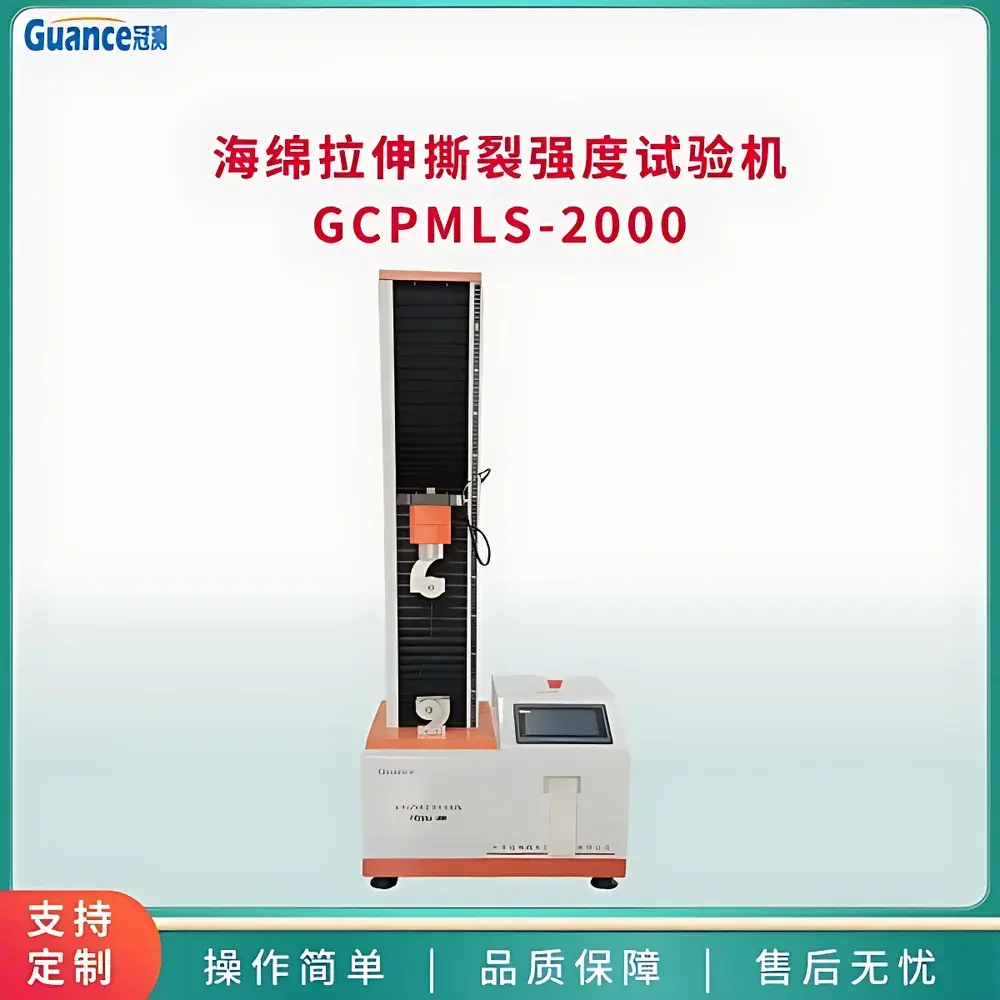
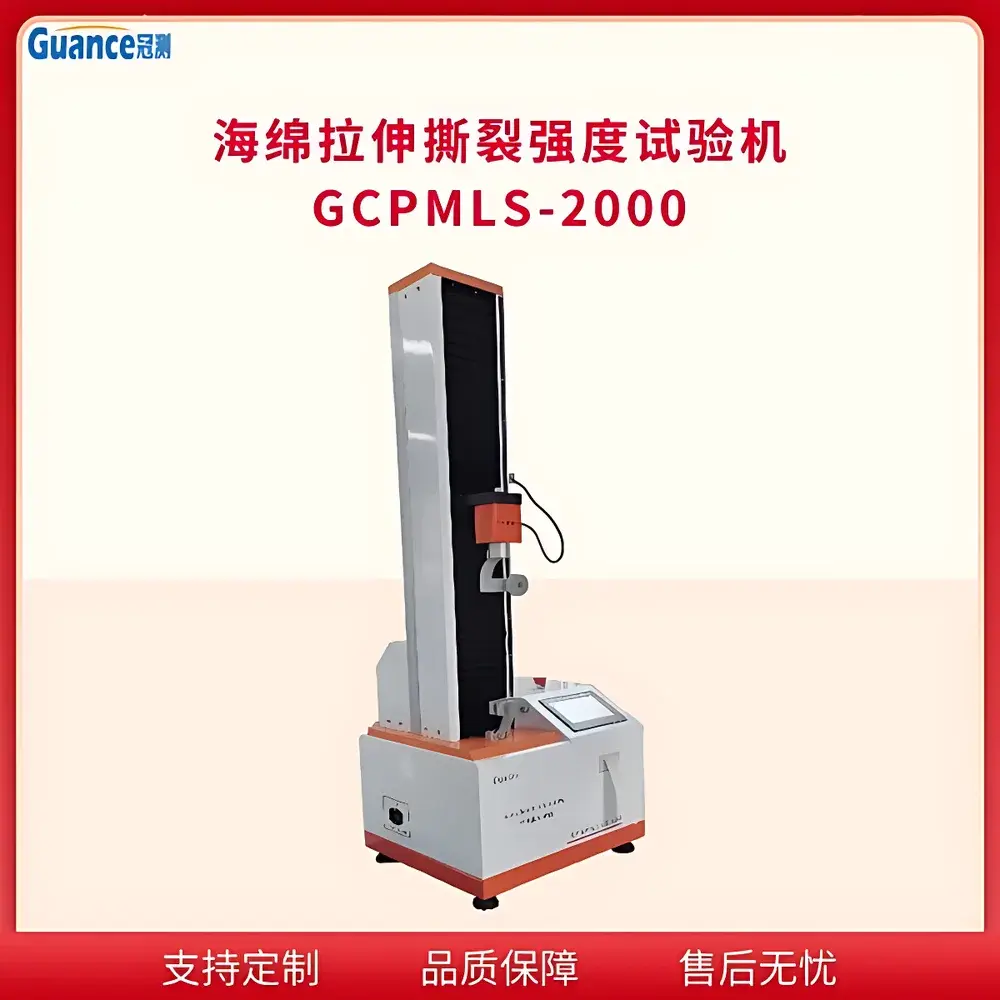
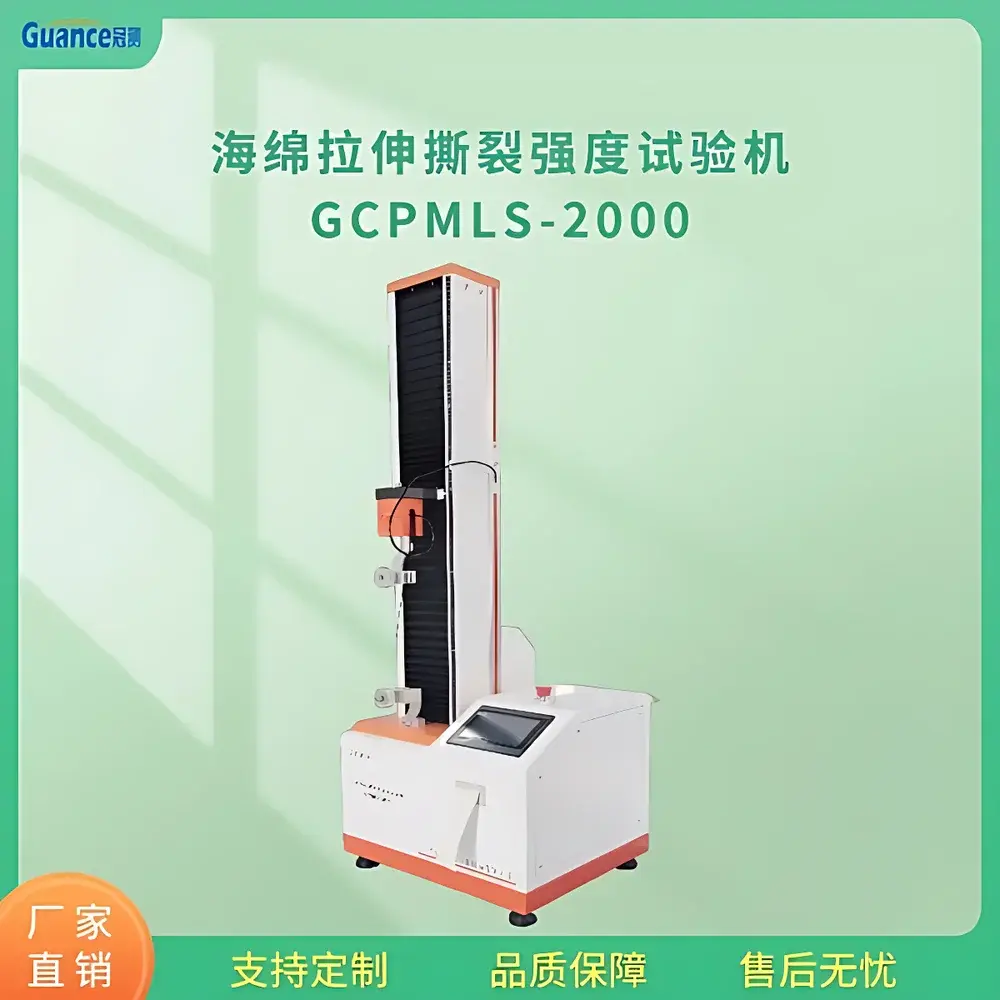
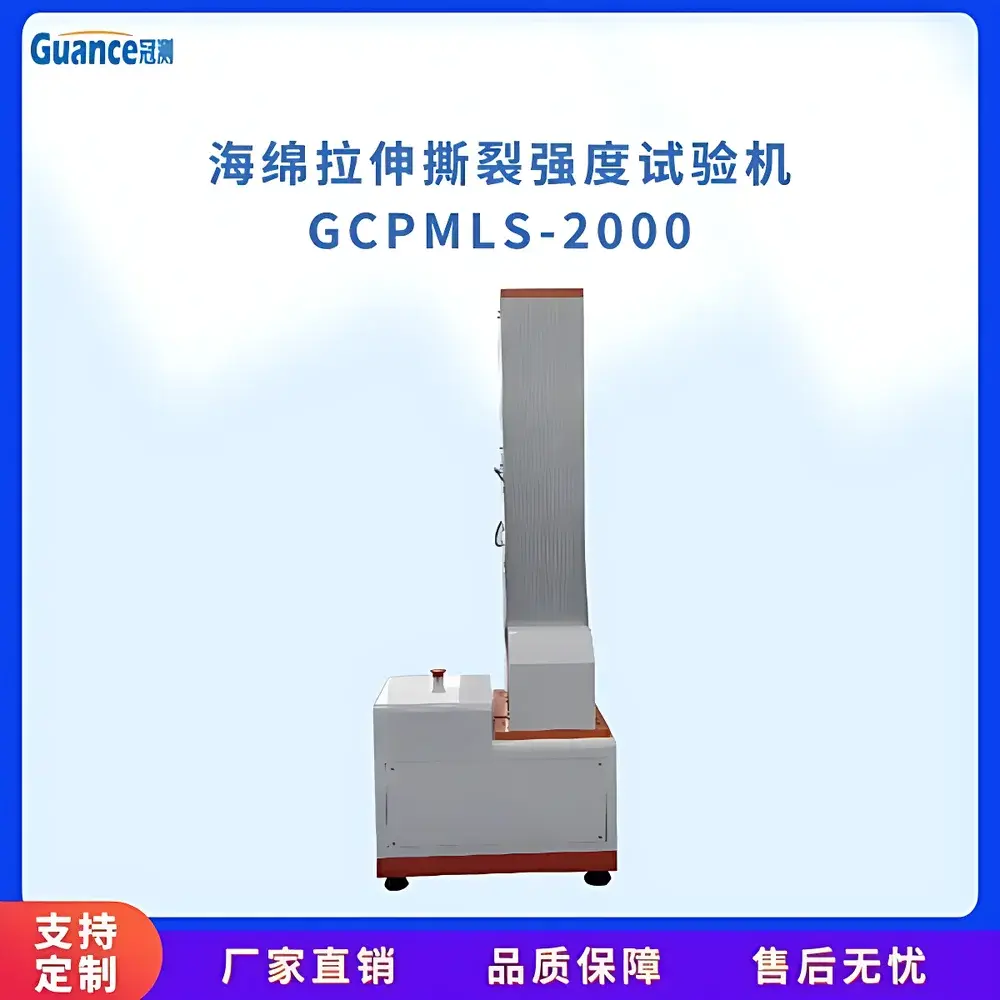
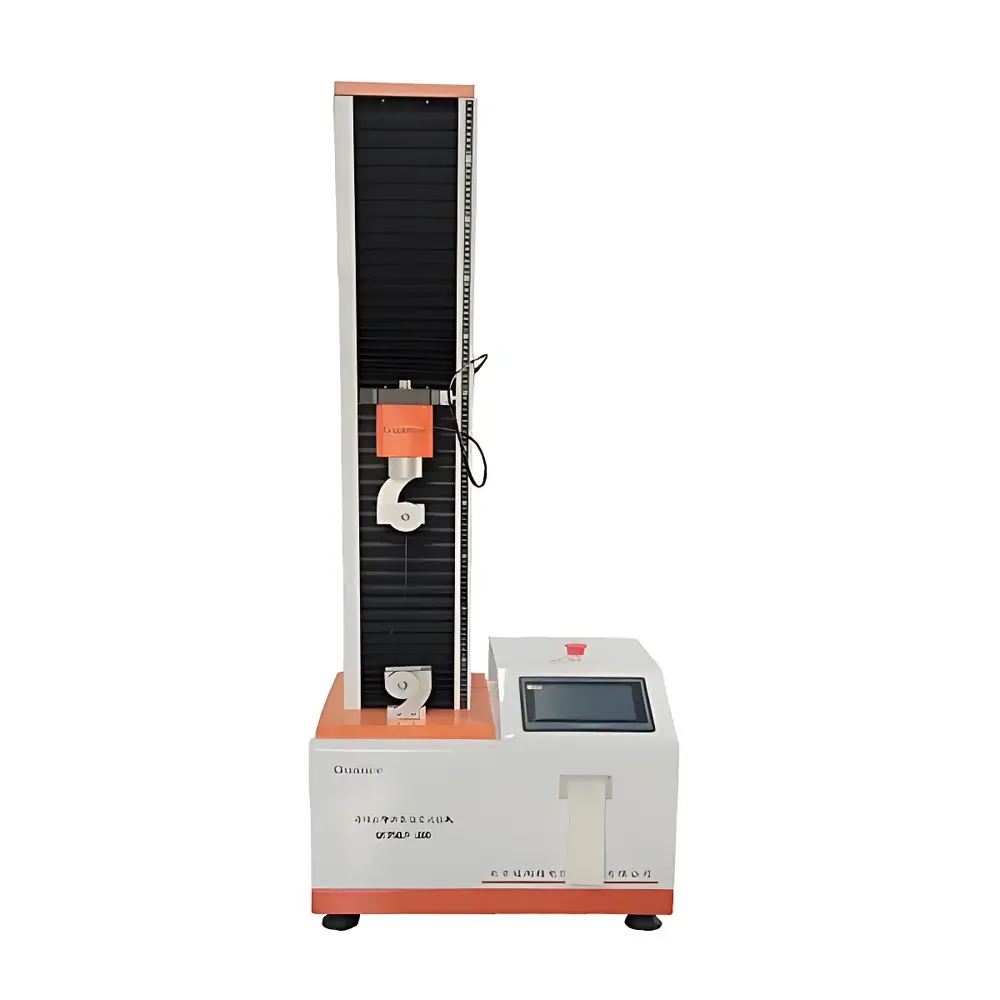
Guance PMLS-2000 Universal Tensile and Tear Strength Tester for Flexible Polymeric Foams
| Key | Brand: Guance |
|---|---|
| Model | PMLS-2000 |
| Origin | Beijing, China |
| Max Load Capacity | 1000 N |
| Force Accuracy | ±1% of reading |
| Displacement Resolution | 0.01 mm |
| Crosshead Speed Range | 0.05–300 mm/min |
| Stroke | 800 mm (excluding fixtures) |
| Power Supply | 220 V, 50 Hz |
| Compliance | GB/T 6344–2008, GB/T 10808–2006, ISO 1798:1997 |
Overview
The Guance PMLS-2000 Universal Tensile and Tear Strength Tester is a precision-engineered mechanical testing system designed specifically for the quantitative evaluation of tensile strength, elongation at break, and tear resistance in flexible polymeric foams—including polyurethane (PU), polyethylene (PE), and latex-based sponge materials. Built upon a single-column, electromechanical architecture, the instrument operates on the principle of controlled uniaxial loading via a high-resolution servo-controlled crosshead driven by a digital AC motor and precision planetary reduction gear train. Force is transduced using a calibrated load cell with traceable calibration to national standards, while displacement is measured via an optical encoder coupled to the lead screw assembly—ensuring repeatable, low-drift measurements under static and quasi-static loading conditions up to 1000 N. Its modular design supports standardized test configurations per international material characterization protocols, making it suitable for routine quality control, R&D validation, and regulatory submission testing in foam manufacturing, automotive seating, bedding, and medical cushioning applications.
Key Features
- Full-range, non-stepped force measurement (0–1000 N) with accuracy better than ±1% of full-scale reading, compliant with ISO 7500-1 Class 2 requirements.
- Digital speed control enabling seamless crosshead velocity adjustment from 0.05 mm/min to 300 mm/min, with real-time feedback and stability within ±1% of setpoint.
- Integrated 7-inch TFT LCD touchscreen interface supporting bilingual (English/Chinese) operation, real-time curve plotting (force vs. displacement), and on-screen parameter configuration without external PC dependency.
- Triple-speed preset function allowing instantaneous velocity switching during test execution—critical for capturing both pre-yield compliance and post-yield deformation behavior in heterogeneous foam structures.
- Automated safety protocols including dual-stage limit protection (mechanical end-stop + software-defined travel boundary), overload cutoff (3–5% over full scale), and automatic crosshead return after test completion.
- Modular fixture system compatible with standard dumbbell, trouser, and crescent tear geometries per ASTM D3574 and ISO 1798 specifications.
Sample Compatibility & Compliance
The PMLS-2000 is validated for use with low-density, open-cell and closed-cell flexible foams ranging from 10–120 kg/m³ density. It accommodates specimens conforming to GB/T 6344–2008 (tensile properties), GB/T 10808–2006 (tear strength), and ISO 1798:1997 (tensile and elongation testing of flexible cellular polymeric materials). All mechanical and electrical subsystems meet CE marking requirements for EMC Directive 2014/30/EU and Low Voltage Directive 2014/35/EU. Calibration certificates are supplied with NIST-traceable reference standards, and the system supports GLP-compliant audit trails when operated with optional data export modules.
Software & Data Management
While the embedded firmware provides standalone test execution and result display, optional USB data export enables CSV-formatted output of raw force-displacement time-series data for post-processing in MATLAB, Excel, or statistical analysis platforms. The system records timestamped metadata—including operator ID, sample ID, test method, environmental temperature/humidity (when connected to external sensors), and pass/fail status against user-defined acceptance criteria. Though not natively 21 CFR Part 11 compliant, the architecture permits integration with third-party LIMS or ELN systems via RS232 or TCP/IP interfaces for electronic signature and audit trail supplementation.
Applications
- Quality assurance of automotive seat cushions and headrest foams per OEM specifications (e.g., Ford WSS-M99P1111-A, GMW15624).
- Batch release testing of medical-grade viscoelastic foams used in pressure-relief mattresses (ISO 10993-10 biocompatibility support).
- Formulation development of flame-retardant PU foams, where tear resistance correlates strongly with polymer crosslink density.
- Accelerated aging studies evaluating mechanical degradation of packaging foams after thermal/humidity cycling (ASTM D3045).
- Validation of recycling process efficacy by comparing tensile recovery and permanent set in reprocessed foam granules.
FAQ
What standards does the PMLS-2000 directly support out-of-the-box?
It is pre-configured for GB/T 6344–2008, GB/T 10808–2006, and ISO 1798:1997 test methods, with default parameters aligned to specimen geometry, grip separation, and speed requirements.
Can the system be upgraded for dynamic mechanical analysis (DMA) capabilities?
No—the PMLS-2000 is strictly a quasi-static mechanical tester; dynamic oscillatory testing requires dedicated DMA instrumentation with inertial compensation and harmonic excitation control.
Is calibration documentation included with shipment?
Yes—a factory calibration report with uncertainty budget and traceability to CNAS-accredited reference standards is provided, along with a calibration certificate valid for 12 months.
What maintenance intervals are recommended for long-term accuracy?
Load cell and encoder recalibration every 12 months; lubrication of lead screw and synchronous belt every 6 months; visual inspection of grips and alignment fixtures prior to each test series.
Does the instrument support network connectivity for centralized lab management?
Not by default—but Ethernet or Wi-Fi adapters may be added via the optional communication module (part no. PMLS-COM-ETH), enabling remote monitoring and scheduled firmware updates.



