
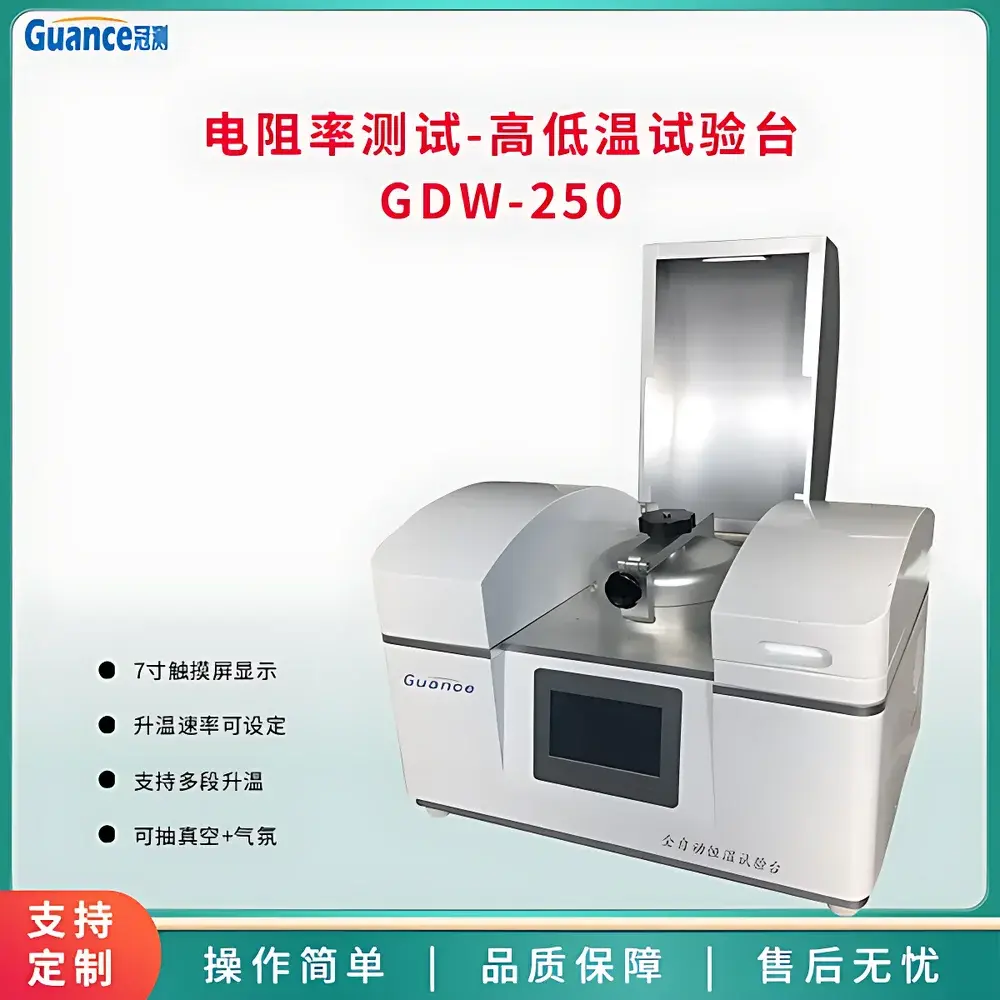
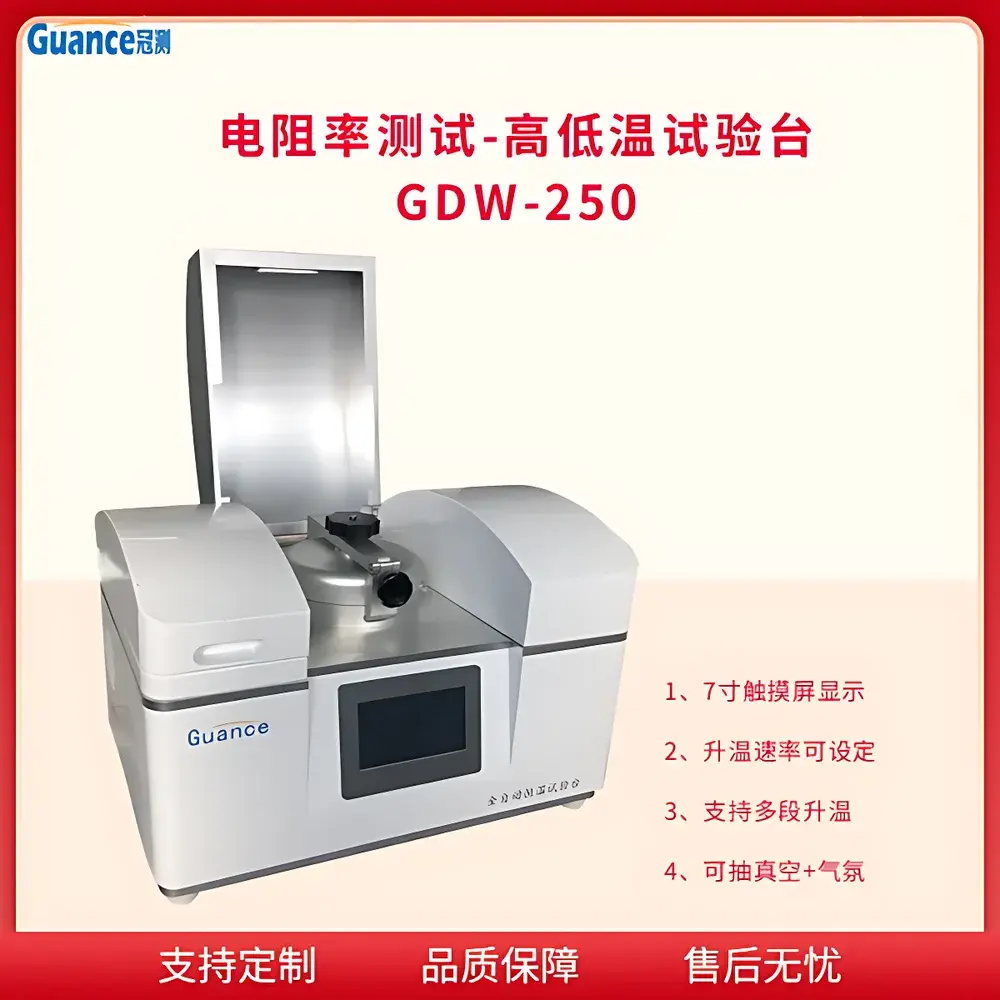
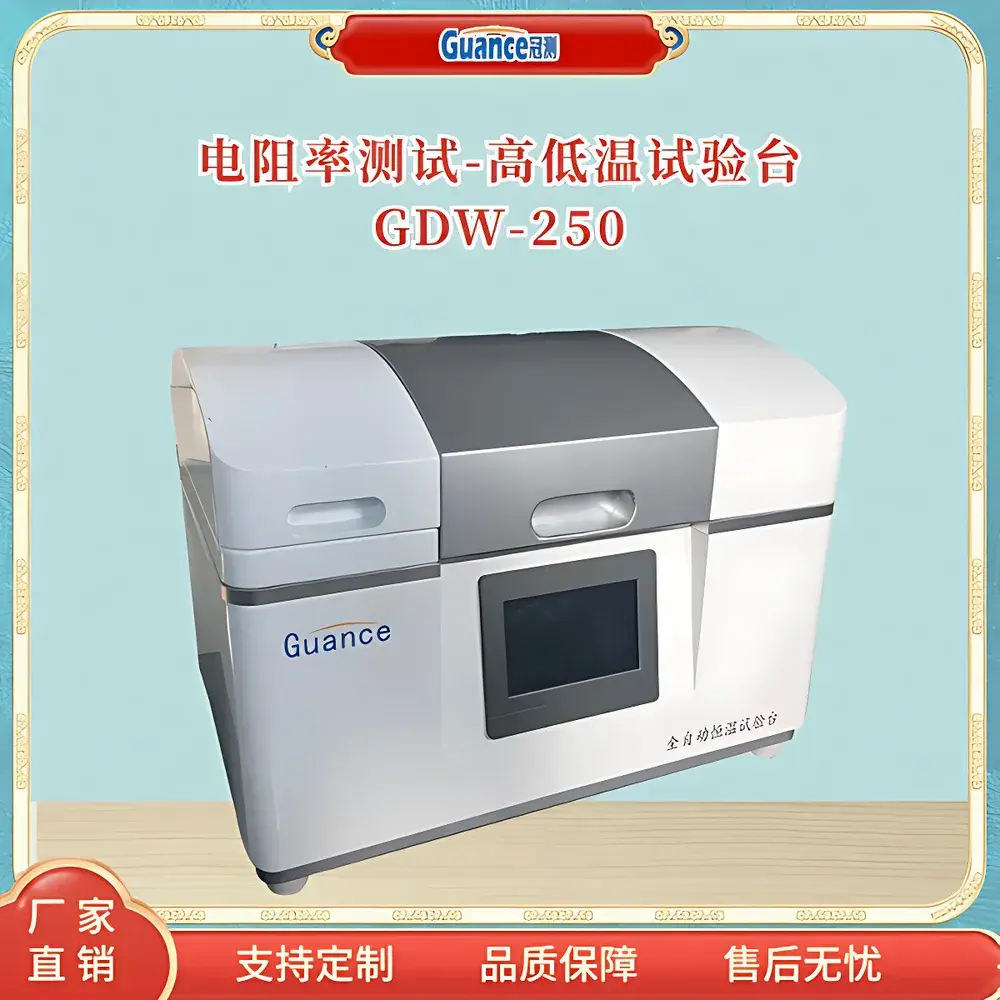
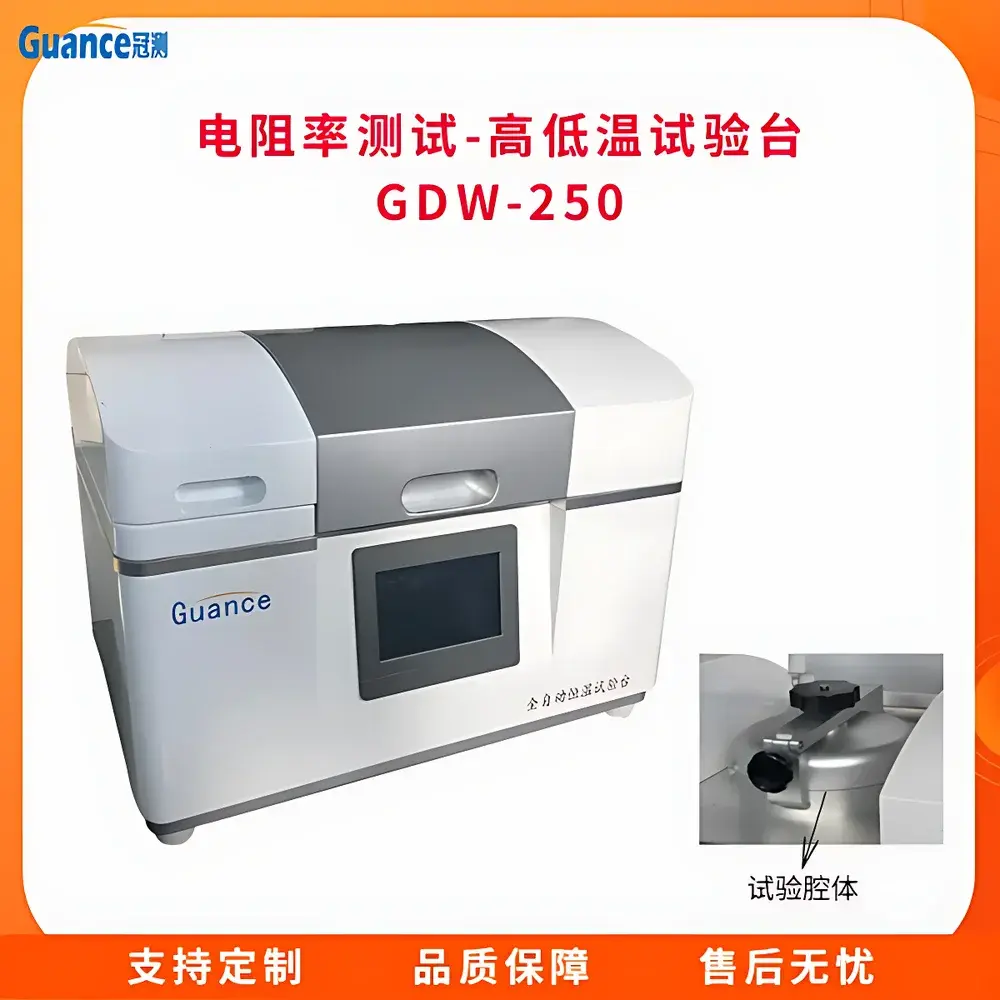
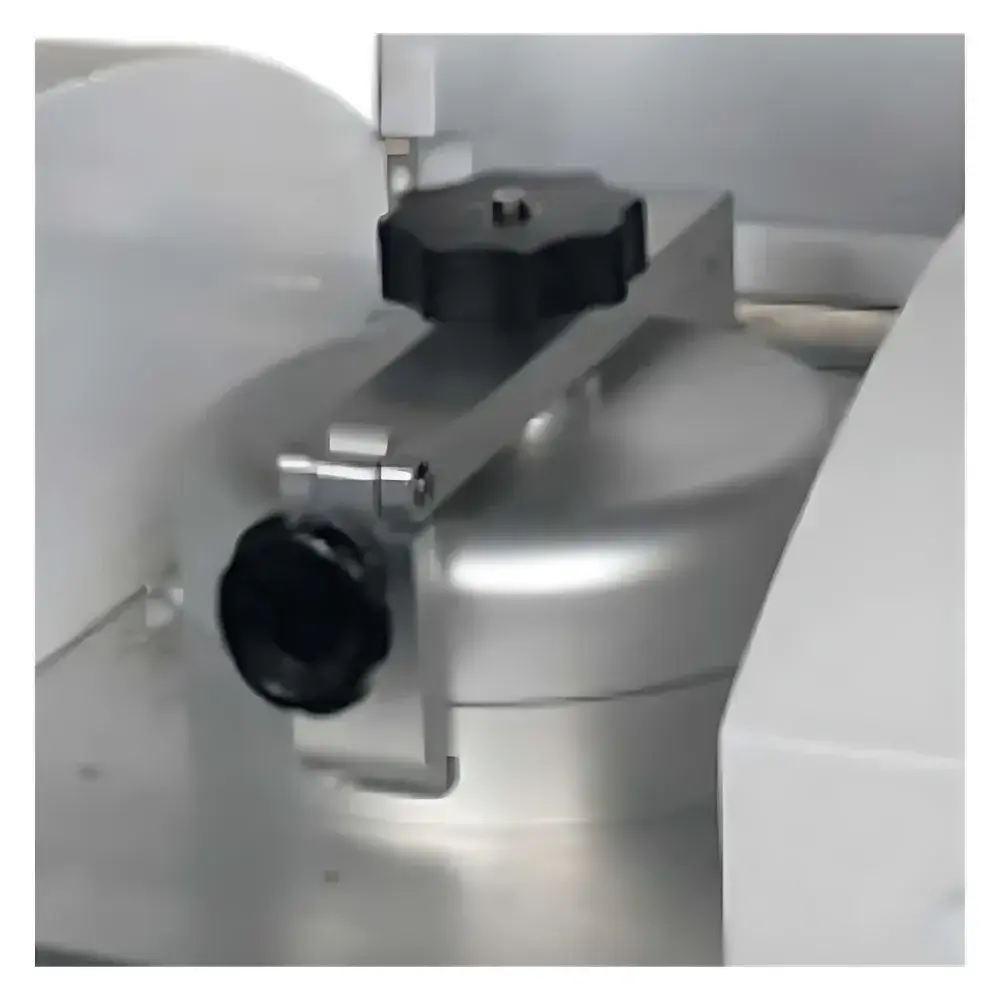
GuanCe GDW-250 Temperature-Controlled Dielectric Test Platform
| Brand | GuanCe Instruments |
|---|---|
| Origin | Beijing, China |
| Manufacturer Type | Authorized Distributor |
| Country of Origin | China |
| Model | GDW-250 |
| Price | USD 410 (converted from ¥2888 at 1 USD = ¥7.03) |
| Chamber Dimensions | 600 mm (L) × 400 mm (W) × 400 mm (H) |
| Construction | Powder-coated sheet metal enclosure |
| Temperature Range | –40 °C to +150 °C (typical operational envelope for dielectric testing) |
| Heating Rate Control | Programmable (0.1–5 °C/min) |
| Power Supply | Single-phase 220 V AC, 50 Hz |
| Ambient Requirements | ≤50% RH, 22–27 °C stable lab environment |
| Compressed Air Supply | 0.5 MPa clean dry air |
| Positive-Pressure Purge Air | 0.05 MPa explosion-proof inert or filtered air |
Overview
The GuanCe GDW-250 Temperature-Controlled Dielectric Test Platform is a precision-engineered environmental test chamber designed to support standardized dielectric property measurements—including dielectric constant (ε′), dissipation factor (tan δ), volume resistivity, and surface resistivity—under tightly regulated thermal conditions. It operates on the principle of controlled thermal equilibration: integrated Peltier-based heating/cooling modules and high-stability PID temperature controllers maintain uniform chamber temperature within ±0.5 °C across the full operational range (–40 °C to +150 °C), enabling repeatable material characterization per ASTM D150, IEC 60250, and ISO 60243. Unlike generic environmental chambers, the GDW-250 features electrical feedthroughs rated for up to 1 kV DC/AC, EMI-shielded internal wiring, and grounding provisions compliant with IEC 61000-4-5 surge immunity requirements—ensuring signal integrity during high-impedance impedance spectroscopy or resistivity measurements.
Key Features
- Modular electrode interface system supporting standardized ASTM D257-compliant guarded electrodes (e.g., 50 mm diameter disc, 25 mm guard ring) with quick-mount fixtures for rapid configuration changes.
- Programmable ramp-and-soak thermal profiles via embedded controller; heating rate adjustable from 0.1 to 5 °C/min with real-time deviation logging.
- Dual-pressure air management: independent supply lines for clean compressed air (0.5 MPa) for sample handling and low-pressure positive-purge air (0.05 MPa) to prevent moisture ingress and enable Class II hazardous area operation.
- EMI-optimized chamber architecture with copper-clad gasketed access doors and RF-tight feedthroughs for integration with LCR meters, impedance analyzers (e.g., Keysight E4990A), or high-resistance meters (e.g., Keithley 6517B).
- Integrated temperature calibration port for NIST-traceable Pt100 sensor verification; optional external reference probe input for cross-validation against primary standards.
Sample Compatibility & Compliance
The GDW-250 accommodates solid dielectric specimens up to 100 mm × 100 mm × 25 mm (L×W×T), including polymer films, ceramic substrates, composite laminates, and elastomeric insulators. Its interior geometry and airflow design meet ISO 291 conditioning requirements for preconditioning prior to dielectric testing. The platform supports compliance workflows aligned with GLP and GMP environments: all thermal setpoints, dwell times, and measured chamber temperatures are time-stamped and stored with audit-trail capability. While the GDW-250 itself is not CE-marked as a standalone medical device, its mechanical and electrical architecture conforms to EN 61010-1 safety standards for laboratory equipment, and its purge-air interface meets ATEX Zone 2/IECEx requirements when used with certified external air sources.
Software & Data Management
The embedded control software provides synchronized acquisition of temperature and electrical parameters via RS-232/USB interfaces. Users configure test protocols—including voltage level selection (10 V to 1000 V DC/AC), electrode geometry definition (diameter, guard gap), and data sampling interval (1 s to 600 s). Real-time dual-axis plotting displays resistivity (log Ω·cm) versus temperature (°C) and dielectric loss tangent versus frequency (when paired with external impedance analyzers). All datasets export in CSV and XLSX formats; report generation includes automatic insertion of test date, operator ID, calibration status, and environmental log summary. Audit-ready metadata—such as firmware version, sensor calibration dates, and user login timestamps—is retained for FDA 21 CFR Part 11–compliant validation (when deployed with validated third-party LIMS integration).
Applications
- Temperature-dependent permittivity mapping of high-k gate dielectrics (e.g., HfO₂, Al₂O₃) for semiconductor process development.
- Volume resistivity stability assessment of aerospace-grade polyimide films under thermal cycling (–55 °C ↔ +125 °C).
- Dielectric breakdown strength evaluation of transformer insulation paper across humidity-controlled thermal ramps.
- Quality control screening of batch-manufactured PTFE spacers for RF coaxial connectors, verifying ε′ consistency within ±0.02 over –25 °C to +85 °C.
- Research into thermally activated conduction mechanisms in polymer electrolytes for solid-state battery applications.
FAQ
What temperature accuracy and uniformity does the GDW-250 achieve during dielectric testing?
The chamber maintains ±0.5 °C temperature accuracy (verified with traceable Pt100 probe) and ±1.0 °C spatial uniformity across the central 75% of the test volume per IEC 60068-3-5.
Can the GDW-250 be integrated with third-party impedance analyzers or LCR meters?
Yes—via standard BNC feedthroughs and isolated analog/digital I/O ports; compatibility confirmed with Keysight, Hioki, and Wayne Kerr instrumentation using provided pinout documentation.
Is the system suitable for long-duration thermal aging studies (e.g., 1000-hour tests)?
It supports continuous unattended operation up to 30 days with automated power-fail recovery and thermal drift compensation algorithms.
Does the platform include factory calibration documentation?
Each unit ships with a Certificate of Conformance and NIST-traceable temperature calibration report valid for 12 months from shipment date.
What maintenance is required to sustain measurement integrity?
Quarterly inspection of door gaskets, annual verification of pressure regulators and purge flow rates, and biannual recalibration of internal temperature sensors using external reference standards.



