

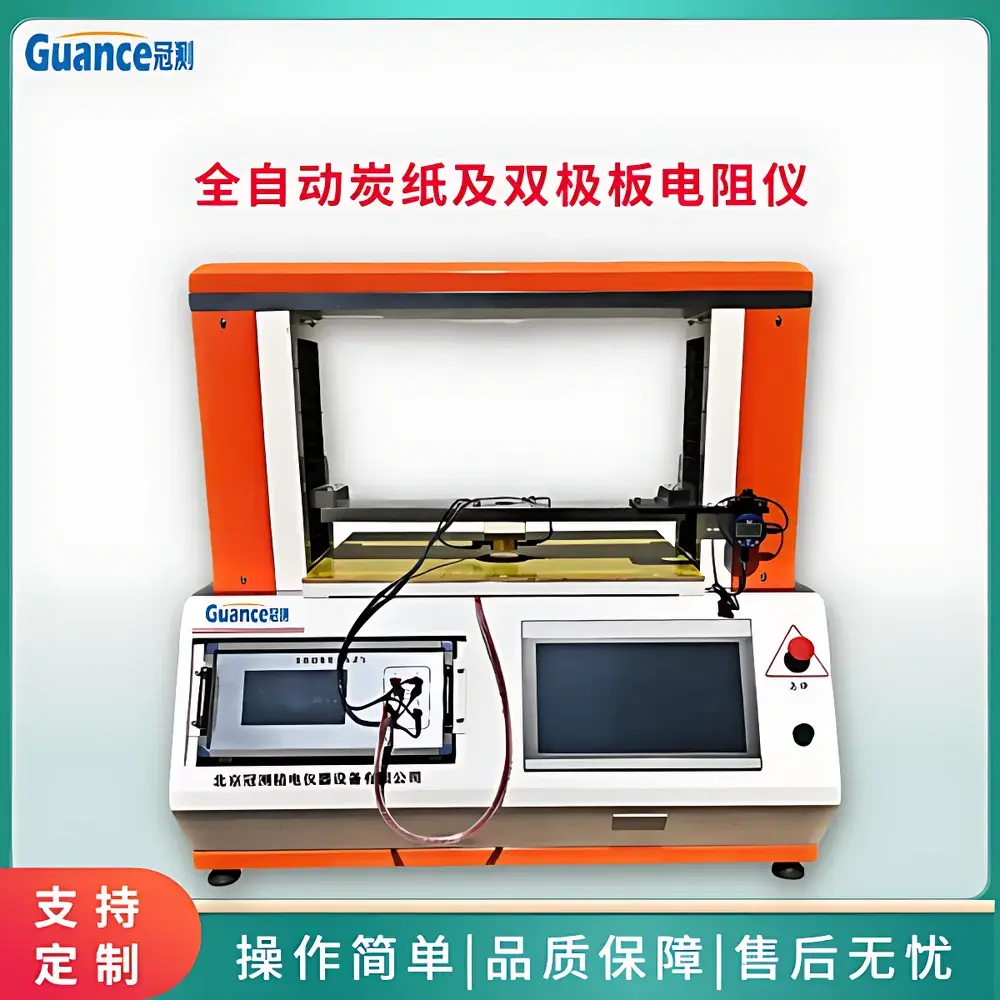
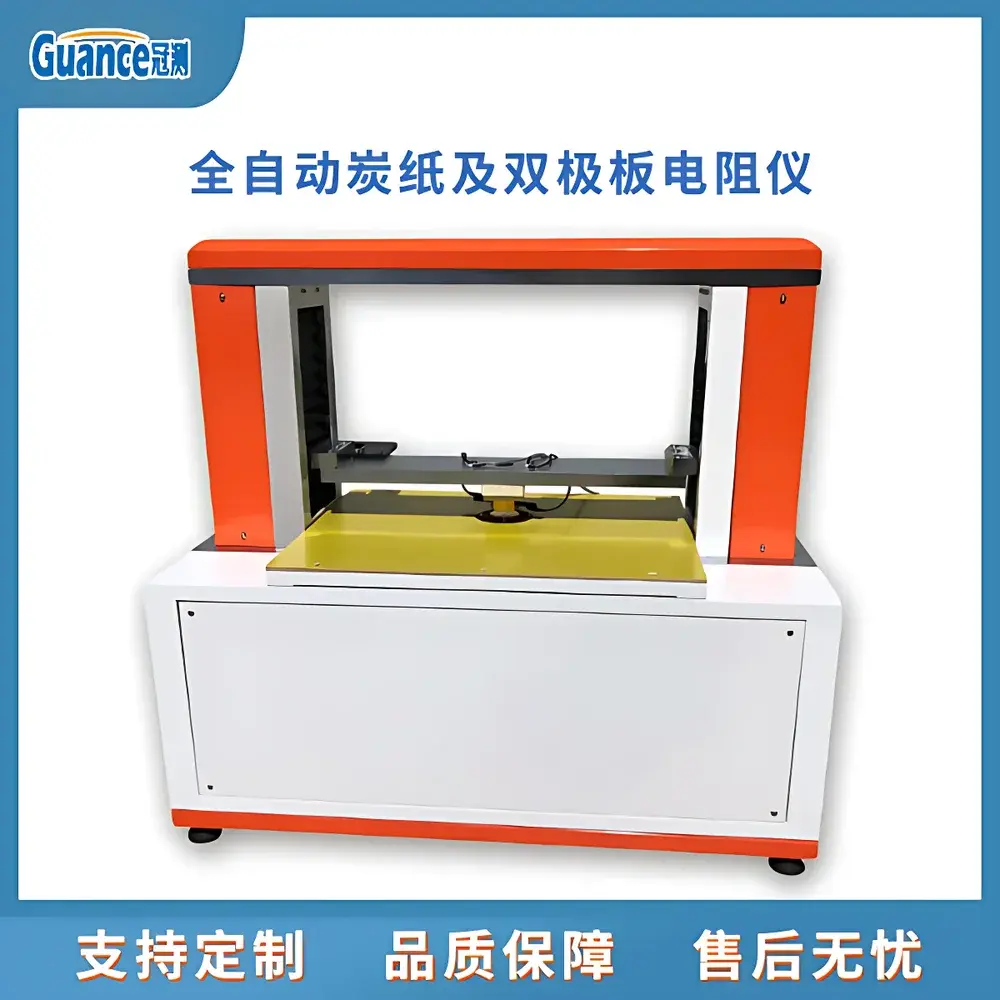
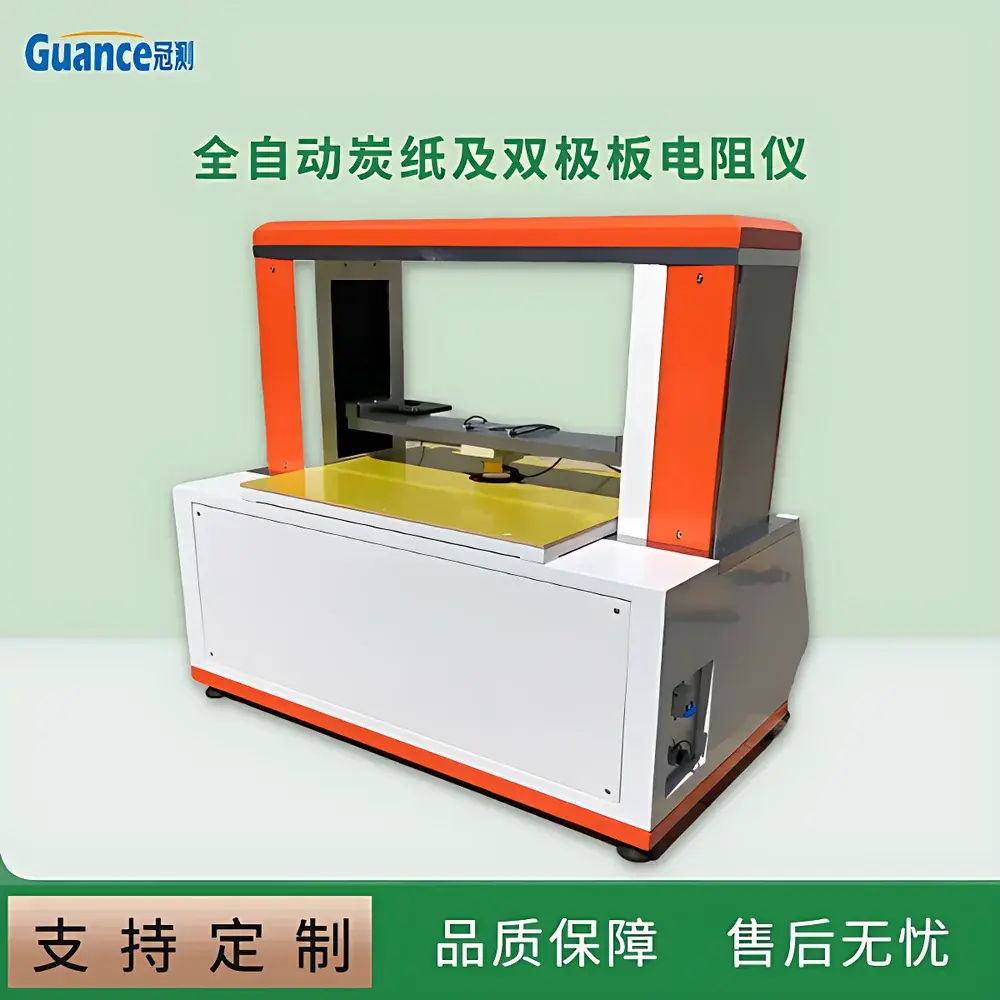
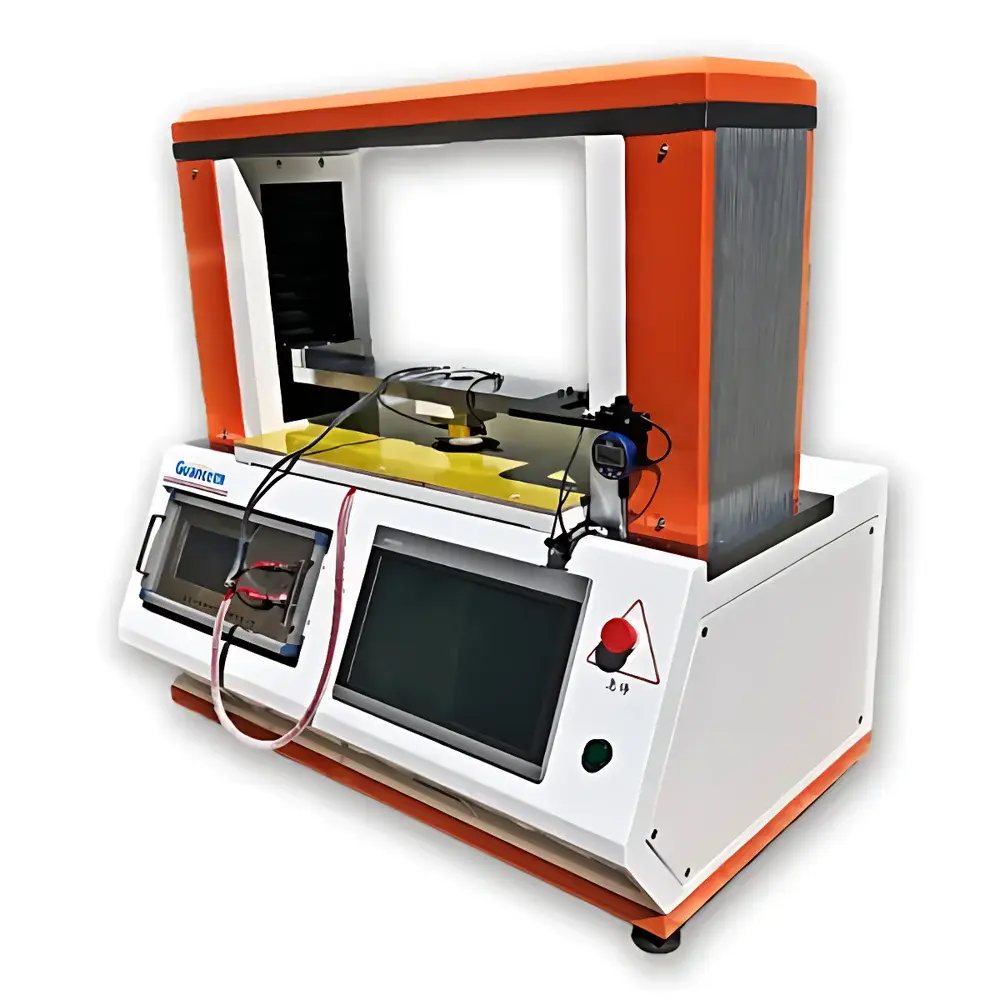
GuanCe GEST-20042 Dual-Plate Capacitive Moisture & In-Plane/Through-Plane Resistivity Tester for PEMFC Gas Diffusion Layers and Bipolar Plates
| Brand | GuanCe Instruments |
|---|---|
| Origin | Beijing, China |
| Manufacturer Type | Authorized Distributor |
| Origin Category | Domestic (China) |
| Model | GEST-20042 |
| Price | USD 1,400 (FOB Beijing) |
Overview
The GuanCe GEST-20042 is a dedicated dual-mode resistivity measurement system engineered for the physical characterization of gas diffusion layers (GDLs), carbon paper, and graphite/composite bipolar plates used in proton exchange membrane fuel cells (PEMFCs). Unlike conventional surface resistivity testers, this instrument implements a dual-electrode architecture—comprising precision-machined, 50 mm diameter gold-plated parallel plates—to simultaneously support both through-plane (vertical) resistivity measurement (2-probe configuration under controlled compressive load) and in-plane (horizontal) resistivity measurement (4-probe collinear array). The system operates on the principle of low-frequency capacitive impedance analysis combined with direct current (DC) four-terminal sensing, enabling high-reproducibility quantification of bulk electrical resistance while minimizing contact resistance artifacts. Designed in strict compliance with GB/T 20042.6–2011 and GB/T 20042.7–2014—the Chinese national standards aligned with ISO 14687 and ASTM D257 for fuel cell component testing—the GEST-20042 delivers traceable, GLP-compatible data for R&D labs, QC departments, and stack manufacturing facilities requiring IEC 62282-2–conformant validation of interfacial conductivity and compression-dependent conduction behavior.
Key Features
- Motor-driven servo loading system with closed-loop force control (range: 0–5,000 N, resolution: ±0.5 N), enabling programmable constant-force, constant-pressure, gradient-force, or strain-controlled compression profiles
- Dual-mode measurement capability: Through-plane resistivity (2-probe, pressure-dependent) and in-plane resistivity (4-probe, collinear array; probe spacing: 1.0 mm, pitch tolerance: ±2 µm)
- Integrated 10-inch industrial-grade touchscreen HMI with real-time visualization of 9 concurrent parameters: applied load (N), calculated pressure (MPa), sample thickness (µm), compression ratio (%), voltage (mV), current (µA), resistance (Ω), volume resistivity (Ω·cm), and conductivity (S/cm)
- Gold-plated brass electrodes (Ø50 mm, Ra < 0.05 µm) with low-contact-resistance interface design, certified per ASTM B488 Grade A coating specification
- Configurable unit output: resistivity values displayed in Ω·cm, Ω·m, or kΩ·mm; conductivity in S/m, mS/cm, or % IACS
- Automated multi-step gradient testing: up to 12 user-defined compression levels with auto-calculation of ΔR (%) and dR/dP (Ω/MPa) between adjacent steps
Sample Compatibility & Compliance
The GEST-20042 accommodates standard PEMFC component geometries: carbon paper (thickness 120–350 µm), microporous layer (MPL)-coated GDLs, and molded graphite or stainless-steel bipolar plates (up to 3 mm thick, max. 100 × 100 mm footprint). Sample clamping is fully enclosed within a grounded Faraday cage to suppress electromagnetic interference during low-current (<100 µA) measurements. All test protocols align with the metrological requirements of GB/T 20042.6–2011 (bipolar plate electrical resistance) and GB/T 20042.7–2014 (carbon paper through-plane/in-plane resistivity), which reference ISO 14687 Annex C and IEC 62282-2 Clause 7.3. Data integrity meets GLP audit criteria, with timestamped raw records stored in CSV/Excel format—including operator ID, environmental temperature/humidity (optional external sensor input), and calibration certificate traceability.
Software & Data Management
Firmware v3.2 supports local data logging (internal 16 GB eMMC), USB export, and optional Ethernet/Wi-Fi connectivity for remote monitoring via browser-based dashboard. Test sequences are saved as reusable .cfg files with embedded metadata (standard, test type, electrode mode, safety limits). Each exported dataset includes full audit trail: parameter setpoints, real-time acquisition timestamps (ms resolution), raw ADC counts, and post-processed resistivity values with uncertainty estimation based on 4-point calibration curves. Optional FDA 21 CFR Part 11-compliant software module available (separate license), providing electronic signatures, role-based access control, and immutable audit logs compliant with GMP Annex 11.
Applications
- Quantifying compression-induced resistivity hysteresis in carbon paper during dynamic stack assembly simulation
- Evaluating interfacial contact resistance (ICR) evolution across bipolar plate–GDL interfaces under thermal cycling
- Screening hydrophobicity effects on in-plane conduction pathways via controlled humidity exposure (when paired with environmental chamber)
- Validating anisotropic conduction behavior in coated vs. uncoated GDL substrates
- Supporting DOE targets for total area-specific resistance (ASR) decomposition in next-generation PEMFC stacks
FAQ
Does the GEST-20042 comply with international fuel cell testing standards beyond GB/T?
Yes—it implements measurement methodologies consistent with ISO 14687:2016 Annex C (electrical resistance of bipolar plates) and IEC 62282-2:2018 Clause 7.3 (GDL resistivity), with traceable calibration against NIST-traceable resistance standards.
Can the system measure samples with non-uniform thickness or surface curvature?
The dual-plate design requires flat, parallel surfaces; samples exhibiting >±5 µm deviation across the 50 mm electrode area must be pre-conditioned via lapping or mounted with compliant thermal interface material to ensure uniform contact pressure distribution.
Is firmware upgrade supported over-the-air?
Yes—via secure HTTPS-based OTA update protocol; version history and changelogs are digitally signed and verified prior to installation.
What is the minimum measurable resistivity in through-plane mode?
With optimized signal averaging (16-sample median filter), the system achieves stable resolution down to 0.1 mΩ·cm for highly conductive graphite plates (typical range: 0.05–500 mΩ·cm).
Are calibration certificates provided with shipment?
Each unit ships with a factory calibration report (ISO/IEC 17025-accredited third-party lab optional), covering force transducer linearity (±0.25% FS), electrode parallelism (≤2 arcsec), and resistance measurement accuracy (±0.5% of reading, 100 mΩ–10 MΩ range).



