
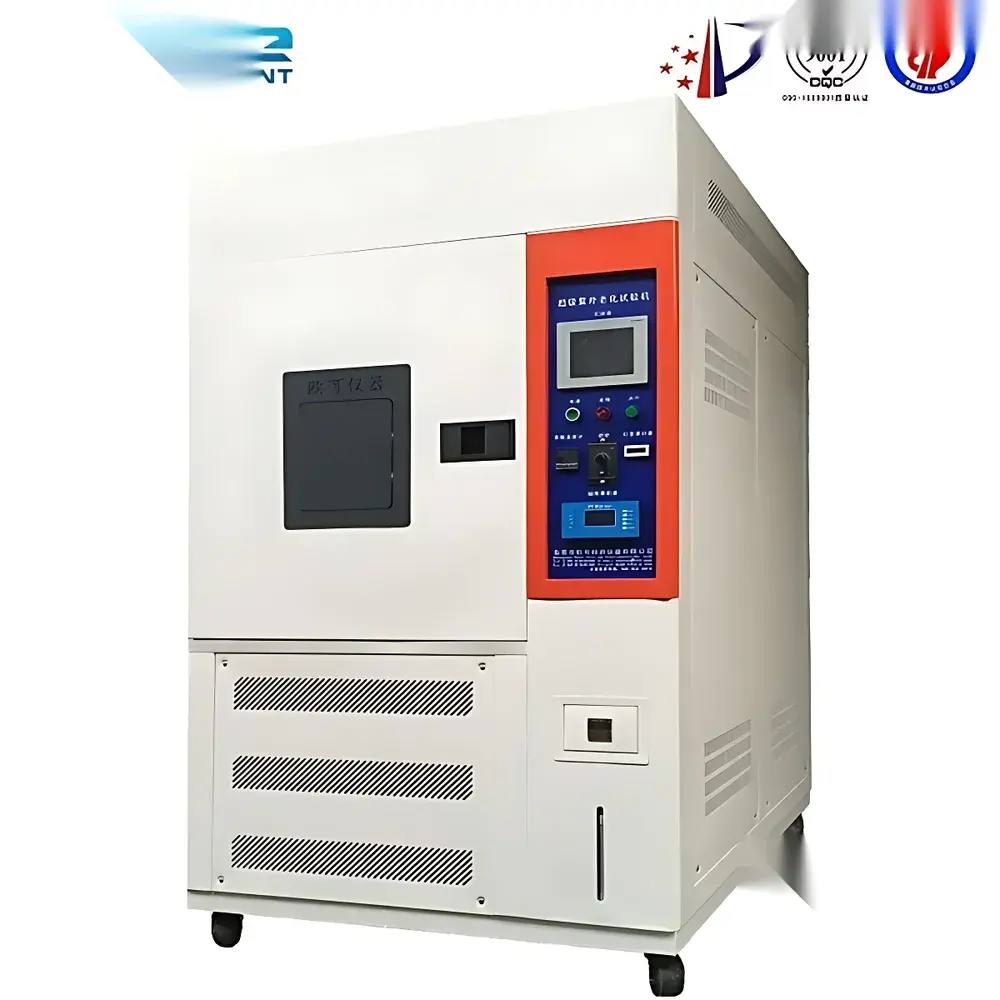
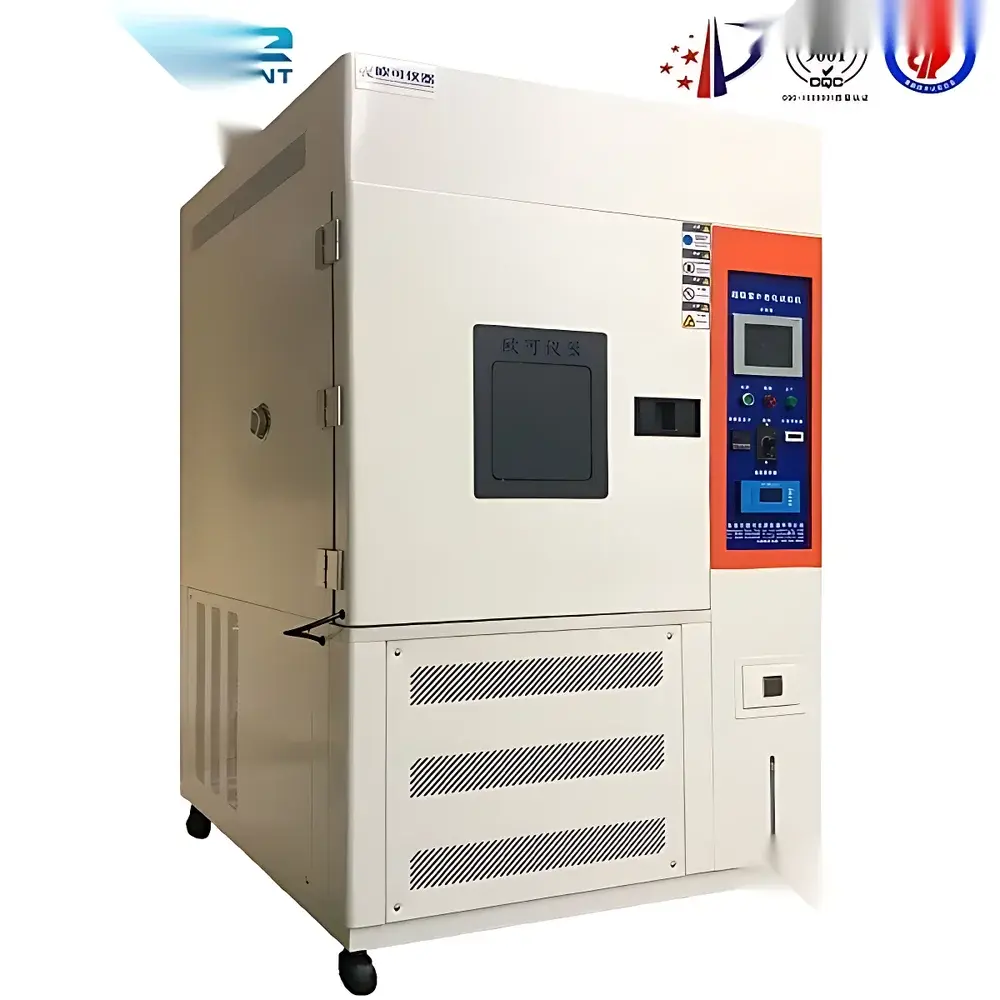
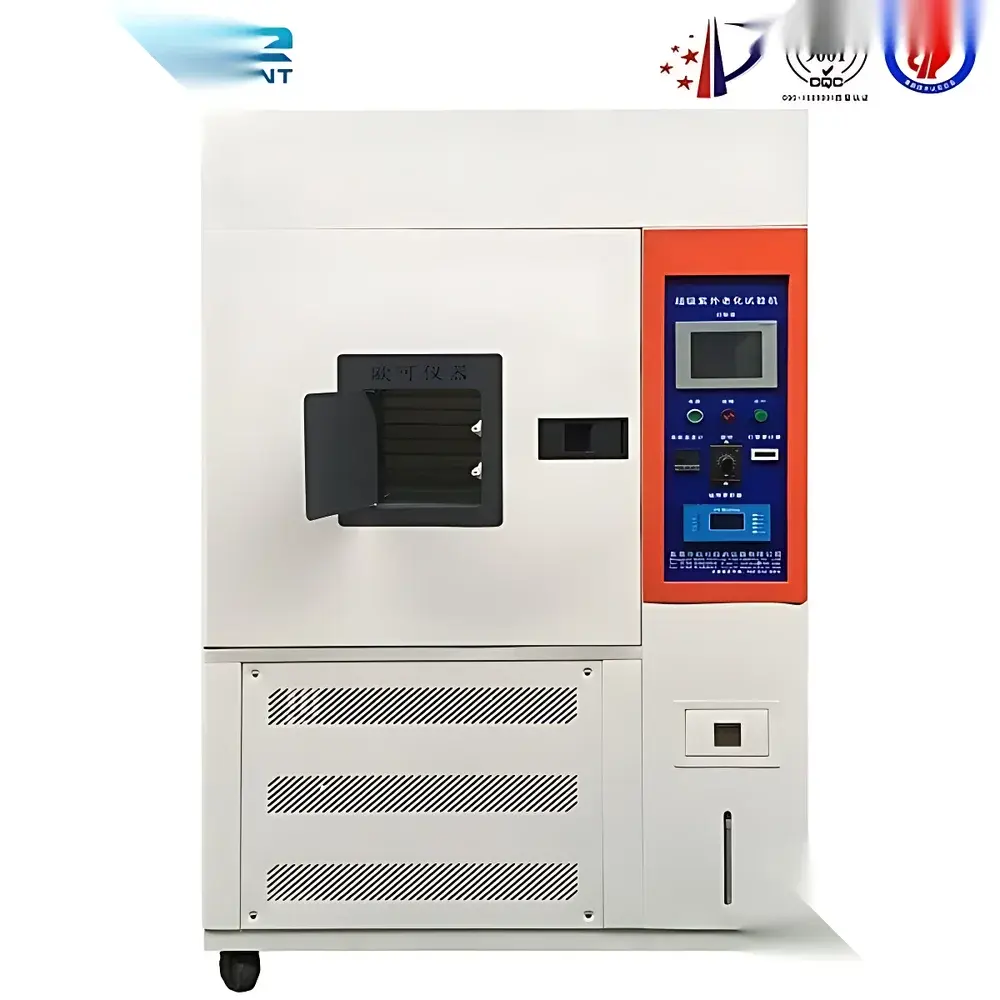
Metal Halide UV Accelerated Weathering Test Chamber
| Brand | Other Brands |
|---|---|
| Origin | Imported |
| Manufacturer Type | Authorized Distributor |
| Temperature Range | RT to 85 °C (Operating Range: 50 ±10 °C) |
| Humidity Range | 40–70 % RH (Illumination), 50–90 % RH (Dark Cycle) |
| Temperature Control Accuracy | ±0.5 °C |
| Humidity Control Accuracy | ±2.0 % RH |
| Temperature Uniformity | ±2.0 °C |
| Humidity Uniformity | ±3.0 % RH |
| Heating Rate | ≤25 min (RT → 85 °C) |
| Light Source | 2.5 kW Air-Cooled Metal Halide Lamp (1 unit) |
| Irradiance Spectrum | 295–450 nm |
| Spectral Match | Equivalent to terrestrial solar radiation filtered through 3 mm borosilicate glass |
| Illumination Uniformity | ≥90 % across specimen plane |
| Sample Tray Dimensions | 500 × 400 mm |
| Illumination Geometry | Top-mounted lamp with reflective direct irradiation |
Overview
The Metal Halide UV Accelerated Weathering Test Chamber is an engineered environmental simulation system designed to replicate the photochemical, thermal, and hygrothermal stresses experienced by materials during long-term outdoor exposure. Unlike fluorescent UV lamps that emit narrow-band ultraviolet radiation, this chamber employs high-intensity air-cooled metal halide lamps—spectrally optimized to deliver a continuous irradiance profile spanning 295–450 nm. This spectral range closely matches the terrestrial solar spectrum after atmospheric filtration and transmission through standard 3 mm borosilicate glass, making it particularly suitable for evaluating degradation mechanisms governed by both UV-driven photo-oxidation and visible-light-mediated processes. The chamber integrates precise temperature and humidity control with programmable irradiation cycles, enabling accelerated assessment of surface deterioration—including color fading, gloss loss, chalking, cracking, delamination, embrittlement, and tensile strength reduction—within days or weeks instead of months or years under natural conditions. Its design adheres to fundamental principles of accelerated testing: reproducible radiant exposure, controlled thermal loading, and cyclic moisture conditioning aligned with ASTM G154, ISO 4892-2, and IEC 60068-2-5 standards.
Key Features
- High-fidelity spectral output: Single 2.5 kW metal halide lamp delivers broadband UV–visible irradiance (295–450 nm), calibrated to match filtered solar irradiance at specimen plane
- Precise environmental control: Dual-channel PID regulation maintains temperature within ±0.5 °C and relative humidity within ±2.0 % RH across defined operating ranges
- Uniform exposure field: Reflective top-mount illumination geometry ensures ≥90 % irradiance uniformity over the 500 × 400 mm sample tray area
- Programmable test profiles: Independent control of light/dark cycles, temperature ramps, and humidity phases supports multi-stage weathering protocols
- Robust thermal architecture: Rapid heating capability (≤25 min from RT to 85 °C) combined with stable thermal uniformity (±2.0 °C)
- Compliance-ready construction: Chamber enclosure, sensor placement, and calibration traceability support validation per GLP and ISO/IEC 17025 requirements
Sample Compatibility & Compliance
The chamber accommodates flat-panel specimens up to 500 × 400 mm and 25 mm thickness, including polymer films, coated metals, architectural finishes, automotive trim, and composite laminates. It is routinely deployed in R&D laboratories and quality assurance departments for conformance testing against ASTM D4329 (plastics), ASTM D4587 (coatings), ISO 11341 (paints and varnishes), and SAE J2020 (automotive exterior materials). All control algorithms and data logging functions are structured to support audit trails required under FDA 21 CFR Part 11 when integrated with compliant software platforms. Humidity and temperature sensors are NIST-traceable; irradiance monitoring—when equipped with optional radiometric calibration kits—meets ISO 17025 calibration hierarchy requirements.
Software & Data Management
The system operates via embedded microcontroller-based firmware with RS-485 or Ethernet interface for integration into centralized lab management systems. Standard operation includes real-time display of chamber setpoints, actual values, elapsed time, and lamp operational hours. Optional PC-based software provides full protocol scripting, automated data export (CSV/Excel), alarm history with timestamped event logs, and configurable pass/fail thresholds for critical parameters. Audit trail functionality records all user-initiated changes—including parameter modifications, cycle starts/stops, and calibration events—with operator ID and timestamp. Data files are stored in non-proprietary formats to ensure long-term accessibility and interoperability with LIMS or ELN platforms.
Applications
This chamber serves as a primary tool for predictive durability assessment in sectors where long-term outdoor performance is mission-critical: aerospace component coatings, photovoltaic encapsulant stability, automotive clearcoat resistance to UV-induced yellowing, marine-grade polymer weatherability, and packaging film barrier integrity under sunlight exposure. It is especially valuable for comparative ranking of formulation variants, verification of supplier material specifications, and root-cause analysis of field failures linked to photochemical degradation pathways. Its spectral fidelity enables correlation studies between accelerated test results and real-world service life—particularly when combined with post-test analytical methods such as FTIR, XPS, or mechanical tensile testing.
FAQ
What spectral standard does the metal halide lamp emulate?
It replicates the global solar spectral irradiance filtered through 3 mm borosilicate glass, covering 295–450 nm with energy distribution matching ASTM G155 and ISO 4892-2 reference spectra.
Can the chamber perform condensation-only or water-spray cycles?
Yes—humidity control is fully decoupled from irradiation, enabling dark-cycle condensation, intermittent spray, or combined UV/humidity stress sequences per ISO 4892-2 Annex A.
Is radiometric calibration supported?
Optional NIST-traceable UV radiometers and spectral irradiance mapping kits are available for periodic verification of irradiance uniformity and spectral power distribution.
What safety features prevent uncontrolled lamp operation?
Integrated thermal cutoffs, lamp current monitoring, door interlock switches, and automatic lamp shutdown on sensor fault or overtemperature event ensure Class I electrical safety compliance.
How is temperature uniformity validated?
Per ISO 16750-4 and ASTM E2709, uniformity is verified using ≥9-point thermocouple mapping across the specimen plane during steady-state operation at 50 °C and 70 °C.



