
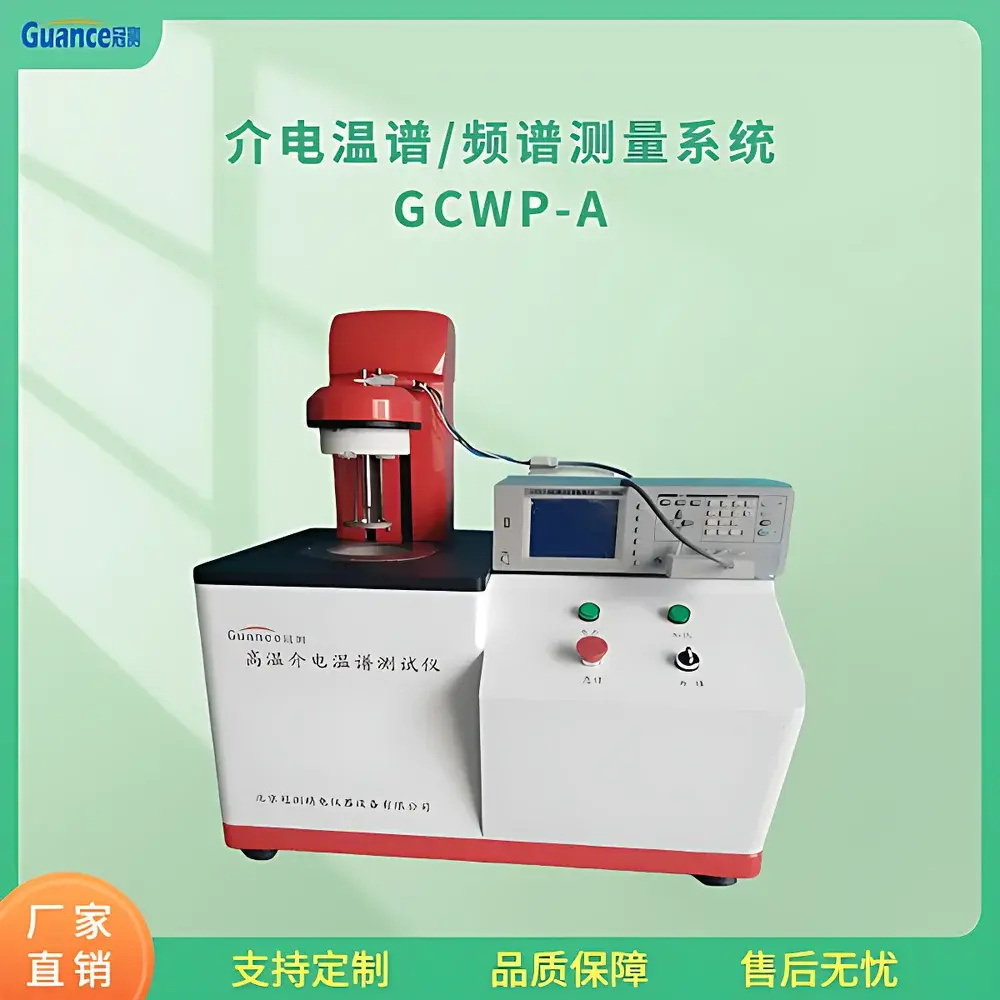
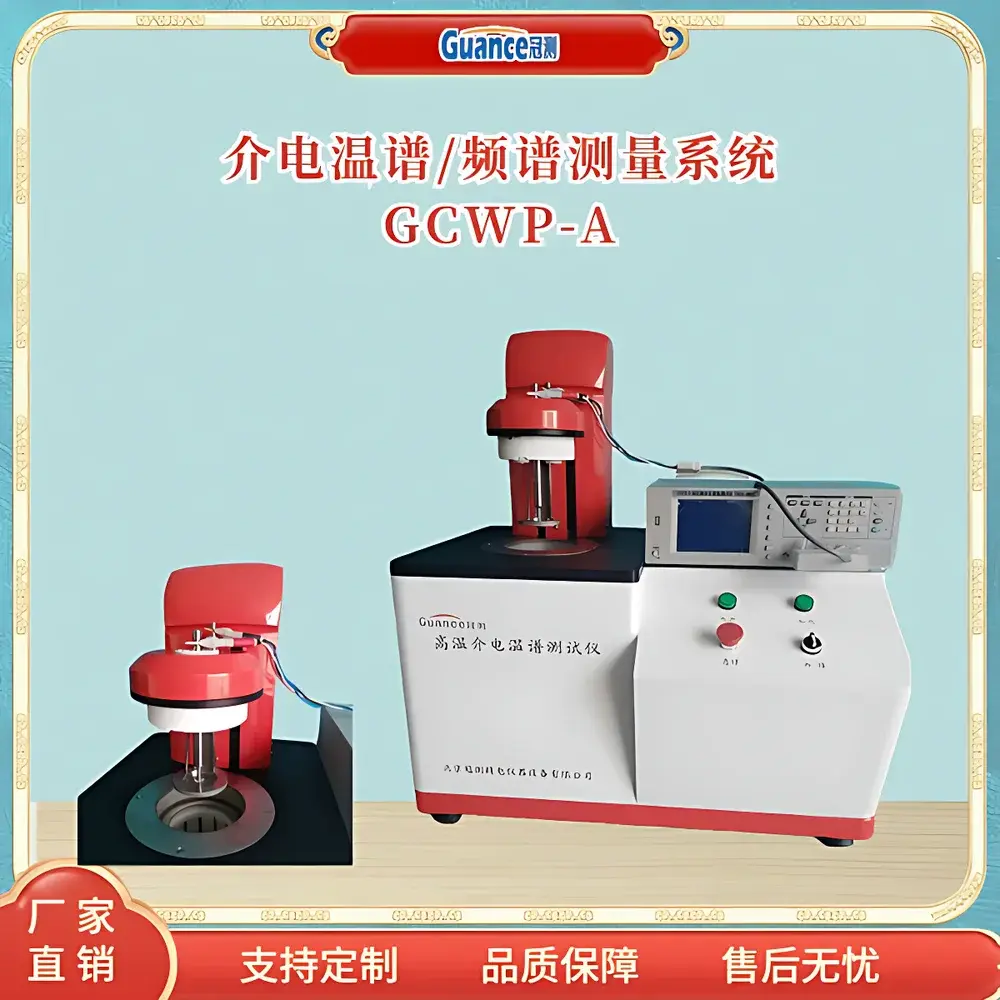
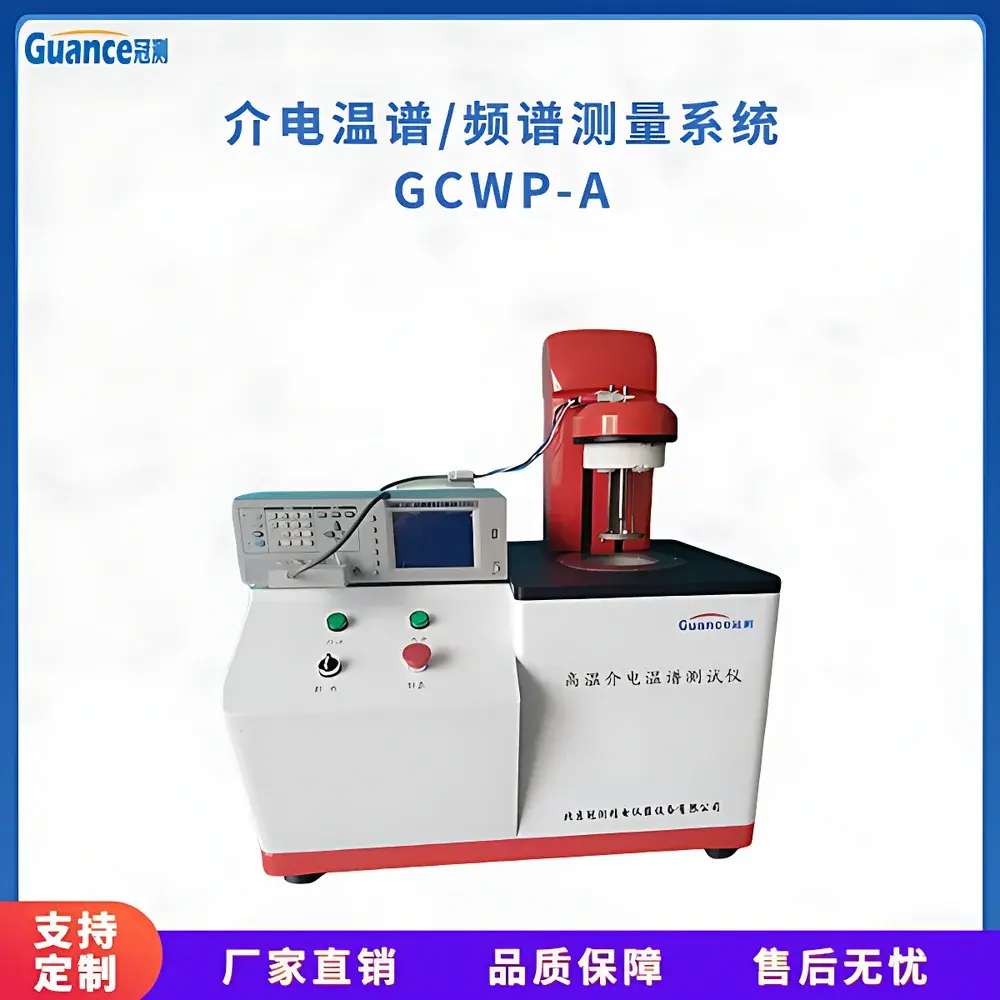
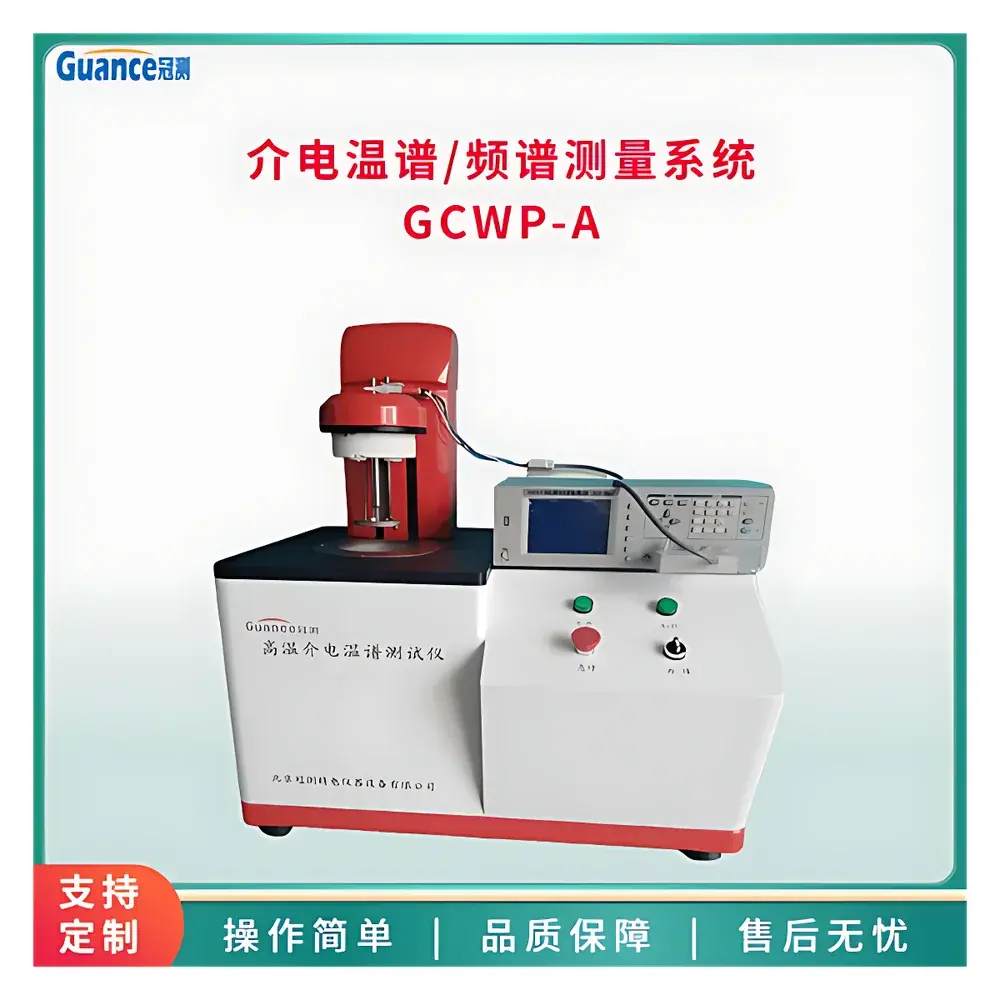
GuanCe Instruments GCWP-A2 Broadband Dielectric Spectrometer
| Brand | GuanCe Instruments |
|---|---|
| Origin | Beijing, China |
| Manufacturer Type | Authorized Distributor |
| Country of Origin | China |
| Model | GCWP-A2 |
| Frequency Range | 100 Hz – 10 MHz (as defined by integrated Agilent 4294A impedance analyzer) |
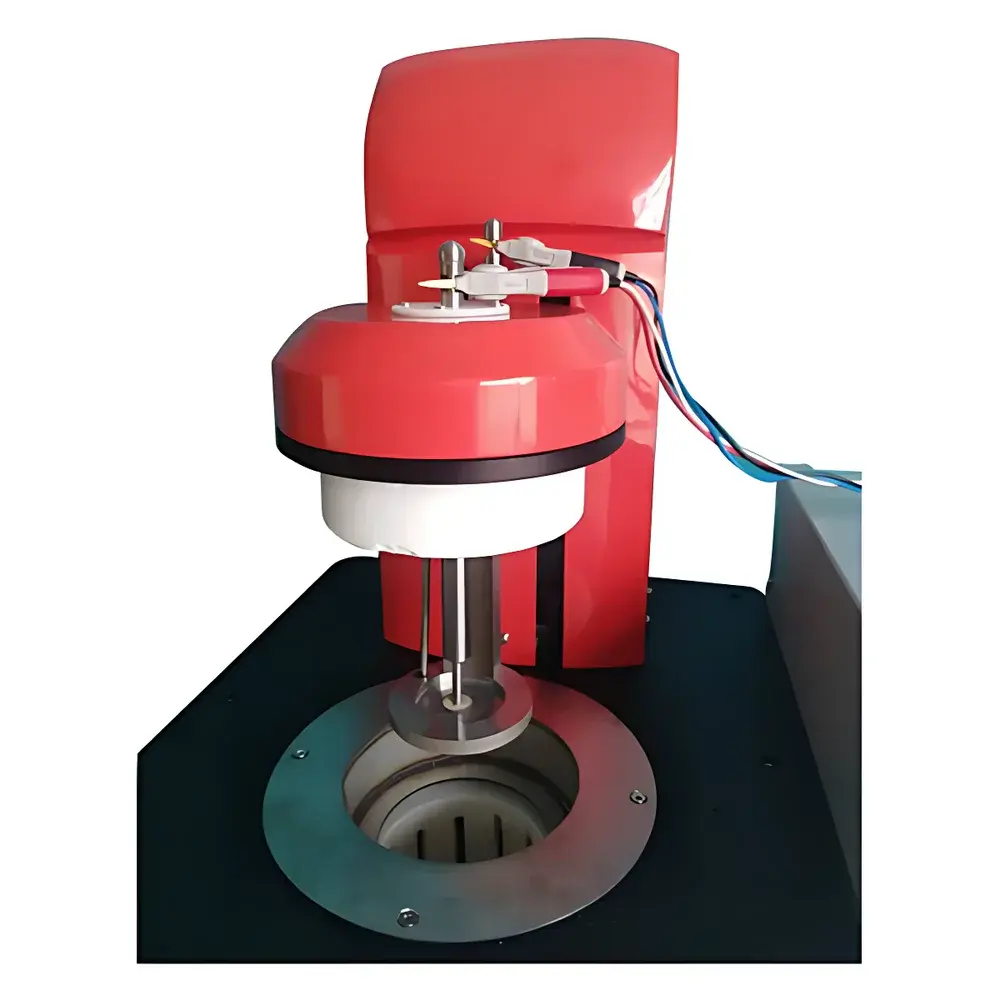
| Electrode Configuration | Four-channel coaxial shielded electrodes (6 mm diameter) |
| Temperature Range | −180 °C to +500 °C |
| Heating Rate | 0.5–2.5 °C/min |
| Input Power | AC 220 V, 50 Hz, 2 kW |
| Shielding | Inner sleeve — AISI 304 stainless steel |
| Data Interface | Silver-plated copper low-temperature shielded cables |
| Enclosure | Q235 carbon steel chassis with high-temp epoxy powder coating |
| Compliance | Designed for ASTM D150, IEC 60250, and ISO 257-3 environments |
| Data Output | Raw time-domain/frequency-domain datasets, Lissajous plots, Cole-Cole diagrams, ε′/ε″ vs. frequency & temperature, printable test reports per GLP-compliant template |
Overview
The GuanCe Instruments GCWP-A2 Broadband Dielectric Spectrometer is an engineered platform for high-precision, temperature-resolved dielectric property characterization across a wide spectral range. It operates on the principle of broadband impedance spectroscopy, utilizing a calibrated Agilent 4294A precision impedance analyzer as its core measurement engine. The system implements four independent, thermally stabilized coaxial electrode channels—each with a 6 mm active diameter—to enable parallel acquisition of complex permittivity (ε* = ε′ − jε″), loss tangent (tan δ), and conductivity (σ) data from solid, semi-crystalline, or viscous polymer samples under controlled thermal profiles. Its cryogenic-to-high-temperature capability (−180 °C to +500 °C), coupled with programmable heating rates (0.5–2.5 °C/min), supports dynamic studies of glass transitions, dipole relaxation, ion conduction, and interfacial polarization phenomena in advanced materials including battery electrolytes, high-k dielectrics, and aerospace composites.
Key Features
- Four-channel synchronized dielectric measurement architecture—eliminates sequential sample cycling delays and improves throughput for comparative studies.
- Electrode system with dual-layer shielding: inner 304 stainless steel cylinder and outer PTFE jacket—minimizes stray capacitance and electromagnetic interference (EMI) up to 10 MHz.
- Integrated cryo-furnace and high-temp chamber with PID-controlled ramp profiling and real-time thermocouple feedback at each electrode site.
- Low-noise silver-plated copper signal cabling with cryogenic-grade shielding—maintains signal integrity below −100 °C and above +300 °C.
- Dual operational modes: manual step-wise testing for method development; fully automated sequence execution with user-defined dwell times, frequency sweeps, and thermal hold points.
- Robust mechanical enclosure fabricated from Q235 structural steel with high-temperature epoxy powder coating—ensures dimensional stability and EMI containment across thermal extremes.
Sample Compatibility & Compliance
The GCWP-A2 accommodates disk-shaped, pelletized, or thin-film specimens (diameter ≤ 6 mm, thickness 0.1–3 mm) compatible with standard dielectric sample holders. It supports non-destructive evaluation of insulating polymers, ceramics, gel electrolytes, and thin-film coatings without requiring metallization. All hardware and software workflows are structured to support compliance with ASTM D150 (dielectric constant and dissipation factor of solid electrical insulating materials), IEC 60250 (measurement of permittivity and dielectric loss of solid electrical insulating materials at power, audio, and radio frequencies), and ISO 257-3 (determination of complex permittivity using impedance analyzers). The system’s data logging architecture includes timestamped metadata (temperature, frequency, voltage bias, electrode ID), satisfying basic GLP traceability requirements for academic and industrial R&D labs.
Software & Data Management
The instrument is operated via Windows-based control software that provides direct integration with the Agilent 4294A analyzer firmware. Users configure multi-step test protocols—including variable-frequency sweeps at fixed temperatures, isofrequency scans across temperature ramps, or custom hybrid sequences. Raw impedance (Z*, θ), admittance (Y*), and derived dielectric parameters are stored in ASCII-compatible .csv format with header metadata. Visualization tools include real-time Bode plots (|Z| & phase vs. f), Nyquist diagrams, Cole-Cole plots (ε″ vs. ε′), and Arrhenius/Williams-Landel-Ferry (WLF) fitting modules. Export functions generate publication-ready figures (PNG, SVG) and standardized PDF test reports with embedded calibration certificates and environmental condition logs.
Applications
- Characterization of polymer chain mobility and segmental relaxation kinetics near Tg, using temperature-dependent ε″ peaks and Vogel-Fulcher-Tammann analysis.
- Evaluation of ionic conductivity activation energy in solid-state battery electrolytes via DC-conductivity extrapolation from low-frequency σ(ω) data.
- Interfacial polarization (Maxwell-Wagner-Sillars) analysis in multiphase composites and nanofilled dielectrics.
- Quality assurance of high-k gate dielectrics (e.g., HfO2, Al2O3) through frequency dispersion mapping and defect-related loss peak identification.
- Thermal stability assessment of aerospace-grade polyimides and ceramic matrix composites under simulated service conditions.
FAQ
What impedance analyzer is integrated into the GCWP-A2 system?
The GCWP-A2 is configured with the Agilent 4294A Precision Impedance Analyzer, providing calibrated measurements from 100 Hz to 10 MHz with ±0.05% basic impedance accuracy.
Can the system perform simultaneous measurements on four different samples?
Yes—the four independently addressable electrode channels allow concurrent acquisition under identical thermal and electrical conditions, enabling statistically robust inter-sample comparison.
Is the temperature control uniform across all four electrode positions?
Each electrode is equipped with a dedicated Type T thermocouple and local thermal mass optimization; temperature uniformity is maintained within ±0.3 °C across the full operating range during steady-state holds.
Does the software support 21 CFR Part 11 compliance?
The base software provides audit-trail-capable user login, electronic signatures, and immutable raw data export—but full 21 CFR Part 11 validation requires optional IQ/OQ documentation packages and third-party system validation services.
What sample preparation guidelines apply for optimal dielectric contact?
Specimens must be flat, parallel, and free of surface contaminants; gold sputtering or evaporated aluminum electrodes are recommended for low-conductivity materials to ensure ohmic contact and minimize electrode polarization artifacts.



