
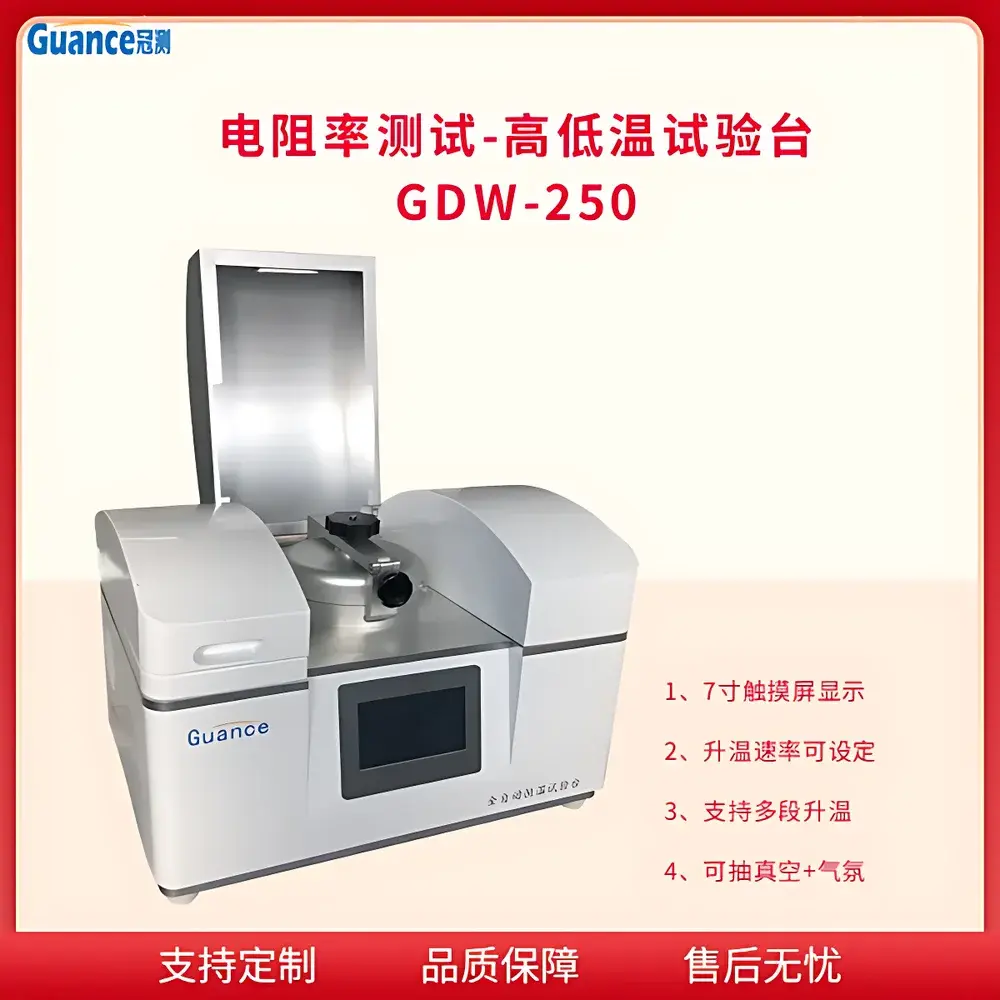
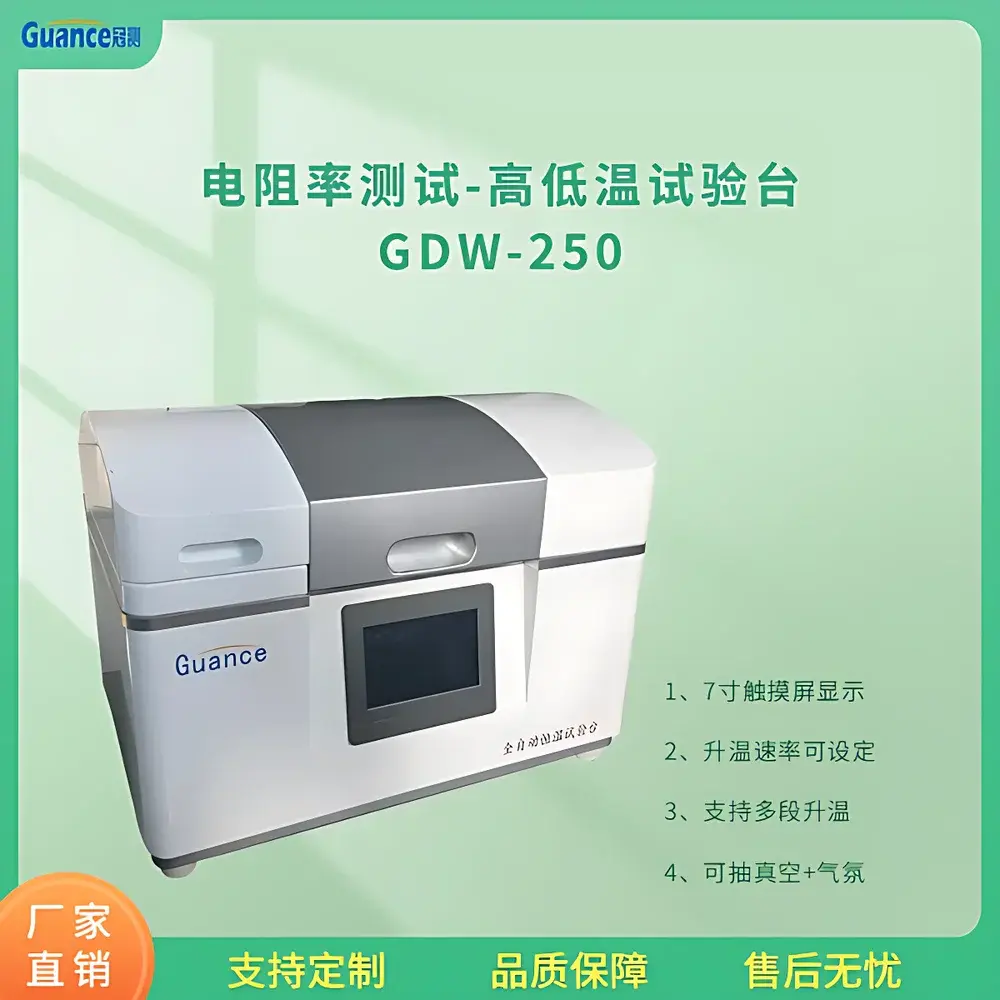
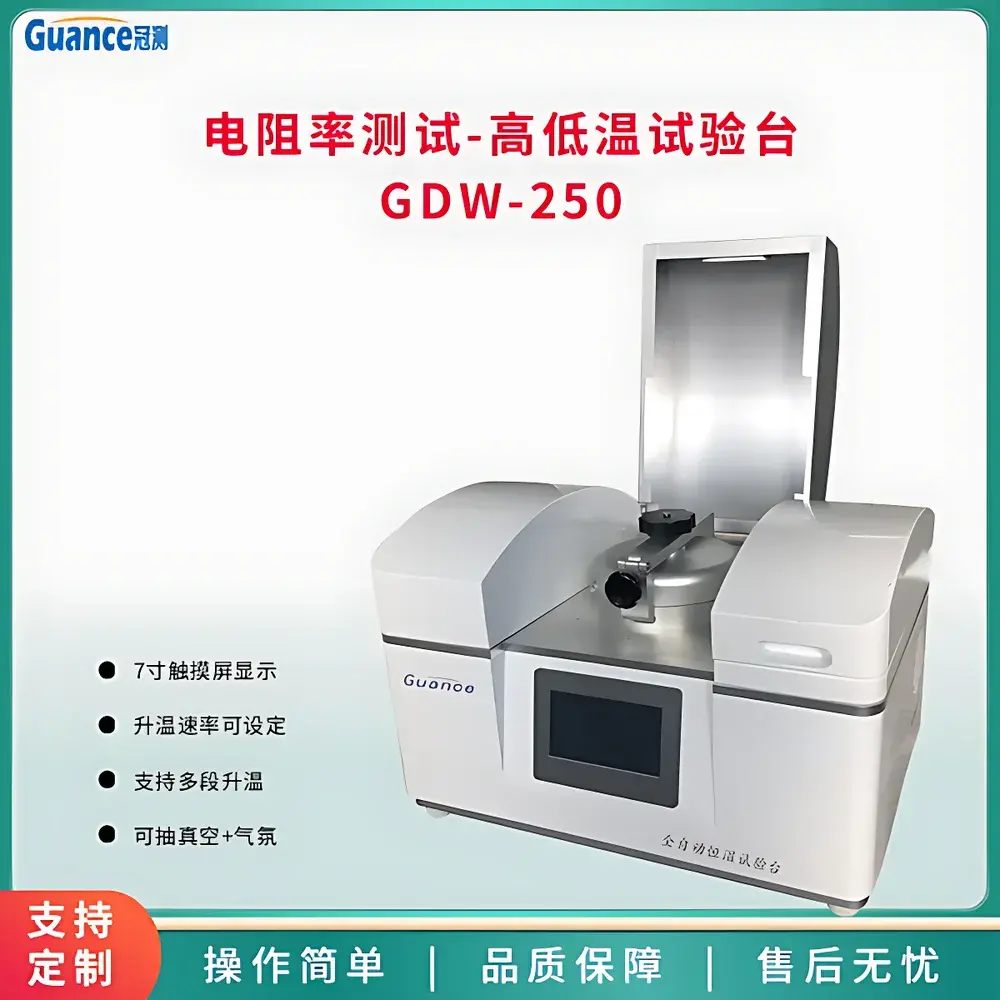
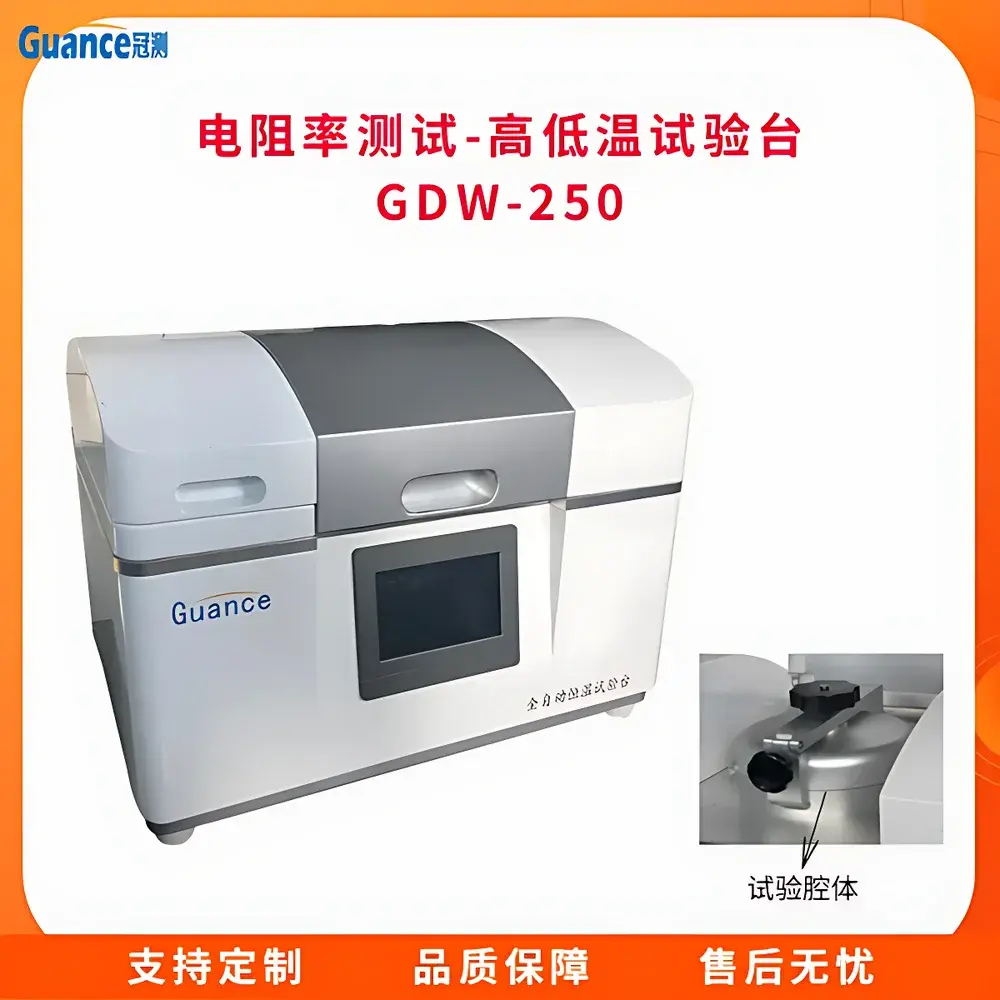
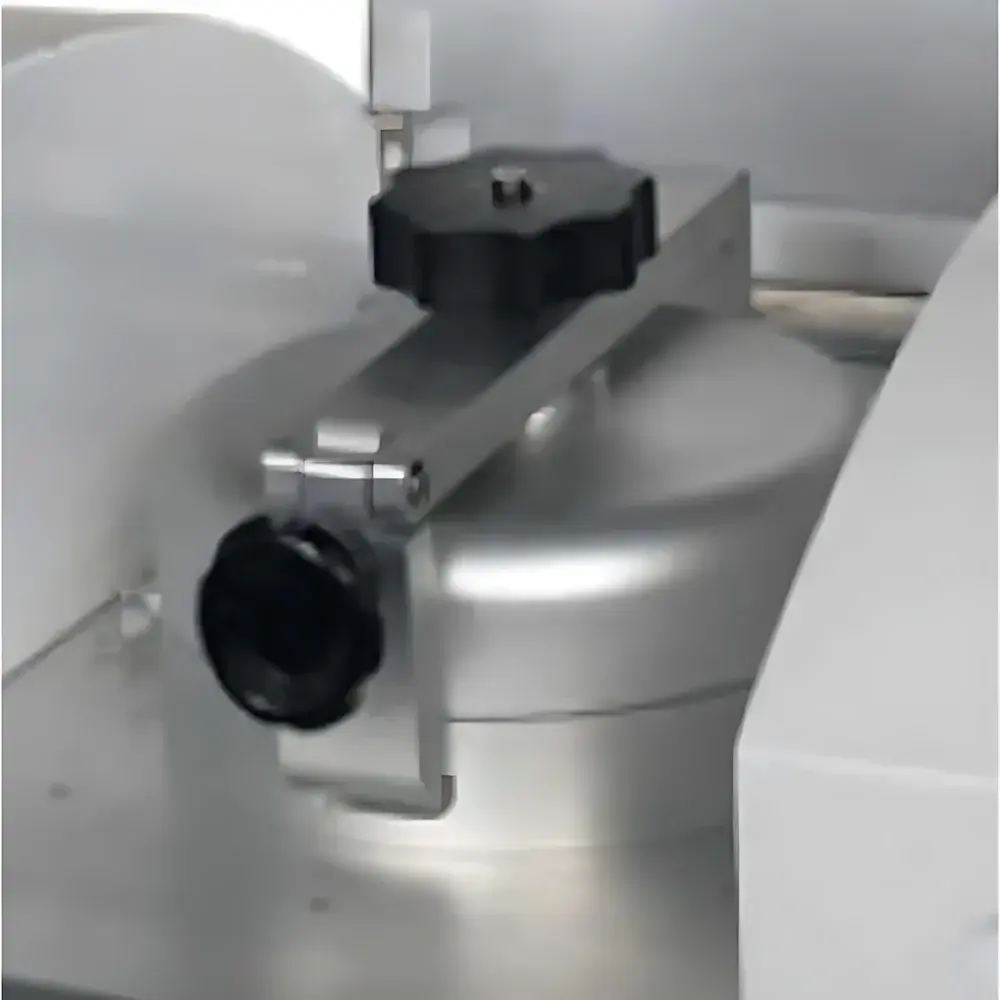
GuanCe Instruments GDW-250a High-Temperature Resistivity and Dielectric Constant Measurement System
| Brand | GuanCe Instruments |
|---|---|
| Origin | Beijing, China |
| Manufacturer Type | Authorized Distributor |
| Country of Origin | China |
| Model | GDW-250a |
| Price | USD 410 (converted from ¥2888 at 1 USD ≈ ¥7.0) |
Overview
The GuanCe Instruments GDW-250a High-Temperature Resistivity and Dielectric Constant Measurement System is an integrated thermal–electrical characterization platform engineered for precise measurement of volume resistivity, surface resistivity, and complex permittivity (dielectric constant ε′ and loss factor ε″) of solid insulating materials under controlled temperature conditions. It operates on the principle of guarded electrode DC resistivity measurement (per ASTM D257 and IEC 60093) combined with low-frequency impedance spectroscopy (typically 10 Hz–1 MHz) for dielectric analysis. The system features a thermally stabilized environmental chamber capable of continuous operation from –40 °C to +250 °C (with optional extension to +300 °C), enabling dynamic tracking of electrical property transitions across glass transition (Tg), crystallization, and thermal degradation regimes. Designed for laboratory-based R&D and quality assurance in polymer science, ceramic development, aerospace composites, and high-voltage insulation material validation, the GDW-250a supports traceable, repeatable measurements compliant with ISO/IEC 17025–accredited workflows.
Key Features
- Thermally isolated test chamber with PID-controlled heating/cooling (–40 °C to +250 °C), ±0.5 °C temperature stability over full range
- Modular electrode configuration: interchangeable guarded three-terminal electrodes (ASTM D257-compliant), parallel-plate capacitive sensors, and interdigitated microelectrodes for thin-film or coating evaluation
- Programmable ramp rates (0.1–10 °C/min) with real-time thermal profiling synchronized to electrical acquisition
- High-impedance electrometer module (1016 Ω input resistance, <1 fA bias current) for resistivity measurement down to 1018 Ω·cm
- Integrated LCR meter with auto-balancing bridge architecture for dielectric spectroscopy (ε′, ε″, tan δ) at selectable frequencies
- Electromagnetic shielding enclosure (≥60 dB attenuation @ 1 kHz–10 MHz) to suppress environmental noise during high-sensitivity resistivity tests
- Robust steel frame with powder-coated sheet metal housing (600 × 400 × 400 mm W×D×H), designed for long-term stability in GLP-compliant laboratories
Sample Compatibility & Compliance
The GDW-250a accommodates rigid and semi-rigid dielectric specimens up to 100 mm × 100 mm × 25 mm (L×W×T), including thermoplastics (e.g., PEEK, PI), thermosets (epoxies, phenolics), ceramics (Al2O3, SiO2), and composite laminates. Electrode contact is ensured via spring-loaded, gold-plated brass fixtures with adjustable pressure control (0.1–2.0 MPa). All measurement protocols align with international standards: resistivity testing per ASTM D257, IEC 60093, and GB/T 1410; dielectric characterization per ASTM D150, IEC 60250, and GB/T 1693. The system architecture supports audit-ready data integrity through timestamped metadata embedding, electronic signature capability, and optional 21 CFR Part 11–compliant software modules for regulated environments.
Software & Data Management
The GDW-250a is operated via GuanCe’s proprietary PC-based ControlSuite v3.2 software (Windows 10/11, 64-bit). Key functionalities include: configurable multi-step thermal profiles with voltage ramping logic; real-time dual-axis plotting (ρ vs. T and ε′/ε″ vs. T); dynamic curve fitting for Arrhenius activation energy extraction; automated report generation (PDF/Excel) with embedded calibration certificates and uncertainty budgets; and export of raw ASCII datasets for third-party analysis (MATLAB, Origin, Python). All data files are stored with SHA-256 hash verification and include operator ID, instrument serial number, environmental log (humidity, ambient temp), and sensor calibration expiry dates — fulfilling ALCOA+ principles (Attributable, Legible, Contemporaneous, Original, Accurate, Complete, Consistent, Enduring, Available).
Applications
- Thermal aging studies of cable insulation and encapsulants in power electronics
- Dielectric relaxation mapping of piezoelectric ceramics across phase transition temperatures
- Quality control of aerospace-grade polyimide films for flex circuit substrates
- Resistivity drift analysis in high-k gate dielectrics during accelerated thermal stress testing
- Correlation of moisture absorption kinetics with low-frequency dielectric loss in fiber-reinforced polymers
- Validation of thermal interface materials (TIMs) under operational thermal cycling conditions
FAQ
What is the maximum operating temperature and thermal uniformity specification?
The standard GDW-250a chamber achieves 250 °C with ±0.5 °C spatial uniformity across the 100 mm test zone. Optional high-temp upgrade extends to 300 °C with recalibrated sensor traceability.
Does the system support AC impedance spectroscopy at elevated temperatures?
Yes — the integrated LCR module performs frequency sweeps from 10 Hz to 1 MHz at any stabilized temperature point, with automatic compensation for lead impedance and thermal EMF drift.
Is calibration documentation provided with shipment?
Each unit ships with NIST-traceable calibration certificates for temperature sensors (PT100), high-voltage source (±0.2% FS), and electrometer gain (±0.15% FS), valid for 12 months.
Can the software generate GMP-compliant audit trails?
When configured with the optional Compliance Pack, ControlSuite v3.2 provides full 21 CFR Part 11 functionality: role-based access control, electronic signatures, immutable change logs, and retrospective audit trail review.
What utilities are required for installation?
Required infrastructure includes: single-phase 220 VAC ±5%, 50 Hz, 10 A supply; ambient humidity <50% RH; vibration-isolated floor mounting; clean dry air (0.5 MPa, dew point ≤ –40 °C); and optional positive-pressure purge gas (0.05 MPa N2 or dry air) for inert-atmosphere testing.



