
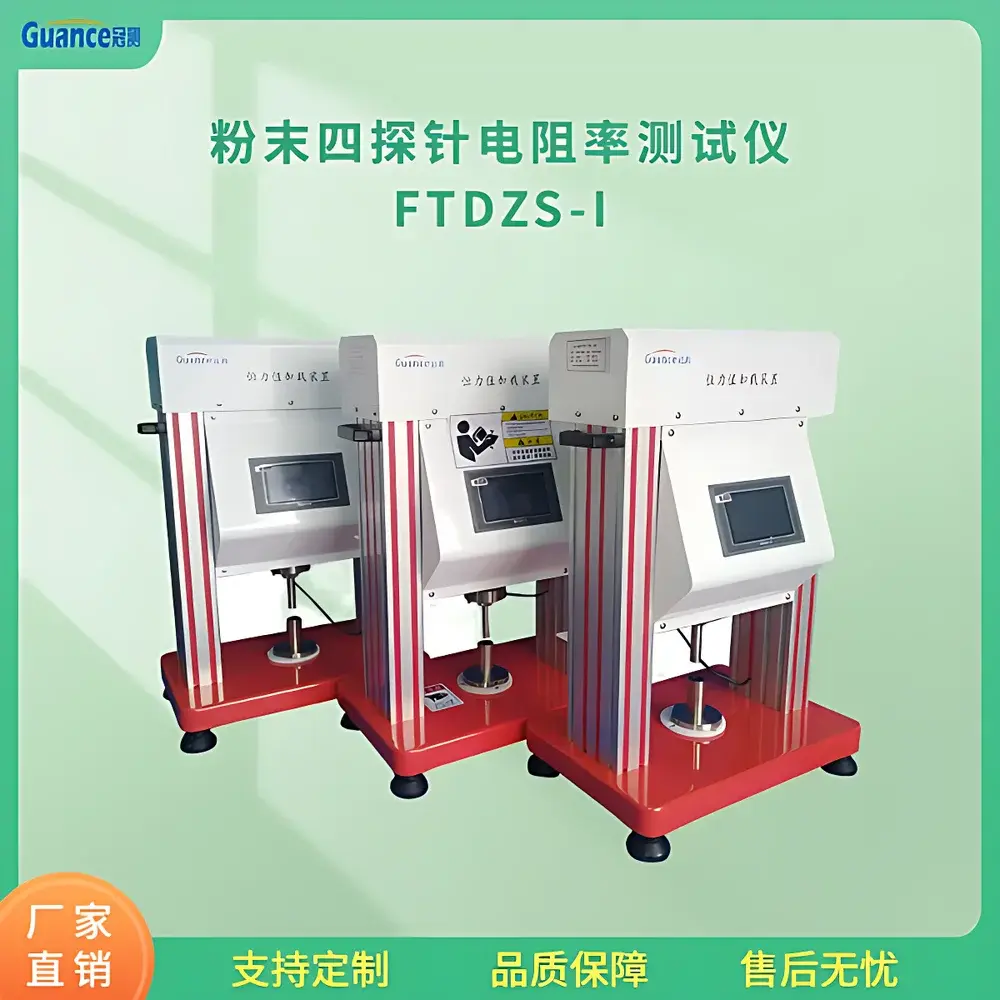
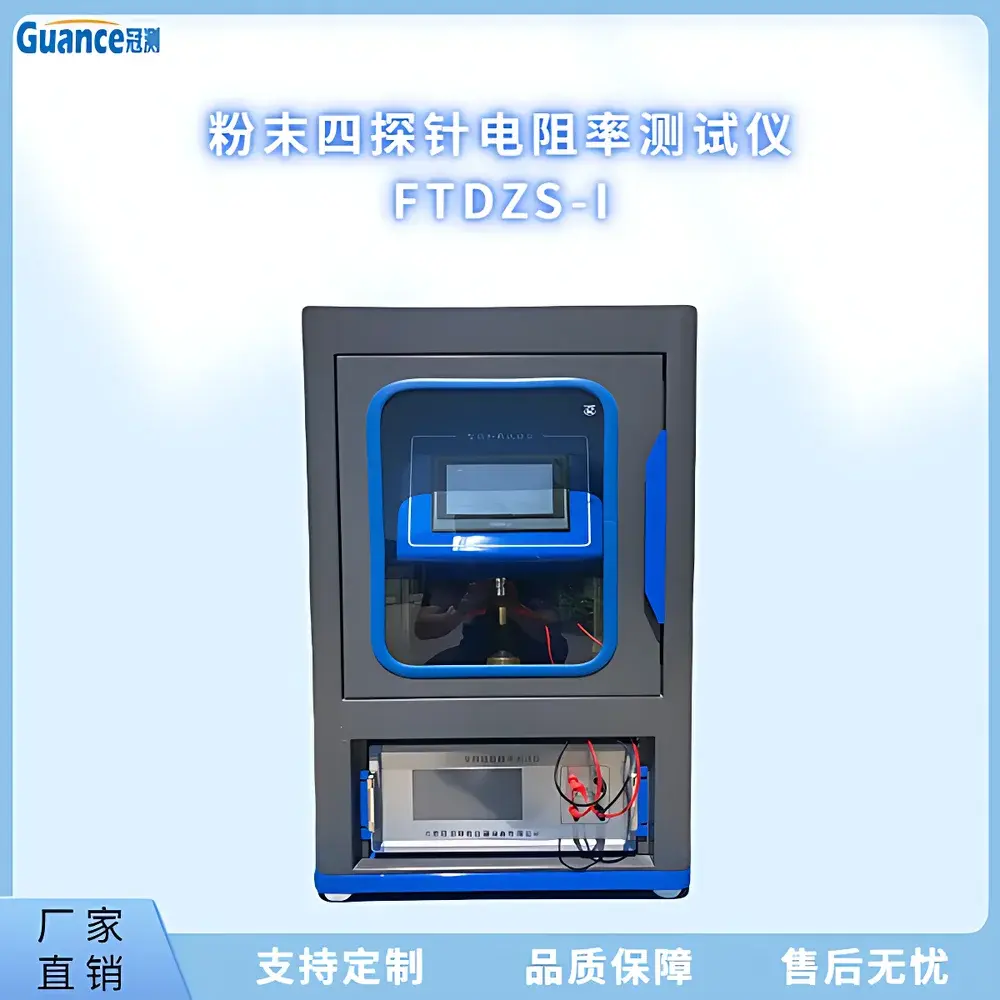
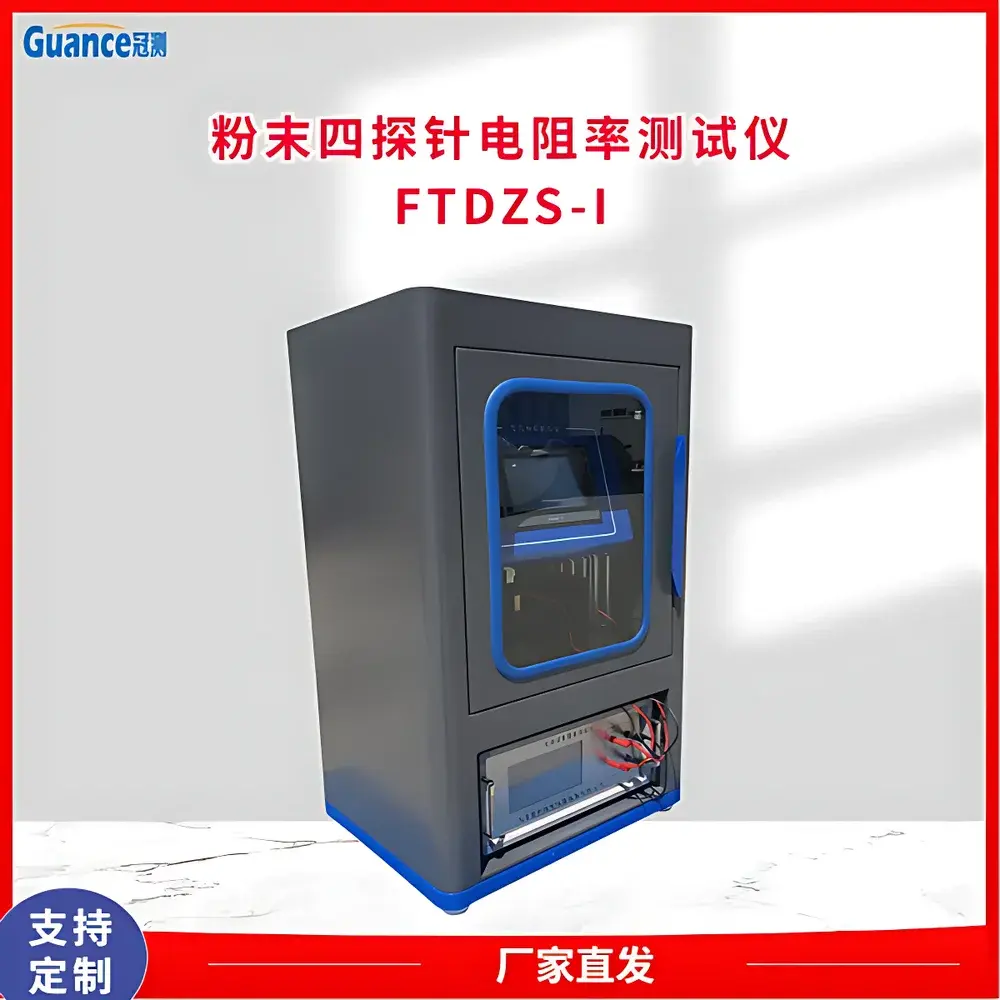
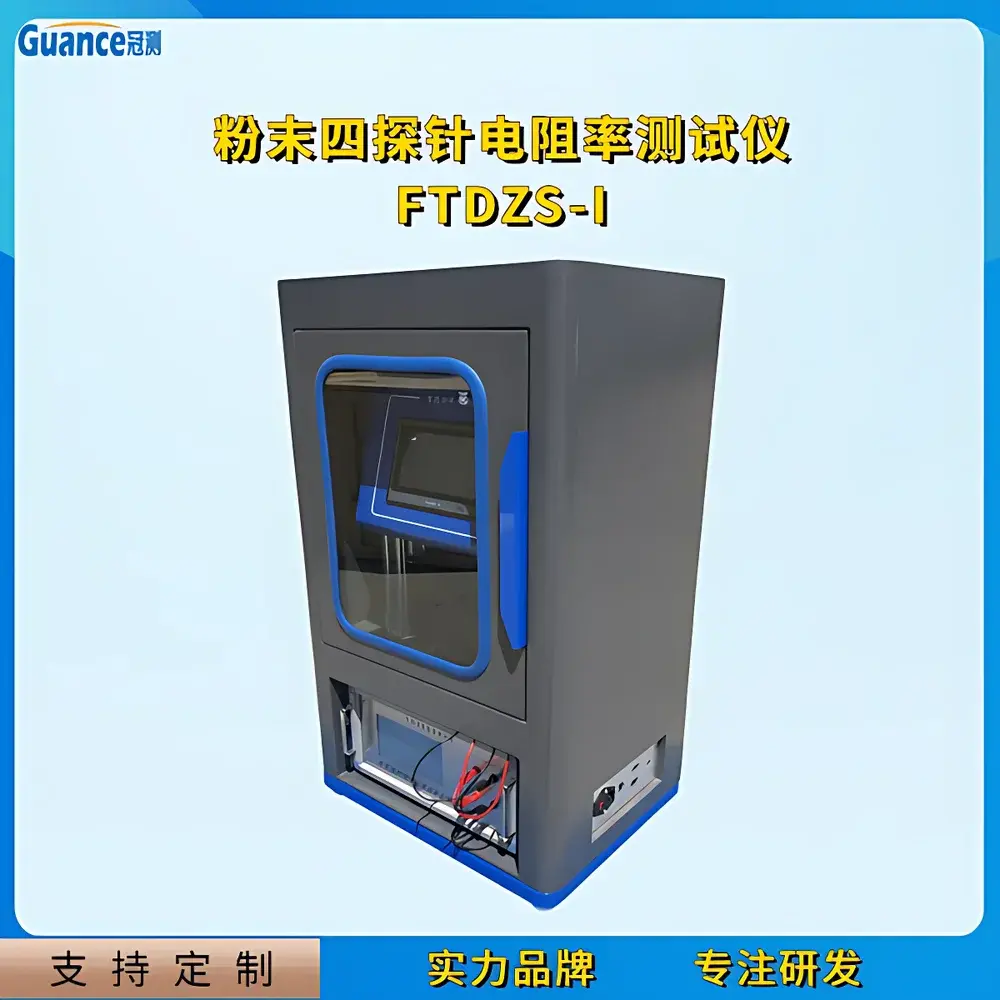
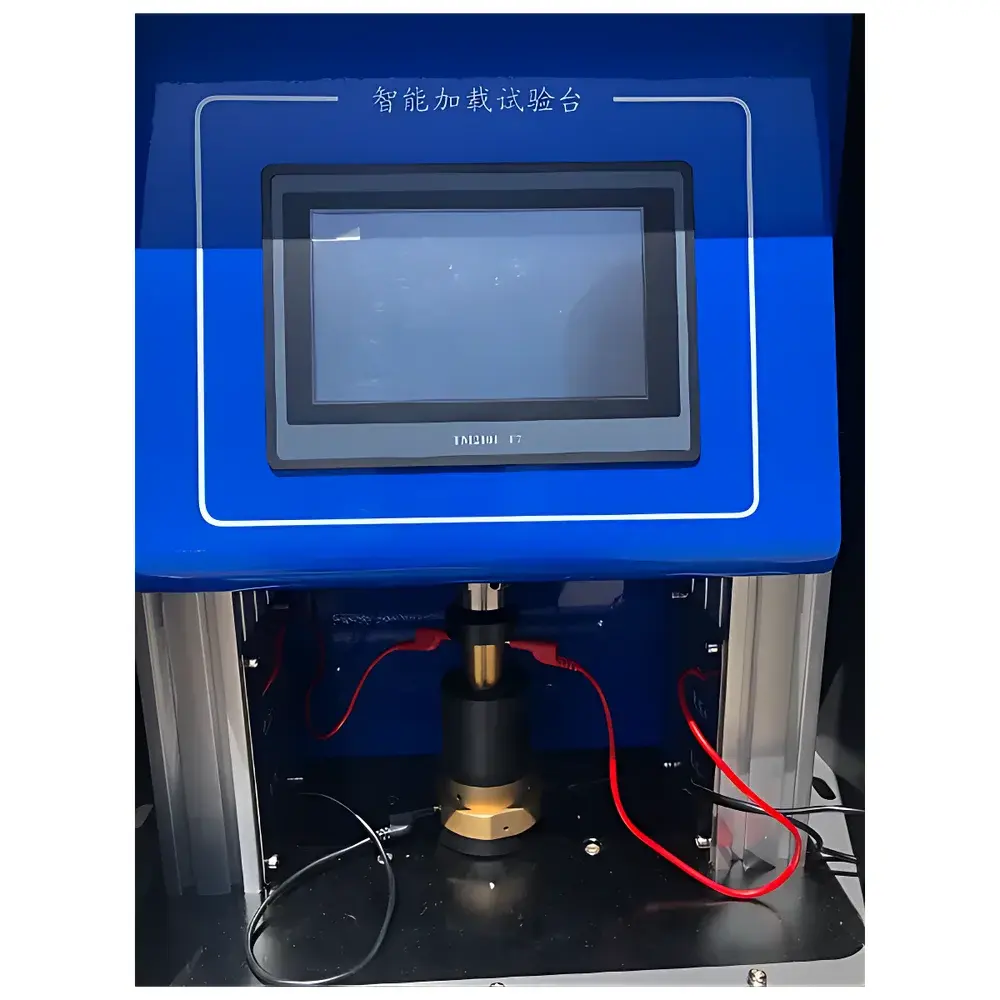
GuanCe Instruments FTDZS-I Powder Resistivity Tester (Four-Point Probe Method)
| Brand | GuanCe Instruments |
|---|---|
| Origin | Beijing, China |
| Manufacturer Type | Authorized Distributor |
| Country of Origin | China |
| Model | FTDZS-I |
| Price | USD 2,150 (FOB Beijing) |
Overview
The GuanCe Instruments FTDZS-I Powder Resistivity Tester is a dedicated benchtop instrument engineered for precise volumetric resistivity measurement of granular and powdered materials using the four-point probe (4PP) method. Unlike bulk solid or thin-film measurements, powder resistivity characterization requires controlled compaction to eliminate inter-particle air gaps and ensure reproducible contact geometry—critical for obtaining physically meaningful, comparable data. The FTDZS-I integrates a high-stability DC constant-current source (±0.05% regulation) and a high-resolution digital nanovoltmeter (100 nV resolution, 6½-digit accuracy) into a single compact chassis. Measurement compliance follows the fundamental principles of ASTM D374–22 (Standard Test Methods for Thickness of Solid Electrical Insulation) and ISO 3915:2022 (Electrical resistance of conductive plastics), adapted for compressed powder columns under defined axial loading. The system operates on the principle that current injected through two outer probes generates a potential gradient across the sample; the voltage drop between two inner probes is measured independently of contact resistance, thereby eliminating electrode interface artifacts.
Key Features
- Four-point probe configuration with spring-loaded, tungsten-carbide tipped probes ensuring consistent penetration depth and minimal surface deformation during compression
- Programmable uniaxial compaction module delivering calibrated pressures from 0.1 MPa to 10 MPa (adjustable in 0.1 MPa increments), traceable to NIST-certified load cells
- Integrated 7-inch capacitive touchscreen HMI with intuitive calibration wizard, real-time curve plotting, and configurable test protocols (e.g., pressure-ramp, hold-time sweep)
- Auto-ranging current sourcing (1 µA to 100 mA) with selectable compliance voltage (±2 V or ±20 V) to accommodate insulating carbons and highly conductive metal powders
- Onboard thermal drift compensation via dual-sensor ambient monitoring (±0.1 °C resolution) and zero-offset auto-nulling before each measurement cycle
- Rugged aluminum alloy frame with ESD-safe anodized finish, CE-marked power supply, and IP20-rated enclosure suitable for ISO Class 8 cleanroom-adjacent lab environments
Sample Compatibility & Compliance
The FTDZS-I supports cylindrical powder specimens with diameters of 10–25 mm and heights up to 30 mm, compatible with standard die sets used in battery electrode R&D (e.g., Swagelok-type, Carver press dies). It is validated for use with conductive fillers (e.g., graphite, carbon black, nickel-coated graphite), semiconductor precursors (Si, SiC, GaN powders), and refractory metals (Mo, W, Ta). All firmware and measurement algorithms comply with GLP documentation requirements, including full audit trail logging (user ID, timestamp, parameter set, raw voltage/current values, calculated resistivity, and pressure profile). Data export conforms to ASTM E1447–21 (Standard Practice for Export of Analytical Data) in CSV and XML formats, supporting integration into LIMS platforms. While not FDA 21 CFR Part 11–compliant out-of-the-box, optional software upgrade enables electronic signature capability and role-based access control.
Software & Data Management
The embedded firmware provides local storage for ≥10,000 test records with metadata tagging (sample ID, operator, date/time, pressure, temperature, current level). Optional PC-based GuanCe LabSuite v3.2 software (Windows 10/11, 64-bit) enables advanced statistical analysis—including Weibull distribution fitting for resistivity scatter, batch trend monitoring, and comparative ANOVA across compaction conditions. Raw data files include ASCII headers with instrument serial number, calibration certificate expiry, and traceable reference resistor values. Export modules support direct import into MATLAB, Python (via pandas), and JMP for multivariate regression modeling of resistivity vs. density, particle size distribution (PSD), and specific surface area (BET).
Applications
- Quality control of cathode/anode active materials in lithium-ion battery manufacturing (e.g., NMC, LFP, silicon-graphite composites)
- R&D evaluation of conductive additives for polymer composites and EMI shielding compounds
- Process validation of powder metallurgy feedstocks (e.g., stainless steel, titanium alloys) prior to sintering
- Characterization of carbonaceous materials including activated carbon, carbon nanotubes, and graphene nanoplatelets
- Academic research on percolation thresholds in heterogeneous powder mixtures under variable densification states
FAQ
What pressure range is supported, and how is force calibrated?
The system delivers 0.1–10 MPa axial pressure via a servo-controlled actuator. Force calibration is performed using NIST-traceable deadweight standards at three points (1 MPa, 5 MPa, 10 MPa) annually or after maintenance.
Can the instrument measure anisotropic resistivity (e.g., layered compacts)?
No—the FTDZS-I assumes isotropic conductivity within the compressed column. For directional measurements, orthogonal probe orientation kits are available as accessories (Model FTDZS-OPT-90°).
Is temperature control integrated?
Ambient temperature is monitored but not actively controlled. For elevated-temperature testing, external environmental chambers (−40 °C to +150 °C) with feedthrough ports are recommended and validated for use with the FTDZS-I.
How often does the system require electrical recalibration?
Voltage and current channels are factory-calibrated with annual verification recommended using certified multimeters (Fluke 8508A or equivalent) per ISO/IEC 17025 procedures.
Does the instrument support ASTM B193 or IEC 60404-16 test methods?
It implements the core 4PP methodology specified in both standards but requires user-defined pressure protocols to fully satisfy their procedural clauses on specimen preparation and density reporting.
Related Products



