
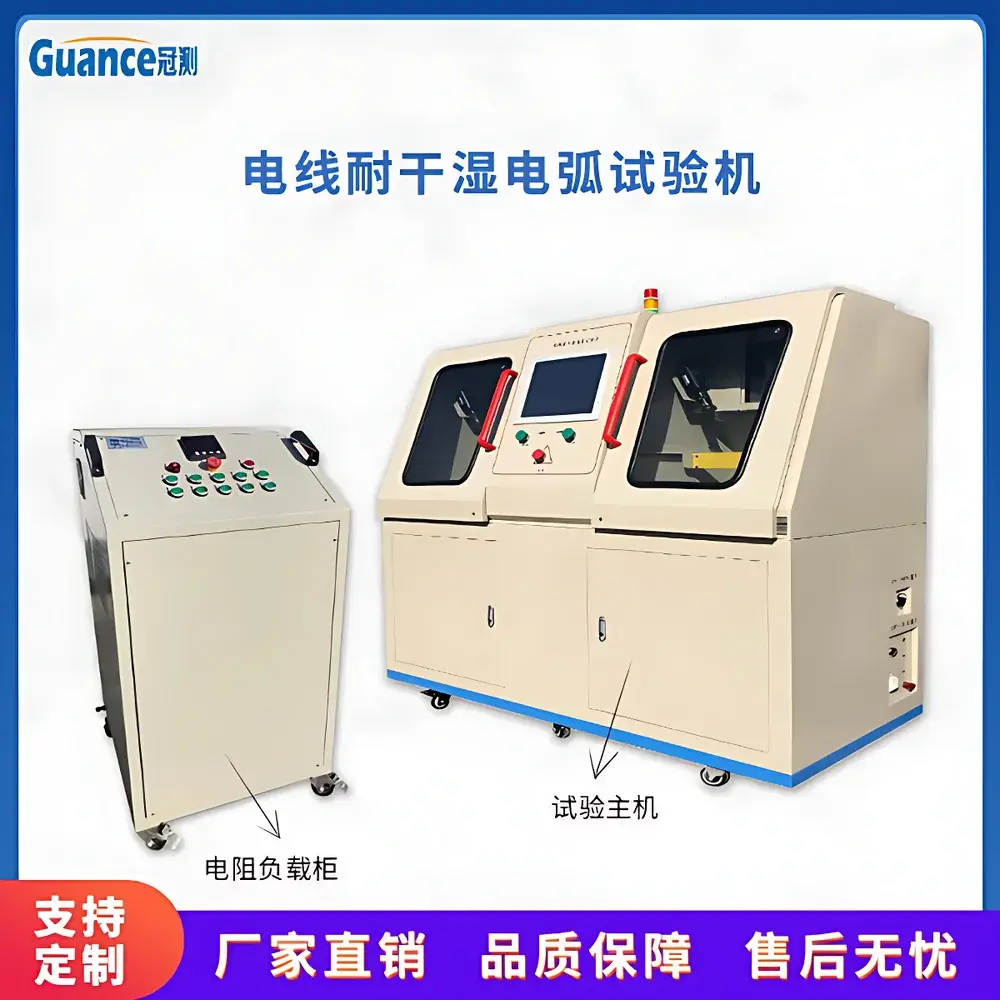
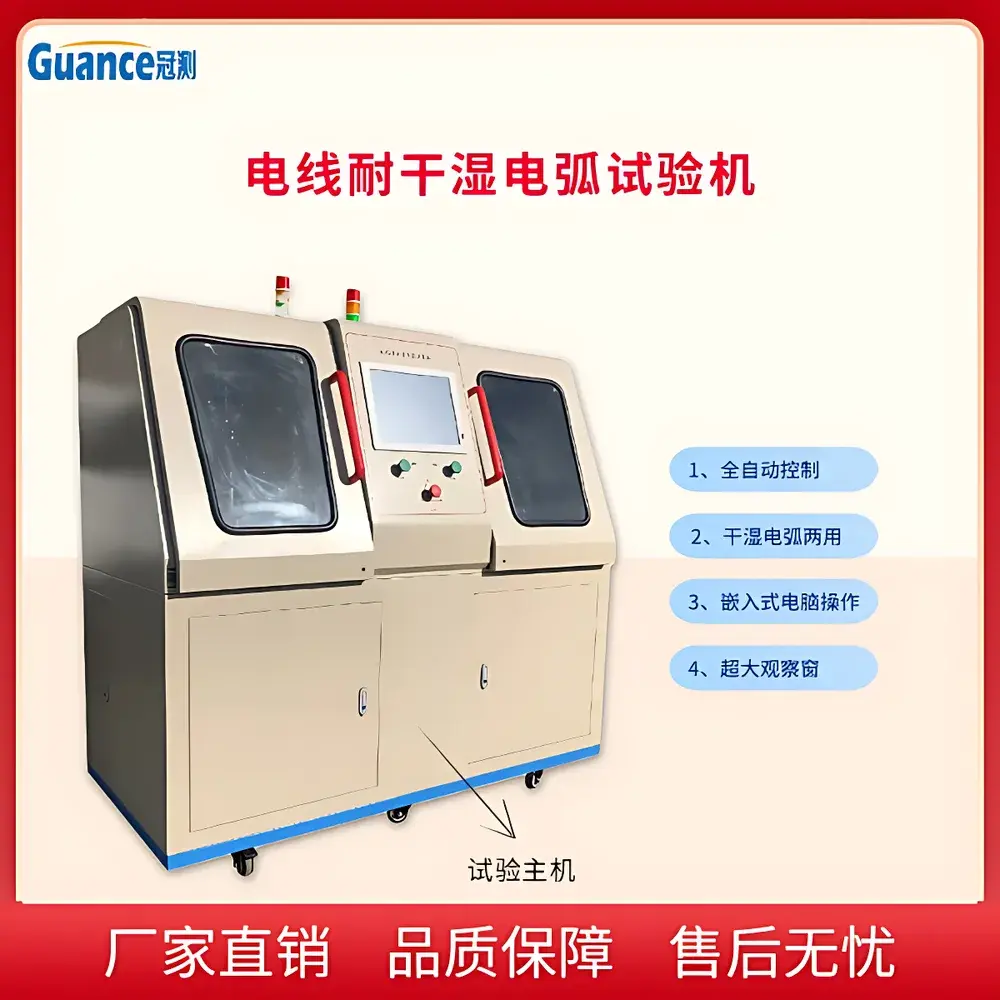
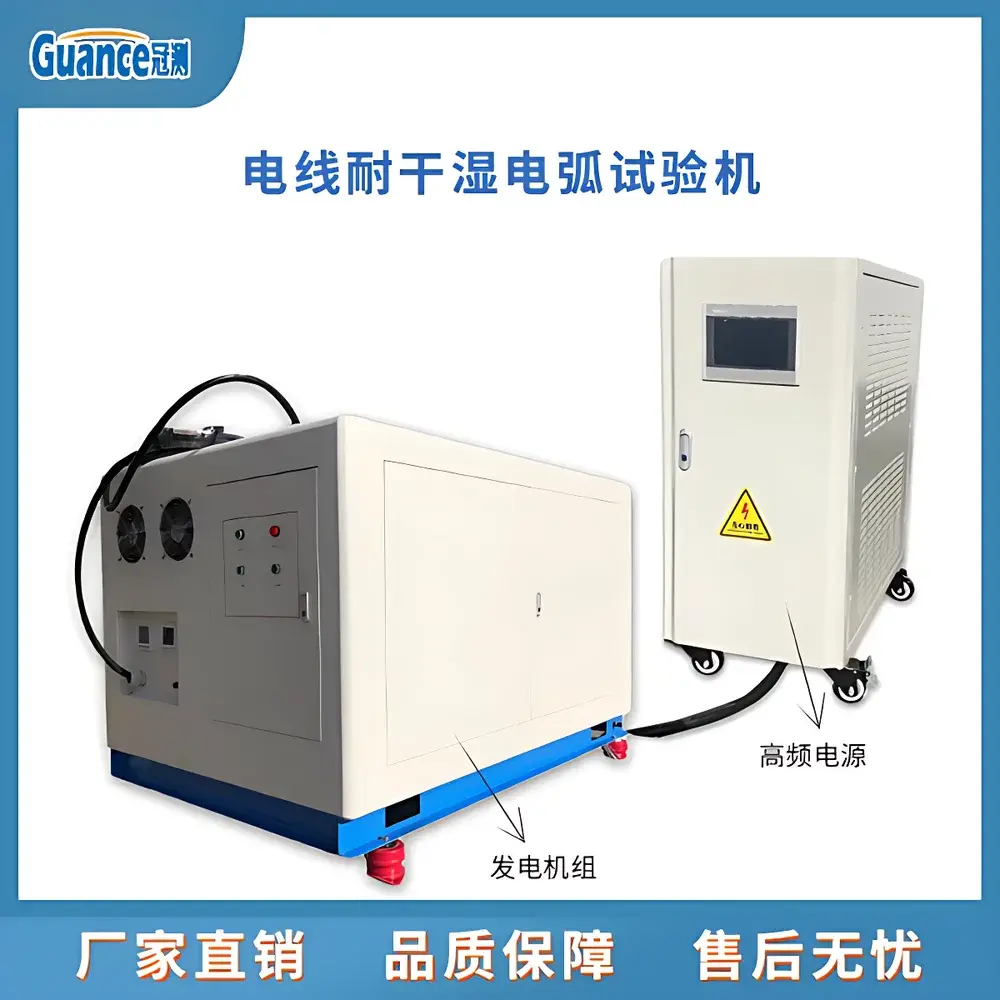

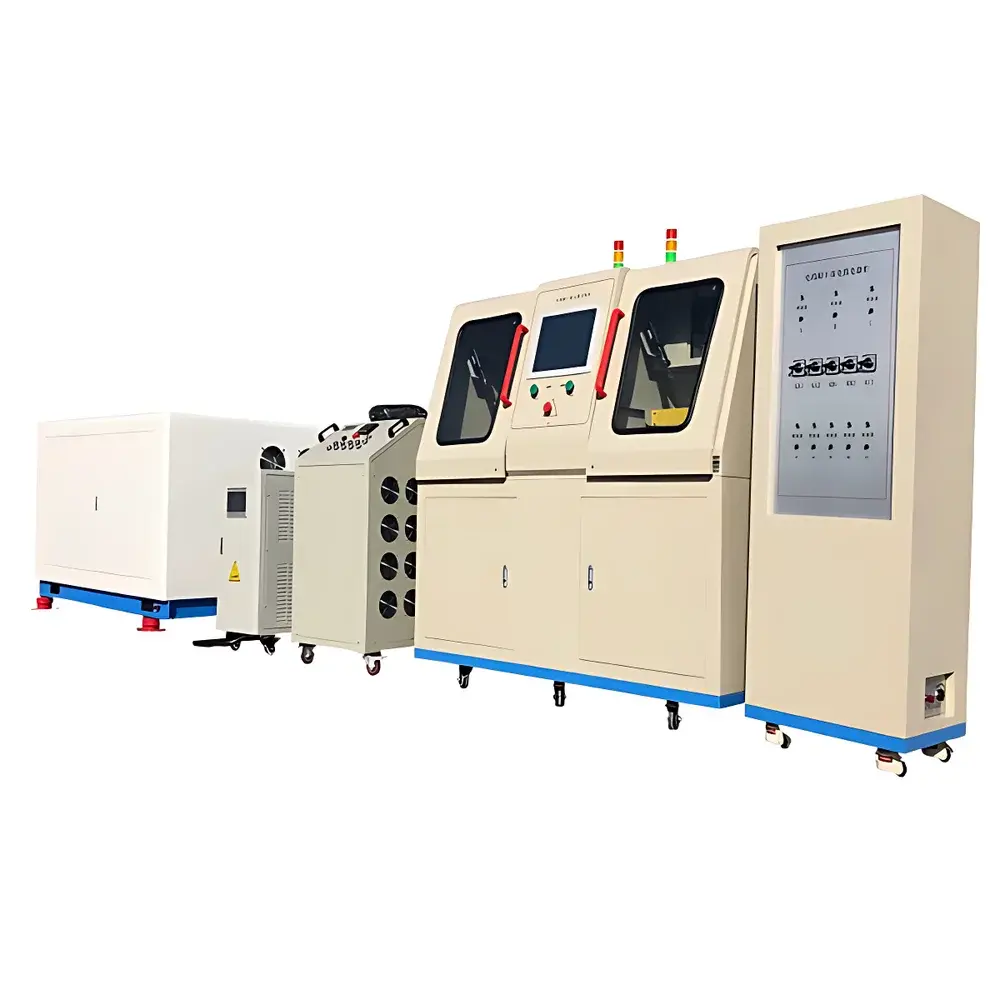
GuanCe Instruments YHT-RC100c Aviation Wire Arc Resistance Universal Testing Machine
| Brand | GuanCe Instruments |
|---|---|
| Origin | Beijing, China |
| Manufacturer Type | Authorized Distributor |
| Regional Classification | Domestic (China) |
| Model | YHT-RC100c |
| Instrument Type | Electromechanical Universal Testing Machine |
| Price | USD 2,250 (FOB Beijing) |
Overview
The GuanCe Instruments YHT-RC100c Aviation Wire Arc Resistance Universal Testing Machine is an electromechanical test system engineered for standardized evaluation of arc resistance performance in aerospace-grade insulated wiring. It operates on the principle of controlled high-frequency electrical arcing combined with mechanical abrasion and calibrated electrolyte exposure to simulate real-world degradation mechanisms encountered during aircraft electrical system operation—particularly under fault conditions involving partial discharge, tracking, or carbonization of insulation. Unlike general-purpose tensile or compression testers, the YHT-RC100c integrates synchronized power delivery (400 Hz AC), precision fluid dosing, and programmable mechanical motion to replicate the combined thermal–electrical–mechanical stress profile defined in aviation wire qualification standards. Its architecture conforms to the functional requirements of accelerated aging protocols used in MIL-STD-810, DO-160 Section 22, and aerospace wiring system certification workflows.
Key Features
- Integrated 400 Hz power subsystem: Comprising a 20 kVA generator, frequency-converting inverter, and ballast-controlled output to deliver stable 230/400 V AC at ±0.5 Hz tolerance—matching the nominal aircraft ground power unit (GPU) specification.
- Dual-mode arc exposure: Supports both dry-arc (no liquid) and wet-arc (electrolyte-dripped) test configurations per AS4373D Clause 4.9.2 and GJB773A-2000 Method 301.1.
- Programmable mechanical abrasion module: Servo-driven linear actuator with repeatable stroke (1–10 cm), velocity control (0.5 ± 0.05 cycles/s), and adjustable vertical travel (0–6 cm), enabling precise simulation of conductor movement-induced insulation wear during vibration.
- High-fidelity metrology: Voltage measurement resolution ≤0.1 V (±1% FS), current sensing ≤0.01 A (±1% FS), and gravimetric liquid dispensing accuracy of 100 ± 10 mg/min via OEM-certified peristaltic pump (Lefu Pump Co., Hebei).
- Industrial-grade control architecture: Siemens S7-1200 PLC (imported original unit) with deterministic scan cycle <10 ms, interfaced to MCGS 10-inch capacitive touchscreen HMI for real-time visualization of voltage, current, flow rate, and elapsed test time.
- Comprehensive safety interlocks: Five 7.5 A circuit breakers for load segmentation, one 30 A short-circuit breaker, grounding resistance <1 Ω, and integrated exhaust ventilation with ducted fume extraction compliant with ISO 14644-1 Class 8 cleanroom ambient compatibility.
Sample Compatibility & Compliance
The YHT-RC100c accommodates multi-strand copper conductors with cross-sectional areas from 0.12 to 2.5 mm² and insulation thicknesses up to 1.2 mm—including polyimide (PI), ethylene tetrafluoroethylene (ETFE), fluorinated ethylene propylene (FEP), and polyether ether ketone (PEEK)-based aerospace wire constructions. Test specimens are mounted using dedicated dry/wet fixtures that maintain consistent electrode geometry and solution containment. The system meets full technical alignment with AS4373D (Aerospace Standard – Test Methods for Electrical Wires and Cables), GJB773A-2000 (Chinese Military Standard – Test Methods for Aircraft Wiring), ASD-STAN PRF-502 (European Aerospace Standards Organization – Arc Resistance Test Procedure), and PrEN 6059-502 (Draft European Norm – Aerospace Series – Cables, Electrical, Aircraft Use – Test Methods – Part 502: Arc Resistance). All measurement traceability paths adhere to ISO/IEC 17025 requirements for accredited calibration laboratories.
Software & Data Management
The embedded HMI firmware supports parameterized test sequencing with up to 99 user-defined profiles, each storing voltage setpoint, current limit, drip interval, stroke length, dwell time, and termination logic (time-based or automatic arc failure detection). Raw analog signals (4–20 mA from voltage/current transducers and flow sensor) are digitized at 16-bit resolution and logged at 10 Hz into non-volatile memory. Export formats include CSV and PDF reports with timestamped metadata, operator ID, environmental conditions (temperature/humidity/pressure), and pass/fail status per clause-specific acceptance criteria. Audit trail functionality complies with GLP and GMP documentation requirements; all configuration changes and test executions are time-stamped and user-logged without overwrite capability.
Applications
- Qualification testing of new wire insulation formulations prior to FAA/EASA type certification.
- Comparative arc tracking index (CTI) assessment across candidate materials under identical electrical stress profiles.
- Validation of repair/rework procedures for field-installed wiring harnesses subjected to moisture ingress and vibration.
- Root cause analysis of in-service insulation failures in avionics bays, landing gear compartments, and engine nacelles.
- Supporting compliance documentation for DO-178C/DO-254 hardware-software co-assurance packages where wire integrity is a critical item.
- Research on carbonization kinetics and surface conductivity evolution during progressive arc exposure.
FAQ
What aviation standards does the YHT-RC100c fully support?
AS4373D, GJB773A-2000, ASD-STAN PRF-502, and PrEN 6059-502 — including all mandatory test setup, instrumentation accuracy, and pass/fail criteria.
Can the system operate continuously for extended qualification tests?
Yes. Designed for unattended 72-hour test cycles with thermal management, redundant overcurrent protection, and automated fault logging.
Is the PLC firmware upgradeable in the field?
Firmware updates are performed via secure USB interface with version-locked checksum verification; no remote connectivity is implemented to ensure air-gapped operational integrity.
Does the system include calibration certificates for transducers and timers?
Each unit ships with NIST-traceable calibration certificates for voltage/current transducers, flow meter, and internal real-time clock, valid for 12 months from date of shipment.
What maintenance intervals are recommended for the peristaltic pump and servo drive?
Pump tubing replacement every 500 hours of cumulative operation; servo motor grease replenishment every 2,000 hours — documented in the included maintenance logbook and accessible via HMI service menu.



