
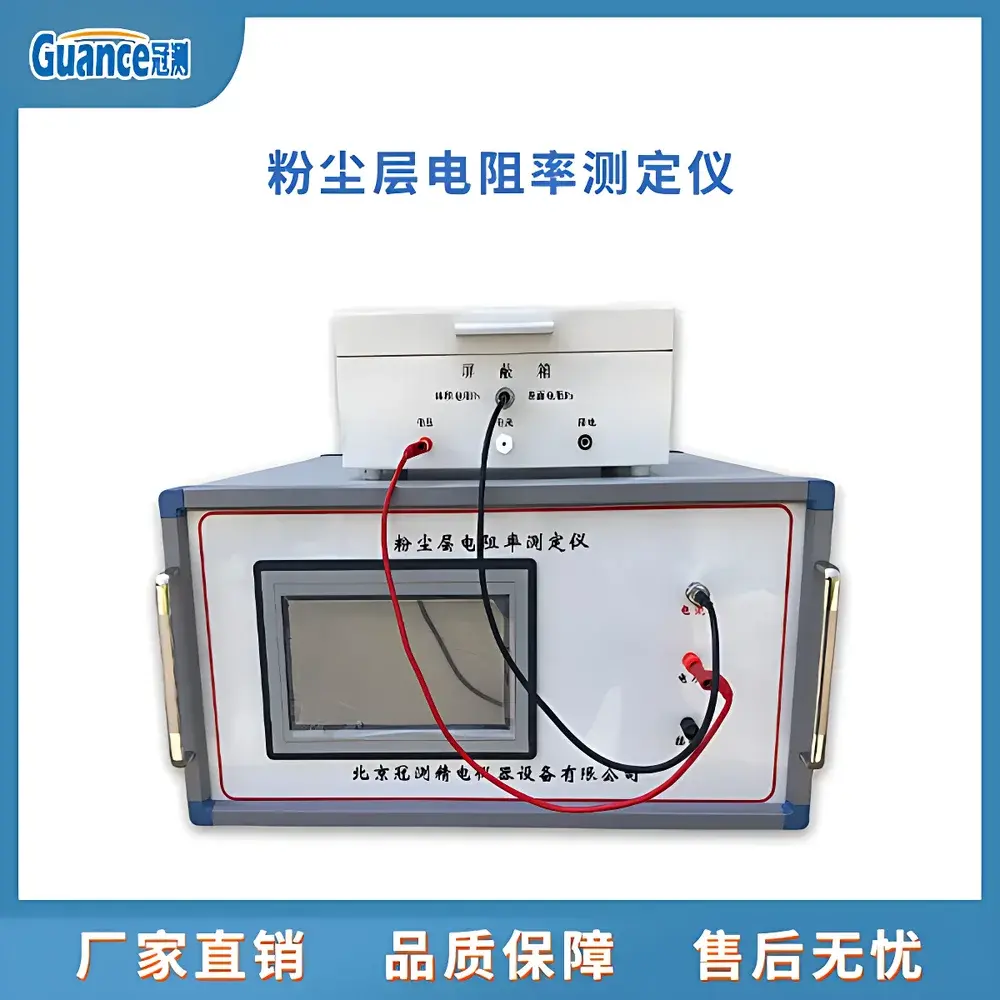
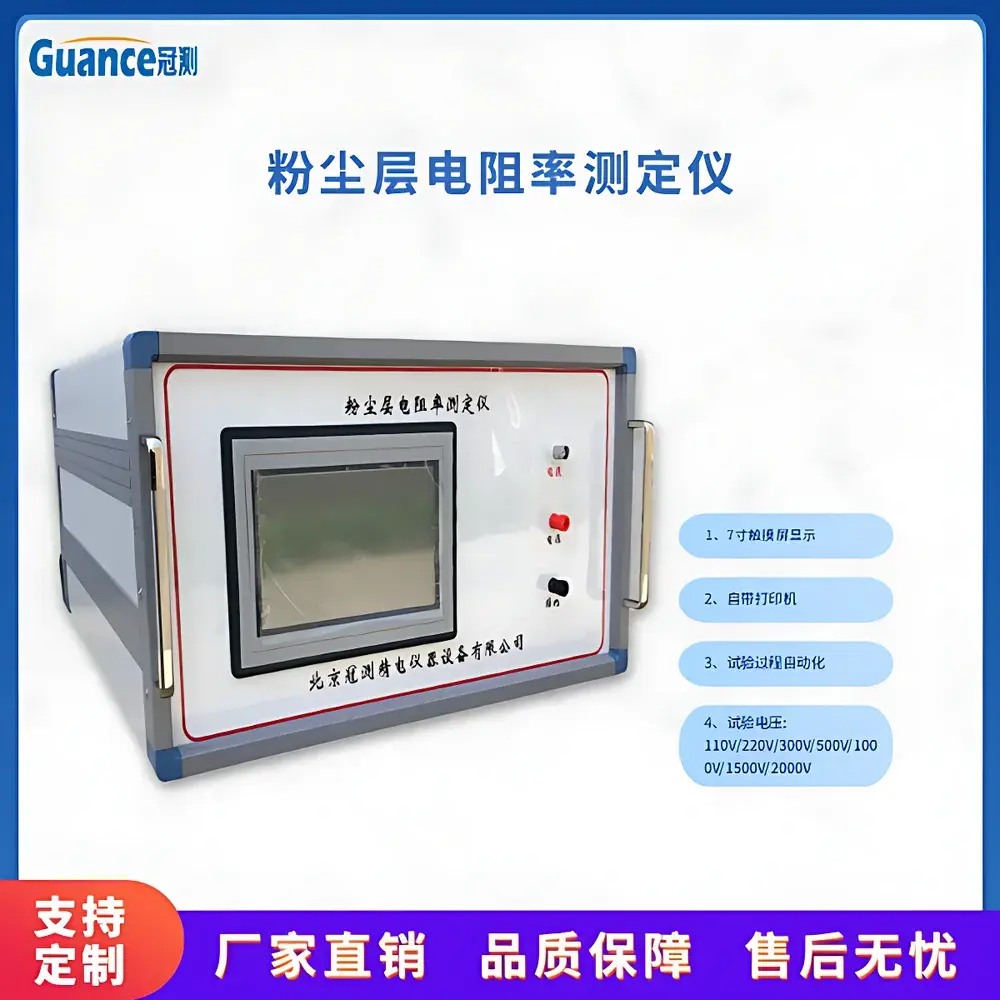
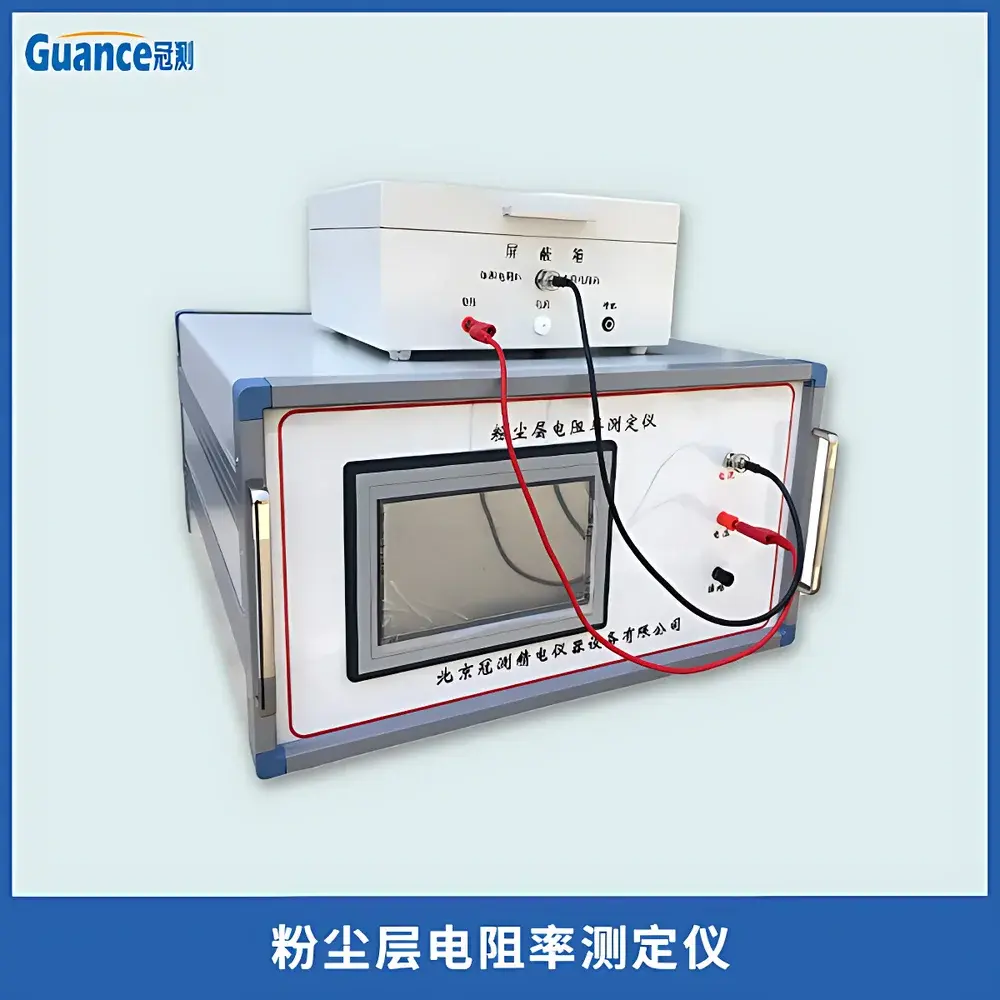
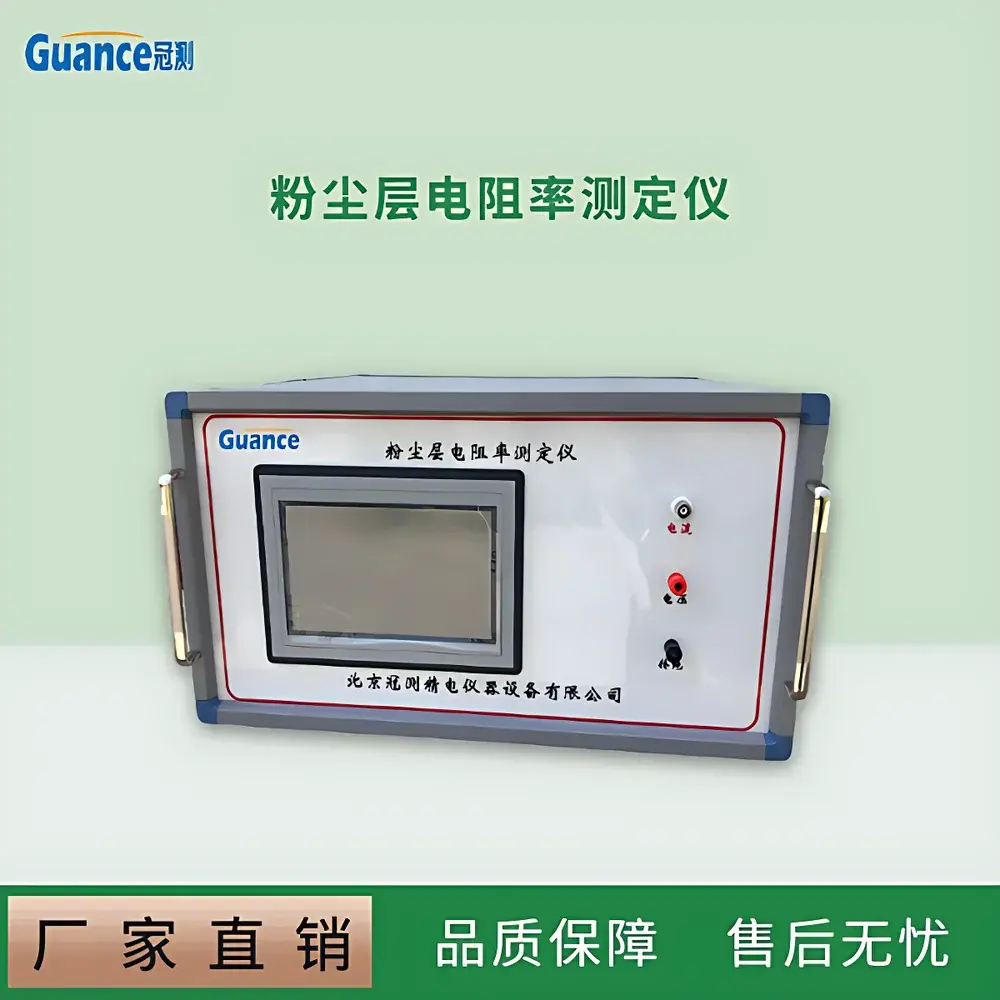
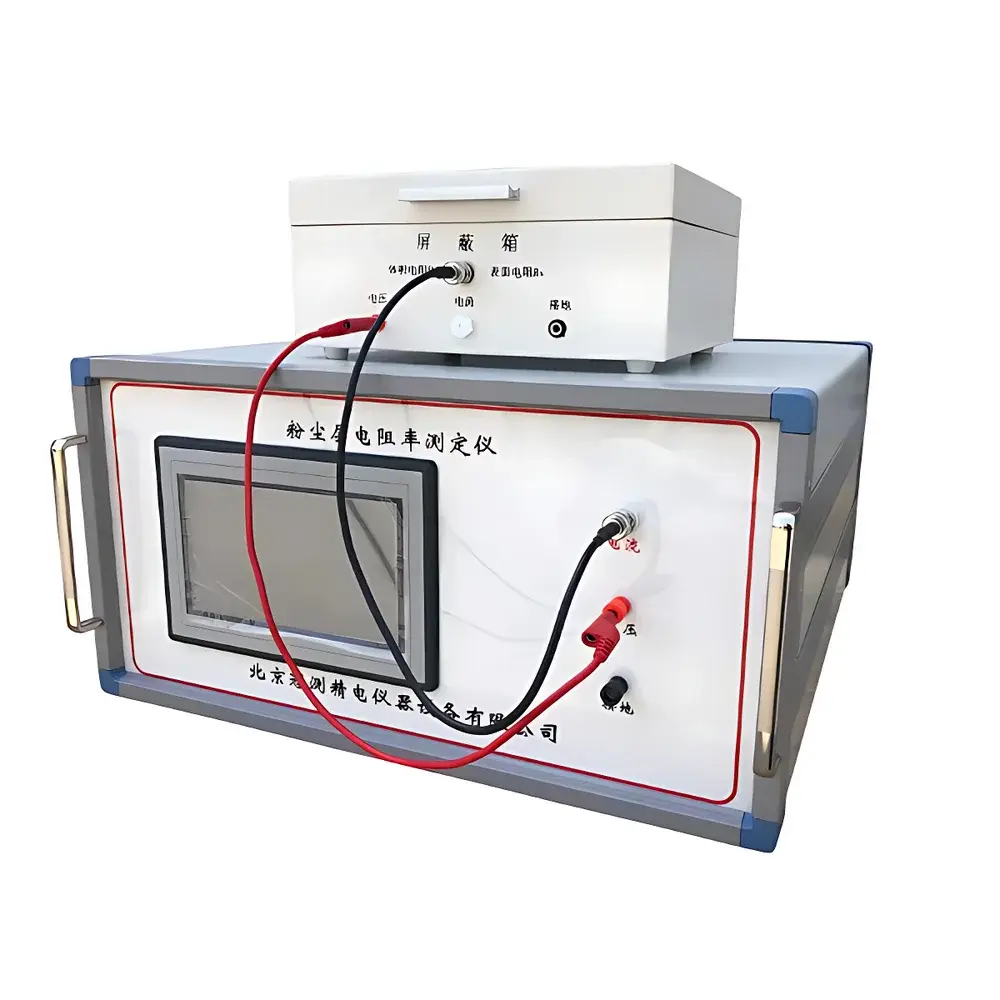
GuanCe Instruments GEST-126T+ Dust Layer Resistivity Tester
| Brand | GuanCe Instruments |
|---|---|
| Origin | Beijing, China |
| Manufacturer Type | Authorized Distributor |
| Country of Origin | China |
| Model | GEST-126T+ |
| Test Voltage Range | DC 110 V / 220 V / 300 V / 500 V / 1000 V / 1500 V / 2000 V |
| Series Resistor | 10 kΩ |
| Maximum Breakdown Current | 200 mA |
| Electrode Material | Stainless Steel (AISI 304) |
| Measurement Accuracy | ±1% of reading |
| Compliance | GB/T 12476.9–2010, GB/T 16427–2018 |
Overview
The GuanCe Instruments GEST-126T+ Dust Layer Resistivity Tester is a precision laboratory instrument engineered for the quantitative determination of electrical resistivity in consolidated layers of combustible particulate materials. It operates on the principle of direct-current (DC) two-electrode resistivity measurement under controlled compression and environmental conditions, conforming to standardized test geometries defined in national standards GB/T 12476.9–2010 and GB/T 16427–2018. These standards specify procedures for evaluating the electrostatic hazard potential of dust layers in industrial environments—particularly relevant to explosion protection engineering, process safety management, and hazardous area classification per IEC 60079 series frameworks. The instrument delivers repeatable, traceable measurements of volume resistivity (ρ, in Ω·m), enabling classification of dusts as conductive (ρ ≤ 10³ Ω·m), static-dissipative, or insulating (ρ > 10³ Ω·m), a critical distinction for grounding strategy design and electrostatic discharge (ESD) risk mitigation.
Key Features
- Multi-step programmable DC voltage output (110 V to 2000 V in discrete steps), allowing systematic evaluation across operational voltage ranges relevant to real-world electrostatic charging scenarios.
- Integrated 10 kΩ series current-limiting resistor ensures compliance with safety requirements during high-voltage testing and prevents uncontrolled arc propagation during incipient breakdown events.
- Stainless steel (AISI 304) parallel-plate electrodes with precision-machined flatness and edge geometry, designed to maintain consistent contact area and inter-electrode spacing per GB/T 16427–2018 dimensional specifications.
- ±1% full-scale measurement accuracy validated against NIST-traceable reference resistors; linearity maintained across full voltage and resistivity range (10²–10¹⁰ Ω·m typical).
- Robust mechanical architecture with calibrated sample compaction fixture, ensuring reproducible dust layer density (typically 0.2–0.8 g/cm³) — a key variable influencing measured resistivity.
- No embedded microprocessor or touchscreen interface; designed for manual operation and integration into GLP-compliant lab workflows where instrument configuration logging and audit trails are managed externally.
Sample Compatibility & Compliance
The GEST-126T+ accommodates dry, free-flowing, non-cohesive combustible powders including coal dust, metal fines (Al, Mg, Ti), organic granules (sugar, flour, lactose), and polymer powders (PE, PP, PVC). Samples must be sieved to ≤500 µm and preconditioned to standard ambient humidity (23 ± 2 °C, 50 ± 5% RH) prior to testing. The instrument supports compliance with GB/T 12476.9–2010 Clause 6.3 (dust layer resistivity test method) and GB/T 16427–2018 Annex A (electrode configuration, pressure application, and dwell time protocols). While not certified to IEC/EN 61241–2–1 or ASTM E2019, its methodology aligns with the physical principles underpinning those international standards for electrostatic hazard assessment in classified locations.
Software & Data Management
The GEST-126T+ is a standalone hardware system with no built-in data logging or software interface. All measurements are recorded manually or via external digital multimeters (DMMs) connected across the electrode terminals. Users are responsible for maintaining complete test records—including applied voltage, measured current, calculated resistivity, sample ID, compaction force, ambient conditions, and operator signature—in accordance with GLP documentation practices. For laboratories requiring electronic recordkeeping, the instrument is compatible with third-party data acquisition systems supporting analog voltage/current inputs and configurable sampling intervals. No firmware updates or cybersecurity features are provided, consistent with its role as a dedicated, low-complexity metrology tool.
Applications
- Hazardous area classification studies for powder handling facilities (e.g., silos, mixers, pneumatic conveyors).
- Validation of anti-static additives in pharmaceutical or food-grade powders.
- Supporting ATEX/IECEx technical documentation for equipment intended for Zone 20/21/22 environments.
- Research into triboelectric charging behavior and charge decay kinetics of particulate systems.
- Quality control screening of raw material batches for consistency in electrostatic properties.
- Root cause analysis of electrostatic ignition incidents involving dust layers on insulated surfaces.
FAQ
Does the GEST-126T+ comply with IEC 61241–2–1?
No. It implements the Chinese national standard methodology (GB/T 16427–2018), which shares conceptual alignment but differs in procedural detail from IEC 61241–2–1.
Can it measure surface resistivity?
No. It is configured exclusively for volume resistivity of compacted dust layers using the two-electrode parallel-plate method.
Is calibration certification included?
A factory calibration report is supplied with each unit, referencing traceable standards. ISO/IEC 17025 calibration services are available upon request through authorized service centers.
What safety certifications does the instrument hold?
It meets GB 4793.1–2007 (Safety requirements for electrical equipment for measurement, control, and laboratory use) and carries CCC marking for domestic use in China.
Is temperature or humidity control integrated?
No. Environmental conditioning must be performed externally using climate-controlled chambers or desiccators prior to sample loading.



