

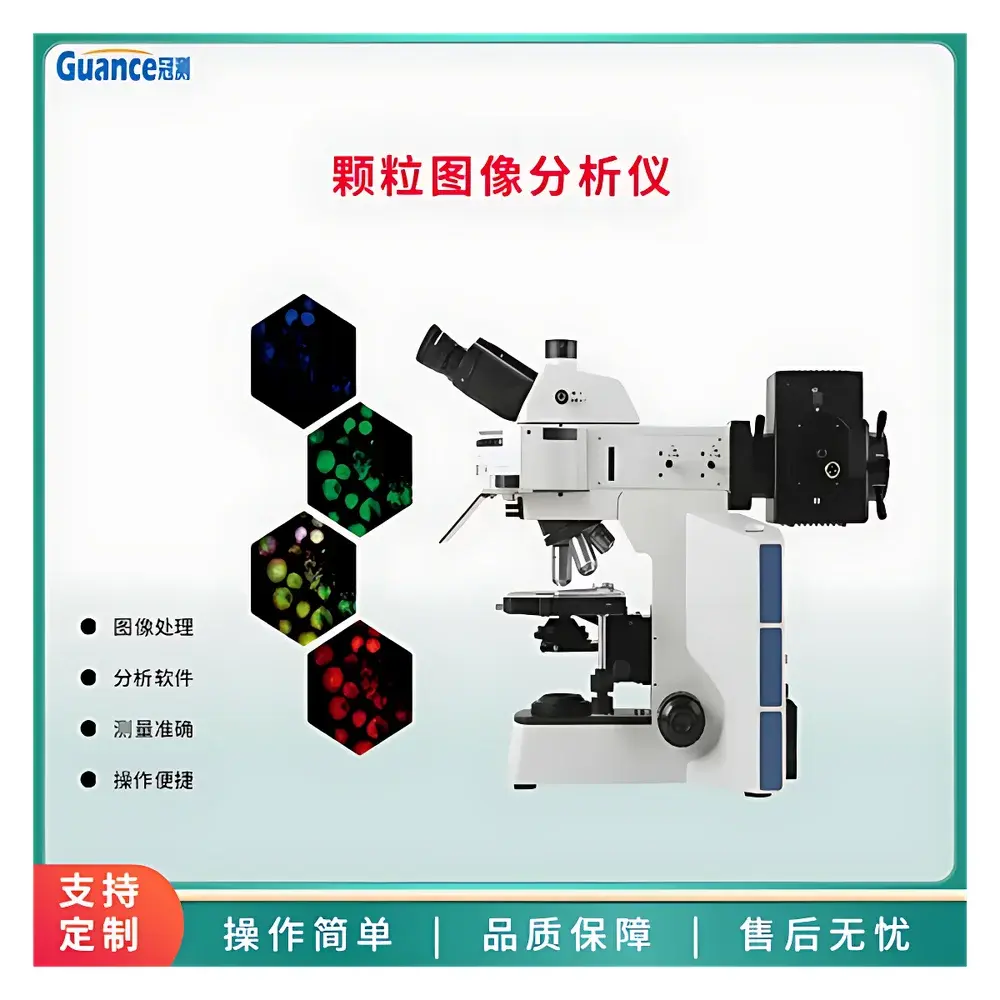
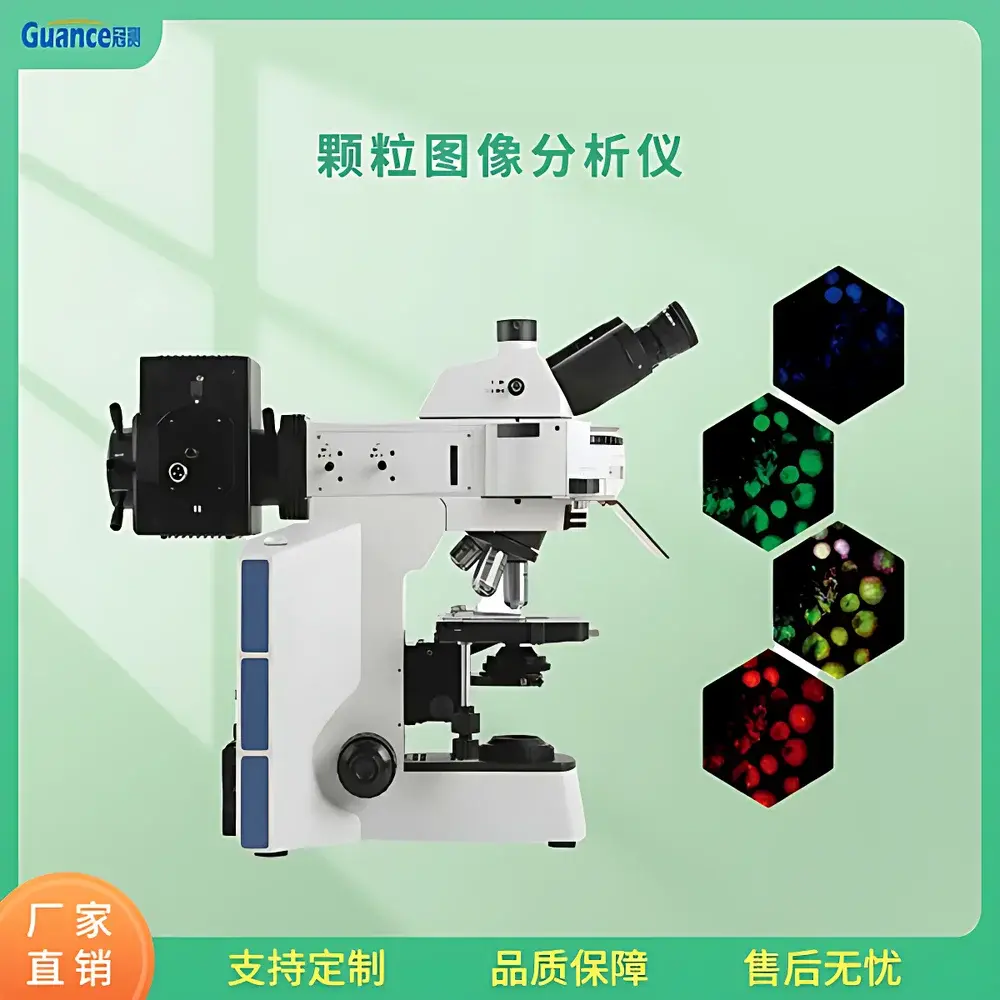
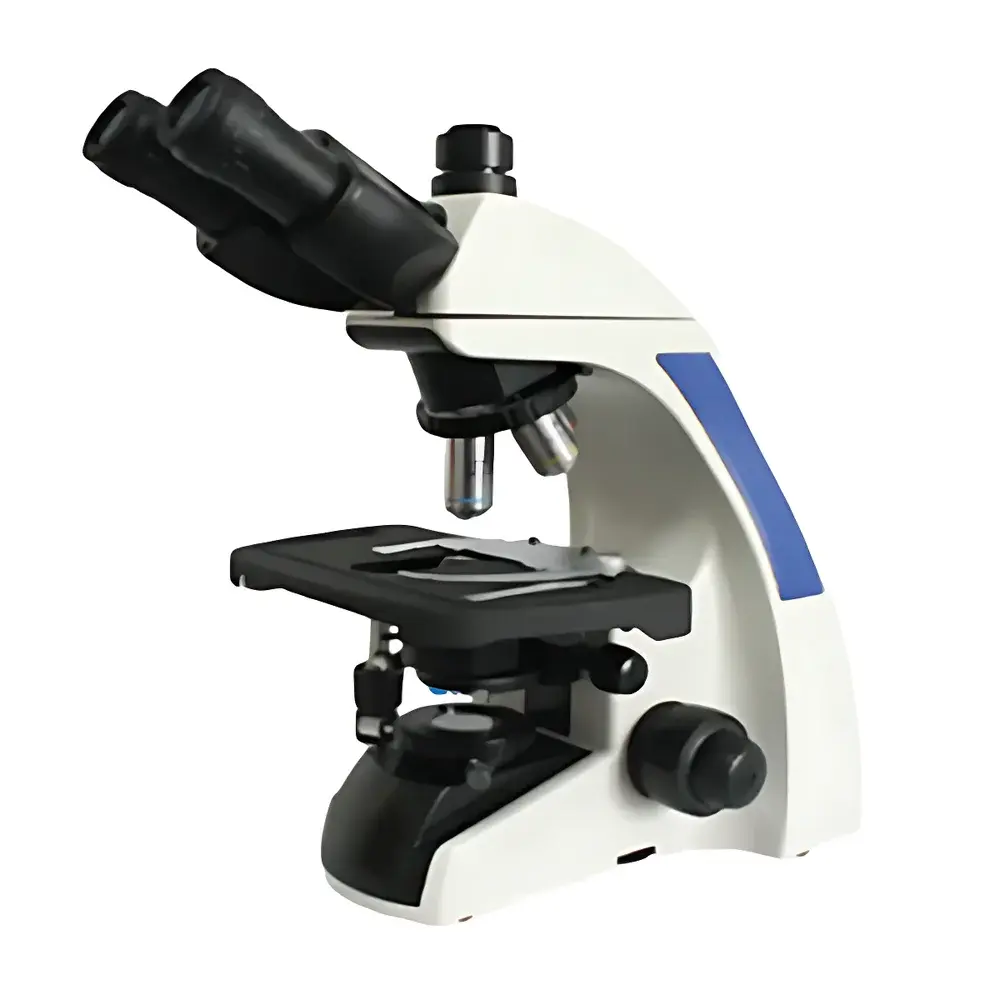
Guance Instruments ZKFT-1600A Image-Based Particle Size and Shape Analyzer
| Brand | Guance Instruments |
|---|---|
| Origin | Beijing, China |
| Manufacturer Type | Authorized Distributor |
| Regional Classification | Domestic (PRC) |
| Model | ZKFT-1600A |
| Application Focus | Metal Powders |
| Instrument Type | Dynamic Imaging System |
| Field of View | 5.70 mm (H) × 4.28 mm (V) |
| Lens Count | 1 |
| Sample Dispersion Method | Gravity-fed static dispersion on glass slide (compatible with dry or liquid suspension protocols) |
| Exposure Time Range | 0.21 ms – 2000 ms (ROI-selectable) |
| Signal-to-Noise Ratio | 66.5 dB |
| Optical Configuration | Integrated high-resolution microscope + progressive-scan CCD camera + motorized stage (optional) |
Overview
The Guance Instruments ZKFT-1600A is a dynamic, microscope-coupled image-based particle analyzer engineered for quantitative morphological characterization of dry or suspended particulate samples. It operates on the principle of high-magnification optical imaging combined with deterministic digital image analysis—capturing real-time or static micrographs of individual particles within a defined field of view (5.70 mm × 4.28 mm), then applying pixel-level segmentation and geometric feature extraction to compute size, shape, and distribution metrics. Unlike laser diffraction or dynamic light scattering systems, the ZKFT-1600A delivers direct visual evidence of particle morphology, enabling unambiguous identification of irregularities such as agglomeration, fracturing, surface roughness, and anisotropic geometry. This makes it particularly valuable in metallurgy, additive manufacturing feedstock qualification, catalyst development, and pharmaceutical excipient evaluation—where regulatory documentation of particle shape heterogeneity is increasingly required under ISO 13322-1:2020 (Microscopic image analysis) and ASTM E2454–21 (Standard Guide for Image Analysis of Particles).
Key Features
- Integrated optical platform comprising a precision-calibrated upright microscope, monochrome progressive-scan CCD camera (12-bit dynamic range), and adjustable LED illumination system optimized for contrast enhancement of opaque metal powders
- Real-time dynamic imaging mode supporting frame rates up to 30 fps at full resolution, enabling statistical sampling of flowing or vibrated powder beds
- Region-of-interest (ROI) exposure control (0.21 ms – 2000 ms) to accommodate highly reflective metallic surfaces and low-contrast organic particles without saturation or motion blur
- Automated focus calibration and stage positioning routines—reducing operator dependency and improving inter-laboratory reproducibility
- Compliance-ready software architecture supporting audit trails, user access levels, and electronic signatures per FDA 21 CFR Part 11 requirements when deployed in GMP environments
- Modular design permitting future integration with automated sample dispensers or environmental chambers (e.g., humidity-controlled staging)
Sample Compatibility & Compliance
The ZKFT-1600A accommodates a broad spectrum of particulate materials including spherical and irregular metal powders (e.g., Ti-6Al-4V, Inconel 718, stainless steel 316L), ceramic granules, polymer beads, and mineral aggregates. Samples are prepared either as dry monolayers on conductive glass slides or as dilute suspensions in low-viscosity media (e.g., isopropanol, ethanol). The system meets essential metrological criteria outlined in ISO/IEC 17025:2017 for testing laboratories, and its measurement traceability aligns with NIST-traceable micrometer standards referenced in ISO 9276-6:2022 (Representation of results of particle size analysis). All shape descriptors—including circularity, aspect ratio, convexity, solidity, and Feret diameters—are computed using algorithms validated against certified reference materials (CRMs) from NIST SRM 1980 and BAM microbeads.
Software & Data Management
The proprietary Guance ParticleVision™ v4.x software provides a unified interface for acquisition, processing, reporting, and long-term archiving. It supports batch processing of multi-field image stacks, customizable parameter thresholds (e.g., minimum particle area, intensity gradient filters), and export of raw TIFF sequences alongside structured CSV/Excel reports containing >30 standardized morphological parameters per particle. Data integrity safeguards include timestamped metadata embedding, checksum verification of image files, and optional SQL database backend for enterprise-scale deployment. Reports conform to GLP-compliant templates and may be exported in PDF/A-1b format for archival submission to regulatory authorities.
Applications
- Quality control of metal powders for laser powder bed fusion (LPBF) and binder jetting AM processes—assessing sphericity, satellite content, and surface oxidation indicators
- Root-cause analysis of flowability issues in pharmaceutical dry powder inhalers via correlation of elongation index with aerodynamic diameter
- Evaluation of grinding efficiency in mineral processing by tracking changes in angularity and surface fractal dimension over time
- Validation of spray-drying parameters through real-time monitoring of droplet morphology evolution during solvent evaporation
- Academic research into particle–particle interaction mechanisms under shear or compaction, supported by time-series image capture and overlay analytics
FAQ
What is the minimum detectable particle size for the ZKFT-1600A?
The practical lower limit is governed by optical resolution (~0.5 µm at 100× magnification) and signal-to-noise ratio; reliable detection begins at approximately 2 µm for high-contrast metal powders under optimal illumination.
Can the system analyze wet-dispersed samples?
Yes—equipped with a sealed sample chamber and compatible immersion objectives, the ZKFT-1600A supports liquid suspension analysis using refractive-index-matched carriers (e.g., glycerol/water mixtures) to minimize edge diffraction artifacts.
Is third-party software integration supported?
The system exposes a documented COM API and HDF5-compatible binary output format, enabling interoperability with MATLAB, Python (OpenCV, scikit-image), and LabVIEW-based automation frameworks.
Does the instrument comply with ISO 13322-1 for image analysis?
Yes—the hardware calibration protocol, software validation suite, and uncertainty estimation module are fully aligned with the metrological requirements specified in ISO 13322-1:2020 Annex B.
What maintenance is required for long-term accuracy?
Annual recalibration of the pixel-to-micron scaling factor using NIST-traceable stage micrometers is recommended; lens cleaning and LED intensity drift compensation are performed automatically during startup diagnostics.



